Weekend links 245

htbag.jpg

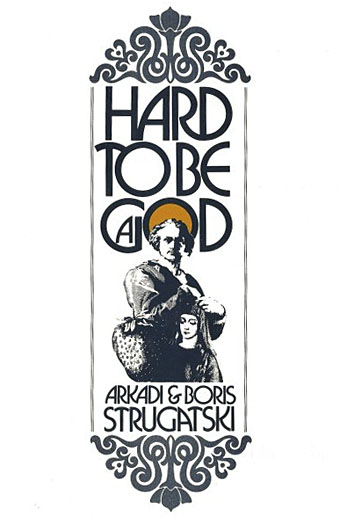
First English-language edition of Hard to Be a God, 1973. Cover design by Alan Peckolick.

A group of scientists is sent to the planet Arkanar to help the local civilization, which is in the Medieval phase of its own history, to find the right path to progress. Their task is a difficult one: they cannot interfere violently and in no case can they kill. The scientist Rumata tries to save the local intellectuals from their punishment and cannot avoid taking a position. As if the question were: what would you do in God’s place?

Hard to Be a God is a 170-minute Russian science-fiction film based on a novel by Arkady & Boris Strugatsky, the authors of Roadside Picnic. The film was the magnum opus of director Aleksey German (1938–2013) who died shortly before post-production was complete. German’s wife and son finished the film.

“…the wonder about this exhausting, astonishing film is not that it took so long to make, it’s that it got made at all,” says Gabriel Winslow-Yost; “one of the most consistently disgusting films ever made,” says Glenn Kenny, “…not only an unforgettable individual masterpiece but probably one of the capital-G Great Films.”; “There are no bones to be made about it, Hard to Be a God is a modern masterpiece,” says Matt Thrift.

This pushes all of my cinematic buttons, of course, so now I’m itching to see it. YouTube has trailers, and (if you must) you can also find the entire film without subtitles. I’d rather wait for a disc version. Meanwhile, Chicago Review Press have republished the novel with a new translation by Olena Blumberg and a foreword by Hari Kunzru.

• At the Guardian John Doran recommends new Middle Eastern and North African music; the playlist includes a song from the forthcoming album by Melechesh which features my cover art. At the Quietus this week Doran explored Manchester’s urban wastelands with local musician Julie Campbell aka Lonelady.

• “Research into psychedelics, shut down for decades, is now yielding exciting results,” says Michael Pollan. Related: Ryan Cooper on why the [US] government should be funding mass scientific studies of Ecstasy, magic mushrooms, and LSD, and “Early humans used magic mushrooms, opium“.

Dad combined porn with all manner of genre fiction. He wrote pirate porn, ghost porn, science-fiction porn, vampire porn, historical porn, time-travel porn, secret-agent porn, thriller porn, zombie porn and Atlantis porn. An unpublished Old West novel opens with sex in a barn, featuring a gunslinger called Quiet Smith, without doubt Dad’s greatest character name. By the end of the decade, Dad claimed to have single-handedly raised the quality of American pornography.

Chris Offutt on the prolific writing career of his father, Andrew Jefferson Offutt V

The Sound Repository 2 by Wizards Tell Lies, a free collection of “rare tracks, demos, early and alternative versions” at Bandcamp.

Jennifer Rothwell‘s new fashion collection uses prints based on Harry Clarke’s stained-glass windows.

• Mix of the week: My Body Full Of Stars, an Afrofuturism mix by Oyinboy.

Terry Gilliam’s title sequence for Cry of the Banshee (1970).

Endless Endless: Kraftwerk at Tumblr.

Sehr Kosmisch (1974) by Harmonia | Walky-Talky (1975) by Harmonia | Sometimes In Autumn (1976) by Harmonia 76
Weekend links 244

scarpulla.jpg

MMOB :: Far West (2013) by Alison Scarpulla.

• “…although same-sex love is as old as love itself, the public discourse around it, and the political movement to win rights for it, arose in Germany in the late nineteenth and early twentieth centuries. This message may surprise those who believe that gay identity came of age in London and New York, sometime between the Oscar Wilde trials and the Stonewall riots.” Alex Ross reviewing Robert Beachy’s Gay Berlin: Birthplace of a Modern Identity. Beachy talks about his book here.

• “I was in a room with tube synthesizers, where you had to tune them up to play them. It was unbelievable.” John Carpenter talking to Joseph Stannard about composing with electronics. Carpenter’s album of new music, Lost Themes, may be previewed here.

• From 2010: John Ridpath on Mervyn Peake’s illustrations for Lewis Carroll’s Alice Through the Looking Glass and Alice in Wonderland. Related: “The most twisted version of Alice in Wonderland you’ll ever see.”

I was brought up in a world where art was something owned and insured—usually inherited: but seldom if ever made by anyone one I knew.

I had an early inkling that there was fun to be had over the hill, like the feeling when faced with a sunset that someone’s throwing a mega awesome party just beyond the nearest cloud, and I set off to join the caravan. Let’s just say I was in search of company, headed towards the glow, and I found it.

Tilda Swinton‘s speech at the Rothko Chapel

• “Her art often touches on alchemy and magic; and in her memoir of insanity she writes of misreading an Imperial Chemicals sign as ‘chemistry and alchemy’.” Charlotte Higgins on Leonora Carrington.

Shadows Over Main Street, an anthology of small-town Lovecraftian terror, is out this week from Hazardous Press. 20 stories and poems plus interior illustrations including a contribution of my own.

• “With Fantastic Planet, I felt torn about using it, because it’s…the title of an animated film.” Guitarist Sarah Lipstate, aka Noveller, talks to Ned Raggett about her new album.

Jim Jupp of Belbury Poly and the Ghost Box record label answers 15 questions.

• A DeLorean driving through a Tron cityscape: Retrowave by Florian Renner.

• Powell & Pressburger’s Tales of Hoffmann (1951) has been restored.

Music from Forbidden Planet (1956) by Louis & Bebe Barron | The Four Horsemen (1972) by Aphrodite’s Child | Assault on Precinct 13 (Main Theme) (1976) by John Carpenter

Weekend links 242

kroll.jpg

Ghost in the Machine (2012) by Hope Kroll.

Nothing Here Now But The Recordings, an album of William Burroughs’ personal tapes originally released by Industrial Records is reissued on vinyl this month. Andrew Spragg reviews it here. Burroughs’ readings fill several collections but this one was the first I owned, and it’s always been a favourite. The album features recordings of early texts such as The Last Words of Hassan I Sabbah, as well as cut-up tape experiments which fuelled some of the chapters in the Nova Trilogy.

• The Melancholy of Perversion: a study of Caitlín R. Kiernan’s Metamorphosis A by Scott Dwyer. More weird fiction: “Written with real psychological depth, these enigmatic tales rise far beyond straightforward ghost stories.” Chris Power on Robert Aickman.

• At Dangerous Minds: Gay Semiotics, a taxonomy of San Francisco life in the 1970s. Related: The case of One, a gay magazine from Los Angeles prosecuted for obscenity in 1958.

Poe’s mind was by no means commonplace. In the last year of his life he wrote a prose poem, Eureka, which would have established this fact beyond doubt—if it had not been so full of intuitive insight that neither his contemporaries nor subsequent generations, at least until the late twentieth century, could make any sense of it. Its very brilliance made it an object of ridicule, an instance of affectation and delusion, and so it is regarded to this day among readers and critics who are not at all abreast of contemporary physics. Eureka describes the origins of the universe in a single particle, from which “radiated” the atoms of which all matter is made. Minute dissimilarities of size and distribution among these atoms meant that the effects of gravity caused them to accumulate as matter, forming the physical universe.

Marilynne Robinson on Edgar Allan Poe

Vanished City: London’s Lost Neighbourhoods, a book by Tom Bolton with photographs by SF Said.

• Mix of the week: Secret Thirteen Mix 143, a selection of soundtrack music by Las CasiCasiotone.

• “I am in Brussels, numbering the Bruegels.” Toby Ferris conducts a Brueg[h]el Census.

Mothmeister “taxidermy collector & curiosity cabinet”.

Ben Zurawski collects and makes flip books.

Akira Kurosawa’s 100 favourite films

The Trip (1965) by Kim Fowley | The Trip (1966) by Donovan | The Trip (1967) by Park Avenue Playground

Weekend links 241

clerc.jpg

A drawing by Lucille Clerc.

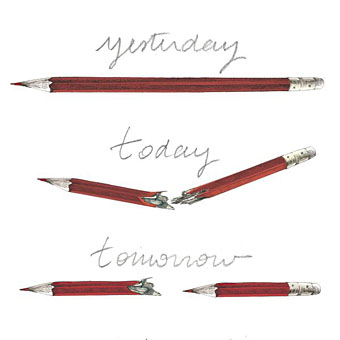
• The usual imbalance of heat versus light this week but Kenan Malik and Teju Cole had some worthwhile things to say. Related: Atlantic illustrators respond to the events of Wednesday. And some history: covers of Charlie Hebdo‘s parent magazine, Hara-Kiri, whose legacy of bad taste and confrontation was overlooked in the rush to express disapproval.

• At The Quietus: Virginie Sélavy, Mark Pilkington and Stephen Thrower of the Miskatonic Institute talk to Mat Colegate about horror old and new. There’s more horror cinema in Mat Colegate’s interview with animator Carla MacKinnon.

• Mixes of the week: Sleepwalkers of the Montgomery Canal by The Geography Trip, and Secret Thirteen Mix 142 by Helena Hauff.

• Jazz legend Julian Priester reflects on his fusion classic Love, Love, Sun Ra, Herbie Hancock, and a lot more.

• “No gays, no blacks, no fat people”: Ryan Gilbey on how film advertising continues to betray filmmakers.

Paul Gorman on the drumheads that Barney Bubbles painted for Hawkwind’s Simon King in 1972.

Massive: Gay Erotic Manga and the Men Who Make It, edited by Anne Ishii & Graham Kolbeins.

NASA’s exoplanet travel bureau wants you to pack your bags.

• The New Humanist on imagining a world without work.

• At Strange Flowers: 15 books for 2015.

Ghosts in the TV

Prologue/Love, Love (1974) by Julian Priester | The Jewel in the Lotus (1974) by Bennie Maupin | Rima (1975) by The Headhunters

A Mountain Walked

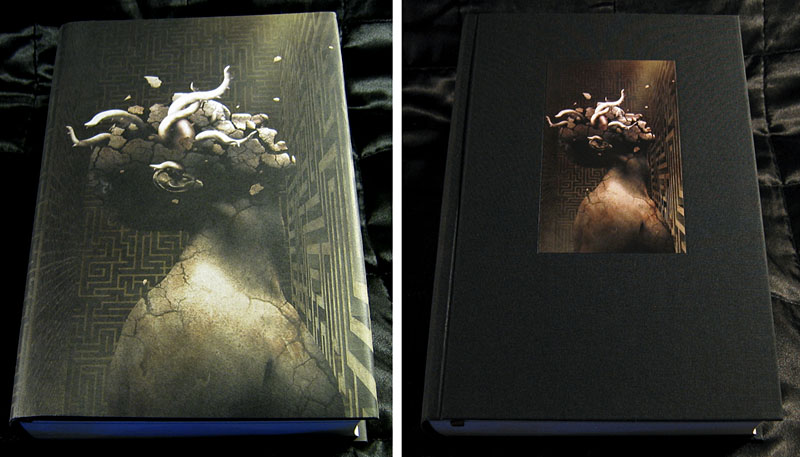
mountain01.jpg

Art by David Ho.

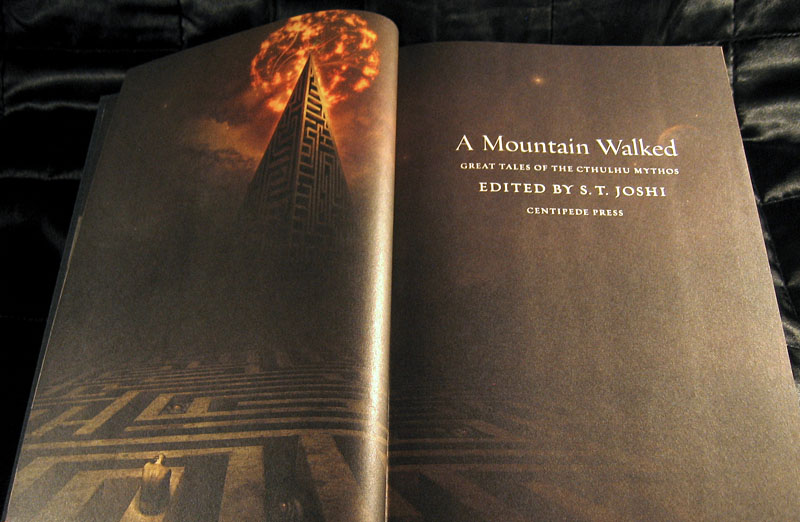
This may be a frustrating post for some since it concerns a limited edition anthology that sold out almost as soon as it was announced a year or so ago. Even though the book was published last year it’s taken a few months for my copies to arrive. A Mountain Walked is a collection of Cthulhu Mythos stories compiled by leading Lovecraft scholar ST Joshi, and published in the US by Centipede Press. Anyone familiar with Centipede’s more luxurious volumes will know that they don’t do things by halves, and this weighty tome is no exception: a large-format hardback (the signed edition is also cased), with heavy paper stock, colour printing, tinted sheets and a bulk that runs to almost 700 pages.

mountain02.jpg

Art by David Ho.

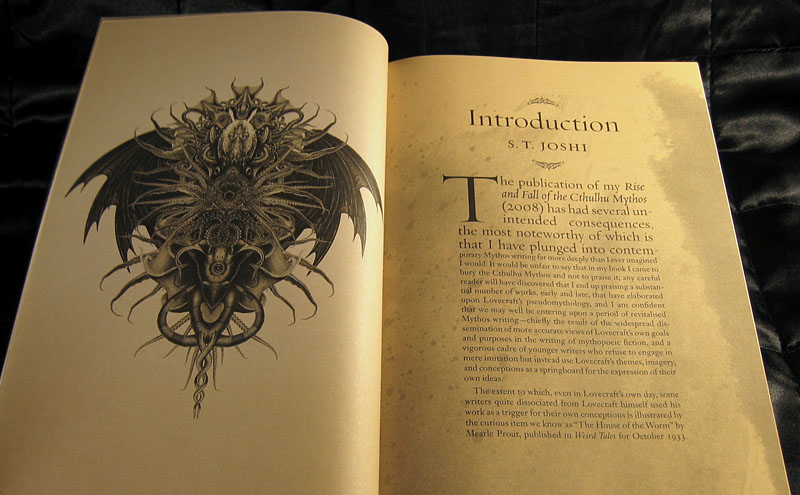
Many of the stories are reprints but there’s also new material from contributors including Thomas Ligotti, Neil Gaiman, Caitlín R. Kiernan, Laird Barron, the late Michael Shea (to whom the book is dedicated), Patrick McGrath, TED Klein, Gemma Files, Ramsey Campbell and many others. The artwork also ranges widely; I’d not seen anything by David Ho before but he’s very good, hence the samples shown here. But there’s also a variety of other work, even a Lovecraftian Peanuts comic strip by Julien Baznet. I was pleased that my Cthulhoid picture was placed with the introduction, it makes up for my never having responded to Mr Joshi when he wrote to me years ago asking if I’d be interested in contributing something to Necronomicon Press.

Since the book was so successful there’s been talk of doing a cheaper reprint. In the meantime, bloated Lovecraftian plutocrats (Yuggothcrats?) will find very expensive copies for sale on eBay. A few more page samples follow.

mountain03.jpg

Continue reading “A Mountain Walked”