Pierre-Yves Trémois’s Fleurs du Mal

tremois1.jpg

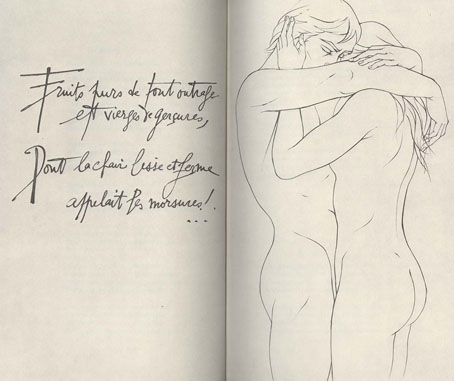
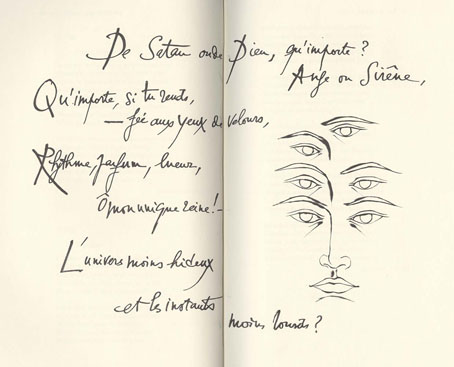
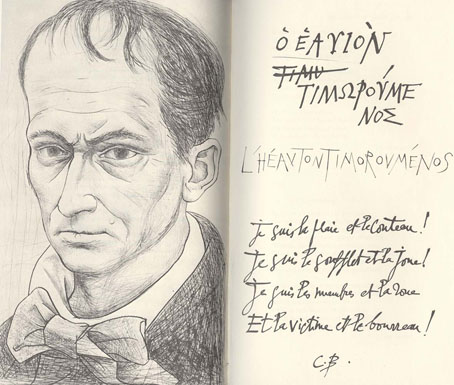
A couple of works by Pierre-Yves Trémois appeared in one of the very first posts here back in 2006 as part of the feature that began the long-running Recurrent Pose series. I like Tremois’s work a great deal so it’s good to find these pages from his 1971 edition of Baudelaire’s Les Fleurs du Mal. There were ten illustrations in all, some of them in the clear-line etching style familiar from his many prints. The Tremois edition is unusual in having some (all?) the poems written out by the artist. He’s also one of the few illustrators to do justice to Baudelaire’s scandalous lesbian verses by showing women who actually seem attracted to one another. Earlier illustrators—if they depicted the theme at all—were much more coy.

tremois2.jpg

tremois3.jpg

Continue reading “Pierre-Yves Trémois’s Fleurs du Mal”

Weekend links 223

paez.jpg

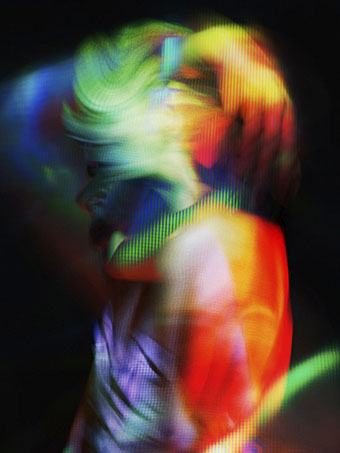
Step Up (2014) by Angelica Paez.

• Lots of attention this week for Kevin Martin whose latest album as The Bug, Angels And Devils, is out now on Ninja Tune. The previous Bug release, London Zoo (2008), was a fierce collection that stood apart from the Grime pack not only for its guest vocalists but also for being informed by Martin’s broad range of influences: industrial and extreme electronics, heavyweight dub, metal and avant-garde jazz. Martin was interviewed by The Quietus and FACT who also asked other musicians to choose their favourite Martin recordings. Elsewhere, The Wire has Swarm, a track not included on the album.

Related: Martin’s four superb compilation albums for Virgin Records have been deleted for years but are worth seeking out: Ambient 4: Isolationism, Macro Dub Infection Volume One & Volume Two, and Jazz Satellites Volume 1: Electrification (Virgin cancelled volume 2). From the NME, 1995: Kevin Martin’s Ten Commandments For All Time.

• “…it never becomes quite clear why two grown men would want to write to each other in the guise of a horse and a cat.” Henry Giardina reviews The Animals: Love Letters Between Christopher Isherwood and Don Bachardy, edited by Katherine Bucknell.

Shufflepoems: A Deck of Poetry by Lydia Swartz. “100 cards, four suits, one stanza per card. Shuffle for a new adventure every time.” The project needs a last-minute push to gain Kickstarter funding so if this sounds interesting go, go, go!

The Haxan Cloak’s favourite heavy metal albums. Metallica’s Master Of Puppets still gets my vote. More from The Quietus: David Stubbs on the Werner Herzog soundtracks of Popol Vuh.

• At Strange Flowers: Waking the witch, a remembrance of occult artist Rosaleen Norton and other characters from Sydney’s Kings Cross area, with news of a planned Norton documentary.

• A nine-note motif has for decades signalled “Asian” in popular music. Kat Chow looks at the history of a musical stereotype.

Joseph Conrad’s Heart of Darkness is the subject for entrants in the Folio Society’s latest illustration competition.

• Irradiating the Object: Rhys Williams talks to writer M. John Harrison.

Does the Sea Serpent Really Look Like an Art Nouveau Oar-fish?

Schrödinger’s cat caught on quantum film.

70s sci-fi art: a Tumblr.

Demodex Invasion (1995) by Techno Animal | Piranha feat. Toastie Taylor (2001) by Techno Animal | Poison Dart feat. Warrior Queen (2008) by The Bug

Weekend links 222

wicker.jpg

A self-portrait by Nadia Wicker from her Projectie series.

• “And boy, did that Rain Parade sleeve look cool with its picture of the insouciant band sitting in front of large hot-house (or glass palace), the sky behind them tinted a sickly shade of apocalypse pink…” Joe Banks on the Rain Parade’s finest moment, Explosions In The Glass Palace.

• “…there are pleasures to be had from books beyond being lightly entertained. There is the pleasure of being challenged; the pleasure of feeling one’s range and capacities expanding…” Rebecca Mead on the pleasure of reading to impress yourself.

• “If Gengoroh Tagame performed the acts he drew in his comics he’d probably be dead or in jail,” says Zac Bayly, interviewing Tagame for BUTT.

Crime does not fascinate James Joyce as it fascinates the rest of us—the suggestion of crime dismays him. He tells me that one of his handicaps in writing Work in Progress is that he has no interest in crime of any kind, and he feels that this book which deals with the night-life of humanity should have reference to that which is associated with the night-life of cities—crime. But he cannot get criminal action into the work. With his dislike of violence goes another dislike—the dislike of any sentimental relation. Violence in the physical life, sentimentality in the emotional life, are to him equally distressing. The sentimental part of Swift’s life repels him as much as the violence of some of his writing.

Padraic Colum attended Joyce’s 47th birthday party.

• I’m currently reading The Wanderer, “a weird document” by Timothy J. Jarvis, which is officially published this week.

The Changes, another remarkable children’s TV series from the 1970s, is out on DVD next week.

Sir Richard Bishop has made all 14 of his solo albums available as free downloads.

• “How long do CDs last? It depends, but definitely not forever,” says Laura Sydell.

• “Readers absorb less on e-readers than on paper, study finds

• Book designer Craig Mod wants to talk about margins.

• Mix of the week: a mix for The Quietus by Helm.

Ozu’s passageways

• The Rain Parade: No Easy Way Down (BBC TV, 1984) | No Easy Way Down (studio, 1984) | No Easy Way Down (Tokyo, 1984)

In Homage to Priapus

gay02.jpg

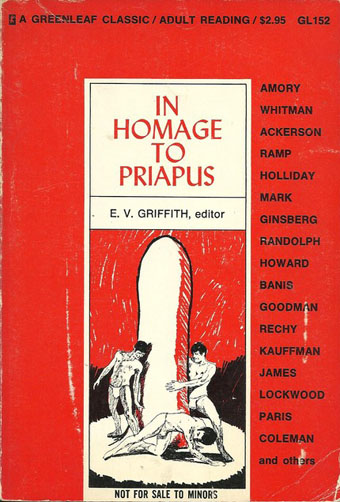
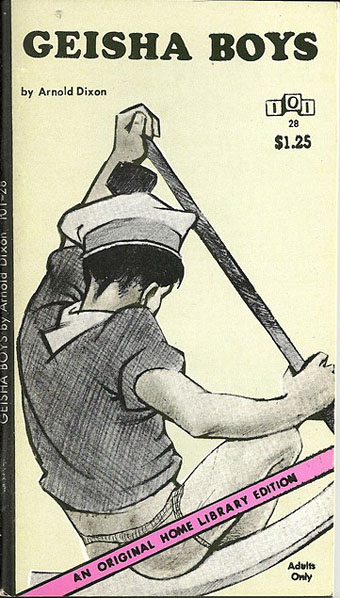
I’ve written a few things in the past about the covers of the gay pulps but decent source material—never mind the books themselves—has often been difficult to find. So it’s been good to stumble across the huge trove of covers at LibraryThing where diligent collectors have tagged and archived some very scarce publications. These are the books that flourished briefly in the US between the first flowering of gay liberation in the mid-60s to the advent of easily available hardcore porn in the mid-70s which must have made the text-only pleasures of a few years earlier seem very quaint and rather superfluous. Looking back today many of the covers of these books have a provocative silliness which is wholly absent from current titles for a gay audience. They may be crude and camp (sometimes simultaneously), and the design is often rudimentary, but they also give an insight into how gay men perceived themselves when they were starting to be more public about their desires.

Despite its cover, In Homage to Priapus looks like a fairly serious sampler of a kind you still see today. By contrast, many of the authors of the titles below were pseudonymous, some ridiculously so: “Billy Farout”. This time I’ve avoided the pulpy art styles featured at sites like Gay on the Range and Strange Sisters in favour of photo covers, odd titles or the more provocative illustrations, of which there are many examples. By coincidence, the latest post at Lambda Literary concerns the publishing of lost gay classics. One of the titles mentioned there, The Leather Boys by Gillian Freeman, can be found in the LibraryThing collection.

gay01.jpg

Don’t mention Jerry Lewis, please. I’ll think instead of this song by Heaven 17.

gay04.jpg

Whoever chose that typeface could also do with a thrashing.

Continue reading “In Homage to Priapus”

Genet art

fini1.jpg

Portrait of Jean Genet II (1950) by Leonor Fini.

Artworks depicting Genet or based on his work are more plentiful than I thought. These are some of the better examples. It’s good to know that the great Leonor Fini was one of the earliest portraitists; in addition to painting two pictures of Genet she also produced a series of erotic engravings based on his writings.

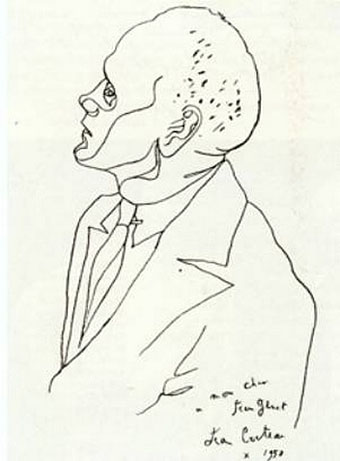
cocteau.jpg

Jean Genet (1952) by Jean Cocteau.

A portrait by Cocteau I hadn’t seen before.

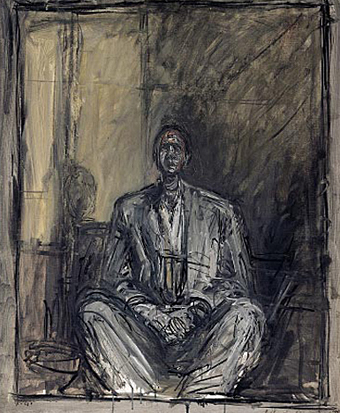
giacometti.jpg

Portrait of Jean Genet (1955) by Alberto Giacometti.

One of three portraits. Genet speaks favourably of Giacometti in Antoine Bourseiller’s film.

kiefer.jpg

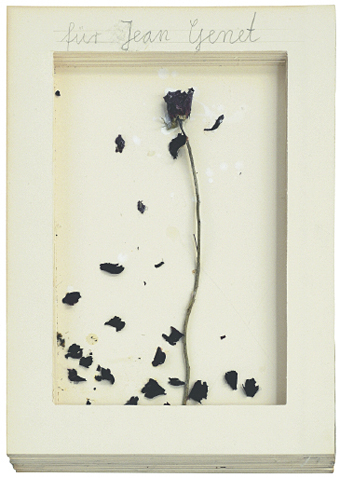
For Jean Genet (1969) by Anselm Kiefer.

Continue reading “Genet art”