Weekend links 190

lipton.jpg

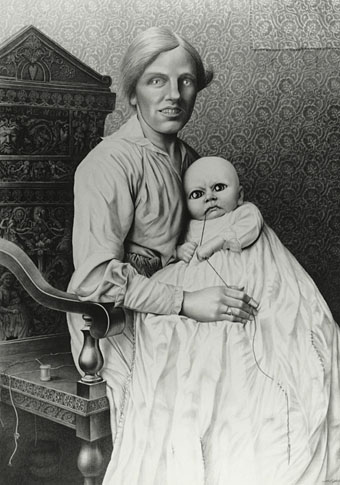
Seam Stress (1987) by Laurie LiptonThe Drawings of Laurie Lipton is out now from Last Gasp.

• The Quietus continues to be essential reading: John Doran talks to Richard H Kirk about Cabaret Voltaire | Sarah Angliss, musician and inventor of music machines, talks to Stuart Huggett | “…the most overt literary lodestar for The Art Of Falling Apart is John Rechy, trailblazing chronicler of the gay underbelly of hustlers and queens zig-zagging across America, and author of Numbers, the book from which Soft Cell’s song takes its name.” Matthew Lindsay looks back at Soft Cell’s second (and best) album.

• “The English have something of a tradition where they like to scare you out of your mind at Christmas, a kind of sobering up of the senses by forces that seem to be beyond them.” Colin Fleming on The Signal-Man by Charles Dickens. More ghosts: Lisa Kerrigan explains why she loves Nigel Kneale’s 1989 TV adaptation of The Woman in Black by Susan Hill, and the BFI resurrects The Mistletoe Bough (1904), “the oldest film version of a classic Christmas ghost story”.

• “…the story is filled with a whole mess of embarrassed and embarrassing euphemisms for (ahem) big dick—stiff language, so to speak, like ‘bludgeon,’ like ‘giant concupiscence’ and ‘ostentatious organ.'” Steven Cordova on A Visit to Priapus and Other Stories by Glenway Wescott.

• “Never produced, the screenplay for The Way to Santiago is credited to Orson Welles. A quick look at the text leaves no doubt it was the work of the Citizen Kane filmmaker when he was at the peak of his arrogant brilliance. The script begins: ‘My face fills the frame.'”

• If you’re at all interested in the current state of the British musical underground, the end-of-year lists at Ears For Eyes are worth your attention.

Pee-wee’s (Remastered) Christmas Adventure: An interview with Paul Reubens. Related: Grace Jones sings Little Drummer Boy for Pee-wee.

• “I’m like a drag queen at Halloween.” John Waters on his favourite time of year: Christmas.

• Mix of the week: Secret Thirteen Mix 099, an “(anti)Christmas mix” by Robert Curgenven.

• The British Library makes over a million free-to-use images available at Flickr Commons.

• Lost in Translation: Notes on adapting Ballard by Calum Marsh.

MR James at Pinterest.

Book Map by Dorothy.

Martin (1983) by Soft Cell | Ghost Talk (1985) by Cabaret Voltaire | For Laika (2011) by Spacedog
Gare d’Orsay to Musée d’Orsay

orsay01.jpg

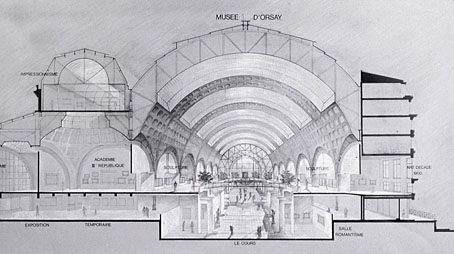
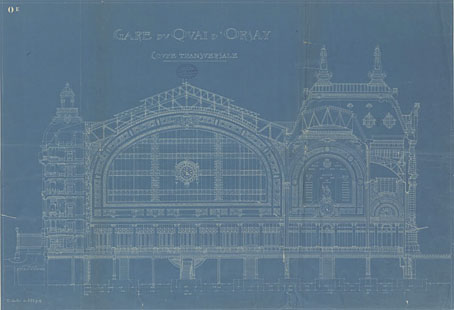
Gare d’Orsay, coupe transversale (1898). Plan de Victor Laloux.

The Google Art Project is currently featuring a slideshow history of the Musée d’Orsay in Paris, showing the museum’s evolution from the world’s first all-electric rail terminal to its current status as a major repository of 19th-century art. The Gare d’Orsay was built to bring visitors to the Exposition Universelle of 1900, an event regular readers should be familiar with by now, a connection which only compounds the interest I have in the place. (See this recent post and the links below it for more on the subject.)

orsay02.jpg

Projet A.C.T. Architecture (Renaud Bardon, Pierre Colboc, Jean-Paul Philippon). Coupe perspective générale, Octobre 1979.

orsay03.jpg

The Trial.

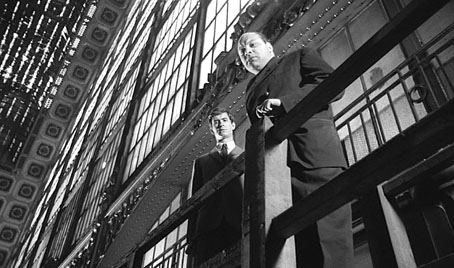
In addition to the building being one of the few structures remaining from the exposition, its dishevelled splendour provided Orson Welles with a fantastically evocative (and cheap!) set for his 1962 film of The Trial. It’s surprising to read that people objected to this, believing the spaces to be too large. The disjunction of space in Welles’ film is one of its great strengths, as is the confusion of architectural styles and detail. Much of this was improvisation imposed by necessity—money not being available for the sets that were planned—but it makes the film all the more labyrinthine and disorienting.

Continue reading “Gare d’Orsay to Musée d’Orsay”

Weekend links 189

wilson.jpg

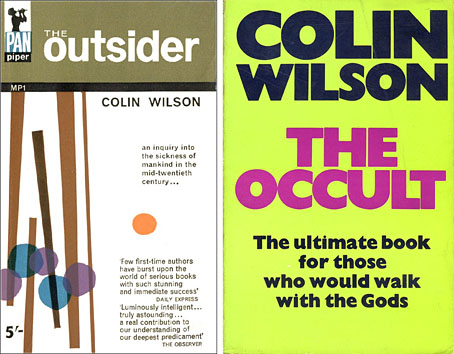
The Outsider (1956), 1963 edition; The Occult (1971), 1973 edition.

The cover of the 1973 UK paperback of Colin Wilson‘s mammoth overview of occultism can still be offered as a pinnacle of hyperbole. The book itself is a very serious and informative study but its success set Wilson on a path as a writer about the paranormal where he’d previously been concerned with literature, philosophy and psychology. For many critics this finished his already shaky reputation as a serious thinker. He continued to write about philosophy and literature in subsequent books but dubious speculations about Atlantis are always more commercially attractive than studies of Nietzsche, hence the proliferation of lost continents in the later part of a bibliography which the Wilson website lists at 114 titles. Wilson was a maverick intellectual whose curiosity ignored many of the boundaries that restrained his metropolitan contemporaries; he was also an autodidact of a type that seems to irritate the university-educated. Mentions of his name in British newspapers were frequently couched in sneering or dismissive terms. His current reputation can be measured by the lack of attention the news of his death has prompted in the UK at the time of writing. (That said, dying on the same day as Nelson Mandela was unfortunate timing.)

Savoy Books published an edition of Wilson’s crime novel, The Killer, in 2002. I designed that volume, rather badly, I think. In 2004 Robert Meadley wrote a book-length reaction to Wilson’s autobiography, Dreaming to Some Purpose, which can be downloaded for free from Savoy. In it Meadley mounts a robust defence of Wilson against the broadsheet termagants. Elsewhere: the only newspaper obituary so far is at The Times (subscription required); Colin Wilson on Desert Island Discs in 1978; Gary Lachman interviewing Wilson for Fortean Times in 2004; musician Anthony Reynolds discussing his collaboration with Wilson.

• “Art, music and a mind-blowing voyage of discovery”: Richard Neville on the late Martin Sharp. At Design Observer Rick Poynor looks back at Sharp’s book and magazine illustrations of the 1960s. Of particular note is Sharp’s contribution to the “Magic Theatre” issue of Oz magazine, a unique combination of collaged visuals and text which Alan Moore often refers to as a favourite work. (See issue 12 of Moore’s Promethea, “The Magic Theatre of the Mind“.)

• “The naked woman in art isn’t unusual, but we have trouble viewing the male body as a sexual, or artistic, object,” says James Polchin.

But how can anyone be bored when there’s always death to think about? Every day. Every hour. Don’t you? All the rest is just evading or glossing the real subject of our lives. Beckett, again, the maestro of death: Never but the one matter. The dead and gone. The dying and the going. From the word go. I too shall cease and be as when I was not yet, only all over instead of in store.

Jenny Diski on death and dying.

• A teaser trailer for The Dreamlands, a film by Huan Vu (Die Farbe) based on HP Lovecraft’s Dream Cycle.

• “On Watching Wages of Fear with my 11-Year-Old Daughter” by Debra Morris.

Abram Games’ “bat wings” BBC logo is 60 years old. See it in action here.

• At Strange Flowers: Romaine Brooks‘ portraits of her famous friends.

• At Front Free Endpaper: Mervyn Peake illustrates Treasure Island.

The Great God Pan (plus satyrs and fauns) at Pinterest.

Dan Wilson on “Electric Music” on the Victorian stage.

• Mix of the week: Fact Mix 414 by Julianna Barwick.

• The BFI chooses 10 great British rural horror films.

Dunwich – The search for Britain’s Atlantis.

The Grand Canyon filled with fog.

• The Bells of Dunwich (1975) by Stone Angel | O.O.B.E. (1992) by The Orb (feat. Colin Wilson) | Why We Make It Difficult On Ourselves (2010) by Anthony Reynolds & Colin Wilson

Jarman (all this maddening beauty)

jarman1.jpg

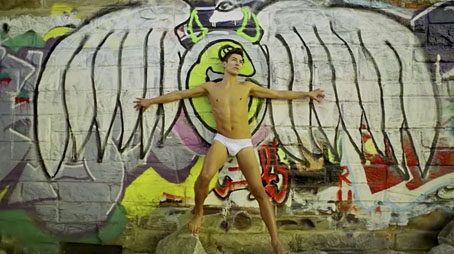
February 2014 will see the 20th anniversary of the death of Derek Jarman. Between then and now I expect we’ll see some retrospectives, although we’ve already had an excellent cinematic one, Isaac Julien and Tilda Swinton’s memorial/documentary Derek (2008). I’d be pleased to see more of Jarman’s films given a decent release on disc: In the Shadow of the Sun has never been available on DVD, and Sebastiane has yet to be released in an uncensored print. When the BFI is releasing Peter de Rome’s gay porn uncut on DVD there’s no longer any excuse for this.

jarman2.jpg

Stephen Benedicto filmed by Ben Carver.

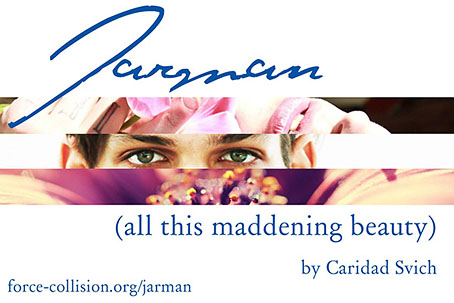
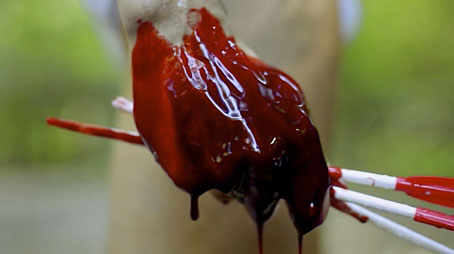
Jarman (all this maddening beauty) is a multimedia solo performance work by playwright Caridad Svich currently in production, with plans for performance in the US later next year. Most of us are unlikely to see this but there is a short promo/trailer by Ben Carver featuring some Jarmanesque imagery, albeit a lot more high-def than Derek was usually allowed. I’d have been tempted to use slowed-down Super-8 if you can still find the cameras or film stock. Production company force/collision has more information about the project in pdf form. Via Towleroad.

jarman3.jpg

jarman4.jpg

Previously on { feuilleton }
Sebastiane by Derek Jarman
A Journey to Avebury by Derek Jarman
Derek Jarman’s music videos
Derek Jarman’s Neutron
Mister Jarman, Mister Moore and Doctor Dee
The Tempest illustrated
In the Shadow of the Sun by Derek Jarman
Derek Jarman at the Serpentine
The Angelic Conversation
The life and work of Derek Jarman

Martin Sharp, 1942–2013

sharp1.jpg

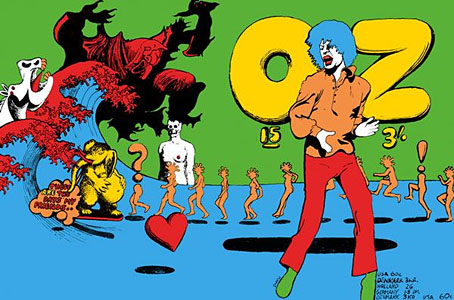
Oz magazine no. 15, October 1968.

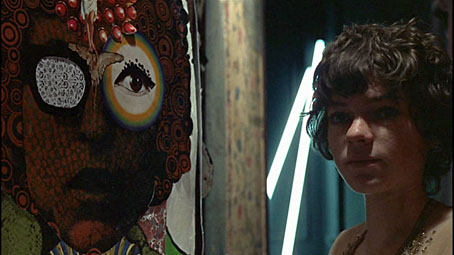
The psychedelic art of Australian artist Martin Sharp has featured here on several occasions. Unlike his British and American contemporaries who maintained a single graphic style, Sharp was a versatile artist whose work could range from loose, often cartoony drawing and painting to very detailed collage designs; he was also as happy as any other artist of the period to plunder art history, as the cover for issue 15 of Oz demonstrates. The Mick Jagger figure from that cover was later reworked as a poster for “Turner’s Purple Orchestra”, one of a number of pieces of Sharp art which can be glimpsed throughout Donald Cammell & Nicolas Roeg’s Performance (1970).

sharp7.jpg

Performance (1970): Michele Breton and a Martin Sharp collage.

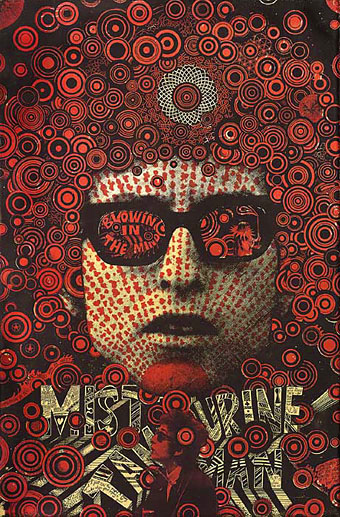
Sharp’s involvement with Oz magazine, and the creation of a handful of endlessly reproduced designs—the Bob Dylan Mr Tambourine Man poster, Jimi Hendrix in a Jackson Pollock explosion, the sleeve art for Cream’s Disraeli Gears—makes his art some of the most visible of the period. People may not necessarily know the name but they’ll recognise the work.

In 2009 Sharp’s Oz colleague Germaine Greer wrote a warm appraisal of the artist and his work. A few more examples follow. There’s a great selection of posters and other art and design here.

The GuardianMartin Sharp, Australian artist who came to symbolise the ’60s | Martin Sharp in pictures

sharp2.jpg

Mister Tambourine Man (1966).

Continue reading “Martin Sharp, 1942–2013”