L’Araignéléphant

kamler.jpg

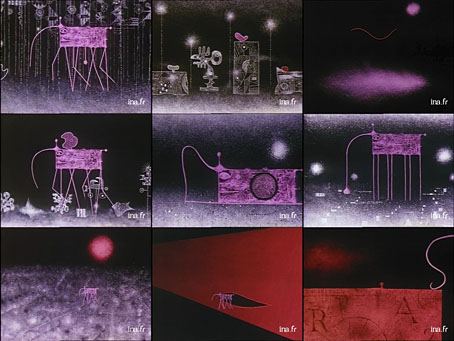
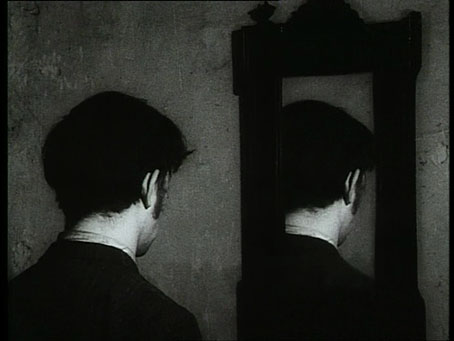
L’Araignéléphant (1967) is another of the strange animations made by Piotr Kamler in the 1960s and 1970s, this one being a 9-minute piece concerning the travails of “the spiderelephant”. As with Kamler’s Le labyrinthe, the music is by the French electroacoustic composer Bernard Parmegiani whose death was announced this week, hence the link. Parmegiani had a varied career which included scores for a number of other films (among them a Jan Lenica short, A, which I’ve not been able to find), and more commercial music than people at his serious end of the composition scale usually produce.

Ubuweb has a selection of Parmegiani’s longer compositions, one of which, Pop’eclectic (1969–1973), chops up pop and classical recordings (spot the Small Faces!) in a manner which would become commonplace a decade or so later with the advent of sampling. The Kamler films, meanwhile, are all available on a single DVD where the narration for L’Araignéléphant—which doesn’t explain very much—is subtitled.

Previously on { feuilleton }
Psyché Rock
Le labyrinthe and Coeur de secours
Chronopolis by Piotr Kamler

Sirene by Raoul Servais

sirene.jpg

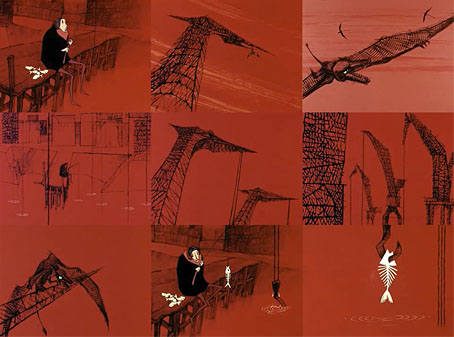
Sirene (1968), a short animation by Belgian filmmaker Raoul Servais, isn’t as sinister as his nightmarish Harpya (1979), despite the similar titles. But Sirene does have a collection of anthropomorphic harbour cranes, and a flock of inexplicable pterodactyls like something out of a Gerald Scarfe cartoon. Watch it here.

Previously on { feuilleton }
Harpya by Raoul Servais
Taxandria, or Raoul Servais meets Paul Delvaux

Two sides of Liška

svankmajer1.jpg

Et Cetera (1966).

A little more on the music of Czech soundtrack composer Zdeněk Liška (1922–1983). Liška seems to stand in relation to Czech cinema as Ennio Morricone does to that of the cinema of Italy, being similarly prolific, highly regarded, and idiosyncratic to a degree that makes his work immediately recognisable. Both men could also draw on their experience outside the film world to fuel their scores: Morricone for many years was a performer with Gruppo di Improvvisazione di Nuova Consonanza, a group of Italian free improvisers, while Liška’s work with electro-acoustic composition and early electronic music explains the frequent eruptions in his lush orchestrations of tape effects, exaggerated echoes and other forms of artificial processing. This kind of cross-pollination doesn’t seem so surprising today but it’s striking and surprising in soundtracks from the 1960s.

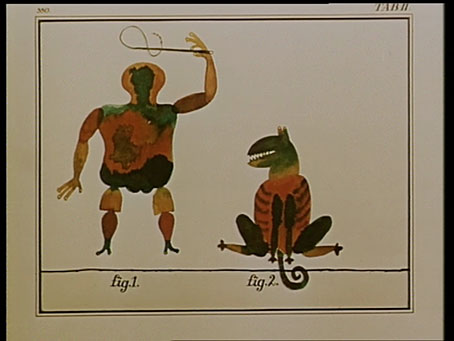
Good examples of the opposite poles of Liška can be found in two of Jan Švankmajer’s early shorts. Et Cetera (1966) is one of the director’s most formal exercises, a series of crude drawings (or cut-outs) coming to life to perform a repetitive routine before being interrupted by the words “ET CETERA”. The film plays with the audience by beginning with a title card that states “The End”, and the piece as a whole could easily be screened as an endless loop. Liška’s score is a combination of fairly minimal orchestration with a variety of electro-acoustic effects which are closer to Pierre Henry or İlhan Mimaroğlu than other Eastern European composers.

svankmajer2.jpg

Shade of Magritte: The Flat (1968).

At the opposite end of the scale there’s the score for The Flat (1968), a typical piece of Švankmajer Surrealism with an unfortunate individual locked in a room where everything, from walls to furniture, contradicts his expectations. René Magritte casts a long shadow over this one, with director Juraj Herz making a brief appearance as a bowler-hatted man carrying a chicken. Liška’s score has a driving and reverberent choral rhythm that always makes me think of Krzysztof Komeda’s similar music for Roman Polanski’s Dance of the Vampires (1967). For such a short film it’s a remarkable piece of orchestration. The Brothers Quay are great Liška enthusiasts, and used some of the score from The Flat (and two other Liška pieces) for their 1984 film The Cabinet of Jan Švankmajer, an animated portrait of the director.

Previously on { feuilleton }
Liška’s Golem
The Cremator by Juraj Herz

Stille Nacht V: Dog Door

dogdoor.jpg

A short animation by the Brothers Quay which I evidently missed last year when I was searching for their uncollected works. As far as I’m aware this is the most recent addition to the Stille Nacht series, all of which were made to serve some function external to the films themselves: so Stille Nacht I was an MTV ident, II was a music video for His Name Is Alive, III was an extended trailer/preview for Institute Benjamenta, and IV was another music video for His Name Is Alive.

Number V in the series is another music video, this time for Sparklehorse’s Dog Door, a song from the group’s 2001 album It’s A Wonderful Life. Tom Waits is the guest vocalist providing his usual enigmatic wailing. The video was one of several commissioned to illustrate the album’s songs but the Quays still manage to make something that’s very much their own. As with the His Name Is Alive films there’s an atmosphere of polymorphous perversity via the two characters of a masturbating dog (or is it a fox?) and a recumbent doll, also masturbating. A slogan at the end states in French “You’re never too young for debauchery”. (In the earlier videos there was another doll and a toy rabbit.) Copies on YouTube are rough but for the moment it’s the only way you’ll see this one.

Elsewhere on { feuilleton }
The Quay Brothers archive

Tadanori Yokoo animations

yokoo13.jpg

Kiss Kiss Kiss (1964).

A follow-up to yesterday’s post, and three short films by the artist from the 1960s. As animations go these are fairly crude but they do have the benefit of showing Yokoo’s sense of humour, something which isn’t necessarily so obvious in his poster art. Kiss Kiss Kiss is a short sequence of juxtaposed couples from the same American romance comics that Roy Lichtenstein spent much of his time plundering. Kachi Kachi Yama, the longest of the three, opens with the unlikely claim that it features Alain Delon, Elizabeth Taylor, Richard Burton, Marilyn Monroe and The Beatles, then makes good by showing drawings of all of these in a witty melodrama which is like Yokoo’s poster art brought to life. Tokuten Eizou Anthology No. 1 is a lot less explicable being a display of the artist’s drawings together with the occasional photograph. All three films can be seen together at Ubuweb.

yokoo14.jpg

Kachi Kachi Yama (1965).

yokoo15.jpg

Tokuten Eizou Anthology No. 1 (1964).

Previously on { feuilleton }
Tadanori Yokoo album covers