Phantastische Edelmann

edelmann1.jpg

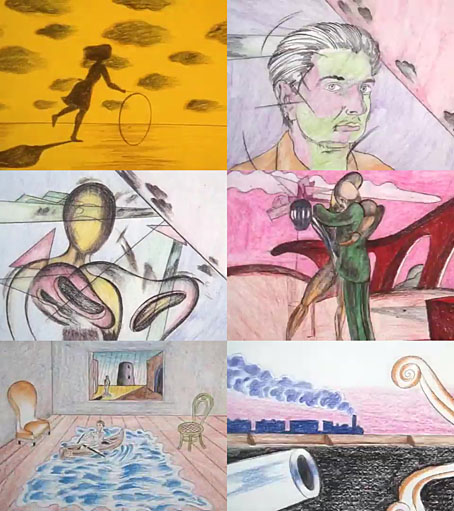
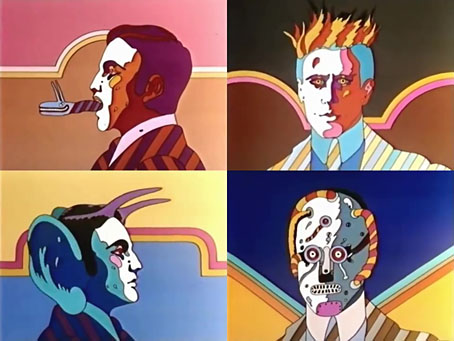
There’s more to Heinz Edelmann than the designs he created for Yellow Submarine, as Edelmann himself often used to remind people. And there’s more to his work for animated film than the Beatles’ exploits. Der Phantastische Film is a short introductory sequence for a long-running German TV series which has been doing the rounds for a number of years. Brief it may be but a couple of the monstrous details resemble those that Edelmann put into his covers for Tolkien’s books.

edelmann2.jpg

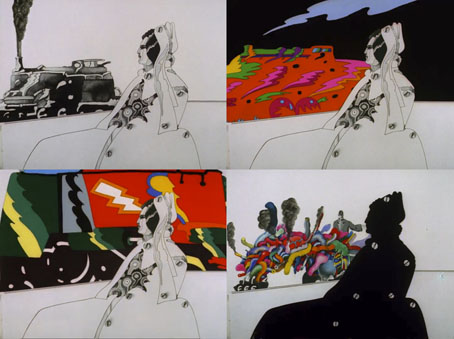
Edelmann had plans to capitalise on the success of Yellow Submarine with more films like this when he set up his own animation company, Trickfilm, but the only other example is The Transformer, a short about steam trains which he designed. (The direction was by Charlie Jenkins, with animation by Alison De Vere and Denis Rich.) Given the persistent popularity of Yellow Submarine I keep hoping someone might revive its style for something new. The first animated feature directed by Marcell Jankovics, Johnny Corncob, comes close but lacks the trippy Surrealism of the Beatles film. The Japanese can certainly do trippy Surrealism (see Mind Game or Paprika) but I’ve yet to see anything that approaches the Edelmann style. Johnny Corncob, incidentally, is now available on Region B blu-ray from Eureka. It’s worth seeing but the main film in the set, Son of the White Mare, is Jankovics’s masterpiece.

edelmann3.jpg

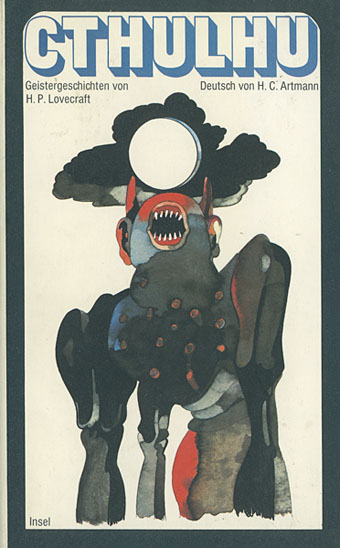
On a slightly related note, until today I hadn’t looked at ISFDB.org for Heinz Edelmann’s genre credits so I hadn’t seen this Lovecraft cover before. Hard to tell if this creature is supposed to be Cthulhu or Wilbur Whateley’s brother when The Dunwich Horror is one of the stories in the collection. Either way, it belongs in the Sea of Monsters. Insel Verlag published this one in 1968, a year before launching their special imprint devoted to fantastic literature, Bibliothek des Hauses Usher.

Previously on { feuilleton }
Return to Pepperland
The groovy look
The Sea of Monsters
Yellow Submarine comic books
Heinz Edelmann

Weekend links 674

moon.jpg

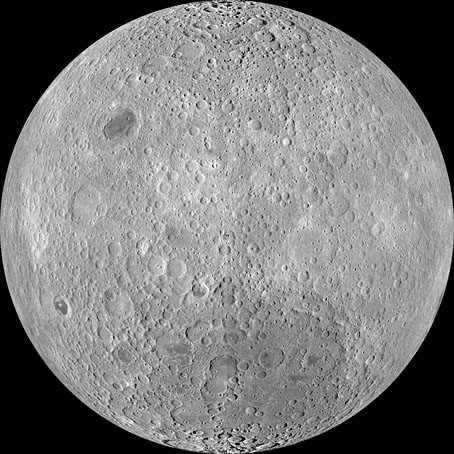
The Far Side of the Moon, as photographed by NASA’s Lunar Reconnaissance Orbiter.

• “It goes against centuries of traditional belief to accept that the moon is barren, that it is indifferent, that it is innocent of any role in monthly spikes in the crime rate or in the cycles of menstrual unreason. When telescopic observation had found nothing on the near side (Roger Boscovich had established by 1753 that it lacks even an atmosphere), the far side still remained a site for the projection of fantasies of a different, neighbouring world.” Justin EH Smith working his way towards a history of the dark side of the moon.

• “It shocks me that movies still lean in so hard to all these outmoded gay narrative tropes: coming out, coming of age; very identity-oriented representations of gay characters. It’s much easier to represent a gay boy who’s repressed in high school and comes out and makes friends. It’s very mainstream, and kind of played out.” Bruce LaBruce on cinematic trends in relation to his new film, a gay-porn take on Pasolini’s Teorema.

• At Cartoon Brew: Pavel Sannikau explains how he developed his own techniques of digital animation in order to create the ever-expanding Floor796.

• There’s always more Poe: Mysterium, Incubus et Terror, Poe-inspired music by a variety of artists, plus illustrations by John D. Chadwick.

• At Smithsonian Magazine: The results of a themed contest in the Close-Up Photographer of the Year Challenge.

• Mixes of the week: In Praise of the Saddest Chord at Ambientblog, and The Funky Eno Pts 2 & 3 by DJ Food.

• Steven Heller talks to Hungarian artist István Orosz about his Escher-like drawings.

• At Unquiet Things: Caitlin McCormack’s ghostly chains of knotted memory.

• At Spoon & Tamago: Intricate and organic sculptures by ceramicist Eriko Inazaki.

• New music: Illumina by Call Super with Julia Holter.

Dark Side Of The Mushroom (1967) by The Chocolate Watchband | Dark Side Of The Star (1984) by Haruomi Hosono | On The Dark Side Of The Sun (live) (2003) by Helios Creed

California Images: Hi-fi for the Eyes

california1.jpg

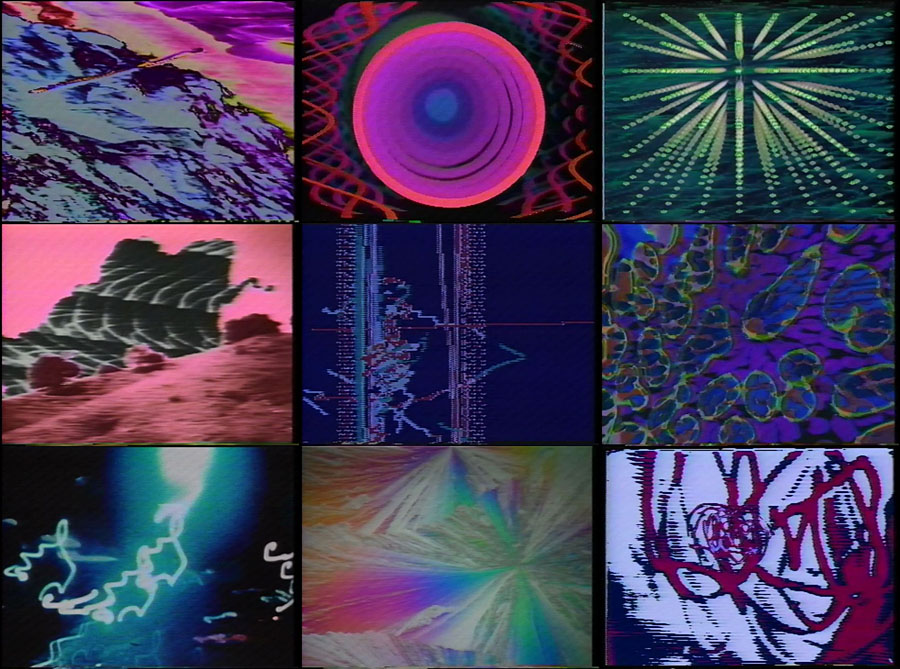
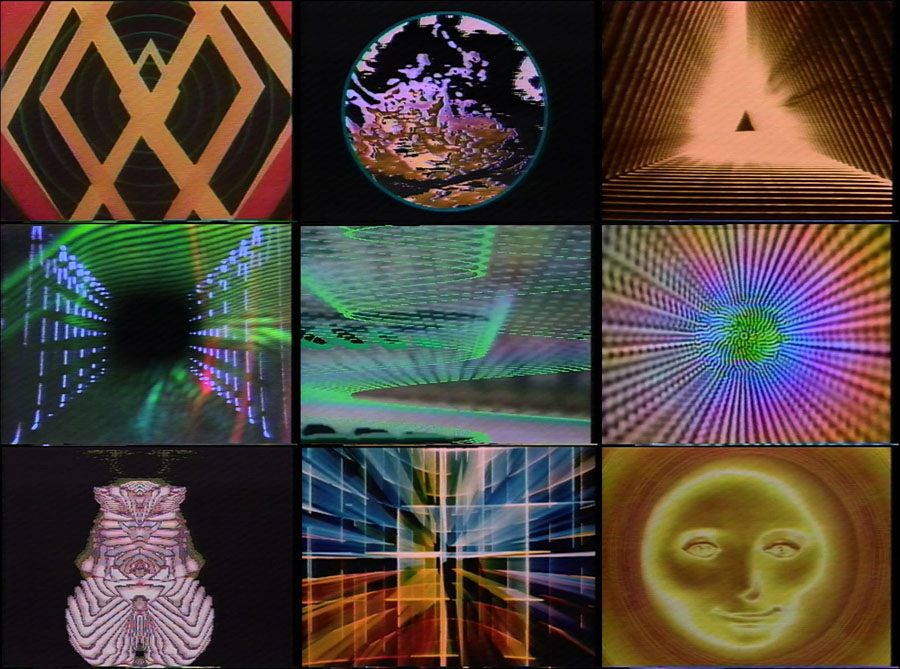
More psychedelia-adjacent visuals. California Images (1985) is another of those video collections that pairs computer graphics and animation with music that’s mostly electronic, 54 minutes of cathode exotica aimed at armchair psychonauts with video-recorders. This one was produced by Pilot Video, and is subtitled “Hi-fi for the Eyes”, the term “hi-fi” doing a lot of work there for an NTSC video cassette. The quality, artistic as well as technical, may not be first-rate but I’m still pleased to see videos like this being resurrected. As I’ve said before, nobody would want to reissue these compilations today, especially the present example whose contents don’t always work well together.

california2.jpg

All the pieces are presented as separate shorts rather than running into each other, with most of them being very simple computer animation or the products of video feedback plus video synthesis. On the visual side, many of them seem to have had the slit-scan lightshow from 2001: A Space Odyssey as their ideal, while their soundtracks are mostly New-Age synth burblings which range from the okay to the mediocre. Between these clips are a couple of other items which don’t suit the hippy-trippy mood at all, especially the one titled Speed, several minutes of nocturnal driving footage accompanied by harsh industrial rhythms more suited to the TV Wipeout collection released by Cabaret Voltaire in 1984. Oddest of all is the inclusion of Oskar Fischinger’s Allegretto (1936), a classic of abstract animation whose meticulous artistry puts to shame many of the other offerings. The collection ends with Ed Emshwiller’s Sunstone (1979), one of the earliest attempts to push computer animation beyond pattern-making. Emshwiller’s luminous faces look towards the digital future. I remain partial to analogue video effects, however, and Electric Light Voyage, aka Ascent 1, is still my favourite of all the TV lightshows I’ve seen to date. The search for more like this one will continue.

Elsewhere on { feuilleton }
The abstract cinema archive

Previously on { feuilleton }
Dazzle
The Gate to the Mind’s Eye

The Secret Adventures of Tom Thumb

tom1.jpg

The dark fairy tale turns up often enough in animated film to be a genre of its own, a kind of mutant sibling to the more traditional fare which has been a staple of the medium as far back as Lotte Reiniger. The darkness is especially pronounced in The Secret Adventures of Tom Thumb, an hour-long film in which the tale of the tiny boy is combined with that of Jack the Giant-killer. In this version Tom is the product of an accident in an insemination plant, to which he’s returned after being kidnapped by sinister adults, and from which he escapes to join a community of miniature scavengers.

tom2.jpg

Dave Borthwick’s film owes nothing to the Tim Burton school of Goth fantasy. This is a queasily British take on the Tom Thumb story: kitchen-sink grotesquerie strained through Terry Gilliam’s Brazil and Jan Švankmajer’s savagery; biological experiments, toxic waste, sweating faces, spiders and insects everywhere. There must be more animated houseflies in this film than in any other before or since. The human characters are pixilated throughout, a technique which adds to their lumbering clumsiness while allowing them to blend with the animated figures and other details.

tom3.jpg

In the previous post I talked about Channel 4’s years of support for underground and experimental cinema. The channel was also a great supporter of animation in its first decade, helping fund films by Jan Svankmajer, the Quay Brothers and many others, as well as regularly screening the kind of child-unfriendly animation which is seldom shown on TV. Having not seen Dave Borthwick’s film since the 1990s I thought this might be another Channel 4 production but it was actually co-funded by the BBC, together with La Sept in France. The BBC’s involvement is surprising considering how weird and unpleasant the film is. The corporation had apparently commissioned a short for their Christmas schedule but turned down the results as unsuitable for the season. (The Christmas connection may explain the detail of a crucified Santa hanging on a wall.) They did, however, agree to help Borthwick and co. make this longer version of the story, a commendable decision that I doubt would pass today. Dave Borthwick died in October last year. His fellow animators regard The Secret Adventures of Tom Thumb as his best film. Watch it here.

Previously on { feuilleton }
The Magic Art of Jan Švankmajer
Jiří Barta’s Labyrinth of Darkness
The Web by Joan Ashworth
Jiří Barta’s Pied Piper

Into the Midnight Underground

midnight01.jpg

Browsing Vimeo recently I found a film by Anna Thew, Cling Film, which I remembered seeing years ago on Midnight Underground, a TV series devoted to avant-garde cinema. The series was broadcast by Channel 4 (UK) for eight weeks in 1993, with each episode being screened shortly after midnight. The presenter was the always reliable Benjamin Woolley, sitting before a backdrop resembling one of Verner Panton’s psychedelic environments from where he introduced the cinematic offerings, an eclectic blend of avant-garde and experimental films, unusual dramas plus a couple of animations. Episodes ran for around an hour, with each installment following a different theme. The films were a mix of the old and the new: “classics” (for want of a better term) of underground cinema set alongside more recent works. This was very much a television equivalent of the screenings of avant-garde cinema which Film and Video Umbrella had been touring around Britain’s arthouses since the mid-1980s; one of the founders of FVU, Michael O’Pray, is thanked in the series credits. Midnight Underground was so tailored to my interests at the time it was easy to feel like this was being screened for my benefit alone. I taped everything as it was broadcast but I never got round to digitising all the episodes, so that many of the films shown there, Cling Film included, I haven’t seen for a long time.

midnight02.jpg

Benjamin Woolley.

The discovery of Anna Thew’s film set me wondering whether it would be possible to replicate the contents of Midnight Underground via links to various video sites. Since this post exists, the answer is obviously yes, or almost… Of the 44 films shown in the series only 3 are currently unavailable, with one more being limited to an extract and another as pay-to-view. This was a much better result than I expected, especially for works with such a limited appeal. The majority of the films shown in the series were being screened on British TV for the first time, also the last time for most of them. In 1993 Channel 4 was still maintaining its original brief, offering a genuine alternative to the programming on the other three terrestrial channels. As I’ve often complained here, this didn’t last; the underground remained underground. Woolley’s series was a brief taste of a televisual world where the concept of diversity could apply to form and content as well as identity. It’s a world the corporate channels will never show you, one you have to find for yourself.

* * *

1: Strange Spirits
The opening episode shows why I felt they were broadcasting this for me alone. Derek Jarman’s grainy film of a Throbbing Gristle performance is probably the first (and only?) time the group appeared on British TV. This was the first surprise. The second one was Kenneth Anger’s film being shown with its Janácek score. I’d seen this at an FVU screening a couple of years before with its ELO soundtrack, the so-called “Eldorado Edition”, which Anger later discarded. As for Daina Krumins’ weird and creepy religiose short, I expected this one to be unavailable but the director now has several of her films on YouTube. Don’t miss her even-weirder animated slime moulds, Babobilicons. The angel in Maggie Jailler’s film is artist (and Jarman/TG associate) Cerith Wyn Evans.

midnight03.jpg

TG: Psychic Rally in Heaven (Derek Jarman, 1981)
The Divine Miracle (Daina Krumins, 1973)
Inauguration of the Pleasure Dome (Kenneth Anger, 1954)
L’ange frénétique (Maggie Jailler, 1985)


2: Music for the Eye and Ear
Bruce Conner’s films are continually elusive on the internet, especially those made to accompany music by Devo and Eno & Byrne. The version of Mongoloid linked here differs slightly from the original but it’s essentially the same film. Versailles II is taped from the Midnight Underground broadcast, and includes Benjamin Woolley’s introduction.

midnight04.jpg

Eaux d’artifice (Kenneth Anger, 1953)
Mongoloid (Bruce Conner, 1978)
Versailles II (Chris Garratt, 1976)
Stille Nacht II: Are We Still Married? (Quay Brothers, 1992)
All My Life (Bruce Baillie, 1966)
Scorpio Rising (Kenneth Anger, 1964)


3: New Sexualities
Stephen Dwoskin’s film is the one that shows a close-up of a woman’s face during the act of masturbation. This is paralleled later in the series by Antony Balch’s masturbatory self-portrait in Towers Open Fire. Cling Film is all about safe sex, and was broadcast in a slightly amended form to avoid being too explicit. The version on Vimeo is uncensored.

midnight05.jpg

Kiss (Chris Newby, 1992) (no video)
Kustom Kar Kommandos (Kenneth Anger, 1965)
Cling Film (Anna Thew, 1993)
Stain (Simon Pummell, 1992)
Asparagus (Suzan Pitt, 1979)
6/64: Mama und Papa (Materialaktion Otto Mühl) (Kurt Kren, 1964)
Moment (Stephen Dwoskin, 1969)


4: London Suite
Sundial and Mile End Purgatorio have both appeared here before as a result of my seeing them on Midnight Underground.

midnight06.jpg

Latifah and Himli’s Nomadic Uncle (Alnoor Dewshi, 1992)
Sundial (William Raban, 1993)
The London Story (Sally Potter, 1987) (pay-to-view)
Mile End Purgatorio (Guy Sherwin, 1991)
London Suite (Vivienne Dick, 1989) (no video)


Continue reading “Into the Midnight Underground”