Weekend links 360

sasaki.jpg

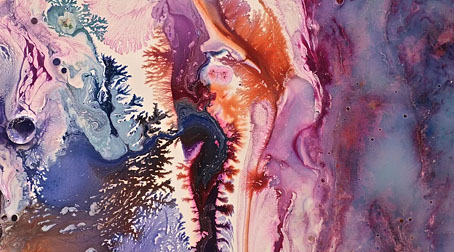
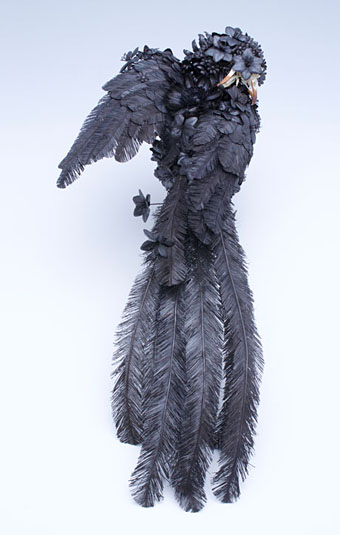
Threshold (2008) by Roku Sasaki.

• A previously unseen interview with Angela Carter from 1979 in which she talks to David Pringle about her evolution as a writer, literary influences and genre fiction.

• Among the highlights in the latest edition of Wormwood there’s Doug Anderson on Panacea by Robert Aickman, a “vast unpublished philosophical work”.

• The London Review Bookshop podcast: Marina Warner and Chloe Aridjis discuss Leonora Carrington.

The prose works, conversely, read like surrealist poetry. They were written according to a compositional method Roussel called le procédé (the procedure), in which a complicated system of puns rather than traditional narrative logic determines the progression of the story. In Locus Solus, the mad scientist Martial Canterel takes his colleagues on a tour of his country estate—“the lonely place” of the title—to show them the bizarre inventions generated by Roussel’s procédé. These include a device that constructs a mosaic made out of human teeth; a water-filled diamond in which a dancer, a hairless cat, and the head of Danton are suspended; and a series of corpses Cantarel has brought back to life with the fluid “ressurectine,” which compels them to act out the most important event of their former lives, to the scientists’ astonishment.

Ryan Ruby on Raymond Roussel, The Accidental Avant-Gardist

• The latest manifestation of paranormal electronica by The Electric Pentacle is entitled Black Ectoplasm.

Sergey Bessmertny‘s account of working as a camera technician on Andrei Tarkovsky’s Stalker.

• City Of Fallen Angels: The Bug vs. Earth. In conversation with Kevin Martin and Dylan Carlson.

• Sex and art by the Grand Canal: Judith Mackrell on Peggy Guggenheim in Venice.

• A Guide Through the Darkened Passages of Dungeon Synth.

• Mix of the week: XLR8R Podcast 489 by Samuel Rohrer.

• The late Mika Vainio/Panasonic live in 1996.

Xan Brooks on Cary Grant’s 100 acid trips.

Resurrection (1968) by Steppenwolf | Resurrection (1975) by Master Wilburn Burchette | Resurrection (1987) by Demons Of Negativity

The Song of the Dead by Carrie Patel

patel1.jpg

Presenting my latest cover for Angry Robot books, and the third cover I’ve done for Carrie Patel. The Song of the Dead is a sequel to Carrie’s two previous novels in the Recoletta series, The Buried Life and Cities and Thrones. For the new volume I maintained continuity by keeping the architectural frame while changing some of the details; the use of green after doing the previous covers in blue and red means that this is now the second series I’ve done for Angry Robot (KW Jeter’s being the first) using a red/green/blue colour scheme. This wasn’t intentional but was the result of choosing colours that differ from each other as much as possible. (Or almost as much: red, blue and yellow are primary colours, green is a secondary colour.) The requirement for the pictorial content was to show a city of disparate architecture but with less of an antique style than that seen on The Buried Life. Almost all the buildings in my palimpsest creation are taken from renderings of unbuilt skyscrapers or views from the early 20th century showing New York “as it will be in the future”. The airship is my own invention, based on the French model of dirigible which favoured pointed ends. The Song of the Dead will be published at the beginning of May.

patel2.jpg

And while I’m writing about recent work, it’s worth mentioning that The Thing: Artbook is now available for pre-order from Printed In Blood. This is a 400-page tribute to John Carpenter’s horror masterwork laden with responses and interpretations of Thingery from a wide range of international artists, myself included. The book will be out in July, and copies pre-ordered from the publisher will come with two bonus prints. More about this later.

Previously on { feuilleton }
Things
Two covers

Covers for Der Orchideengarten

orchid01.jpg

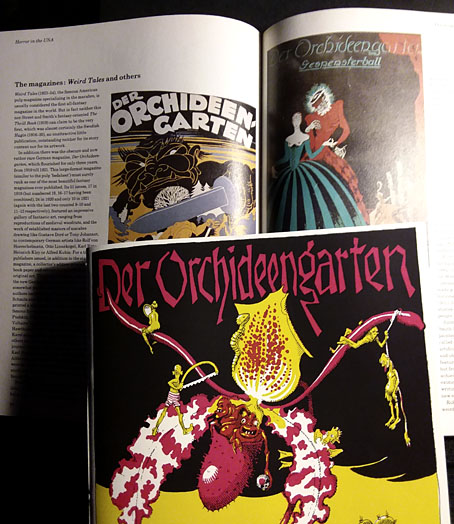
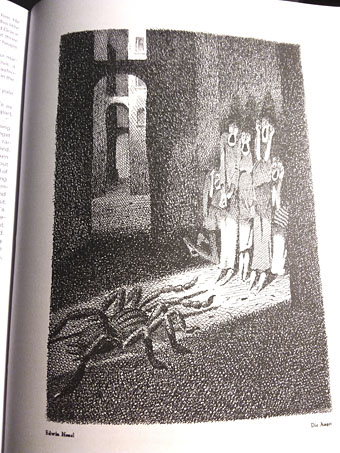
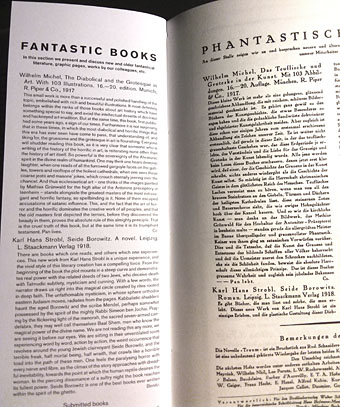
I was going to finish the year with a post showing some of the handful of product designs I’ve done recently but since some the products in question still need to be photographed that’ll have to wait. After a peculiarly dark and grotesque year it seems more fitting to end with a post of dark and grotesque artwork from an earlier epoch. Der Orchideengarten has been the subject of several posts here in the past but it’s only this week that I’ve had the opportunity to see an entire run of the world’s first magazine devoted solely to fantastic art and literature. Der Orchideengarten ran for 51 issues from 1919 to 1921; the editors were Hans Strobl and Alfons von Czibulka, and the contents comprised original fiction, book reviews and reprints in German of notable works of weird literature.

orchid02.jpg

The interior graphics (previously) are in a style similar to those found in Jugend and other German magazines of the period (plus reprints of Beardsley, Doré, and the like), while the covers follow the Jugend template of being different in style and format for every issue. All of these covers are from the wonderful resource at the University of Heidelberg where every issue of Der Orchideengarten is available for download. Even if you can’t read German the magazine is worth browsing for its very European view of the fantastic, a view which tends to be darker and more adult than the American magazines that would soon overshadow it. Some of the covers are strange in a manner that Weird Tales seldom achieved, and many of them feature an orchid somewhere in the design.

orchid03.jpg

orchid04.jpg

orchid05.jpg

orchid06.jpg

Continue reading “Covers for Der Orchideengarten”

BEHOLD! Oddities, Curiosities and Undefinable Wonders

behold.jpg

Behold: another book cover. This is a design I was working on in October, the contents of which haven’t been disclosed yet but the cover has been made public so I can post it here. BEHOLD! Oddities, Curiosities and Undefinable Wonders is an anthology of short fiction with a Wunderkammer brief similar to that of The Thackery T. Lambshead Cabinet of Curiosities, the collection that I illustrated in 2011 for Ann & Jeff VanderMeer. There’s an antique slant to both the books so I’ve reflected this in the graphics which are mostly from 19th-century sources. I was supposed to do the cover for the VanderMeers’ collection but HarperCollins went with their own designer; this was disappointing for the editors as well as myself so the latest cover makes up for that. Doug Murano is editing the new volume for Crystal Lake Publishing, one of five companies listed recently at Dirge Magazine as notable publishers of transgressive horror (and another of Doug Murano’s collections is their “must read”). BEHOLD! is slated for publication in early 2017 so watch this space.

Previously on { feuilleton }
A Cabinet of Curiosities
The Thackery T. Lambshead Cabinet of Curiosities
The specimens of Alex CF
Walmor Corrêa’s Memento Mori
The art of Ron Pippin
Custom creatures
Jan Švankmajer: The Complete Short Films
Cryptozoology
The Bowes Swan
The Museum of Fantastic Specimens

Weekend links 334

rist.jpg

Pixel Forest (2016) by Pipilotti Rist.

• “Think about it: gays, lesbians, bisexuals, and transgender people were almost completely invisible in the movies or on television, or even in newspapers and magazines. It wasn’t until LGBT people started producing their own media that we started to see consistent, positive images. But it would take until very recently for TV and cinema to catch up with what happened in books and magazines decades ago. In other words, nearly all LGBT culture only existed in print or at the bar. So when the queer bookstore disappears, where else can you find 40+ years of LGBT culture? (Hint: it’s not on Netflix.)” Ken White on starting Query Books and republishing classic LGBT literature.

• Related to the above: David Shariatmadari reviews a new edition of Coming Out, Jeffrey Weeks’ history of gay emancipation in the UK; Modern Harmonic is reissuing Love Is A Drag, a collection of “love songs by men, for men”, first released in 1962; Your Daily Male 2017: 52 international artists, 365 pages of full-colour male art; erotic portraits of Yukio Mishima by Eikoh Hosoe.

A Year In The Country revisits The Touchables (1968), a film about four Swinging Sixties girls who live in a huge plastic bubble in the countryside (must be a nightmare in winter); the quartet kidnap a rock star as “a temporary solution to the leisure problem”. Script by Ian La Frenais from a story by David & Donald Cammell. No DVD but it’s on YouTube.

• Mixes of the week are still in the Halloween zone: FACT mix 575 by Fenriz, and Resting Lich Face by SeraphicManta.

• War, love and weirdness: Brian Dillon on Powell & Pressburger’s A Matter of Life and Death, 70 years on.

• Bringing back the magic: a conversation with Hope Sandoval & The Warm Inventions.

David Toop listens, finally, to the legendary John Latham recordings of Pink Floyd.

The Synth Sounds of John Carpenter: Halloween, The Fog, Assault on Precinct 13.

• “Creep or craftsman? Hitchcock was both,” says Tom Shone.

The Dazzling Designs for a New York That Never Existed

Photography by Harry Gruyaert

The Untouchables (1959) by Nelson Riddle | The Touchables (All Of Us) (1968) by Nirvana (UK) | The Touchables (1980) by The Human League