Weekend links 468

atoms.jpg

“The atom shall work for peace…” Soviet poster promoting the benefits of nuclear power.

• RIP Mac Rebennack aka Dr. John Creaux, The Night Tripper. Dan Auerbach remembers the man whose return to funky form, Locked Down, he produced in 2012. Elsewhere, Michael Hurtt details Mac Rebennack’s pre-Dr. John exploits; some of his music from that period is linked at the end of this post. Entries at YouTube are inevitably skewed to the present but among the older clips you’ll find these: The Doctor and his band in full voodoo regalia miming to Zu Zu Mamou on the Something Else TV show; audio extracts from a Dutch festival performance in 1970, here and here; more quality audio from a 1972 concert in Syracuse, NY; and an hour-long Chicago TV show from 1974 featuring Dr. John, Professor Longhair, The Meters, and Earl King.

• More Tangerine Dream: all the soundtrack music for Vampira (1971), a drama-documentary directed by George Moorse for German TV. Recommended to those who like the group’s Ohr period.

• More Chernobyl: a photo-essay by Tom Skipp featuring survivors of the disaster, and from 2013, Hari Kunzru‘s report from the Exclusion Zone.

• At The Quietus: Lottie Brazier on The Strange World of Stereolab, and Ned Raggett talking to Liz Harris about her Nivhek project.

• The sixth edition of Wyrd Daze—”The multimedia zine of speculative fiction + extra-ordinary music, art & writing”—is out now.

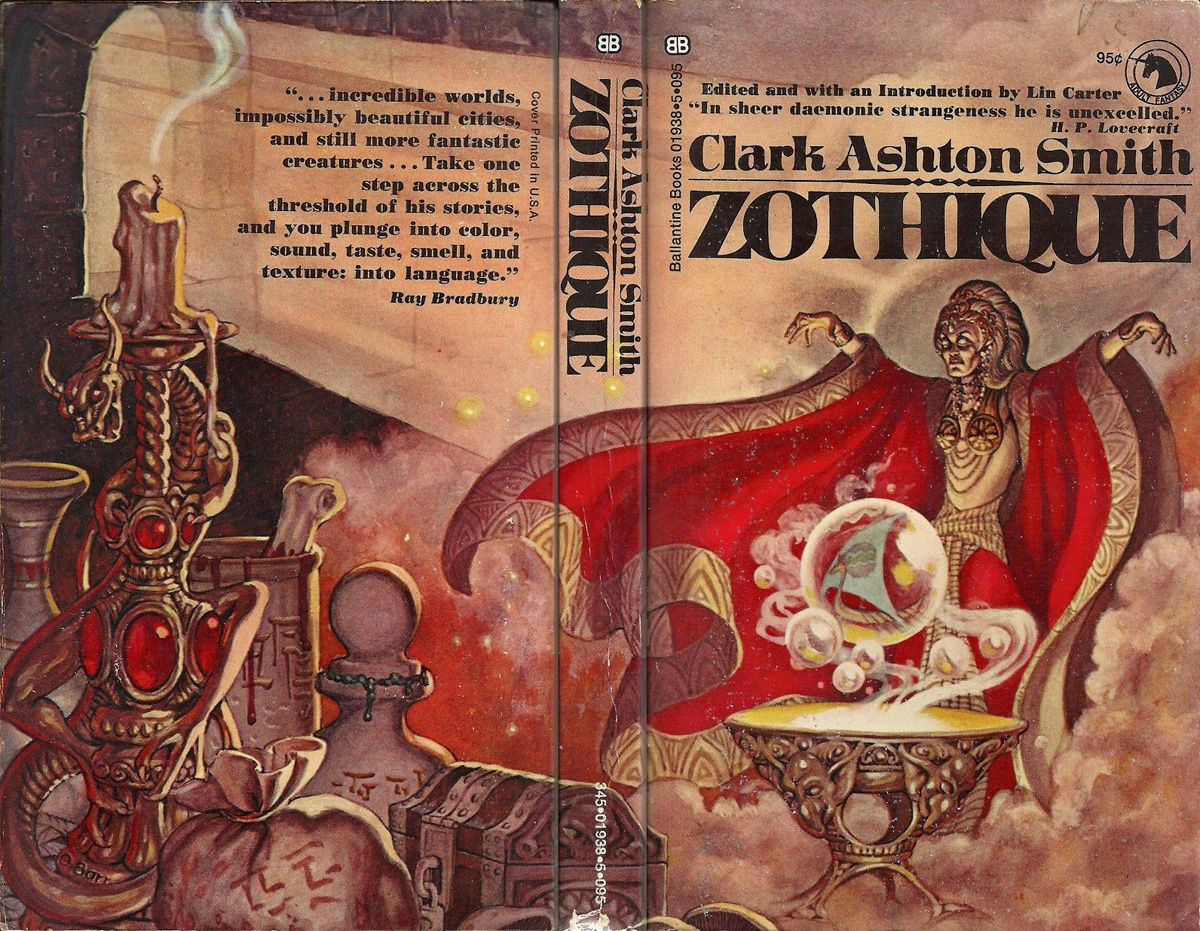
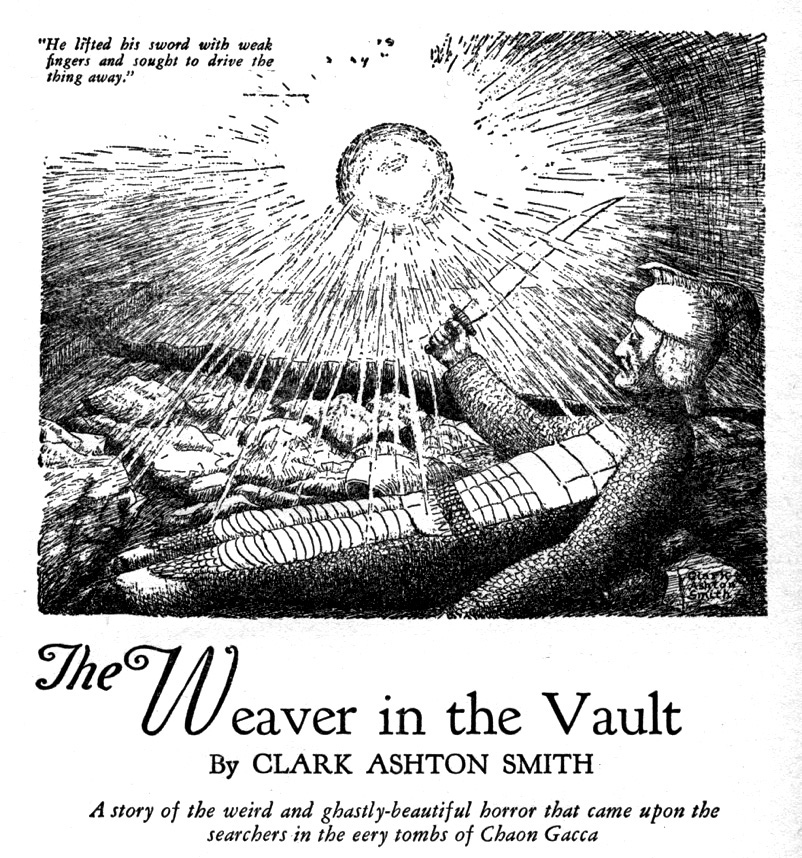
Clark Ashton Smith: The Emperor of Dreams, a DVD of the feature-length documentary by Darin Coelho Spring.

• Moon Wiring Club is back this month with fresh releases at Bandcamp, a YouTube post, and the EVP MVP Mix.

• Once the “Swingingest Street in the World”: Rob Baker on pictures of Carnaby Street 1924–1975.

• New video footage of Coil playing live at All Tomorrow’s Parties, 6th April, 2003.

Dean Hurley explores life after death on Philosophy of Beyond.

Tom Walker on Harry Clarke’s uncanny visions of Ireland.

Alex Barrett on where to begin with Alain Resnais.

• Martin Parr’s Soviet space dog collection.

Dennis Cooper winds you up.

Storm Warning (1959) by Mac Rebennack | Morgus The Magnificent (1959) by Morgus & The 3 Ghouls | Sahara (1961) by Mac Rebennack & His Orch.

Weekend links 457

tanaka.jpg

Imagination of Letters by Ikko Tanaka.

Kankyo Ongaku: Japanese Ambient, Environmental & New Age Music 1980–1990 is the latest compilation from Light In The Attic, and another excellent package both musically, physically and design-wise. The album was compiled by Spencer Doran of Visible Cloaks who talked to The Quietus a couple of years ago about his favourite Japanese (and other) music. Simon Reynolds reviewed Kankyo Ongaku last month, and drew attention to Spencer Doran’s Fairlights, Mallets and Bamboo mixes which may be heard here and here.

Michael O’Shea playing his home-made musical instrument (an old door, paintbrushes, etc) on RTÉ in 1980. Shea’s one-and-only album has been deleted for years but was reissued in January. The story of O’Shea’s surprising involvement with Bruce Gilbert and Graham Lewis of Wire (which led to the recording of his album) is recounted here.

Lou Thomas suggests five reasons to watch Shinya Tsukamoto’s Tetsuo: The Iron Man on its 30th anniversary.

…Topor generates a world in which the great unsaid realities of human life are painfully laid bare, amplified through a series of confrontations with “le sang, la merde et le sexe” (“blood, shit, and sex”). While few of his texts have been made available in English, they are nevertheless representative of his wider body of work, in which the reader constantly trips over these same themes as if stumbling upon a naked corpse in a darkened room. They predicate an oeuvre of carnivalesque and necrophilic eroticism, and draw out the pungent, animalistic core hidden within the norms of our everyday existence. Topor’s narratives are shot through with macabre irony, orgiastic scatology, and physical and psychological cruelty, which constitutes a fundamental reframing of the characteristics of human interaction with others.

Andrew Hodgson on Roland Topor’s neglected writings

An anciente mappe of Fairyland: newly discovered and set forth (1920) by Bernard Sleigh.

Maggot Brain: an impromptu Funkadelic cover by Albatross Project.

Anne Billson on purr evil: cinematic cats with hidden agendas.

Sayonara: one of the most Japanese words in the dictionary.

• Painting the Beyond: Susan Tallman on Hilma af Klint.

• RB Russell on bookseller’s labels: part one & part two.

Christopher G. Moore on The Immortals and Time.

• Fuck the Vessel,” says Kate Wagner.

• Japanese Farewell Song (Sayonara) (1957) by Martin Denny | Sayonara: The Japanese Farewell Song (1976) by Haruomi Hosono | Sayonara (1991) by Ryuichi Sakamoto

Weekend links 451

smith.jpg

Manifold (2015), a painting by Samantha Keely Smith which will appear in April on the cover of Life Metal, a new album by Sunn O))).

• At Expanding Mind: Professor and queer historian Heather Lukes talks with Erik Davis about Silver Lake riots, gay bikers, house ball scenes, the nostalgia for repression, and the joys and challenges of working on the online archive The Grit and Glamour of Queer LA Subculture.

A Stroke of Ingenious: Chatting Fear and Fantasy with Darius Hinks.  Also this week, Darius Hinks’ The Ingenious (for which I created the cover art) was featured in a Barnes & Noble list of seven attractive (if hazardous) fantastic cities.

• “From the late ’60s and through the ’70s broadcasters invested in home-grown kids’ television, and much of it was decidedly weird.” Paul Walsh on the vanished, thought-provoking strangeness of British TV.

That late surrealism still needs rescuing by curators and critics is perhaps not a sign of its defeat but of the breadth and pervasiveness of its triumph. Could we have Pablo Picasso or Jackson Pollock without surrealism? What about David Lynch, JG Ballard or Angela Carter? As an influence, it’s easy to give [Dorothy Tanning] a crucial place in the canon of feminist art. Louise Bourgeois was born just a year later than Tanning but only started to sew after Tanning had exhibited her first sculptures.

Lara Fiegel on the weird, wild world of Dorothea Tanning

After its own death / Walking in a spiral towards the house by Nivhek, a new album from Liz Harris (Grouper) “recorded using Mellotron, guitar, field recordings, tapes, and broken FX pedals”.

• At Dangerous Minds: Michael Rother (Neu!/Harmonia) on the forthcoming reissue of his solo albums from the 1970s.

Clesse by Clesse, another pseudonymous musical project by Jon Brooks (The Advisory Council et al).

• After Dark: The art of life at night—and in new lights by Francine Prose.

Elena Lazic on where to begin with Gaspar Noé.

• Mix of the week: Headlands by David Colohan.

Steven Heller‘s confessions of a letterhead.

• RIP Albert Finney.

• Void (2009) by Monolake | Void (2013) by Emptyset | Void (2014) by The Bug feat. Liz Harris

Salvador Dalí’s Maze

dali13.jpg

Maurice Yves Sandoz (1892–1958) was a Swiss composer and writer who published a handful of works of fantastic fiction, none of which are especially well-known today. One of these, a novel entitled Le Labyrinthe (1945), will be familiar to most people via the film version directed by William Cameron Menzies in 1953, Menzies’ final effort in a chequered directing career. The Maze is a low-budget horror film that was shot in 3-D, and which works well for the most part, at least until its rather absurd ending. I hadn’t heard about the novel until a recent conversation with the knowledgeable Mr TjZ during which he mentioned that Salvador Dalí had illustrated Sandoz’s novel when it was republished by Doubleday, Doran in 1945. Dalí illustrated a number of novels throughout his career but The Maze is one of the few original works (as opposed to a reprint of a classic), the fruit of Sandoz’s social connections with the art world. 1945 was the year that Dalí’s brand of Surrealism was fully embraced by America—he was working on Hitchcock’s Spellbound at this time—so it’s surprising that Sandoz’s novel isn’t better known. Dalí also provided illustrations for two collections of Sandoz’s short stories: Fantastic Memories (1944) and On the Verge (1950).

dali14.jpg

I haven’t seen a copy of the novel so the illustrations here are no doubt wrongly sequenced. Secondhand copies of the Dalí Sandoz titles aren’t as expensive as you’d imagine so I’m tempted to track down copies. I’m also curious to know how the novel compares to the film. Thanks to TjZ for the tip!

(And having written the above, I notice from my tags for the post that I’d linked to copies of the short story illustrations in a weekend posting several years ago. Among other things, this blog is a useful memory jolt. But The Maze was definitely news.)

dali05.jpg

dali01.jpg

dali02.jpg

Continue reading “Salvador Dalí’s Maze”

The Resurrectionist of Caligo by Wendy Trimboli & Alicia Zaloga

resurrectionist.jpg

My latest cover for Angry Robot Books was unveiled this week on the Barnes & Noble blog. The Resurrectionist of Caligo is an atmospheric Gothic fantasy for which the cover art veers close to the illustration work I was doing recently for Editorial Alma, Frankenstein in particular:

With a murderer on the loose, it’s up to an enlightened bodysnatcher and a rebellious princess to save the city, in this wonderfully inventive Victorian-tinged fantasy noir.

“Man of Science” Roger Weathersby scrapes out a risky living digging up corpses for medical schools. When he’s framed for the murder of one of his cadavers, he’s forced to trust in the superstitions he’s always rejected: his former friend, princess Sibylla, offers to commute Roger’s execution in a blood magic ritual which will bind him to her forever. With little choice, he finds himself indentured to Sibylla and propelled into an investigation. There’s a murderer loose in the city of Caligo, and the duo must navigate science and sorcery, palace intrigue and dank boneyards to catch the butcher before the killings tear their whole country apart.

Some covers present more difficulties than others, this one being an awkward layout in its early stages due to the multiple demands of the brief. Not only was the book title a lengthy one, there were also two author names to accommodate plus a variety of pictorial detail that required placing in a harmonious arrangement. I don’t always begin a design with the title layout but in this case this was the first priority, so the cover is designed around the title rather than the title being applied to the cover at a later stage. All of this caused me some headaches for a few days while I tried to find a type layout that would look pleasing, be readable from a distance and also not interfere too much with the background. None of the struggle is evident in the final work, of course, which is as things should be.

The Resurrectionist of Caligo will be published in September.