Weekend links 660

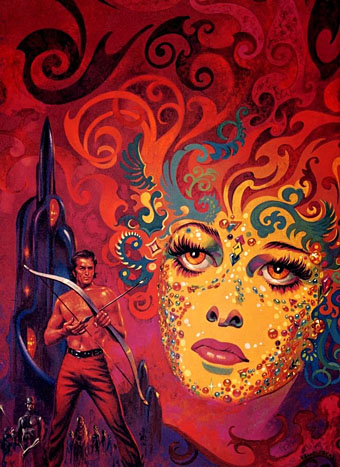
freas.jpg

Cover painting by Kelly Freas for Mayenne (1973) by EC Tubb.

• “The kamishibai (literally “paper play”) is a Japanese form of storytelling that involved a narrator using illustrated paper boards to tell stories. As the story would progress, a new board would replace the previous board, propelling the story forward. This concept served as the inspiration for graphic designer Katsuhiko Shibuya and his class of students at Joshibi University of Art and Design. The task, however, was to deconstruct fairy tales even further using only graphic symbols.” Graphic design kamishibai tell visual fairytales at Spoon & Tamago. Great stuff.

• “If it’s not magical it’s not worth doing it… Without magic there’s no quality.” Musician/producer/catalyst Bill Laswell in conversation.

• At Public Domain Review: Lara Langer Cohen on the emancipatory visions of a sex magician: Paschal Beverly Randolph’s Occult Politics.

• At Smithsonian Magazine: Nicola Jones on the scientific history of cannabinoids.

• “Deep beneath the streets of London, musical wax cylinders reveal lost histories.”

• “The Moon smells like gunpowder.” And all that fine dust is bad for your lungs.

• At Aquarium Drunkard: Guiding Light : A Tom Verlaine Appreciation.

• New music: Sacred Tonalities by Mike Lazarev.

Supernatural Fairytales (1967) by Art | X-Rated Fairy Tales (1985) by Helios Creed | The Fairy Tale (1991) by Biosphere

Foreign affairs

something.jpg

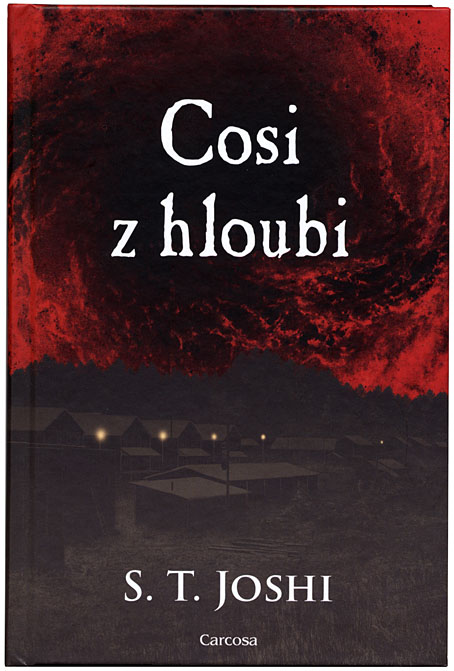
A Czech edition of Something from Below by ST Joshi, 2022.

A few of my illustrations and cover designs have been reprinted on foreign editions over the past couple of years so I thought I’d note them here. All the books are cosmic horror of one kind or another which isn’t too surprising when I’m known more for this than for my work in other genres. Seeing your cover art reused in other countries (or in your own country, for that matter) happens less often than you might think. The music business goes in the opposite direction in this regard. Books, for a variety of reasons, tend to be reprinted with new covers whereas album releases will sail through the years packaged in whatever cover they were fortunate (sometimes unfortunate) to have received when first released. Consequently, you can’t predict which design or illustration might end up being used for a reprint or a new edition.
cthulhu.jpg

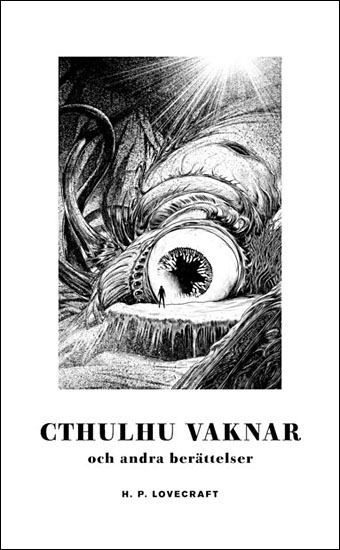
A Swedish edition of The Call of Cthulhu and other stories, 2022. The cover art is from the series of illustrations I produced for Lovecraft’s Monsters, a story collection edited by Ellen Datlow.

This list isn’t necessarily all that may be out there. Another peculiarity of the publishing world is that you can be told a foreign edition is being planned then, after various agreements have been made, never hear about it again. This is partly a result of the Babel-like nature of the internet, in which we navigate our own language zones while remaining ignorant of the other zones which exist close by. If nobody tells you the book was published then you’re unlikely to encounter it by accident. Publishing is also a slow business, so that you might agree to a reprint, send off the artwork then forget all about it until somebody contacts you a year later asking where they should send a complimentary copy. (And publishers don’t always send complimentary copies…) Missing from this list are a Russian edition of Under the Pendulum Sun by Jeannette Ng, and a Chinese edition of The King in Yellow by Robert W. Chambers. In both cases I sent the publishers the artwork and was paid a small fee as a result but I’ve yet to discover whether the books were published using my cover art, or even published at all.
hodgson.jpg

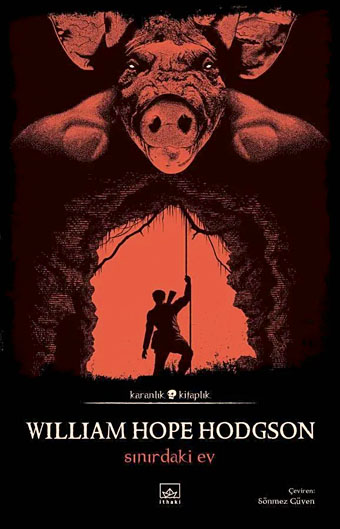
The above is a Turkish edition of The House on the Borderland published by the Karanlik Kitaplik imprint of Ithaki. The imprint title translates as “Dark Bookshelf” although “Dark Library” seems more likely, with the other books in the series being horror novels that feature similar cover designs using tinted monochrome artwork. My illustration is from the interior of the Swan River Press edition which I would, of course, recommend to all Anglophone readers. The Turkish publisher said they planned to reprint some of my other Hodgson illustrations inside their edition but I don’t know whether they’ve done this. Ithaki also have another edition of the novel which reuses the Ian Miller cover art from the old Panther paperback.
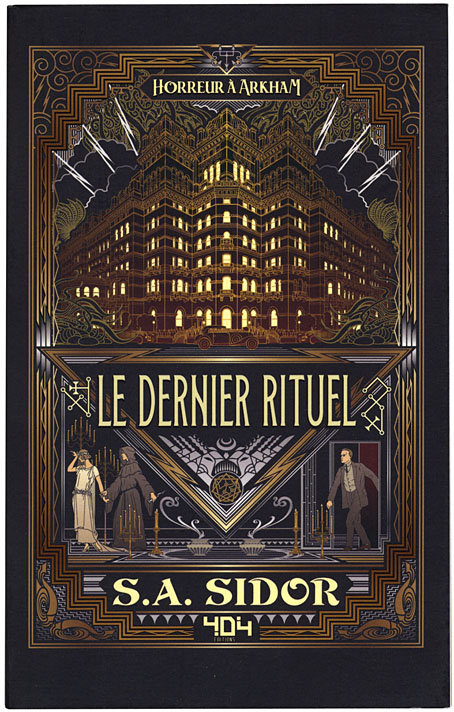
last3.jpg

French edition of The Last Ritual by SA Sidor, 2021.

Asmodee has tentacles in many countries so the spin-off books published by the company’s Aconyte imprint have generated a number of foreign editions, one of which has already been mentioned here. I’m pleased to see the reworked covers using fonts sympathetic to the Deco-style design. There are more books in this series (the most recent being The Ravening Deep) so there may be more foreign editions in the future.
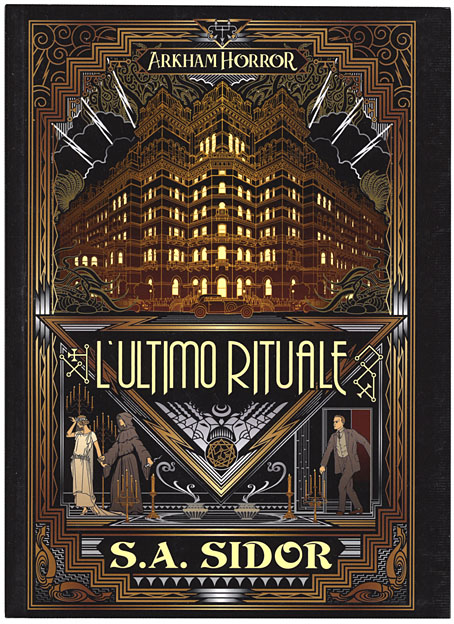
last2.jpg

Italy, 2021.

last1.jpg

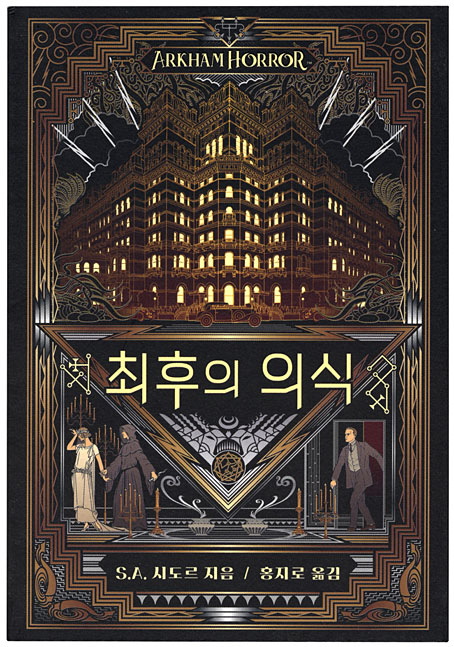
South Korea, 2022.

last4.jpg

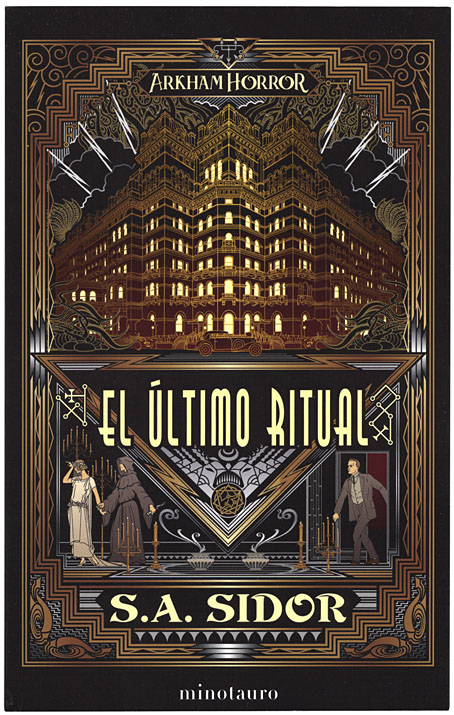
Spain, 2022. This one comes with a postcard of the cover design.
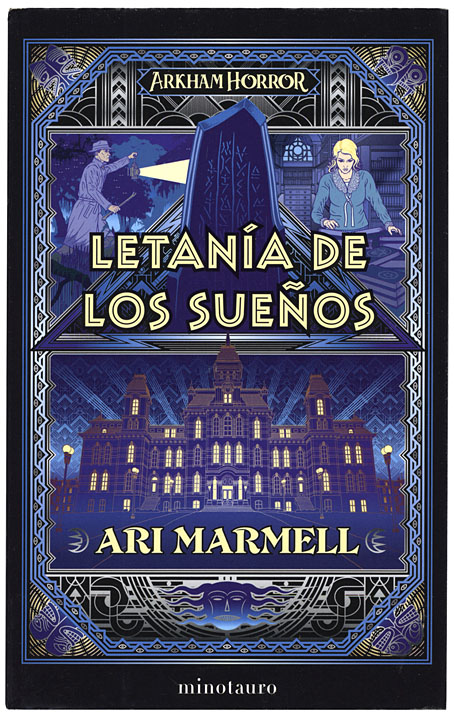
litany2.jpg

Spanish edition of Litany of Dreams by Ari Marmell, 2022.
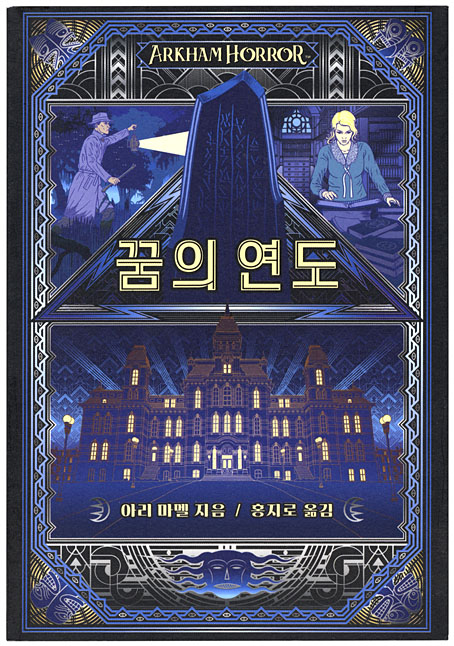
litany1.jpg

South Korea, 2022.

Previously on { feuilleton }
Das Letzte Ritual
Litany of Dreams
The Last Ritual
Something from Below
Lovecraft’s Monsters

Weekend links 659

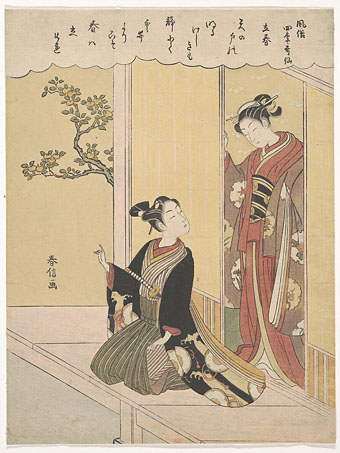
harunobu.jpg

The First Day of Spring (Risshun), from the series Fashionable Poetic Immortals of the Four Seasons (c.1768) by Suzuki Harunobu. Risshun in Japan begins on the 4th of February.

• “…after centuries of imbibing alcoholic beverages as their main source of potable water, European’s new fondness for boiled drinks—coupled with the psychoactive properties of caffeine—swapped societal tipsiness with a mindstate primed for the Enlightenment’s intoxication with reason.” Hunter Dukes on A Treatise Concerning the Properties and Effects of Coffee (1792) by Benjamin Moseley.

• Steven Heller on John Wilcock, Master of the Underground: “[He] was one of the great ‘happening’ characters of midcentury America, beat myth to Hippie legend. He was founder of half a dozen underground papers, and started one of the first citizen-access cable television shows. His achievements are a dense package.”

• At Fonts In Use: Florian Hardwig explores the origin of “the Dune font” as used on the covers of Frank Herbert’s novels during the 1970s and 80s.

• At Smithsonian Magazine: “Hundreds of Frank Lloyd Wright’s designs were never built. Here’s what they might have looked like.”

• Mix of the week: Fact Mix 893 by KMRU & Aho Ssan & Sevi Iko Dømochevsky.

• New music: Hypnagogia by Martina Bertoni, and Cosmos Vol. II by Ran Kirlian & Jaja.

• “Forgotten ‘Stonehenge of the north’ given to nation by construction firm.”

• At Aquarium Drunkard: Soft Machine live at Jazz Bilzen, 1969.

• RIP Tom Verlaine.

Goofin’ At The Coffee House (1959) by Henri Mancini | Bring Me Coffee Or Tea (1971) by Can | Starfish And Coffee (1986) by Prince

Now It’s Dark

dark1.jpg

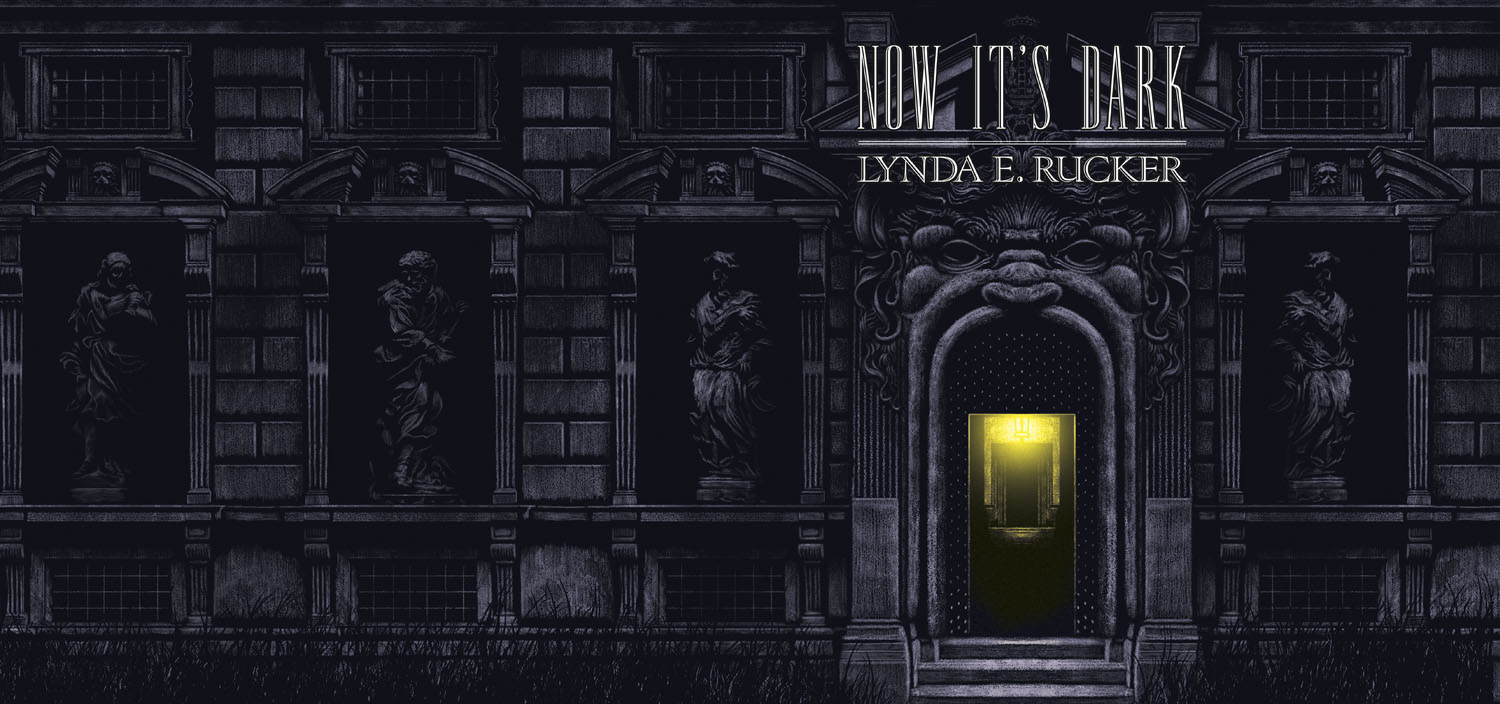
Now It’s Dark by Lynda E. Rucker; cover art by John Coulthart; jacket design by Meggan Kehrli; introduction by Rob Shearman; edited by Brian J. Showers and Timothy J. Jarvis; copyedited by Jim Rockhill; typeset by Steve J. Shaw; published by Swan River Press.

Hardback: Published on 27 January 2023; limited to 400 copies of which 100 were embossed and hand numbered; signed by Lynda E. Rucker, Rob Shearman, and John Coulthart; xii + 225 pages; lithographically printed on 90 gsm paper; dust jacketed; illustrated Wibalin boards; sewn binding; head- and tail-bands; ISBN: 978-1-78380-043-8.

dark2.jpg

Dust jacket.

dark3.jpg

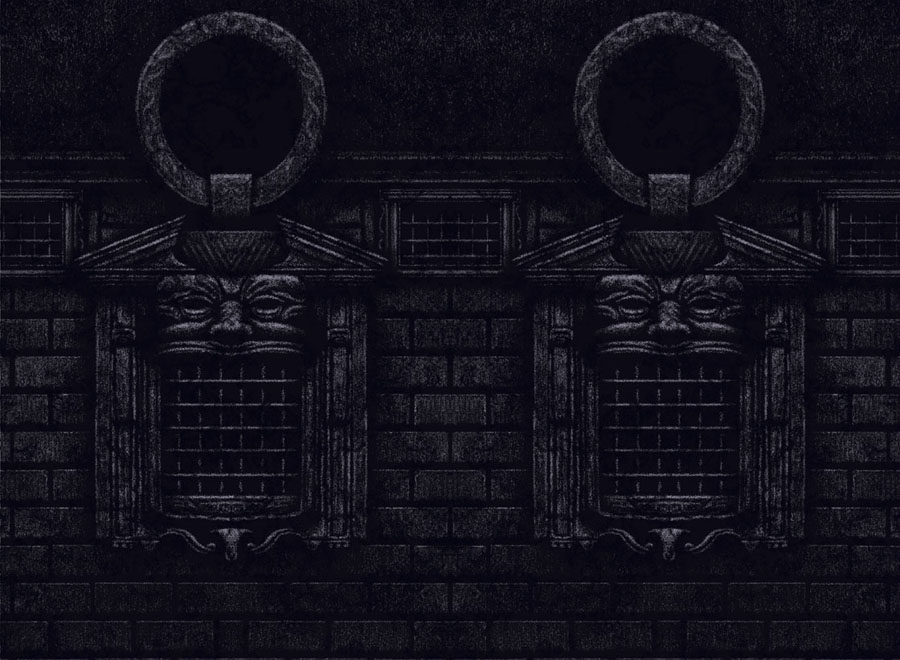
Printed boards.

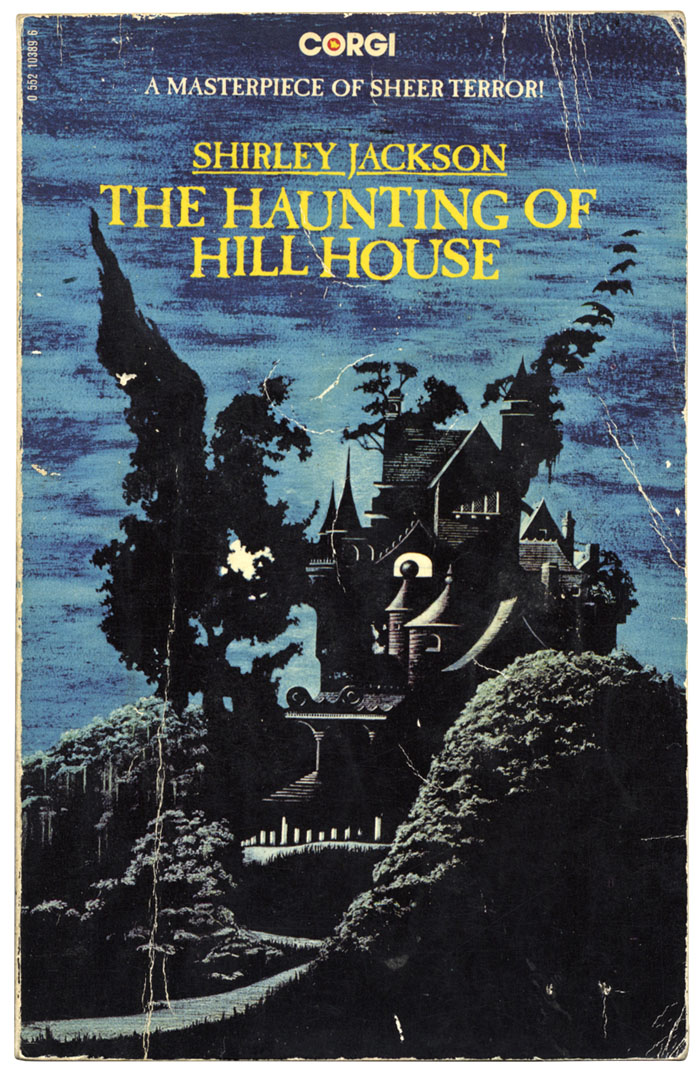
This is the last of the books I was working on last year, and being another design for Swan River Press means that once again the artwork is a wraparound cover with printed boards under the wrap. Now It’s Dark is a collection of horror stories (or possibly “strange stories” à la Robert Aickman), and a very fine collection it is. I was given carte blanche with this one so the cover is a mood piece rather than anything directly illustrational. One of the stories concerns the god Pan, which tempted me at first to do something with a satyr-like face, possibly as an architectural feature like a mascaron. But focusing on a single story in this way usually makes me worry about giving that story too much attention if it hasn’t also provided the title of the collection. Thinking about mascarons and their positioning above arched doorways led to the design you see here, a gesture towards a minor trend in horror illustration that makes use of the Arcimboldo effect, as with my battered Shirley Jackson paperback.

haunting.jpg

Corgi Books, 1977. No artist credited.

zuccari1.jpg

A Boy and His Dog on a Staircase in Rome (1886) by Niels Frederik Schiøttz-Jensen.

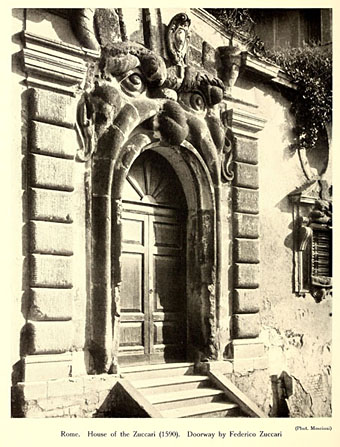
My cover is a variation on a real place, the “House of Monsters” entrance of the Palazzo Zuccari in Rome which today houses the Bibliotheca Hertziana. I placed the portal into an extended Baroque facade while moving the monstrous windows to the boards of the book. Given the way the grotteschi concept was a common feature of the Baroque you’d expect there to be more doorways like this but the palazzo street entrance seems to be unique. Equivalents such as the Ogre’s Head at Bomarzo are more like theme-park attractions than architectural features. I’ve never seen Umberto Eco mention the Palazzo Zuccari but I imagine he would have enjoyed seeing an infernal mouth as an entrance to a library.

zuccari2.jpg

Previously on { feuilleton }
Infernal entrances

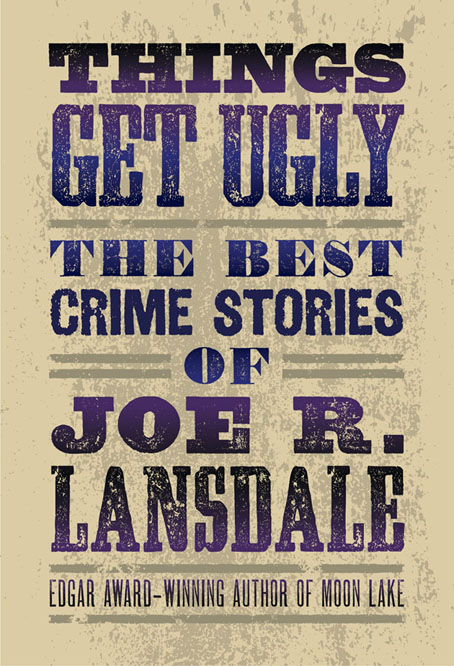
Things Get Ugly

tgu.jpg

Last month I said I had one more cover from 2022 to be made public, having forgotten that there was this one plus another which is currently at the printer, and which I’ll write about at a later date. Things Get Ugly follows last year’s Born For Trouble in being another Joe R. Lansdale cover for Tachyon that uses typography for the whole of the design. As with the earlier cover, this approach sidestepped having to try and summarise a collection of short stories with a single image or graphic. Adding imagery to a collection usually works best when the contents follow a specific theme, which isn’t the case here.

The stories may be described as crime but quite a few of them are dark enough to be included in horror collections. Things do, indeed, get ugly. The intersection between crime and horror fiction isn’t exactly new, the two genres have been entangled since The Murders in the Rue Morgue, and the boundaries remain permeable to this day. The most well-known piece in the new collection is Incident On and Off a Mountain Road, a story that was filmed for TV by Don Coscarelli for the Masters of Horror series, and which also opened the first season in 2005. Coscarelli’s adaptation is even nastier than its source but not everything in the collection is unrelentingly grim. Lansdale has a flair for black comedy which is to the fore in another story, Driving to Geromino’s Grave, in which two Depression-era children have to bring home the rotting body of their deceased uncle. This may not be everybody’s idea of an amusing read but the witty dialogue made me laugh. As well as the cover I’ve designed the interior of this one so I may post samples at a later date.

Things Get Ugly will be published in August. The book can be pre-ordered here.

Previously on { feuilleton }
Born for Trouble
Of Mice and Minestrone