Dekalog posters by Ewa Bajek-Wein

dekalog01.jpg

One of the pleasures of our age of cultural plenitude is the opportunity to immerse yourself in entire filmographies. I did this recently with almost all of Wes Anderson’s films (I skipped Bottle Rocket, and I still haven’t seen Asteroid City); last week it was the turn of Krzysztof Kieślowski, with a run through four of his Polish films—The Scar, Camera Buff, Blind Chance and No End—followed by the final quartet of The Double Life of Veronique and the Three Colours Trilogy. This week I’ll be working my way through Kieślowski’s Dekalog, a cycle of ten hour-long films that I’ve had on disc for years but not watched all the way through for some time.

dekalog02.jpg

Dekalog (or The Decalogue) is a series that Kieślowski made for Polish TV in 1988, although subsequent acclaim for the cycle (famously from Stanley Kubrick) has seen it treated as a work of cinema in its own right, albeit one that few people are likely to watch in a single sitting. Two of the films were also expanded to feature length and released individually as A Short Film About Love and A Short Film About Killing. Each film concerns different inhabitants of the same housing estate, with the problems they face (or that they create) being related to one of the Ten Commandments. None of the Commandments are named as such, we’re left to guess from the numbers which is which. I imagine this would have been more obvious to an audience in Poland where Catholicism remained a dominant presence despite the disapproval of the Communist authorities. I was dragged through the Catholic church as a child but I still couldn’t list all the Ten Commandments today without cheating. Kieślowski’s films aren’t as dourly moralistic as this structure might suggest. Ironic circumstance was one of his persistent themes, his characters usually find their desires thwarted or fulfilled in ways they didn’t anticipate at all. Fate, rather than the hand of God also plays a part, dramatically so in Blind Chance where we see three different futures for a young student running to catch a train.

dekalog03.jpg

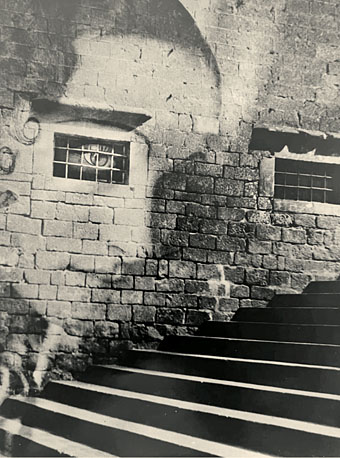
Ewa Bajek-Wein’s posters turned up when I was searching for designs by Andrzej Pągowski, an artist responsible for many of the Polish posters for Kieślowski’s films, including the two Dekalog features. Bajek-Wein’s designs, created for a 2009 reissue of the cycle, continue the Polish tradition of original and unorthodox approaches to the cinema poster which extends in this case to the graphics as well as the artwork. Titles and other credits on 20th-century Polish posters were often casually hand-lettered, with the details pushed to the margins. The artwork here maintains the elusiveness of the theme; if you don’t know which number relates to which Commandment you’re left to guess from the picture. Films five and six are easy enough to decipher but I’ll be looking up the titles of the rest before I watch them again.

dekalog04.jpg

dekalog05.jpg

Continue reading “Dekalog posters by Ewa Bajek-Wein”

Weekend links 682

barbier.jpg

La Voie Lactée (1921) by George Barbier.

• Fun news of the week: “The Taylor Swift vinyl haunted by Britain’s weirdest musicians.” The “weirdness” is tracks from Happy Land: A Compendium of Electronic Music from the British Isles 1992–1996 which have been mispressed onto Swift’s latest, the re-recorded Speak Now. One of the offending pieces is Soul Vine (70 Billion People) by Cabaret Voltaire, a relatively understated instrumental from the Plasticity album which features samples from the Demon with a Glass Hand episode of The Outer Limits. “It’s possibly the most subversive thing we’ve ever done,” says Stephen Mallinder. Adventurous Swifties looking to broaden their horizons are advised to try The Crackdown next.

• “For McCarthy, violence is the signature of God: God, who cannot be seen, who is only indicated by an absence, who no amount of experimenting or observing will reveal, but whose existence is in evidence all around us, every day, through the apocalyptic and apophatic violence that makes up the very stuff of the world.” JC Scharl on the violent faith of Cormac McCarthy.

• Strange news of the week: Reclusive guitarist Master Wilburn Burchette (age 84) was found dead in a house with the body of his younger brother (age 76) after decades spent avoiding anyone showing an interest in his music. Numero Group, the label behind the recent reissues of Burchette’s albums, posted an interview from 2018.

Takrar by Waref Abu Quba is “an experimental film that celebrates the timeless and intricate beauty of ancient craftsmanship. Filmed in Istanbul, the film takes us on a mesmerizing journey into the past, paying homage to Islamic, Ottoman, Greek, and Byzantine art forms.”

• “Could an industrial civilization have predated humans on Earth?” Probably not, but if it was in the deep past how would we know? Joel Froelich investigates.

• At Dennis Cooper’s: Visual evidence from almost every museum devoted to prestidigitation in the world (for Derek McCormack).

• At Spoon & Tamago: Osaka celebrates Star Festival with river of 40,000 LED lights evoking the Milky Way.

• At Unquiet Things: Even more sneak peeks from The Art of Fantasy.

• Mix of the week is DreamScenes – July 2023 at Ambientblog.

• At The Daily Heller: Sign writing and glass engraving.

Out Of Limits (1963) by The Marketts | Trip Through The Milky Way–An Electronic Panorama (1969) by Raymond Moore | Milky Way (1971) by Weather Report

Weekend links 681

hunter.jpg

All Cats are Grey At Night (2009) by Kenny Hunter.

“They found ways to do the impossible”: Hipgnosis, the designers who changed the record sleeve for ever. Lee Campbell talks to Anton Corbijn about Squaring the Circle, Corbijn’s documentary about the Hipgnosis design team. Peter Christopherson is shown in the accompanying photo but Campbell doesn’t mention him at all, despite his having been an equal partner with Storm Thorgerson and Aubrey Powell from the mid-70s on. Many of those famous covers were photographed by Christopherson’s camera.

• A new book by Stephen Prince at A Year In The Country: “Lost Transmissions weaves amongst brambled pathways to take in the haunted soundscapes of electronica, the rise of the occult in the 1970s, cinema and television’s dystopian dreamscapes and hauntological work which creates and gives a glimpse into parallel worlds…”

• New music: Ambient Bass Guitar by John von Seggern, and Sturgeon Moon/Beaver Moon by Missing Scenes.

• How Samuel R. Delany Reimagined Sci-Fi, Sex, and the City.

• Mix of the week: Tranquility by A Strangely Isolated Place.

Galerie Dennis Cooper presents…Snow Globalists.

• The Strange World of…African Head Charge.

• Steven Heller’s font of the month is Baudot.

Nights on Earth.

Transmission (1979) by Joy Division | Clandestine Transmission (1994) by Richard H. Kirk | Transmission (1996) by Low

Weekend links 680

wijdeveld.jpg

15 Miles into the Earth (1944) by Hendrik Wijdeveld.

• “He realized that there were individuals around him who had never appeared in the great altarpieces and frescoes, individuals who had been marginalized by the cultural ideology of the previous two centuries. And there were hours of the day—transient, yet unequivocal in their lighting—which had never been reproduced, and which were pushed so far from habit and use that they had become scandalous, and therefore repressed.” Pasolini on Caravaggio.

• “Reading Albert Camus and Mikhail Bulgakov by day, by night, crucially, they were listening to Chic, Kraftwerk, Donna Summer, Michael Rother and Grace Jones in the clubs.” Graeme Thomson on the atmosphere and influences that helped create my favourite album by Simple Minds, Empires And Dance. Borges was also a minor influence, apparently, which wasn’t something I knew until this week. I like it when your favourite things join up this way.

• “This being England, a ‘tea shop’ is not a shop that sells tea. That would be a tea merchant. A tea shop serves tea.” Mark Valentine on the perennial connections between rambling and tea-drinking.

Talking about generations as if they really existed and had sway over people is much more respectable and widespread than the belief that events and personalities are governed by the movements of the planets. But is there really much more substance and reality to “generations”? If not “a bunch of bullshit”, the discourse of generations is certainly generative of bullshit: tenuously grounded overviews and opinion pieces, specious analysis and analogies, platitudes and truisms. And yet, like astrology, it is a fun game to play along with. And far more than astrology, it’s a mode of talk that partially constitutes its object: generalizing about a generation actually brings it into semi-existence, shaping how people perceive themselves and how they are perceived by earlier or later generations. What may just be an illusion, a shaky set of alleged affinities, becomes a social fact.

Simon Reynolds analyses the generation game

• More Milton Glaser: PDFs of the Glaser Gazette, a memorial publication in three parts: Vol 1 | Vol 2 | Vol 3

• New music: Tractatus Lyra-Organismus by Lyonel Bauchet, and Grounded Rectangle by Ambidextrous.

• “A digital archive of graphic design related items that are available on the Internet Archives.”

• DJ Food found a handful of psychedelic posters by Nicole Claveloux.

• “Rights to Jorge Luis Borges’s work go to his wife’s nephews.”

• “Is this the earliest known phallic art?

Young Generation Dub (1976) by Augustus Pablo | Chile Of The Bass Generation (1990) by Mental Cube | Invisible Generation (1992) by Cabaret Voltaire

Weekend links 679

gay.jpg

All this and the best tunes. Via.

• As noted last month, Space Ritual by Hawkwind turned 50 this year so here comes the inevitable reissue which in its most lavish edition will run to 11 discs. This isn’t as immediately attractive for me as the recent Calvert-era collection—I already own four different copies of Space Ritual, including the original vinyl—but I may feel differently a few months from now.

• At Wormwoodiana: Mark Valentine explores The Prophecies of N’Gai, something which sounds like a story from Weird Tales but isn’t.

• “Is function in the eye or mind of the beholder?” Steven Heller on Jacques Carelman’s Catalogue of Impossible Objects.

• At Spoon & Tamago: Yoko Tada began painting in her 80s. At 100 she’s publishing her first book.

• “The Magnificent Ambersons: rebirth for ruined Orson Welles masterpiece that rivalled Citizen Kane.”

At Wyrd Daze: Disco Rd 3: 23 pages 23 minutes. Free PDF, music mix, Discordianism, etc.

• A (brief) conversation with Milena Canonero, Wes Anderson’s costume designer.

• At Public Domain Review: Specimens of Fancy Turning (1869).

• New music: Móatún 7: Tetsu Inoue by Various Artists.

Arik Roper’s favourite album artwork.

• RIP Peter Brötzmann.

Table Turning (1973) by The Upsetters | Forever Turning (1995) by Scorn | Turning Towards Us (2008) by Redshift