Saga de Xam by Nicolas Devil

saga01.jpg

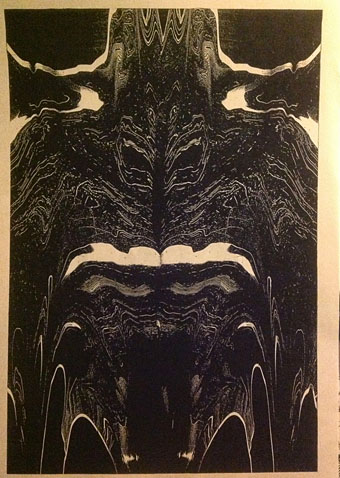
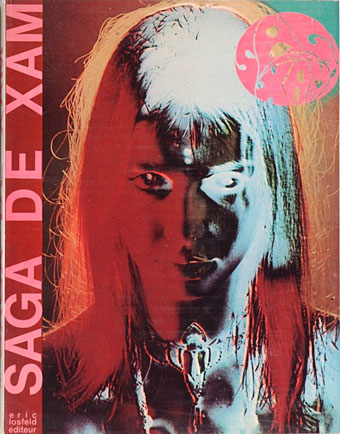
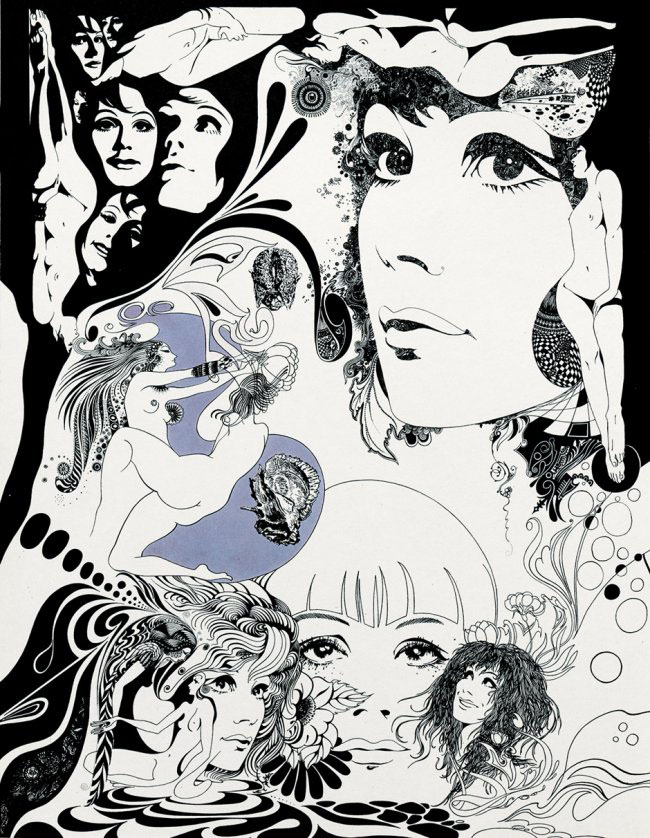
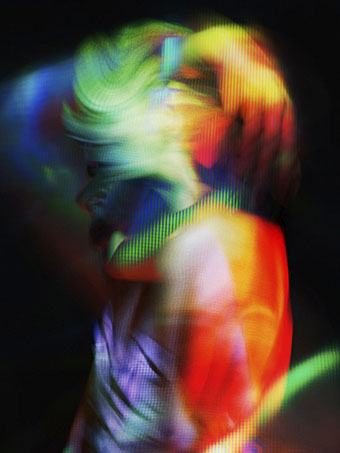
Saga de Xam, a large-format comic book published by Éric Losfeld in 1967, is another example of French erotic psychedelia that remained off my radar until I got my hands on the exhibition catalogue for the Musée d’Orsay’s Art Nouveau Revival show in 2010. The glorious drawing below was used as the background for the exhibition poster, and appeared inside the catalogue with two more pages from this rare and sought-after book, described in the catalogue as “the best and most precocious example of French BD directly inspired by American psychedelia”.

saga02.jpg

Éric Losfeld is a fascinating character, a kind of pop-culture equivalent of Maurice Girodias, the founder of Olympia Press. Both men published erotic novels, and both had problems with the authorities as a result; but Losfeld also found a niche in art and graphics, producing albums of erotic comic strips—Jean-Claude Forest’s Barbarella, Guy Peellaert’s Jodelle and Pravda, Guido Crepax’s Valentina, Philippe Caza’s Kris Kool—and lavish portfolios from the weirder end of the erotic art spectrum, showcasing work by Raymond Bertrand, Jean-Marie Poumeyrol and others. It’s common for Brits to consider France a more enlightened nation where sex and comic-art is concerned but in the 1960s comics in France were considered an unsuitable medium for sexual material. Many of Losfeld’s comic-books of the late 60s and early 70s endured the kind of censure that was occurring in Britain and elsewhere. An early non-erotic title was Lone Sloane: Mystère des Abîmes in 1966, the first Lone Sloane story by Philippe Druillet. This no doubt explains Druillet’s involvement with Saga de Xam a year later.

saga16.jpg

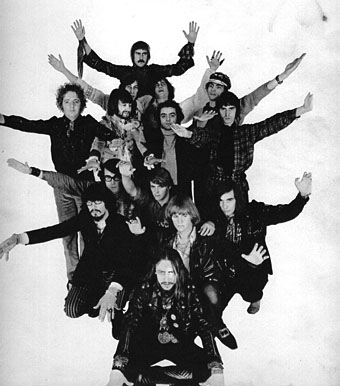
Saga de Xam: les créateurs.

The comics by Forest, Peellaert and Crepax all featured attractive (often naked) woman as their lead characters. Saga de Xam continued the trend, a story in seven chapters that reads like an amalgam of all the comics Losfeld had published up to that point, Druillet included. The book is credited to Nicolas Devil, and based on a scenario by film director Jean Rollin. (Druillet would later design some posters for Rollin’s vampire films.) Devil, aka Nicolas Deville, was one of Rollin’s art directors who also worked for a time as a comic artist and illustrator. For Saga de Xam Devil was the principal artist in the first six chapters, and wrote most of the text and dialogue. In the final chapter other hands are involved: Jim Tiroff, an actor from Julian Beck’s Living Theatre, provided a poem in English, while the artwork is an unusual exercise in the Surrealist “Exquisite Corpse” technique with Devil, Druillet and several other artists—Barbara Girard, Merri, Nicolas Kapnist—collaborating on a series of improvised splash pages. The final chapter also features arrangements of text that resemble layouts from avant-garde art magazines. Druillet’s contributions are easy to identify since they resemble invasions from his Lone Sloane series, even including references to the Necronomicon.

Continue reading “Saga de Xam by Nicolas Devil”

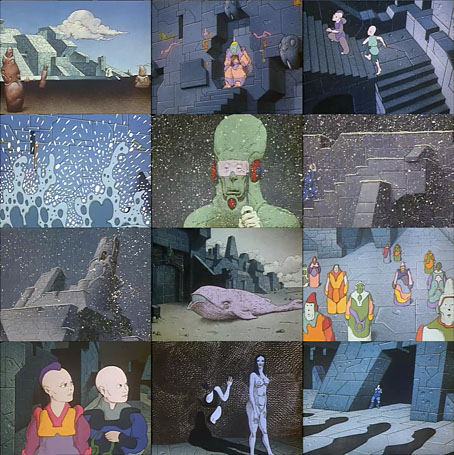
The Captive, a film by René Laloux

captive.jpg

The feature films of French animator René Laloux are the closest thing to cinematic equivalents of comics magazine Métal Hurlant. Laloux’s collaboration with Roland Topor, Fantastic Planet (1973), is familiar to Anglophone audiences but fewer people are aware of Time Masters (1982) and Gandahar (1988), two more science fiction films made with Moebius and Philippe Caza respectively. Time Masters looks marvellous but the story (based on a novel by Stefan Wul) lacks the strangeness of Fantastic Planet. Gandahar,  based on a novel by Jean-Pierre Andrevon, I’ve yet to see but anyone searching for it should be aware that the version dubbed into English (and retitled The Light Years) dumped Gabriel Yared’s score, and had a sexual encounter censored by the usual rabble of prudish American producers.

The Captive (1988) continues the collaboration with Philippe Caza being a 7-minute adaptation of Caza’s comic story Equinoxe (1982). The music for this one is also by Gabriel Yared, and this copy at YouTube includes English subtitles. For comparison, the comic story is here. Of the two I prefer the comic but then I’ve always enjoyed Caza’s work.

Previously on { feuilleton }
Les Temps Morts by René Laloux

The White People by Arthur Machen

aklo.jpg

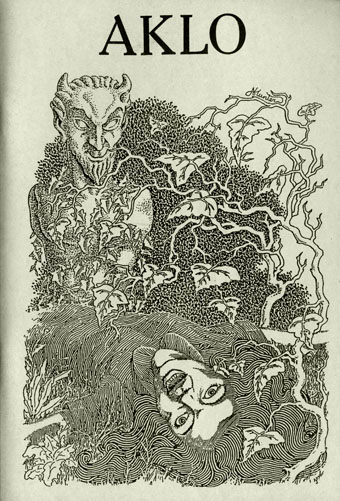
Aklo: A Journal of the Fantastic, Spring 1988 edition, edited by Mark Valentine & Roger Dobson. Illustration by Alan Hunter.

1: The White People

The White People by Arthur Machen was written in 1899 but not published until it appeared in Horlick’s Magazine, January 1904. The magazine, which ran for just over a year, was edited by Machen’s Golden Dawn colleague AE Waite which no doubt explains the unlikely venue. HP Lovecraft enthused about the story in Supernatural Horror in Literature (1927):

Less famous and less complex in plot than The Great God Pan, but definitely finer in atmosphere and general artistic value, is the curious and dimly disquieting chronicle called The White People, whose central portion purports to be the diary or notes of a little girl whose nurse has introduced her to some of the forbidden magic and soul-blasting traditions of the noxious witch-cult — the cult whose whispered lore was handed down long lines of peasantry throughout Western Europe, and whose members sometimes stole forth at night, one by one, to meet in black woods and lonely places for the revolting orgies of the Witches’ Sabbath. Mr. Machen’s narrative, a triumph of skilful selectiveness and restraint, accumulates enormous power as it flows on in a stream of innocent childish prattle, introducing allusions to strange “nymphs,” “Dols,” “voolas,” “white, green, and scarlet ceremonies,” “Aklo letters,” “Chian language,” “Mao games,” and the like. The rites learned by the nurse from her witch grandmother are taught to the child by the time she is three years old, and her artless accounts of the dangerous secret revelations possess a lurking terror generously mixed with pathos. Evil charms well known to anthropologists are described with juvenile naiveté, and finally there comes a winter afternoon journey into the old Welsh hills, performed under an imaginative spell which lends to the wild scenery an added weirdness, strangeness, and suggestion of grotesque sentience. The details of this journey are given with marvellous vividness, and form to the keen critic a masterpiece of fantastic writing, with almost unlimited power in the intimation of potent hideousness and cosmic aberration.

Lovecraft borrowed Machen’s naive narrator a year later for The Dunwich Horror: Wilbur Whateley’s diary is written “by a child of three-and-a-half who looked like a lad of twelve or thirteen”, and makes reference to “Aklo”, “the Dho formula” and “the Voorish sign”. (The journal in The White People refers to “a wicked voorish dome”.)

Lovecraft wasn’t alone in being impressed by the story, it’s long been regarded as Machen’s greatest piece of short fiction with good reason:

…it remains the purest and most powerful expression of what Jack Sullivan has called the “transcendental” or “visionary” supernatural tradition. Most other tales in that tradition, Blackwood’s The Wendigo, EF Benson’s The Man Who Went Too Far, and Machen’s own The Great God Pan, merely describe encounters with the dark primeval forces that reign beyond the edge of civilisation; The White People seems an actual product of such an encounter, an authentic pagan artefact…

TED Klein, The Penguin Encyclopedia of Horror and the Supernatural (1986)


2: The House of Souls
sime.jpg

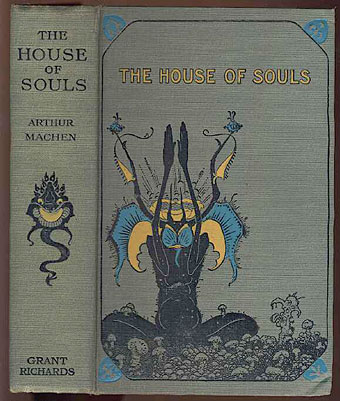
The House of Souls (1906). Cover illustrations by Sidney Sime.

The story was first collected in The House of Souls in 1906, a book that features a splendidly weird cover illustration by Sidney Sime. Inside there’s some of Machen’s finest supernatural writing including The Great God Pan, The Inmost Light and The Three Imposters. Also included is A Fragment of Life, a visionary piece that begins as a domestic drama but by the end has almost intersected with The White People.

And by coincidence (or is it?), I’ve just noticed that Tartarus Press are publishing a facsimile edition of the 1906 volume later this month.


3: The Ceremonies
ceremonies.jpg

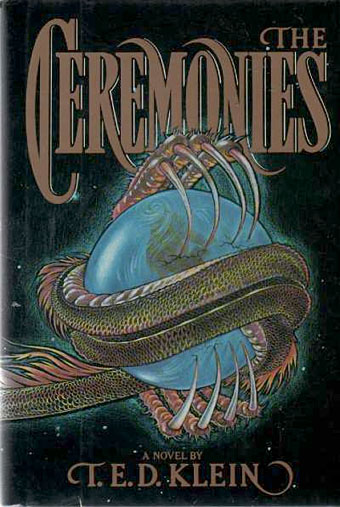
The Ceremonies (1984). Illustration by David Palladini.

TED Klein’s debut novel is also his only novel to date. Klein was editor of The Twilight Zone Magazine at this time, and he used the publication’s popularity to promote the weird fiction of the past; writers like Machen and Algernon Blackwood weren’t as visible in the mid-80s as they are today. The Ceremonies was expanded from a 1972 novella, The Events at Poroth Farm, and borrows much from The White People: the ceremonies of the title refers to those in the story, and the story itself—which a character is instructed to read by moonlight—is described as a key to occult mysteries. There’s a lot about the novel to recommend—Klein’s prose for a start—but I felt it could have been much weirder than it was. The book reads like a typical King/Straub narrative that’s aiming for more without quite getting there, and placing something as unique as Machen’s story at its heart only makes its eventual shortcomings all the more apparent.


4: A drawing
whitepeople.jpg

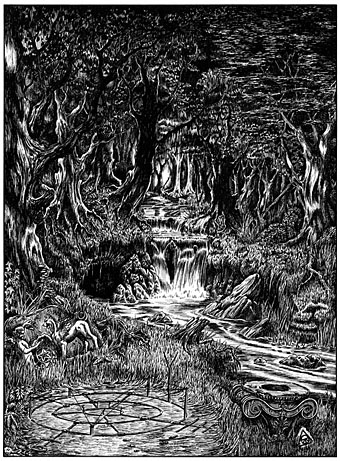
The White People (1990) by John Coulthart.

And speaking of aiming for more without quite getting there, my drawing from 1990. This was going to be one of a series based on Machen’s story but I ran out of steam, feeling that the usual approach of drawing separate scenes wasn’t going to deliver the essence of the piece. If I tried this today I’d probably go for a more surreal approach the way Sätty did with Poe.


5: Roses
roses.jpg

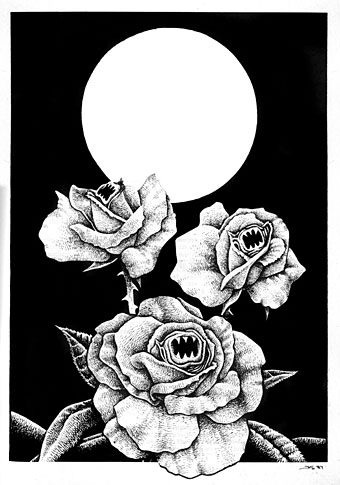
The Singing Roses (1987) by Jeffrey Salmon. From Dagon magazine no. 18/19, July–October, 1987.

“And what is sin?” said Cotgrave.

“I think I must reply to your question by another. What would your feelings be, seriously, if your cat or your dog began to talk to you, and to dispute with you in human accents? You would be overwhelmed with horror. I am sure of it. And if the roses in your garden sang a weird song, you would go mad. And suppose the stones in the road began to swell and grow before your eyes, and if the pebble that you noticed at night had shot out stony blossoms in the morning?

The White People

*

Sweet tortures fly on mystery wings / Pure evil is when flowers sing / My heart / My heart is a rose

Love’s Secret Domain (1991) by Coil


6: Ghost Box
zann.jpg

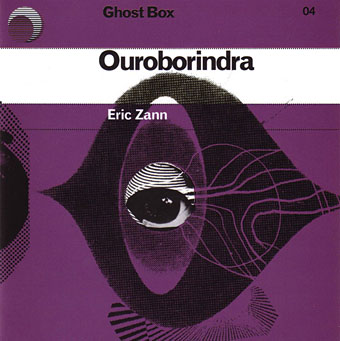
Ouroborindra (2005) by Eric Zann. Design by Julian House.

Track 4: Dôls
Track 6: Voolas
belbury.jpg

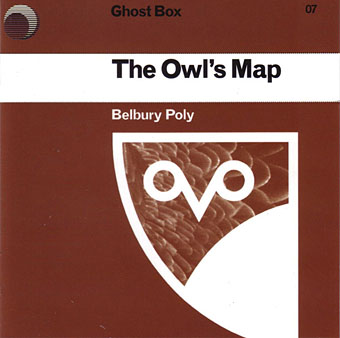
The Owl’s Map (2006) by Belbury Poly. Design by Julian House.

Track 11: Scarlet Ceremony

Among the sleeve notes there’s this:

And the noise and the singing would go on and on for a long time, and the people who were in a ring swayed a little to and fro; and the song was in an old, old language that nobody knows now, and the tune was queer.

Arthur Machen, The White People


7: The White People by Ibrahim R. Ineke
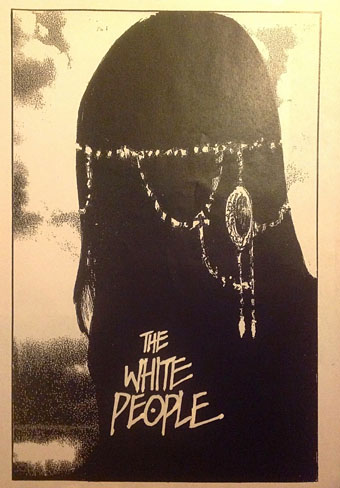
ineke1.jpg

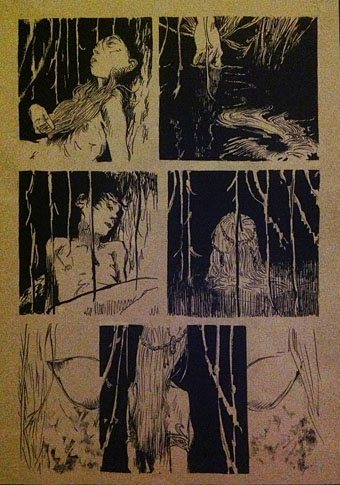
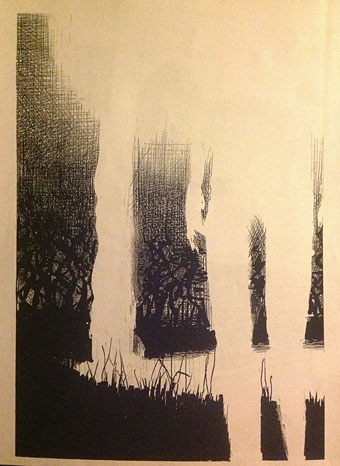
A very impressive comic-strip adaptation, the first of its kind, as far as I’m aware. See the full run of pages here. (And thanks to Ibrahim for getting in touch!)
ineke2.jpg

ineke3.jpg

ineke4.jpg

For those who can’t afford a limited edition from Tartarus Press, Machen’s story may currently be found in Penguin’s The White People and Other Weird Stories. The perfect thing now the nights are drawing in.

Update: See also The Forbidden Forest, a short animation based on the story. (Thanks, Richard!)

Elsewhere on { feuilleton }
The Lovecraft archive

Previously on { feuilleton }
The Bowmen by Arthur Machen
Rex Ingram’s The Magician
The Great God Pan

Fuseli’s Nightmare

nightmare1.jpg

The Nightmare (1781).

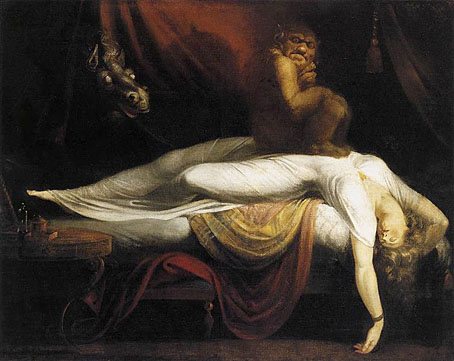
Christopher Frayling’s Nightmare: The Birth of Horror (1996) opens with a prologue examining Henry Fuseli’s most celebrated painting:

Henry Fuseli, who later wrote that “one of the most unexplored regions of art are dreams”, and who was said to have supped on raw pork chops specifically to induce his nightmare, made his name with this painting. And engraved versions, produced in 1782, 1783 and 1784, distributed the image across Europe, until Fuseli’s masterpiece became the way of visualising bad dreams.

Although The Nightmare was painted just before the Romantic craze in Western Europe—which revelled in peeling back the veneer of rational civilisation to reveal the “natural” being or the raw sensations beneath, sometimes through the gateway of dreams—it was well-known to the writers and painters of the early nineteenth century. One of them wrote that “it was Fuseli who made real and visible to us the vague and insubstantial phantoms which haunt like dim dreams the oppressed imagination”.

The Nightmare was fascinating—and scary—because it operated at so many different levels at once. It was set in the present (the stool and bedside table are “contemporary” in style), and it was concerned not so much with an individual’s nightmare—the usual subject-matter of dream paintings, often involving famous individuals and their prophecies—as with nightmares in general. It was not A Nightmare, but The Nightmare; not a vision but a sensation. This gave it a direct impact, unmediated by history, which put a lot of critics off.

nightmare2.jpg

The Nightmare (1791).

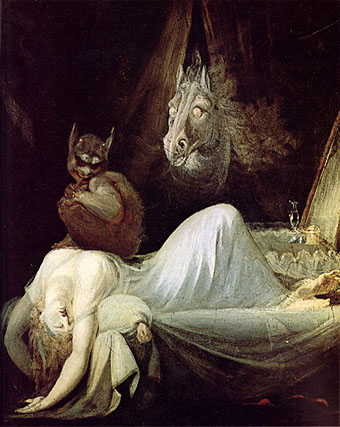
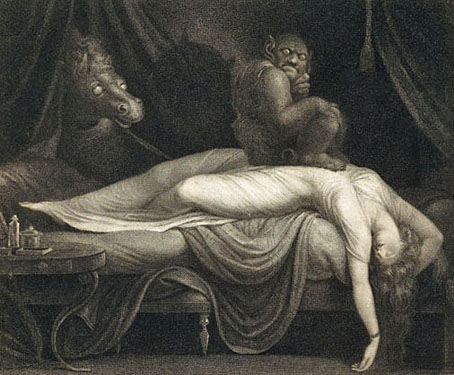
Later generations of critics have had no such problems, of course, nor have the legions of artists and cartoonists who’ve plagiarised and parodied this memorable scene. I had a vague notion of collecting some of the derivations but a quick image search reveals an endless profusion of squatting figures and thrusting horse heads. Wikipedia did provide two of the engraved versions, however. Of the two paintings above I’ve always preferred the later one: the incubus, or “mara” as Frayling calls it, looks more sinister, and the horse head has become an almost unavoidable sexual symbol. No wonder that Siegmund Freud had a copy of The Nightmare on the wall of his waiting room.

nightmare3.jpg

Engraving by Thomas Burke (1783).

Continue reading “Fuseli’s Nightmare”

Weekend links 222

wicker.jpg

A self-portrait by Nadia Wicker from her Projectie series.

• “And boy, did that Rain Parade sleeve look cool with its picture of the insouciant band sitting in front of large hot-house (or glass palace), the sky behind them tinted a sickly shade of apocalypse pink…” Joe Banks on the Rain Parade’s finest moment, Explosions In The Glass Palace.

• “…there are pleasures to be had from books beyond being lightly entertained. There is the pleasure of being challenged; the pleasure of feeling one’s range and capacities expanding…” Rebecca Mead on the pleasure of reading to impress yourself.

• “If Gengoroh Tagame performed the acts he drew in his comics he’d probably be dead or in jail,” says Zac Bayly, interviewing Tagame for BUTT.

Crime does not fascinate James Joyce as it fascinates the rest of us—the suggestion of crime dismays him. He tells me that one of his handicaps in writing Work in Progress is that he has no interest in crime of any kind, and he feels that this book which deals with the night-life of humanity should have reference to that which is associated with the night-life of cities—crime. But he cannot get criminal action into the work. With his dislike of violence goes another dislike—the dislike of any sentimental relation. Violence in the physical life, sentimentality in the emotional life, are to him equally distressing. The sentimental part of Swift’s life repels him as much as the violence of some of his writing.

Padraic Colum attended Joyce’s 47th birthday party.

• I’m currently reading The Wanderer, “a weird document” by Timothy J. Jarvis, which is officially published this week.

The Changes, another remarkable children’s TV series from the 1970s, is out on DVD next week.

Sir Richard Bishop has made all 14 of his solo albums available as free downloads.

• “How long do CDs last? It depends, but definitely not forever,” says Laura Sydell.

• “Readers absorb less on e-readers than on paper, study finds

• Book designer Craig Mod wants to talk about margins.

• Mix of the week: a mix for The Quietus by Helm.

Ozu’s passageways

• The Rain Parade: No Easy Way Down (BBC TV, 1984) | No Easy Way Down (studio, 1984) | No Easy Way Down (Tokyo, 1984)