Weekend links 401

time.jpg

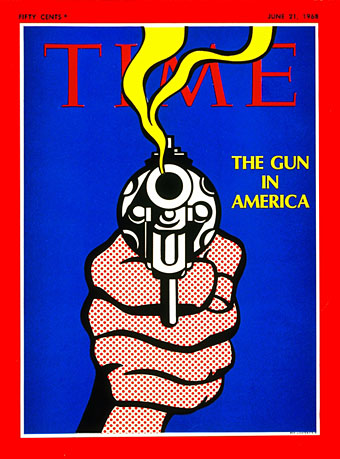
TIME, June 21st 1968. Cover by Roy Lichtenstein.

• “Forget the democratic processes, the judicial system and the talent for organization that have long been the distinctive marks of the US. Forget, too, the affluence (vast, if still not general enough) and the fundamental respect for law by most Americans. Remember, instead, the Gun. That is how much of the world beyond its borders feels about the US today. All too widely, the country is regarded as a blood-drenched, continent-wide shooting range where toddlers blast off with real rifles, housewives pack pearl-handled revolvers, and political assassins stalk their victims at will.” The TIME magazine feature with the famous Roy Lichtenstein cover (prompted by the assassination of Robert Kennedy) will be fifty years old in June.

• “Where do we feel at home? What do our cities look like? How do we see? In 1908, architect and theorist August Endell set out to answer these deceptively simple questions.” Endell’s The Beauty of the Metropolis is coming from Rixdorf Editions in May.

Beardsley 120: The Death of Pierrot is a series of events in Aubrey Beardsley’s birthplace, Brighton, taking place throughout the month of March.

Like the Bloomsbury Group and the Beats, the Surrealists could be incestuous, choosing lovers from inside the circle and often remaining close to their exes. When [Max] Ernst and [Leonora] Carrington reached Paris, he introduced her to Leonor Fini, his friend and former lover. Tall, dazzling, and bejeweled, Fini cultivated a baroque theatricality; every day with her was a masked ball. Recognizing Carrington as “a revolutionary,” she claimed her as an astrological twin—a feat possible only because Fini lied about her age. “This chronological charade, combined with later cosmetic surgeries, sustained the image of youth and beauty that remained vital to Leonor’s self-image, the sexuality and her sense of her place in the world,” writes Chadwick:

Imperious and mercurial, she was also generous, loving and happy to share her rich intellectual life with the younger woman she considered her double. Like Leonora, she believed that cats possessed highly developed psychic powers, that horses had mythological powers that identified them with the feminine, and that painting was an alchemical process.

Regina Marler reviewing three new books about Leonora Carrington and the women artists of the Surrealist movement

As Serious As Your Life: Black Music and the Free Jazz Revolution, 1957–1977 by Val Wilmer receives a welcome republication next month.

• At Dangerous Minds: Occultism, cinema and architecture: How a ouija board built the Bradbury Building.

• When Books Read You, a Defence of Bibliomancy by Ed Simon.

• Ä Brïëf Hïstöry Öf Mëtäl Umläüts by Mike Rampton.

Joey Zone Illustration – Art from The joey Zone.

• At Dennis Cooper’s: Brad Dourif Day.

Alva Noto‘s favourite albums.

Eddie Campbell, Dammit!

• Metropolis (1978) by Edgar Froese | Metropolis (1979) by Motörhead | Under The Gun (Metropolis Mix) (1993) by The Sisters Of Mercy
Weekend links 390

possession.jpg

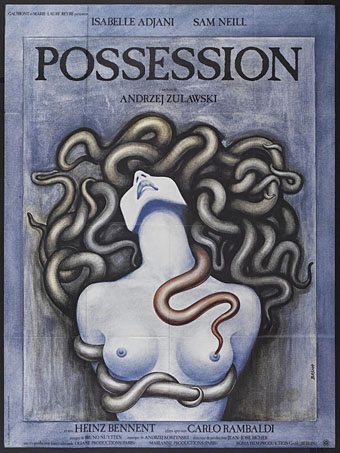
French poster by Basha (Barbara Baranowska) for Andrzej Żuławski’s extraordinary Possession (1981).

• “Alive from Off Center, renamed Alive TV in 1992, was an American arts anthology television series aired by PBS between 1984 and 1996. Each week, the series featured experimental short films by a mixture of up-and-coming and established directors. Notable episodes included As Seen on TV, starring comic actor Bill Irwin as an auditioning dancer who becomes trapped in a television, wandering among daytime dramas, MTV, and PBS’s own Sesame Street and the atmospheric puppet melodrama Street of Crocodiles, adapted by the Brothers Quay from the Bruno Schultz story. […] Arguably the series’ best-known episode was What You Mean We? a short film written by, directed by, and starring Laurie Anderson, which aired in 1986.” Alive from Off Center, 11 episodes at Ubuweb.

• “[Count] Stenbock was a homosexual convert to Roman Catholicism and owner of a serpent, a toad, and a dachshund called Trixie. It was said that toward the end of his life he was accompanied everywhere by a life-size wooden doll that he believed to be his son. His poems and stories are replete with queer, supernatural, mystical, and Satanic themes; original editions of his books are highly sought by collectors of recherché literature.” Of Kings and Things: Strange Tales and Decadent Poems by Count Eric Stanislaus Stenbock will be published by Strange Attractor in March, 2018.

• Music news of the week (in this house, anyway) is a new song, The Mysterious Vanishing of Electra, by Anna von Hausswolff. A new album, Dead Magic, is due in March, and I’m doubly-thrilled to read that Randall Dunn of Master Musicians of Bukkake (and producer/engineer for Earth, Sunn O))), etc.) is involved.

• “Why do Texas prisons ban Freakonomics but not Adolf Hitler’s Mein Kampf?” asks Lauren McGaughy. On the banned list is the three-volume The Graphic Canon, edited by Russ Kick, which includes my adaptation of The Picture of Dorian Gray.

• “To understand how other planets are made, exogeologists are synthesizing those planets in miniature in the earthbound equipment in their labs.” BLDGBLOG on speculative mineralogy.

• “What does the Bardo sound like?” Lauria Galbraith on Éliane Radigue‘s Trilogie de la Mort, three hour-long electronic compositions based on The Tibetan Book of the Dead.

• And speaking of Earth, Joseph Stannard talked to Dylan Carlson (Earth) and Kevin Martin (The Bug) about their recent collaboration.

• Mixes of the week: FACT mix 630 by Hanz, XLR8R Podcast 519 by Setaoc Mass, and Secret Thirteen Mix 239 by Blush Response.

• The League’s seven deadly sins: Reese Shearsmith on the cinematic influences behind The League of Gentlemen’s TV series.

Donnie & Laurie, a jam from the late 1970s with Laurie Spiegel on Electrocomp 101 synthesizer, and Don Christensen on drums.

• Guests and dates for the Dublin Ghost Story Festival have been announced.

David Bowie sang for Devo, and Mark Mothersbaugh might have the tapes.

• The albums of the year according to The Quietus.

• At Dennis Cooper’s: Isabelle Adjani Day.

Possessed (1979) by MX-80 Sound | Possession (1988) by Danzig | Possessed (1992) by Balanescu Quartet

Weekend links 374

vasconcelos.jpg

Le Chasseur by Lupe Vasconcelos who was profiled this week at Unquiet Things, and whose work may also be seen at the Ars Necronomica art show in Providence, RI, until the end of the month.

• “After a morning’s writing, Stevenson would entertain himself with music, particularly the flageolet, which he played so badly ‘people fled from the sound’.” Peter Moore reviewing Robert Louis Stevenson in Samoa by Joseph Farrell.

• Jon Hassell’s 1981 album, Dream Theory in Malaya: Fourth World Volume Two, will be reissued next month.

• Mixes of the week: Secret Thirteen Mix 228 by Arma Agharta, FACT Mix 614 by Do Make Say Think.

Yet, entertaining as all this is, in a macabre key, the dead are hard to think about—and, in many ways, to read about. Unlike animals, which Lévi-Strauss declared were not only good to eat but bon à penser, too, I found that I averted my eyes, so to speak, several times as I was reading this book. Not because of the infinite and irreversible sadness of mortality, or because of the grue, the fetor, the decay, the pervasive morbidity—though Laqueur’s gallows humour about scientific successes in the calcination of corpses can be a bit strong—but because the dead present an enigma that can’t be grasped: they are always there in mind, they come back in dreams, live in memory, and if they don’t, if they’re forgotten as so many millions of them must be, that is even more disturbing, somehow reprehensible. The disappeared are the unquietest ghosts. Simone Weil writes that the Iliad is a poem that shows how “force…turns man into a thing in the most literal sense: it makes a corpse out of him.” But Laqueur is surely right to inquire why that thing, the “disenchanted corpse…bereft, vulnerable, abject”, is a very different kind of thing from the cushion I am sitting on or even my iPad (which keeps giving signs of a mind of its own). I have always liked Mme du Deffand’s comment, when asked if she believed in ghosts. A philosopher and a free thinker, she even so replied: “Non, mais j’en ai peur.” (“No, but I am frightened of them.”)

Marina Warner reviewing The Work of the Dead: A Cultural History of Mortal Remains by Thomas Laqueur

New Worlds magazine at the Internet Archive. Not a complete run but it’s a start.

Brigit Katz on breakthroughs in the scientific search to replicate psilocybin.

• The relaunched (and slightly renamed) Manchester Digital Music Archive.

• At Dennis Cooper’s: Robert Altman Day (restored/expanded).

• RM Rhodes presents the art of Philippe Druillet.

Fragile Self

Dream Lover (1964) by The Paris Sisters | Dream Street (1966) by Henry Mancini | Dream Letter (1969) by Tim Buckley

Weekend links 369

popovic.jpg

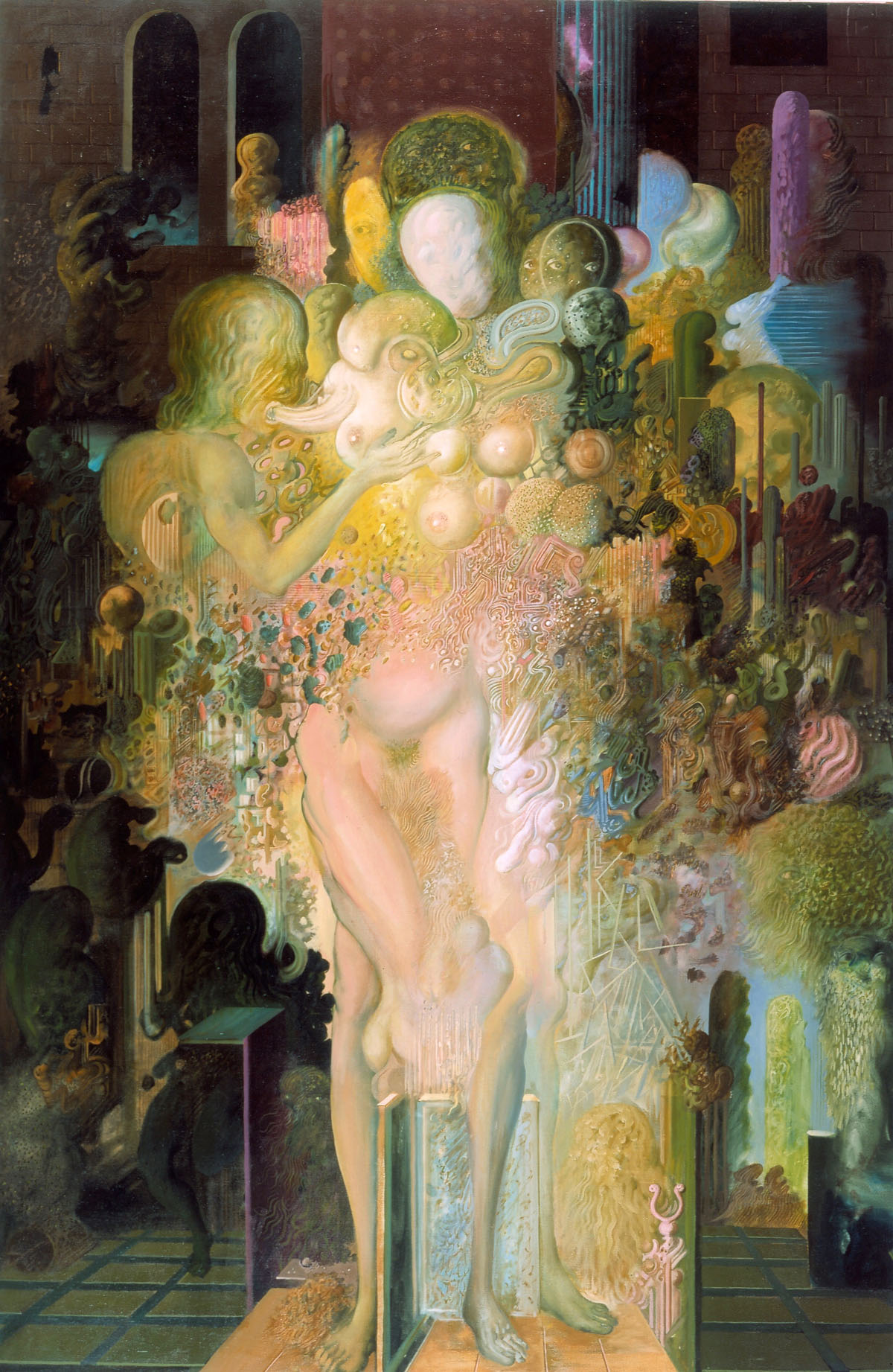
Untitled painting by Serbian Surrealist Ljuba Popovic (1934–2016). I missed the announcement of Popovic’s death last year.

Bryan Washington on the radical grace of Gengoroh Tagame: My Brother’s Husband and the tradition of gay manga. Where bara artists are concerned, I favour the work of Mentaiko Itto. Bruno Gmünder recently published a collection in English.

• At madrotter-treasure-hunt: Post punk from old tapes; “Some live recordings from concerts in Holland from Charles Hayward and from This Heat, Metabolist, Pere Ubu, Holger Hiller…”

Dennis Cooper‘s favourite fiction, poetry, non-fiction, film, music, art & internet of 2017 so far. (Thanks again for the nod to this blog!)

The Weird and the Eerie is an evocative and carefully-written short study in cultural aesthetics. Far from the familiar line-up of vampires, zombies, and demons, Fisher’s eclectic examples speak directly to one of the central themes of the horror genre: the limits of human knowledge, the metamorphic shapes of fear, and the blurriness of boundaries of all types. His simple conceptual distinction quickly gives way to reversals, permutations, and complications, ultimately refusing any notion of a monstrous or alien unhumanness “out there”; with Fisher, the unhuman is more likely to reside within the human itself (or as Lovecraft might write it, “the unhuman is discovered to reside within the human itself”).

Many books on the horror genre are concerned with providing answers, using varieties of taxonomy and psychology to provide a therapeutic application to “our” lives, helping us to cathartically purge collective anxieties and fears. For Fisher, the emphasis is more on questions, questions that target the vanity and presumptuousness of human culture, questions regarding human consciousness elevating itself above all else, questions concerning the presumed sovereignty of the species at whatever cost – perhaps questions it’s better not to pose, at the risk of undermining the entire endeavour to begin with.

Eugene Thacker reviewing The Weird and the Eerie by Mark Fisher. I’ve not read Fisher’s book yet (I’m intending to) but I was pleased to see one of my illustrations of R’lyeh accompanying the piece.

• At Dirge Magazine: Gwendolyn Nix on Twisted Labyrinths, Dark Mazes, and Ancient Methods of Reflection.

• Mixes of the week: XLR8R podcast 498 by Nicola Kazimir, and Secret Thirteen Mix 227 by Sculpture.

AO Scott reviews Endless Poetry, Alejandro Jodorowsky’s surreal self-portrait.

Maze Of Love (1968) by The Dave Clark Five | Audiomaze (2000) by Tabla Beat Science | Into The Maze (2012) by Pye Corner Audio

Weekend links 364

focusgroup.jpg

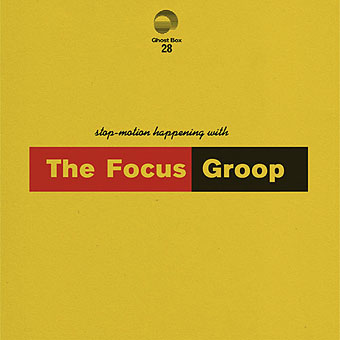
Stop-Motion Happening with The Focus Groop is a new album by The Focus Group (now a Groop, apparently, à la Stereolab), and the next release on the Ghost Box label. Design, as always, by Julian House.

• At Dennis Cooper’s: Sypha presents…Voyager en Soi-Même: a Tribute to JK Huysmans’ Là-Bas. Related: Henry Chapront’s illustrations for a 1912 edition of Huysmans’ novel.

• At the BFI: Graham Fuller on Penda’s Fen and the Romantic tradition in British film; Pamela Hutchinson and Alex Barrett choose 10 great German Expressionist films.

• The Provenance of Providence: Chris Mautner on the Lovecraftian comic series by Alan Moore and Jacen Burrows.

Luke Turner on Sunn O))): the ecstatic doom metallers turning rock concerts into “ritualist experiences”.

• At Dangerous Minds: The homoerotic “needleporn” art of Zachary Nutman.

Conor McGrady on the visual art of Nurse With Wound’s Steven Stapleton.

• Collage and Mechanism: Anita Siegel’s art for Doubleday Science Fiction.

• Mix of the week: My name is Legion: Chapter 1 by The Ephemeral Man.

ChrisMarker.org is asking for small donations to help keep it running.

• 1967 is the year pop came out, says Jon Savage.

Allen Ginsberg’s Howl goes online.

Groupmegroup (1981) by Liquid Liquid | If I Were A Groupie (1995) by Pizzicato Five | Group Four (1998) by Massive Attack