François Schuiten record covers

schuiten01.jpg

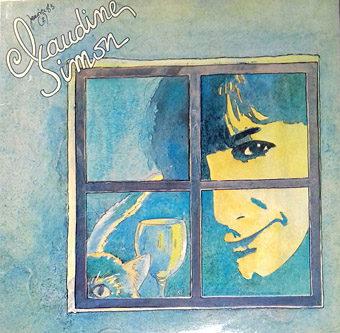
Claudine Simon (1980) by Claudine Simon.

Continuing an occasional series about artists or designers whose work has appeared on record sleeves. Belgian artist François Schuiten is a familiar name here, being the co-creator with Benoît Peeters of the Obscure World, one of my favourite zones of fantastic invention. The Obscure World has grown to become a multimedia endeavour so Schuiten’s involvement with some of the later entries in this post goes beyond providing the cover art to being connected to the music itself.
schuiten02.jpg

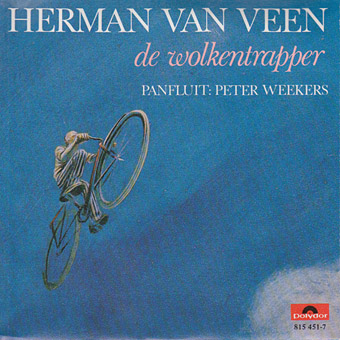
De Wolkentrapper (1983) by Herman van Veen.

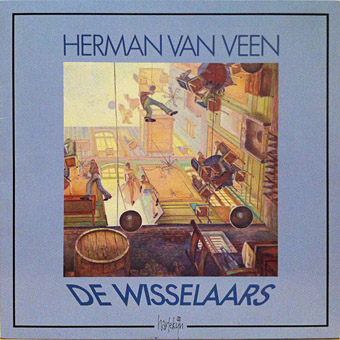
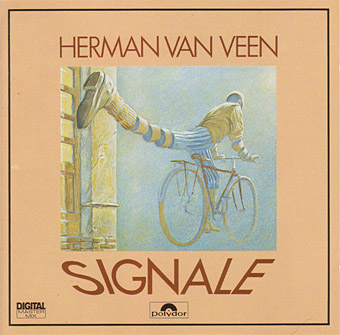
Herman van Veen is a Dutch writer and singer who produced a number of albums and singles in the 1980s featuring Schuiten cover art. The gravity-defying people are from an early comic strip unattached to the Obscure World mythos, Going to Pieces.
schuiten03.jpg

Signale (1984) by Herman van Veen.

schuiten04.jpg

De Wisselaars (1985) by Herman van Veen.
schuiten05.jpg

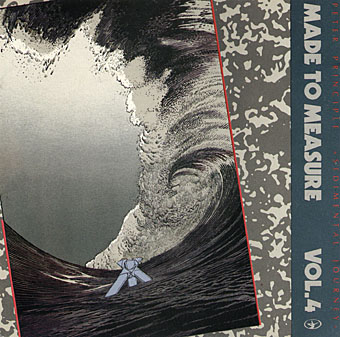
Sedimental Journey (1985) by Peter Principle.

The Obscure World makes its cover debut on this solo release by the late Peter Principle, bass player in Tuxedomoon. Principle was American but Tuxedomoon were based at the time in Europe, and their record label, Crammed are Belgian. Obscure World aficionados will recognise the structure about to be submerged by a vast wave as the Network, an inexplicable object first seen in Fever in Urbicand (1985).
Continue reading “François Schuiten record covers”

Weekend links 480

yokoo.jpg

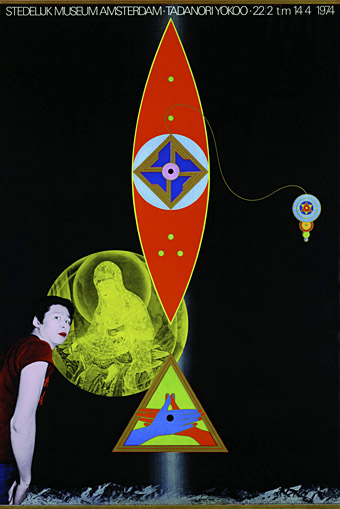
Tadanori Yokoo (1974) by Tadanori Yokoo and Will van Sambeek. A poster from the Colourful Japan exhibition at the Stedelijk Museum, Amsterdam.

• The first decade of space-rock pioneers Hawkwind is explored by Joe Banks in Hawkwind: Days of the Underground — Radical Escapism in the Age Of Paranoia, coming soon from Strange Attractor Press. I created the wraparound cover for this one, and will be talking about it here in a later post. Those interested in the book should note that the special edition hardback will include an extra book, plus a print and postcards. Limited to 500 copies so don’t wait around.

• “What we look for in our formative years can be very different from the demands we make later as analytical adults, and it was certainly more important to me that representations of gayness were complex or colourful than that they were positive, whatever that meant.” Ryan Gilbey on 50 years of Midnight Cowboy.

• Mixes of the week: Through A Landscape Of Mirrors Vol. II – France I by David Colohan, and As Imperceptibly As Grief The Summer Lapsed Away by Haunted Air.

If we imagine the material world about us having a concealed component of the fictional and the fantastic, visions buried in its stones and mortar waiting for their revelation, then we may suppose that 18th-century Lambeth was a teeming hub of such imaginal biodiversity. Bedlam alone could account for this ethereal population boom, but then nearby was the Hercules Buildings residence of William Blake, which can have only added to the sublime infestation.

Alan Moore on the visionary art of William Blake

• At the Internet Archive: Ten issues of Ed Pinsent’s The Sound Projector Music Magazine (1996–2002), with bonus Krautrock Kompendium.

• “Like many dictators Franco considered himself an artist.” Jonathan Meades on how fascism disfigured the face of Spain.

Occulting Disk is a new album from the master of unnerving doomscapes, Deathprod, which will be released in October.

• Making MAD: Chris Mautner on the beginning and end of MAD magazine.

John Margolies’ photographs of roadside America.

Fair Sapphire by Meadowsilver.

Jarboe‘s favourite music.

Theme from Midnight Cowboy (1969) by John Barry | Astral Cowboy (1969) by Curt Boettcher | Dayvan Cowboy (2005) by Boards Of Canada

Weekend links 477

starling.jpg

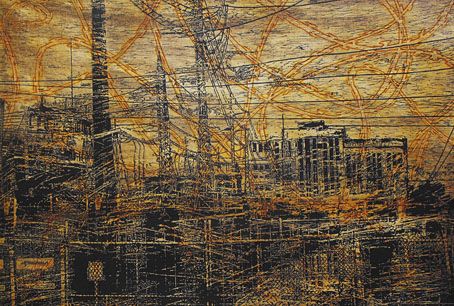
Edge of Industry (2009) by Anne Starling.

• “In her darkroom with her silver salts and gelatine plates, she experimented with the mercurial effects of light, time and temperature.” Hailey Maxwell on the photographic art of Dora Maar.

• A Visionary Work Renew’d: A conversational review of Swan River Press edition of William Hope Hodgson’s The House on the Borderland by the late Sam Gafford & The joey Zone.

Brian Blomerth’s graphic novel Bicycle Day tells the story of the psychedelic ride made in 1943 by Swiss chemist Albert Hofmann while he was researching LSD.

• “The cinema is not the industrial cinema. The cinema is independent cinema.” Francis Ford Coppola on Apocalypse Now and related matters.

• More lunacy: “Fireworks, wild swans and super-cannons were propelling people mentally Moonwards long before 1969,” says David Seed.

• Mix of the week: Then Beautiful Swift Sparrows Led You Over the Black Earth by The Ephemeral Man.

Working (You Are), a new recording by Stephen Mallinder, his first solo work since Pow Wow in 1982.

Lost Proust stories of homosexual love finally published (but only in French for the moment).

Oren Ambarchi‘s favourite albums.

My White Bicycle (1967) by Tomorrow | Trip On An Orange Bicycle (1968) by The Orange Bicycle | Blue Bicycle (2008) by Hauschka

Fracture by Paul and Gaëtan Brizzi

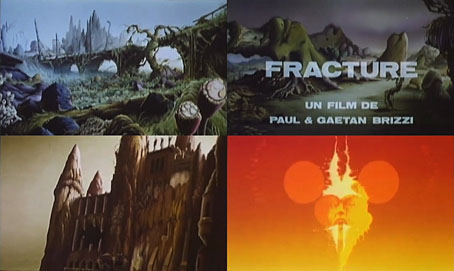
fracture1.jpg

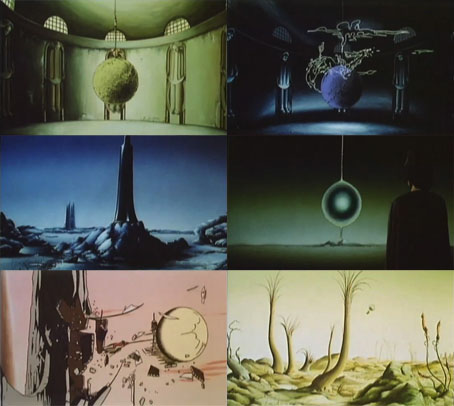
Fracture (1977) is a short animated film from France by the Brizzi Brothers (Paul and Gaëtan), a duo better known for their work on feature-length animated films such as Asterix versus Caesar (1985), and a number of films for Disney. Fracture is their earliest work, and isn’t remotely Disney-like, delivering an SF/fantasy scenario of alien inexplicabilities that makes it an animated counterpart of the comic strips that were running in Métal Hurlant (and its US counterpart, Heavy Metal) in the late 1970s. (The Brizzi Brothers’ most recent works have been comic books so I’d be surprised if Fracture didn’t have comics influence.)

fracture2.jpg

Comics and animation have a considerable advantage over film and TV in being able to avoid the commercial imperatives that explain away mysteries and make the alien too familiar. Animation doesn’t exploit this advantage as often as it might so examples such as Fracture are all the more rare and valuable. The Brizzi Brothers’ film may not be as thoroughly strange and inexplicable as Piotr Kamler’s masterpiece, Chronopolis (1983), but it has its moments. As a bonus, the soundtrack is lifted from albums by Tangerine Dream and Edgar Froese which have been monopolising my waking hours for the past two weeks.

Previously on { feuilleton }
The Captive, a film by René Laloux
Continu-discontinu 2010, a film by Piotr Kamler
L’Araignéléphant
Le labyrinthe and Coeur de secours
Chronopolis by Piotr Kamler

Weekend links 469

X.jpg

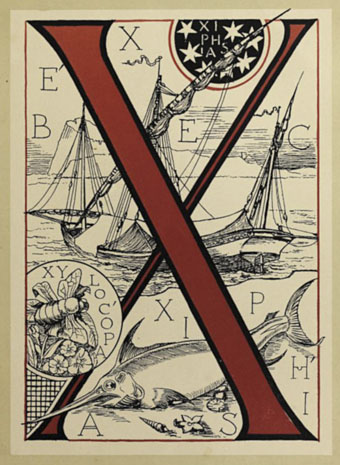
X from Theodore Howard’s ABC (1880) by Theodore Howard.

• “[Parade] has everything: joy and sadness, get-down and wistfulness, mourning and melancholia, group funk and Debussy interludes, echoes of Ellington, Joni, film music, chanson. It’s a perfectly realised whole.” Ian Penman on the enigmas and pleasures of Prince.

• “Mescaline reads like the culmination of a lifetime’s wanderings in the very farthest outposts of scientific and medical history.” Ian Sansom review’s Mike Jay’s history of the psychedelic alkaloid.

• The Day the Music Burned by Jody Rosen: “It was the biggest disaster in the history of the music business—and almost nobody knew. This is the story of the 2008 Universal fire.”

This willing constriction of intellectual freedom will do lasting damage. It corrupts the ability to think clearly, and it undermines both culture and progress. Good art doesn’t come from wokeness, and social problems starved of debate can’t find real solutions. “Nothing is gained by teaching a parrot a new word,” Orwell wrote in 1946. “What is needed is the right to print what one believes to be true, without having to fear bullying or blackmail from any side.” Not much has changed since the 1940s. The will to power still passes through hatred on the right and virtue on the left.

George Packer on what George Orwell’s Nineteen Eighty-Four means today

• Having spent the past week watching Jacques Rivette’s 775-minute Out 1, this interview with Rivette from 1974 was of particular interest.

• At Dangerous Minds: Donald Sutherland as “a sperm-filled waxwork with the eyes of a masturbator” in Fellini’s Casanova.

The Adventures of the Son of Exploding Sausage (1969): the Bonzo Dog Band getting it untogether in the country.

• Dark, velvety dark: Nabokov’s discarded ending to Camera Obscura, introduced by Olga Voronina.

• “Spotify pursues emotional surveillance for global profit”, says Liz Pelly.

• Mix of the week: Then Space Began To Toll by The Ephemeral Man.

• An interview with master of horror manga Junji Ito.

• Announcing the Arthur Machen Essay Prizes.

• RIP film-maker and author Peter Whitehead.

X is for…

X Offender (1976) by Blondie | X-Factor (1981) by Patrick Cowley | X-Flies (1997) by Mouse On Mars