Weekend links 547

baade.jpg

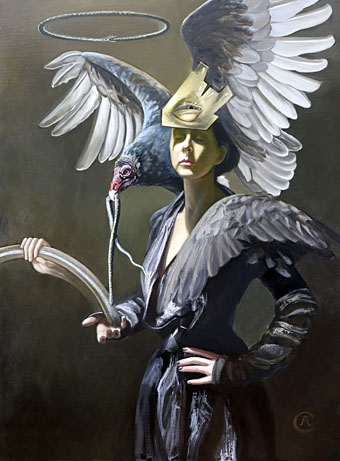
Anti-Vanitas (2018) by Carrie Ann Baade.

• RIP Richard Corben, an artist whose work I wasn’t always keen on but whose enthusiasm for pulp weirdness and cosmic horror was matched by a pulp vitality of his own. Corben’s Den was the first story in the first issue of Heavy Metal, a strip in which Den’s ever-present penis provided some rare equality of nudity in American comics. Corben was also a lifelong Lovecraftian; his 1972 adaptation of The Rats in the Walls is one of the earliest Lovecraft-derived comic strips.

• “Wit was the great man’s defence. Once, crossing Leicester Square with a friend, he looked up and saw a cinema marquee advertising a new film: Michael Redgrave and Dirk Bogarde in The Sea Shall Not Have Them. Coward turned to his friend and said: ‘I don’t see why not. Everyone else has.'” Philip Hoare on Noël Coward’s private lives: the photographs that could have landed him in jail.

• The end of the year brings the lists: Strange Flowers’ Secret Satan, 2020 is a guide to a surfeit of delectable volumes, while at 3 Quarks Daily Dave Maier selects his favourite ambient music of the year.

It’s not an easy life, but for Layne it is better than the alternative. “There is a generation of writers who think that it is a perfectly acceptable thing to accumulate a couple of hundred thousand dollars in student loan debt and go write “takes”—contrary opinion on things like ‘Why Dogs Are Actually The Worst Pet.’” None of it is new, he says, “it’s what people were doing when Rome burned.” But it has left us worse off, he says.

“I feel like we are post-language now,” he says. “Things are more symbolic. The relationship between words and facts and objectivity and their impact seems to have separated to the point where most of the writing that I see, especially on something like Twitter, is by people baffled that people don’t get what they are trying to say. It’s depressing.”

Dominic Rushe on how Ken Layne created an alternative to clickbait in the desert

• “Underworlds, otherworlds, so many passageways on this earth to elsewheres, especially during these weeks of the year.” Nina MacLaughlin on The Shadows below the Shadows.

Dennis Cooper‘s favourite fiction, poetry, non-fiction, film, art, and internet of 2020. Thanks again for the link here!

• The week in strange worlds: The Strange World of Colossive Press, and The Strange World of Robbie Basho.

• The Images Wish To Speak: An interview with artist Carrie Ann Baade.

Jackson Arn on why so many filmmakers have paid homage to Pieter Bruegel.

Physicists nail down the “Magic Number” that shapes the Universe.

Dreams, Built By Hand

Shadow (1990) by Nusrat Fateh Ali Khan | Shadows (1994) by Pram | Shadow Of A Twisted Hand Across My House (2001) by I.E.M.

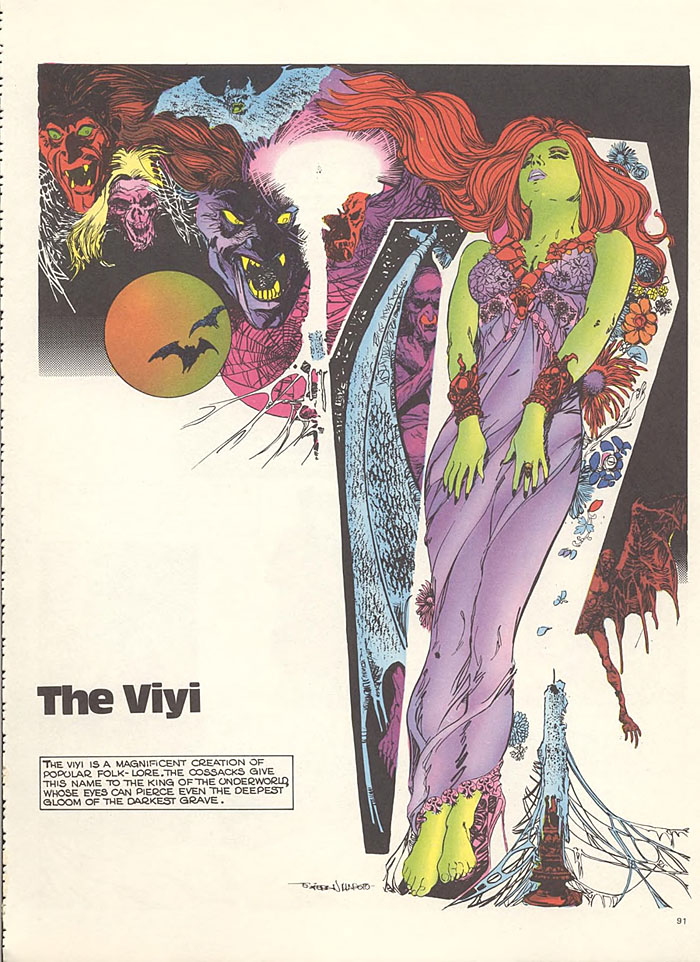
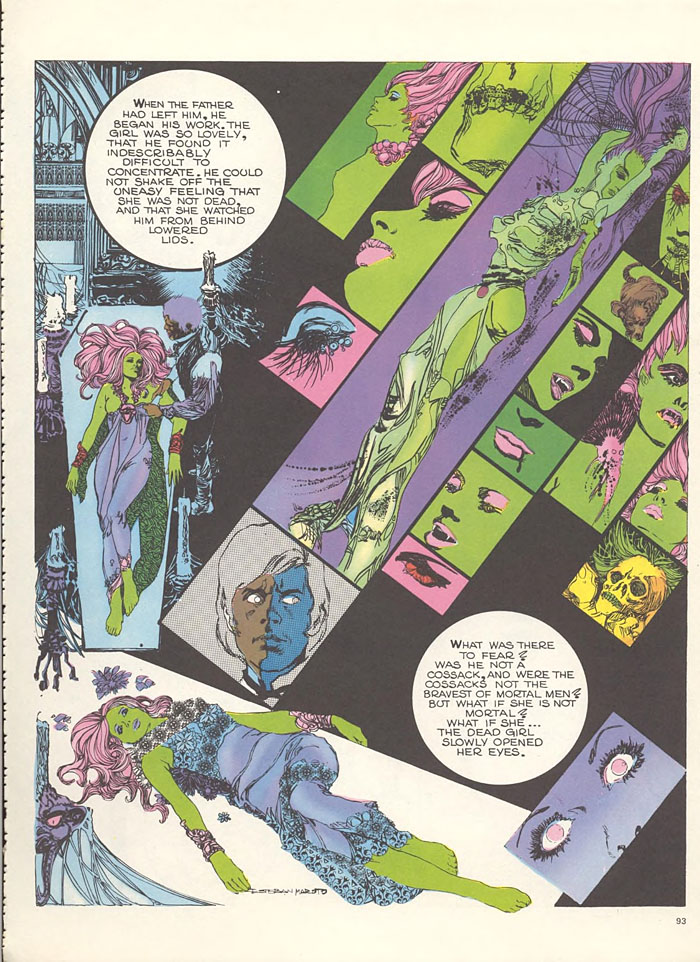
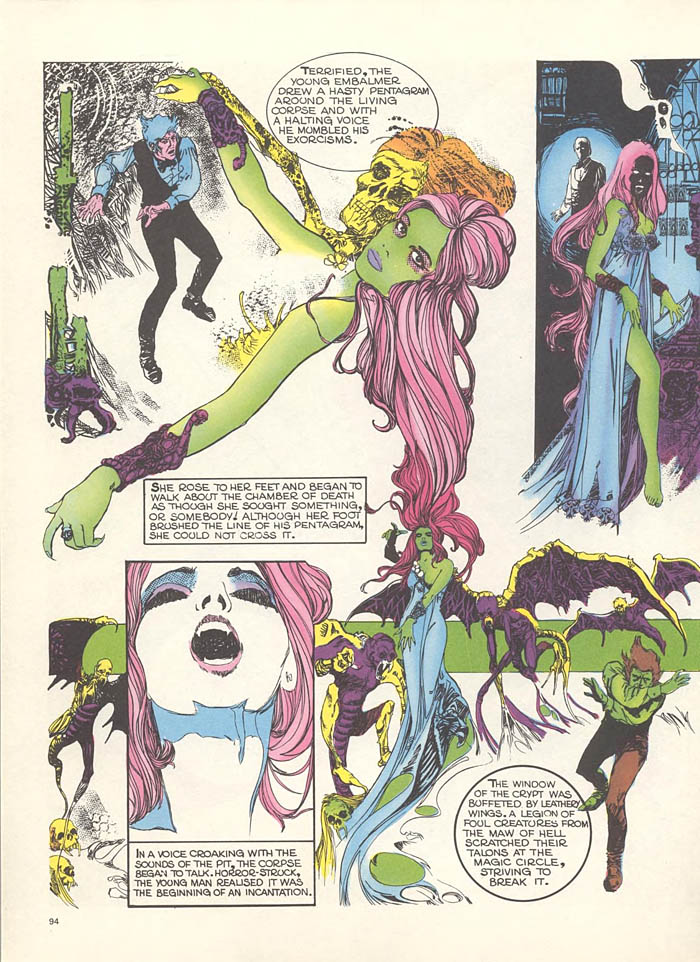
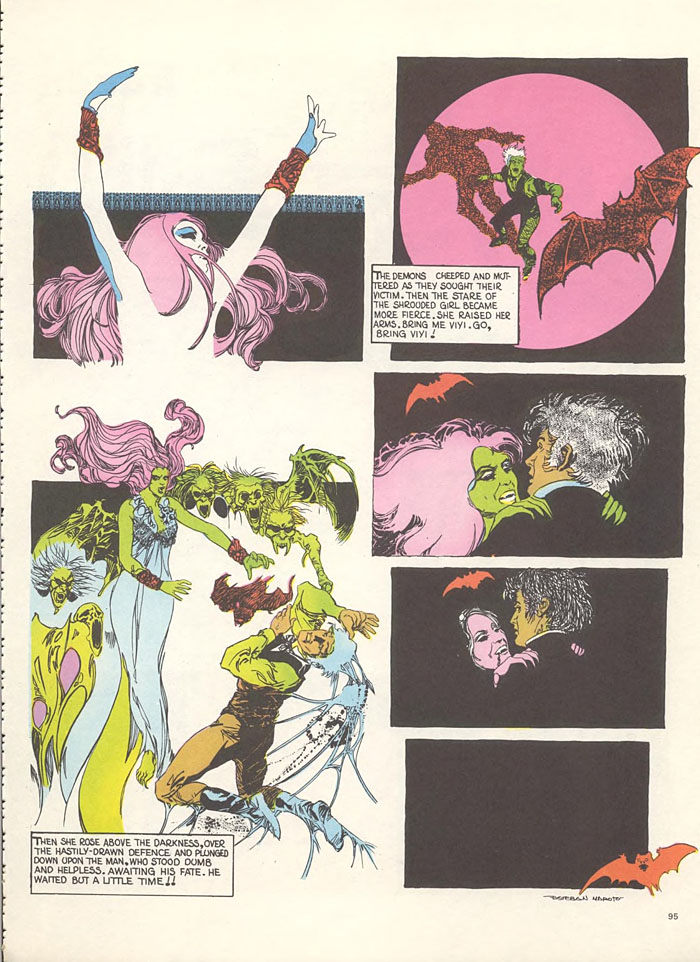
The Viyi by Esteban Maroto

maroto1.jpg

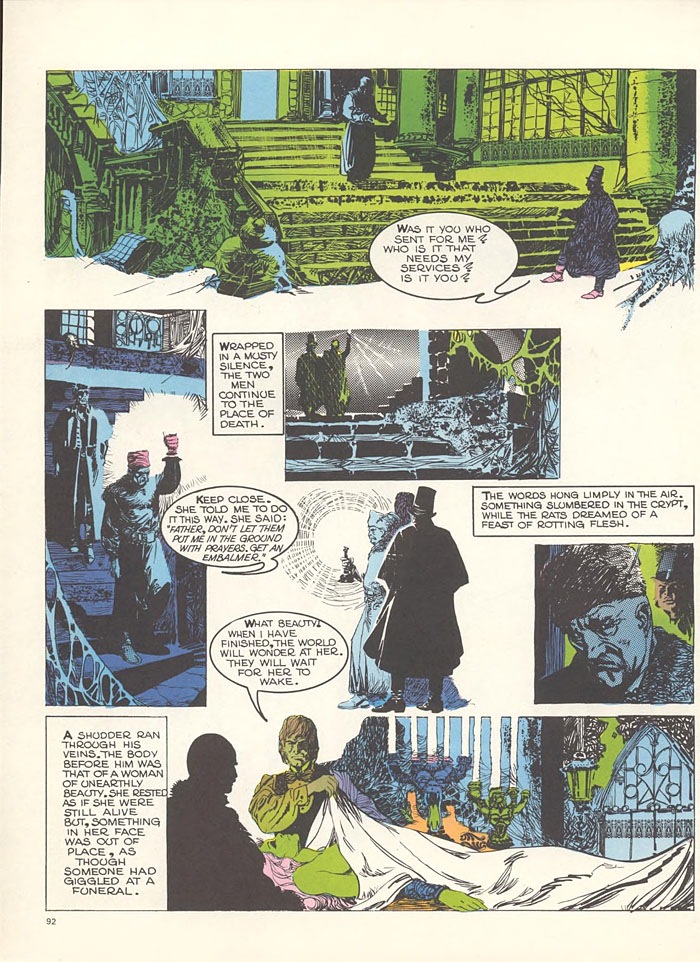
The latest announcement from Eureka Entertainment includes the welcome news of a debut UK release for Viy (1967), the Russian horror film directed by Konstantin Yershov and Georgi Kropachyov. To celebrate this, here’s Esteban Maroto’s gorgeous version of the witchy folk tale as it appeared in Warren’s Dracula magazine in 1972. There’s more Maroto in the collected edition of Dracula which, like all the Warren publications, is now out-of-copyright. I don’t think there was ever a book 2 in the US but here in Britain we were lucky to get the entire run of Dracula in a single volume.

maroto2.jpg

maroto3.jpg

maroto4.jpg

maroto5.jpg

Previously on { feuilleton }
More Esteban Maroto
The Dracula Annual

Weekend links 528

durer.jpg

The Rhinoceros (after 1620) by Albrecht Dürer.

• “Today—Tolkien, Lovecraft, Miéville and M John Harrison!” Paul StJohn Mackintosh at Greydogtales explores HP Lovecraft’s lack of interest in fictional worldbuilding. The piece includes one of my book covers (ta!) plus a link to an earlier post I wrote about the cover designs of M. John Harrison’s Viriconium books. Since I’m connected to the thesis I’ll suggest that Lovecraft was resistant to the worldbuilding impulse in part because he was almost always writing horror stories. Having studied the genre at length he was well aware of the need to leave suggestive voids for the reader’s imagination.

• RIP Denise Johnson. All the obituaries mention the big names she worked with, notably New Order and Primal Scream, but being in the pool of Manchester session artists she also appeared on a couple of records by my colleagues at Savoy. Her voice is one of those you first hear on the PJ Proby cover of I’m On Fire, while with friend Rowetta she improvised her way through a Hi-NRG original (and a favourite of Anohni’s), the scurrilous Shoot Yer Load.

• At the BFI: Axel Madsen interviews Fritz Lang in 1967; Serena Scateni on where to begin with Nobuhiko Obayashi; and Roger Luckhurst reviews the spomenik-infested  Last and First Men by Jóhann Jóhannsson.

• “Be more aware of the rest of the world!” says Jon Hassell, talking to Alexis Petridis about a life spent making music.

John Boardley on the Renaissance origins of the printed poster. Worth it for the selection of engraved details alone.

• “What Ever Happened To Chicken Fat?” Jackson Arn on a tendency to over-abundance in Jewish humour.

Erik Davis has a new writing home at Substack that he calls The Burning Shore. Bookmarked.

• Mix of the week: The Ivy-Strangled Path Vol. XXII by David Colohan.

• Garry Hensey on The Strange World of John Foxx.

• At Dennis Cooper’s: Sergei Parajanov Day.

Romantic Rhino (1981) by Ananda Shankar | The Lone Rhinoceros (1982) by Adrian Belew | Blastic Rhino (2000) by King Crimson

Weekend links 524

heisler.jpg

Letter M from Abeceda (1942) by Jindrich Heisler.

• At the BFI: Matthew Thrift chooses 10 essential Ray Harryhausen films. “This is, I can assure the reader, the one and only time that I have eaten the actors. Hitchcock would have approved,” says Harryhausen about eating the crabs whose shells were used for Mysterious Island. Meanwhile, Alfred Hitchcock himself explains the attraction and challenges of directing thrillers.

“Although largely confined to the page, Haeusser’s violent fantasies were even less restrained, his writings littered with deranged, bloodthirsty, scatological scenarios.” Strange Flowers on Ludwig Christian Haeusser and the “Inflation Saints” of Weimar Germany.

• Death, Pestilence, Emptiness: Putting covers on Albert Camus’s The Plague; Dylan Mulvaney on the different design approaches to a classic novel.

• A trailer (more of a teaser) for Last and First Men, a film adaptation of Olaf Stapledon’s novel by the late Jóhann Jóhannsson.

• At Dennis Cooper’s: Spotlight on…James Purdy: The Complete Short Stories of James Purdy.

Al Jaffee at 99: Gary Groth and Jaffee talk comics and humour.

Steven Heller on Command Records’ design distinction.

Czech Surrealism at Flickr.

Sisters with Transistors.

Solitude by Hakobune.

Mysterious Semblance At The Strand Of Nightmares (1974) by Tangerine Dream | Mysterious Traveller (Dust Devils Mix) (1994) by System 7 | The Mysterious Vanishing of Electra (2018) by Anna von Hausswolff

Weekend links 510

phaseiv.jpg

• Saul Bass’s cult science-fiction film, Phase IV, has received a very welcome (Region B) blu-ray release from 101 Films. Everything is a metaphor for the unavoidable just now, but a film about a group of scientists besieged by a tiny and insidious biological threat can’t help but have additional resonance. The new release includes the original (and seldom seen) cosmic ending plus another disc containing several of Bass’s short films. Previously: Directed by Saul Bass.

• Music at the Internet Archive: Live at Metro (2007) by Sora, and three rare cassette releases by French synth-rock duo Fondation: Metamorphoses (1980), Sans Etiquette (1980), and Le Vaisseau Blanc (1983).

• Mixes of the week: a Manu Dibango (RIP) mix from Aquarium Drunkard, and Industrial Synth Rave Isolation Mix by Moon Wiring Club.

We must talk about Nightwood. The novel that sits between those early and late phases of her writing life, the tale of Felix Volkbein, Robin Vote, Dr Matthew-Mighty-Grain-of-Salt-Dante-O’Connor and many others, caught between world wars and each other, in the decadent cities of Europe. The novel follows the journey of Robin Vote, who is more “earth-flesh, fungi, which smells of captured dampness” than person. Sleepwalking through life, she nonetheless wakes up her fellow characters Nora, Felix and Jenny, who each try and pin her down, to no avail. It is a novel that defies synopsis. It is unsurprising that this remarkable book has attracted a “burgeoning body of interpretations”, as Tyrus Miller here notes; yet it seems that there are still new ways to approach it. Julie Taylor offers an affective reading, for example; Joanne Winning concentrates on Nightwood’s collaborative origins, exploring the fruitful and often overlooked creative relationship between Barnes and her partner, Thelma Wood. This is not just a case of considering that relationship as source material for the novel, but unpacking what Winning describes as their “lesbian modernist grotesque”. It is particularly welcome that Winning treats Wood as a silver-point artist in her own right.

Jade French reviews Shattered Objects: Djuna Barnes’s Modernism

• Ben Beaumont-Thomas on where to start with Kraftwerk, and Jennifer Lucy Allan on where to start with Alice Coltrane.

• The BBC’s Culture page discovers Tom of Finland but can’t bring itself to show much of his artwork.

• The art of Asterix: illustrator Albert Uderzo (RIP) at work.

Clive Hicks-Jenkins on “a marvel of clockwork ingenuity”.

• The films Wes Anderson is watching during isolation.

Greydogtales on six more strange tales that linger.

Adrian Searle‘s favourite online art galleries.

• The Ghost Box label is now at Bandcamp.

Twin Flames (Edit) by Lustmord.

• At Dennis Cooper’s: Flamboyant.

Phase By Phase (1976) by Peter Baumann | Phase 3: Agni Detonating Over The Thar Desert… (1995) by Earth | Phase Draft (2003) by Bill Laswell