Weekend links 170

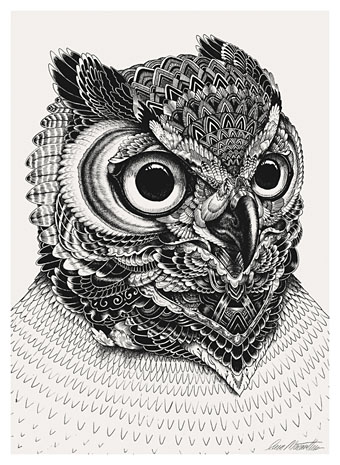
macarthur.jpg

Owl portrait by Iain Macarthur.

• “Ghost Box is a glance through a window seeing something running alongside our version of reality. Like, what if Paul McCartney had made records with the Radiophonic Workshop?” Ghost Box designer and Mr Focus Group, Julian House is interviewed.

• “…that book with the girl with the hatchet in her head…” Dave Tompkins remembers Denis Gifford’s A Pictorial History of Horror Movies (1973), a formative influence of mine, and that of many other people, it seems.

Salvador Dalí’s 1946 illustrated edition of Macbeth. Related: From Macbeth to the Wizard of Oz: New exhibition explores the erotic side of witchcraft.

I do not want to live in a world where the government and a select few conservative feminists get to decide what we may and may not masturbate to, and use the bodies of murdered women or children as emotional pawns in that debate. It is supremely difficult to achieve radical ends by conservative means. Feminists and everyone who seeks to end sexual violence should be very cautious when their immediate goals seem to line up neatly with those of social conservatives and state censors.

Laurie Penny on the recent Tory policy of attempting to limit online pornography.

The Facebook page for The Wicker Man has details of the pursuit for a complete print of the film. A Blu-ray edition will be released in October.

Anne Billson visited the Hotel Thermae Palace in Ostend, the columnated location of Daughters of Darkness.

Kenneth Anger on how he made Lucifer Rising. The ICA in London is screening his films this weekend.
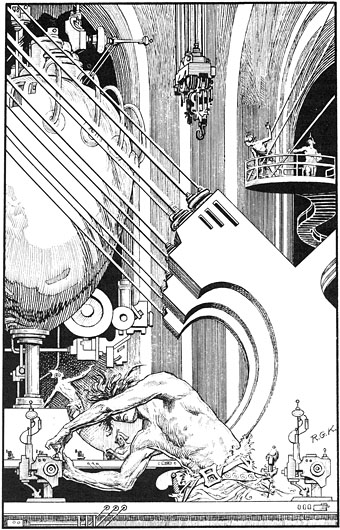
krenkel.jpg

Roy Krenkel illustrates Tales of Three Planets by Edgar Rice Burroughs, 1964.

The Electric Banana Blows Your Mind: The soundtrack library alter ego of The Pretty Things.

• Mix of the week: an ambient (in the 90s’ sense of the word) DJ set by Surgeon.

Bernie Krause shares the happiest sounds he’s heard in nature.

• RIP Walter De Maria, sculptor and musician.

Sexodrome by Asia Argento with Morgan.

• Metabolist: Identify (1980) | Curly Wall (1980) | Ymuzgo/Pigface (1981)
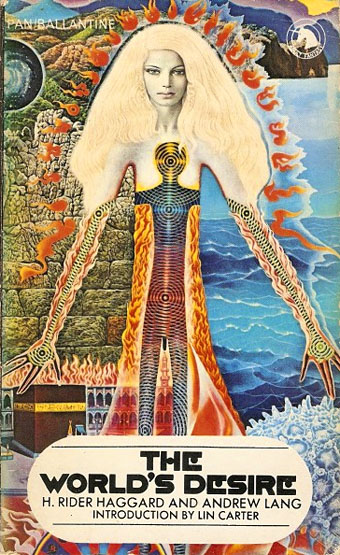
Mati Klarwein book covers

mati1.jpg

The World’s Desire (1972) by H. Rider Haggard & Andrew Lang. Painting: Astral Body Asleep (1968).

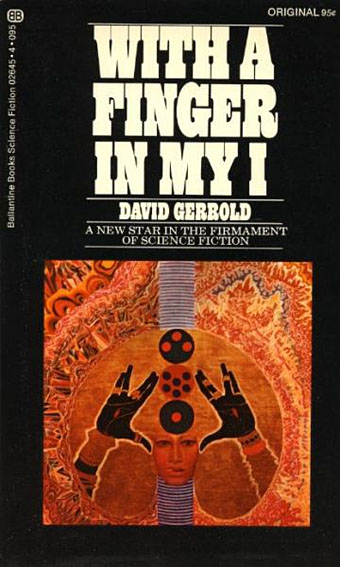
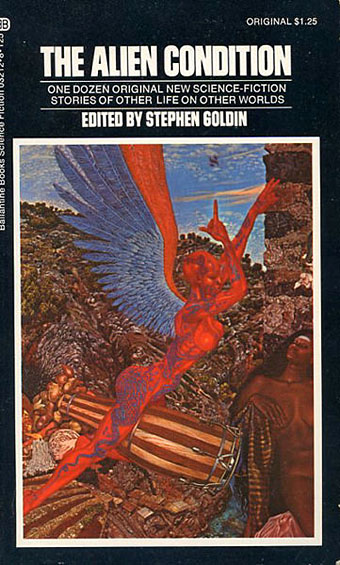
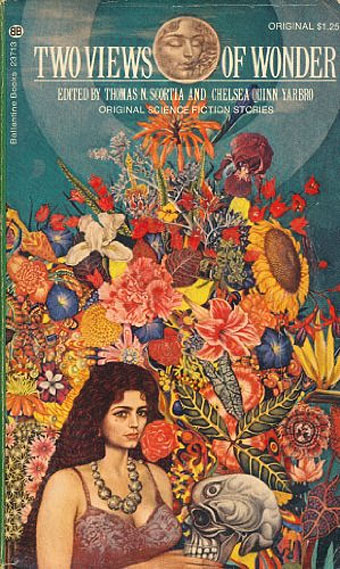
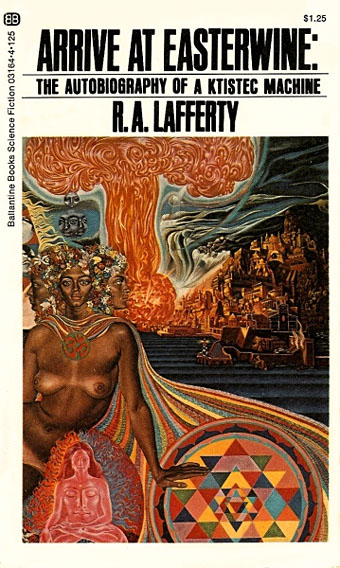
The use of Mati Klarwein’s paintings on album covers is well documented, the official Klarwein site has a small section devoted to some of the covers. Less well-known are these book covers which were evidently the product of a brief enthusiasm for Klarwein’s work in the Ballantine Books’ art department. As with many of the album covers, these are all pre-existing paintings which have been cropped for use as cover art.

The most surprising example is the cover for The Alien Condition with its detail from Annunciation, a painting better known for its appearance on Abraxas (1970), a very successful Santana album. Given how visible that cover art would have been in 1973 you have to suspect that the painting’s use as a book cover was a deliberate bid to attract a youthful readership. All these titles are works of science fiction or fantasy; I don’t recall having seen a Klarwein cover for any non-genre titles. If anyone knows of an example then please leave a comment. (Thanks to Jay for the tip!)

mati2.jpg

With a Finger in My I (1972) by David Gerrold. Painting: Blessing (1965).

mati3.jpg

The Alien Condition (1973) edited by Stephen Goldin. Painting: Annunciation (1961).

mati4.jpg

Two Views of Wonder (1973) edited by Thomas N. Scortia & Chelsea Quinn Yarbro. Painting: Unknown.

mati5.jpg

Arrive at Easterwine: The Autobiography of a Ktistec Machine (1973) by RA Lafferty. Painting: Nativity (1961).

Elsewhere on { feuilleton }
The book covers archive

Previously on { feuilleton }
The art of Mati Klarwein, 1932–2002

Weekend links 169

anderson.jpg

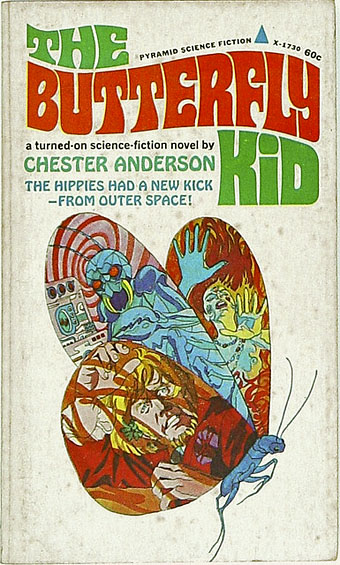
Cover illustration by Gray Morrow, 1967. One of the less exploitative examples from a collection of hippy book covers.

• Ten Photographs by Alain Resnais: Mise en scène of Memory, Aesthetics of Silence by Ehsan Khoshbakht. In the comments to that post someone shows an old Penguin book with cover photos by Chris Marker. This confirms that the “C. Marker” whose name I found on the back of another Penguin book was indeed Monsieur Chat.

• There’s more (there’s always more…): Cornelius Castoriadis interviewed by Chris Marker in 1989, the complete footage of an interview edited down for Marker’s TV series L’héritage de la chouette (The Owl’s Legacy). Watch the series itself at YouTube.

• “A generation of innovators want to change the way we have sex and consume porn, but Google, Apple, and Amazon won’t let them,” says Andrea Garcia-Vargas. Related: Sam Biddle on how Tumblr is pushing porn into an internet sex ghetto.

• Mix of the week: the Chop Quietus Mix, “a jagged journey all the way from Broadcast to the uneasy thrum of Suicide, kosmische flavours from Popol Vuh and Cluster, Alexander Robotnik and many more.”

Strange Flowers looked back at The Student of Prague: “the first art film, the first horror film and the first auteur film”, and now a century old.

Clive Hicks-Jenkins talked to animator Barry Purves about the pleasures and difficulties of creating animated films for adults.

• Mazzy Star released a song, California, from their new album which arrives in September. Can’t wait.

Suzanne Ciani, “American Delia Derbyshire of the Atari Generation” explains synthesizers, 1980.

Christer Strömholm‘s photos of Parisian transgender communities in the 1950s.

What are These Giant Concrete Arrows Across the American Landscape?

• How Kiyoshi Izumi built the psych ward of the future by dropping acid.

Alan Moore: The revolution will be crowd-funded.

Fuck Yeah Mazzy Star

• Suzanne Ciani: Lixiviation | The First Wave—Birth Of Venus (1982) | The Eighth Wave (1986)

Pay It All Back

burroughs.jpg

Two things of interest to William Burroughs aficionados are looking for funding this month. The Burroughs Century is an event being planned to celebrate the 100th anniversary of Burroughs birth next year in Bloomington, Indiana:

We are calling this event the Burroughs Century, but we are not looking backward; rather, we believe that the Burroughs Century is ongoing, that we are in the midst of it, and we intend to stage an event that indicates the full range of that continuing influence, including a film series, art and literature exhibits, speakers and panels, musical performances, and more.

There’s more detail at Indiegogo. The organiser of the event, Charles Cannon, has expressed an interest in showing some of the Wild Boys portfolio which I keep tinkering with. Having a deadline to work towards may compel me to finish some of those pieces.

tangiers.jpg

I’ve already mentioned Alex Harvey’s computer game-in-progress, Tangiers, but the game now has a Kickstarter fund which Harvey and co. are hoping will push their work to completion. The Burroughs influence here is more oblique since this is an original creation but it’s still a promising development in a medium with a tendency to rely on Hollywood and genre stereotypes for its scenarios:

You play an outsider to the world, an entity with a singular, enigmatic goal – to find and dispose of five other beings. Your arrival here has fractured the world; the city that these other beings resided in is now broken into shards across a broken, bleak landscape.

You must infiltrate these cities, searching to discover your marks – investigating both precisely who, and where. Keeping to the shadows is to be encouraged – reality here is a fragile place. Your interactions with the world cause it to fall apart. In homage to Burrough’s cut-up technique, the world collapses and rebuilds itself the more you interact with it – future areas rebuilt with the fragments and personality of places you mistreated. From this every play-through will, subtly or drastically, be unique to you.

Find out more at the game’s Kickstarter page.

Weekend links 168

bell.jpg

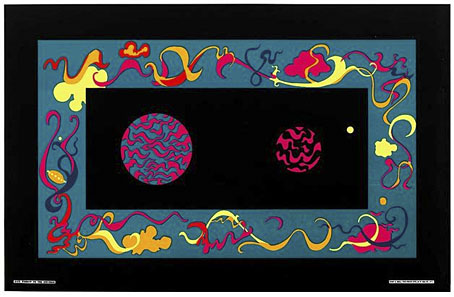
Window to the Universe (1967) by Roberta Bell. From Summer of Love: Psychedelic Posters from SCMA currently showing at the Smith College Museum of Art, Northampton, MA.

Sympathy for the Shoggoth: China Miéville’s Revolution of the Weird Tale, an essay by Christina Scholz which features one of my Cthulhu pictures among its embellishments. Related: “‘New Strange’ stories hold a chilling mirror to life” says Rick Kleffel discussing Robert Aickman and others. And speaking of Aickman (so to speak), Reese Shearsmith has recently recorded Aickman’s Cold Hand in Mine for Audible.

• An erotic alphabet book from the Soviet Union circa 1931, created to promote adult literacy. Who says porn can’t be educational?

Angelystor is a new 39-minute composition by Phil Legard which he describes as “often heavy, Saturnine and melancholic”.

• James Ward’s postcards of the Post Office Tower. Related: film of the revolving restaurant at the top of the Tower in 1967.

•You Might Never Find Your Way Back: Shirley Jackson’s Hangsaman by Nicholas Rombes.

satty.jpg

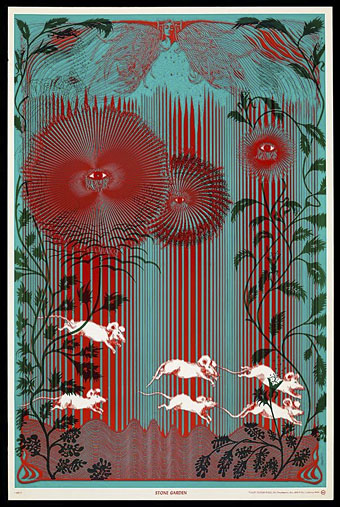
Stone Garden (1967) by Wilfried Sätty.

High Over Blue is “a mind-warping 20-minute freakout” by Moon Duo.

• Queer Visual Splendour: Jon Macy discusses his erotic comics.

The Origin of the Pilcrow, aka the Strange Paragraph Symbol.

• Mix of the week: the Kranky 20th Anniversary Mixtape.

Ten Amazing Cheeses and their Literary Counterparts.

PingMag looks at the past and present of Ginza.

Mind Gardens (1967) by The Byrds | The Garden (1981) by John Foxx | The Toy Garden (2006) by Helios