A Mountain Walked

mountain01.jpg

Art by David Ho.

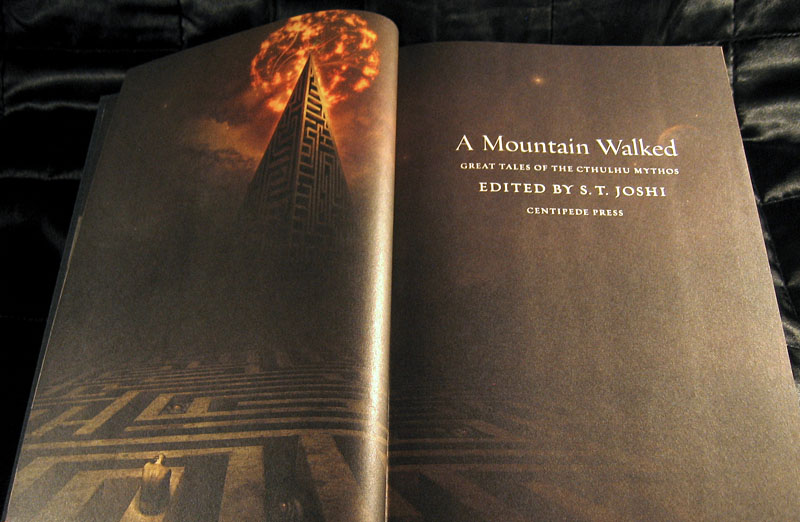
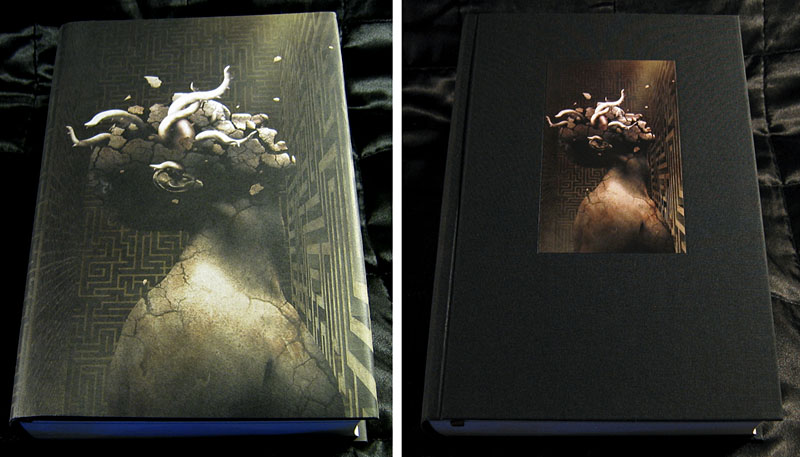
This may be a frustrating post for some since it concerns a limited edition anthology that sold out almost as soon as it was announced a year or so ago. Even though the book was published last year it’s taken a few months for my copies to arrive. A Mountain Walked is a collection of Cthulhu Mythos stories compiled by leading Lovecraft scholar ST Joshi, and published in the US by Centipede Press. Anyone familiar with Centipede’s more luxurious volumes will know that they don’t do things by halves, and this weighty tome is no exception: a large-format hardback (the signed edition is also cased), with heavy paper stock, colour printing, tinted sheets and a bulk that runs to almost 700 pages.

mountain02.jpg

Art by David Ho.

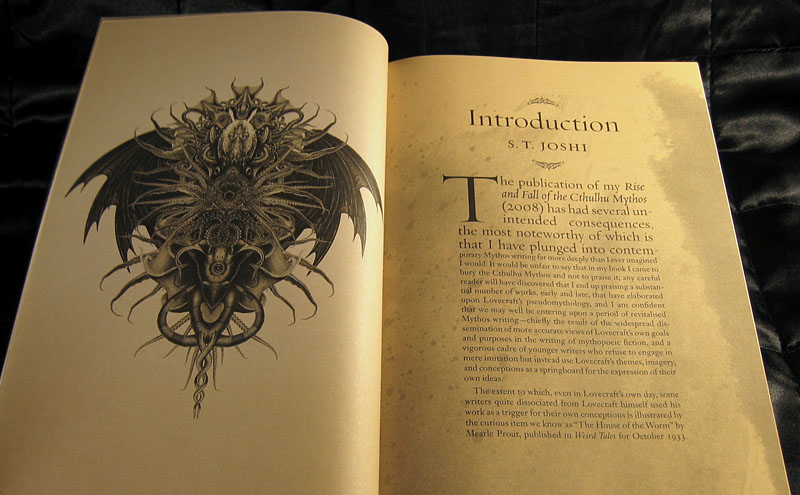
Many of the stories are reprints but there’s also new material from contributors including Thomas Ligotti, Neil Gaiman, Caitlín R. Kiernan, Laird Barron, the late Michael Shea (to whom the book is dedicated), Patrick McGrath, TED Klein, Gemma Files, Ramsey Campbell and many others. The artwork also ranges widely; I’d not seen anything by David Ho before but he’s very good, hence the samples shown here. But there’s also a variety of other work, even a Lovecraftian Peanuts comic strip by Julien Baznet. I was pleased that my Cthulhoid picture was placed with the introduction, it makes up for my never having responded to Mr Joshi when he wrote to me years ago asking if I’d be interested in contributing something to Necronomicon Press.

Since the book was so successful there’s been talk of doing a cheaper reprint. In the meantime, bloated Lovecraftian plutocrats (Yuggothcrats?) will find very expensive copies for sale on eBay. A few more page samples follow.

mountain03.jpg

Continue reading “A Mountain Walked”

Dissent

pen.jpg

If you believe in freedom of speech, you believe in freedom of speech for views you don’t like. Goebbels was in favour of freedom of speech for views he liked. So was Stalin. If you’re in favour of freedom of speech, that means you’re in favour of freedom of speech precisely for views you despise.

Noam Chomsky in Manufacturing Consent: Noam Chomsky and the Media (1992)

Terrorists don’t care about rights or laws so any debate about freedom of speech isn’t directed at them. I’d be more encouraged by the show of solidarity for dead cartoonists if I didn’t believe that many of those currently declaring their support will continue burning up social media in the next few months with demands that something be banned or stopped. We live in censorious times. Censorship (or the urge to see it enforced) never disappears, it migrates along with whatever happens to be taboo to current generations. In the 1970s much of the heat was around sexual content; today it’s predominantly about identity politics. Whatever the provocation, the results are the same: angry people step forward with a demand that something be forbidden. Last September a showing at the Barbican in London of Brett Bailey’s Exhibit B was cancelled after a petition and a demonstration outside the venue. Bonnie Greer wanted to make up her own mind but she didn’t get the opportunity:

These people largely reacted from hearsay, ideology, photos and the reactions of others who had seen it—not their own experience. I’ve seen people like this before, self-appointed judges, roaming the internet in search of what displeases and offends them. One protester went so far as to issue an absurd analysis of the possible psychological damage Exhibit B could cause the actors involved. It was ignorant and insulting psychobabble.

I don’t want to be stopped from seeing a work because, in their opinion, it’s “inappropriate”, “incorrect” or “racist”—words which are, at best, moveable feasts. I want to think for myself.

You’ll be seeing more movable feasts in the next few days when Anglophone commenters begin to discover that Charlie Hebdo was a full-spectrum offender rather like my colleagues at Savoy Books. When David Britton’s novel Lord Horror was being subject to Crown Court disapproval in 1992 The Independent wrote a prissy editorial complaining that the novel and a death metal album by Dismember were hardly worth the trouble of defending. These things weren’t art, they were trash, something that one of the UK comics mags (I forget which one) also complained about when discussing the Meng & Ecker prosecution. You can defend the principle of freedom of speech (or art) without agreeing with anything that’s being said, but for some people this often seems to be a step too far. Lord Horror escaped the obscenity charge thanks to Geoffrey Robertson QC but Meng & Ecker didn’t (comics being deemed trashier than novels by the court); my artwork for Hard Core Horror #5 was deemed obscene three years later in a separate trial in which Savoy were also declared to be unworthy of trial by jury because they were “not a bona fide publisher”. We don’t have a freedom of speech defence in Britain which is why history continues to repeat itself.

In the end all discussion about censorship comes down to this: who decides what is art and what is trash, what should be defended and what should be thrown to the dogs (or the gunmen)? You? Me? The Pope? Some guy in a ski-mask? Is freedom of speech only for the responsible people, for you and your friends? Or does it also apply to the irresponsible, the contentious, the trashy and the downright offensive? If freedom isn’t for everyone then someone, somewhere is willing to decide it’s not for you.
René Binet revisited

binet00.jpg

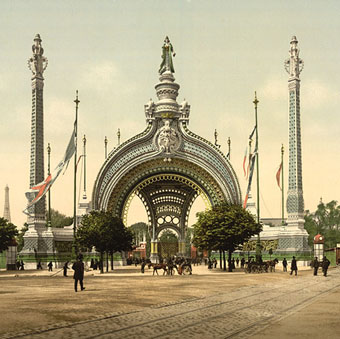
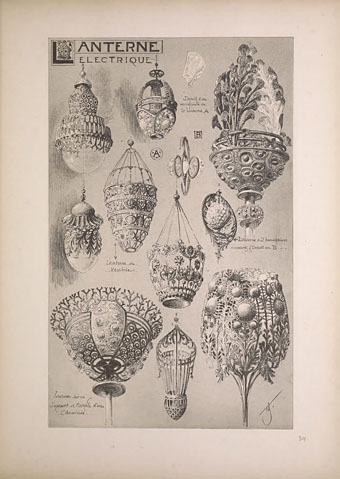
I wrote something about French designer and architect René Binet (1866–1911) a few years ago while exploring the creation of the Paris Exposition Universelle of 1900. Binet designed the remarkable monumental gate that formed the entrance to the exhibition, a structure that demonstrated his proposal that natural forms might replace historical pastiche as a basis for architecture.

binet01.jpg

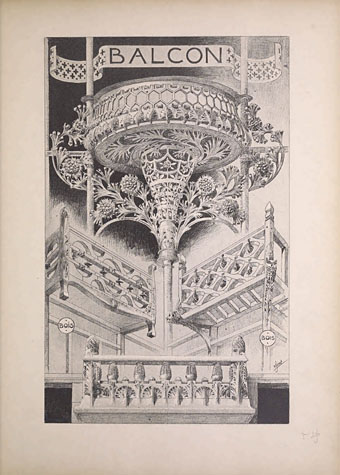
A book by Binet and Gustave Geffroy, Esquisses Décoratives (1905), argued the case with 60 plates showing Binet’s designs for new forms of architectural style and decor derived in part from the plates in Ernst Haeckel’s Kunst-Formen der Natur. At the time of the earlier post there wasn’t a copy of the book online but there is now thanks to the Smithsonian Libraries and the Internet Archive. In addition to architectural designs there are suggestions for various forms of jewellery based on Haeckel’s radiolarians and other organisms. See the rest of the plates here or download the book here.

binet07.jpg

Continue reading “René Binet revisited”

Weekend links 240

wiley.jpg

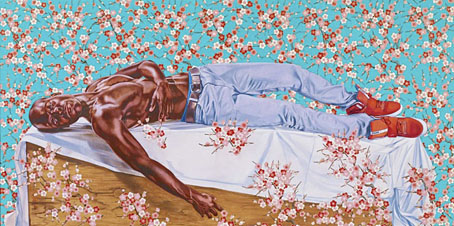
The Death of Chatterton (2014) by Kehinde Wiley.

• Mixes of the week (and the week before that): The Conjurer’s Hexmas: Second Rite by SeraphicManta; Secret Thirteen Mix 140 by Deaf Center; Best of 2014: A Highly Opinionated Mix by Robin The Fog.

• Never mind Music for Airports, how about Music for Neurosurgery? The Tegos Tapes Edits are extracts from “12 hours of unheard Vangelis music soundtracking films of various surgical operations”.

• “It was one of the first magazines that, with science-fiction and comics together, proposed comics for adults.” Aug Stone on 40 years of publisher Les Humanoïdes Associés and Métal Hurlant.

• Zinesters Do It on the Photocopier: Stephanie Schroeder on the Queer Zine Archive Project. Related: Holy Titclamps by Larry-bob Roberts.

A Year In The Country reached the end of its 365 posts. The archive is well worth a browse.

• “These people love to collect radioactive glass. Are they nuts?” asks Ben Marks.

• Think before you share: 86 viral images from 2014 that were totally fake.

• The Anti-Tolkien: Peter Bebergal on Michael Moorcock.

• Extracts from Alan Bennett‘s diary for 2014.

John Cage 4’33” Autotune

Alpha (1976) by Vangelis | Reve (1979) by Vangelis | L’Enfant (1979) by Vangelis

William Heath Robinson’s Rabelais

rabelais00.jpg

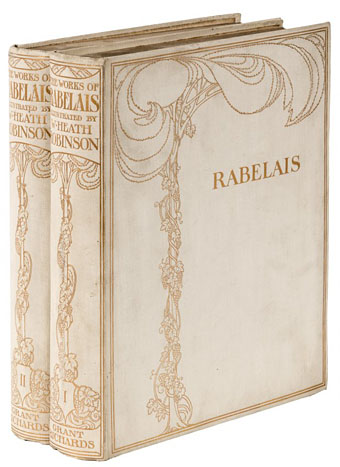
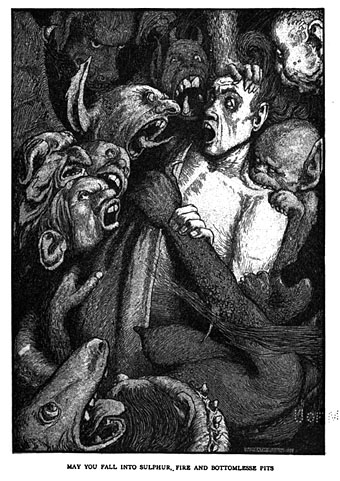
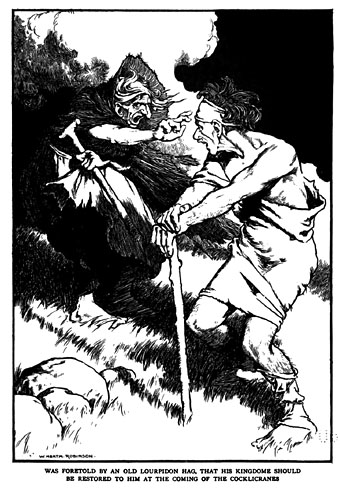
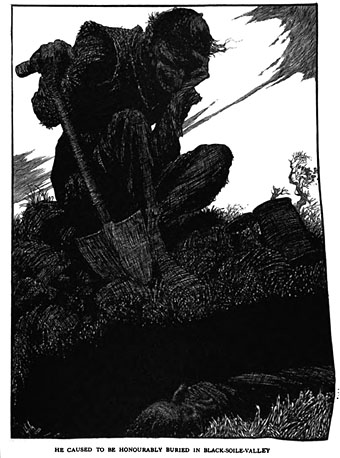
Ending the year with some Heath Robinson illustrations I’d not seen before, probably because their grotesque qualities set them apart from the rest of his whimsical drawings and fairy tale illustrations. Illustrated editions of Rabelais are rare owing to the coarse and scatological nature of the novels. Gustave Doré‘s robust and bloodthirsty character made him a good match for the material but it’s a surprise to find a generally light-hearted illustrator like Heath Robinson tackling the same stories.

rabelais01.jpg

Robinson’s illustrations were for a two-volume set published in 1904 (see here and here), and are suitably dark with plenty of solid blacks and heavy cross-hatching. Some of the drawings are so different to the artist’s usual work they could be taken at first glance for pieces by Sidney Sime or Mervyn Peake. More typical are the numerous vignettes that appear at the ends of chapters. The examples here are from Google scans at the Internet Archive but some of the original drawings may be seen in better quality (and purchased if you have the money) at the Chris Beetles gallery.

rabelais02.jpg

rabelais03.jpg

Continue reading “William Heath Robinson’s Rabelais”