Weekend links 166

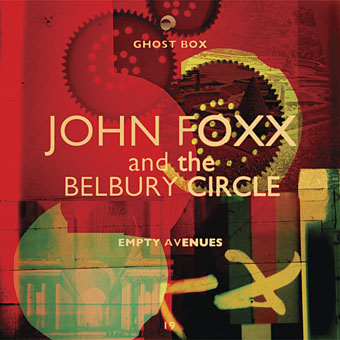
foxxbelbury.jpg

The Julian House cover art for the forthcoming collaboration between John Foxx and Belbury Poly (here renamed) has been revealed. Single no. 9 in the Ghost Box Listening Centre Study Series is now available.

• In addition to new Ghost Box records there’s more Hauntological (for want of a better term) cinema on the way this summer with the DVD/BR release of Ben Wheatley’s A Field in England. The potted description at Movie Mail is “a monochrome psychedelic trip into magic and madness set during the English Civil War”. Julian House has made a trailer. Meanwhile at Fangoria, there’s a PIF mixtape from The Advisory Circle. This accompanies an interview with John Krish, director of the most bizarre of the UK’s many strange and alarming public information films from the 1970s.

• More mixes: The hour-long OH/EX/OH show for The Geography Trip on Chorlton FM. “Expect slumber / tension / euphoria in almost equal measures.” It’s marvellous. At Self-Titled mag there’s DJ Food with O Is For Orange: Boards of Canada, Broadcast, The Books, etc.

Tangiers is a computer game based on the fiction of William Burroughs. Jim Rossignol talked to Alex Harvey about the development of the project.
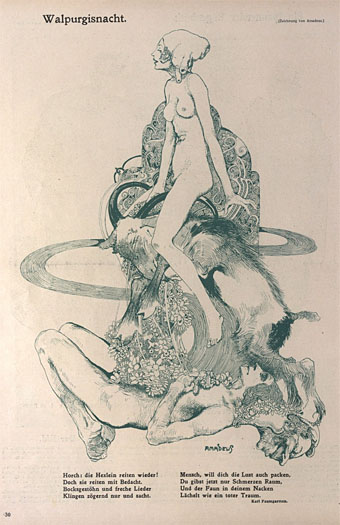
walpurgisnacht.jpg

Walpurgisnacht (1917) by Amadeus. A drawing that could easily be from the late 1960s. If anyone knows the full name of the artist, please leave a comment. Via Beautiful Century.

Rebecca J. Rosen asks “What would the night sky look like if the other planets were as close as the moon?”

• The mystery of Charles Dellschau and the Sonora Aero Club.

The Surreal Cave Paintings Of Stockholm’s Metro Stations.

• At 50 Watts: More strange art from Marcus Behmer.

Ry Cooder in 1970. Directed by Van Dyke Parks!

The Post Office Tower: now you see it…

• At Little Augury: 99 Meninas.

Sartori In Tangier (1982) by King Crimson | City Of Mirage (2010) by John Foxx
Weekend links 155

austin.jpg

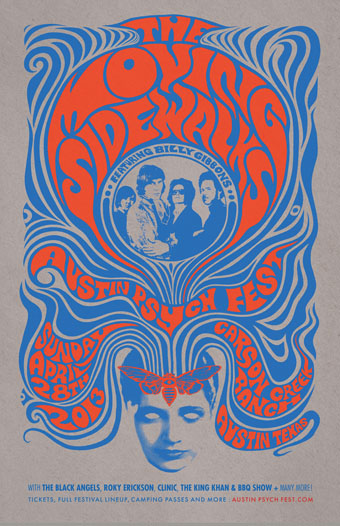
Poster design by Mishka Westell for this month’s Austin Psych Fest. Billy Gibbons’ pre-ZZ Top psychedelic outfit, The Moving Sidewalks, surprised everyone by reforming for a New York gig last month, their first performance together in 44 years.

• Pye Corner Audio played the Boiler Room, London, last week, and remixed a track from FC Judd’s Electronics Without Tears. Also on the latter is Chris Carter who talks about his own remix (and the “Radiophonic” Mr Judd) here.

Tom Bianchi’s Fire Island Pines, Polaroids of New York’s gay enclave from 1975–1983. Related: In Conversation with the Violet Quill: Andrew Holleran, Felice Picano, and Edmund White.

• From 2011: Sex, prison and lost ligatures: The story of Herb Lubalin’s Avant Garde typeface. Related: The ITC Avant Garde Gothic group at Flickr.

• Music reissues: Tape Works 1981–1982 by Laughing Hands is out now, and Scott Walker’s early solo albums will be reissued in the summer.

fraser.jpg

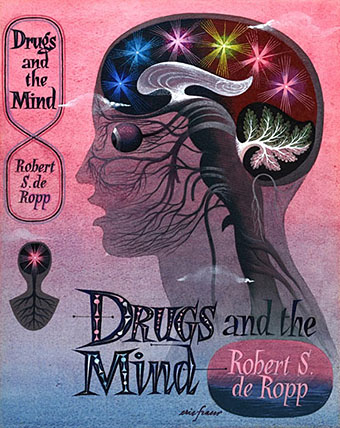
Drugs and the Mind (ii), a cover design from 1957 by Eric Fraser (1902–1983) whose illustrations and designs are in exhibition at the Chris Beetles gallery, London.

• At Ubuweb: William S. Burroughs + Brion Gysin + Genesis P-Orridge – Cold Spring Tape (1989).

The World According to John Coltrane, an hour-long documentary.

Neko Font: for when you need a word made of cats.

Fuck yeah, Sarah Bernhardt

Sordid Spheres!

99th Floor (1967) by The Moving Sidewalks | Over Fire Island (1975) by Brian Eno | Ledge (1980) by Laughing Hands

Weekend links 151

yongliang.jpg

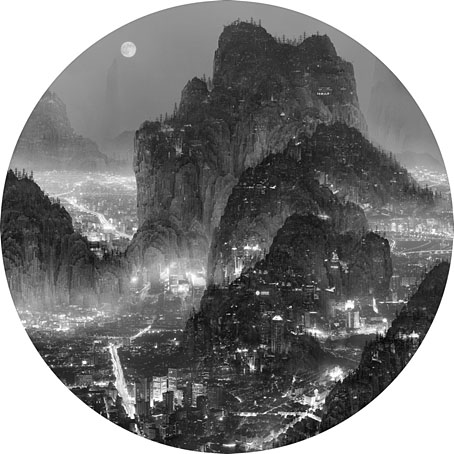
Untitled art by Yang Yongliang. There’s more at But Does It Float.

• “Newly unearthed ITV play could be first ever gay television drama“. Writer Gerald Savory, incidentally, also adapted Dracula for the BBC in 1977, still the version that’s closest to the novel.

Craig Redman and Karl Maier‘s poster designs for the Bavarian State Opera.

Lustmord: ambient’s dark star, and The Strange World of Scanner.

The cats are tapping the old man for psychic sap, milking him, stalking through rubbled dreams of the coming Land of the Dead. On subsequent US visits – to Bastrop in Texas and Phoenix, Arizona – I learned about the fellowship of those internal exiles, the hardcore writers: Michael Moorcock, Jim Sallis. Like Burroughs, they kept cats and guns (Mike’s was a replica). Cats infiltrate mystery fiction: men with coffee habits, ex-drinkers, post-traumatic spooks solving crimes the hard way. Moorcock uses cats like a scarf, like Peter Sellers in The Wrong Box; their claws scratch runes into his easy chair.

Iain Sinclair remembers visiting William Burroughs. I remember meeting those Moorcock moggies; not as interesting to reminisce about, however.

The Ghosts of Antarctica: Abandoned Stations and Huts.

• A Masterpiece of the Ridiculous by Jocelyn Brooke.

• “Chance is a good librarian,” says Alberto Manguel.

• Mix of the week: dub from Bristol duo Zhou.

The Aleph: Infinite Wonder / Infinite Pity.

Sarah Lee‘s underwater photography.

Arthur #34 is out!

Underwater (1979) by Harry Thumann | Underwater Church (1992) by Conrad Schnitzler | Underwater Flowers (2003) by John Foxx & Harold Budd

Interzone: A William Burroughs Mix

burroughs.jpg

Interzone is a selection of William Burroughs recordings mixed with electronic music and other pieces such as extracts from Howard Shore & Ornette Coleman’s Naked Lunch soundtrack:

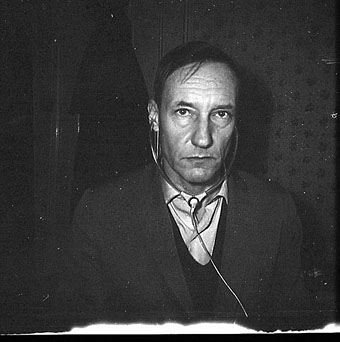
A tribute to ‘El Hombre Invisible’. It features some of my favourite readings, to which I’ve added music by John Zorn (from his Burroughs-inspired work), Tod Dockstader, Arne Nordheim and others. Also in the mix are radio recordings and vocal cut-ups by the man himself.

The curator is Mixcloud user Timewriter, one of whose mixes I linked to last Halloween. I was surprised to find I’d already downloaded the Burroughs mix from the Timewriter blog, Include Me Out, but hadn’t managed to listen to it. Better late than never. This week seems a good time to draw attention to both the mix and that blog in general which features among its posts a quantity of Burroughs-related ephemera. Many of the mix readings are from the albums of Burroughs’ tape recordings from the 1960s, including Nothing Here Now But The Recordings, the collection of tape experiments released by Industrial Records in 1981. The latter is essential listening for anyone who appreciates Burroughs’ early novels; some of its pieces such as Last Words of Hassan Sabbah sound less like readings of the author’s work than actual artefacts from the books themselves.

Elsewhere on { feuilleton }
The William Burroughs archive

The Ticket That Exploded: An Ongoing Opera

ticket1.jpg

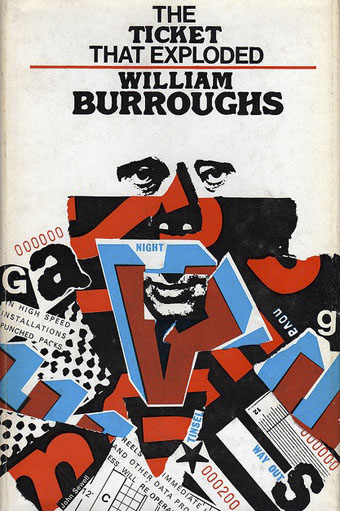
The book that made my head explode when I was 16. Calder & Boyars edition, 1968; design by John Sewell.

Years ago the idea of an opera based on The Ticket That Exploded would have been a wry joke: a novel brimming with text that’s fragmented even by Burroughs’ standards, as well as the usual preoccupations with spurting cocks, alien sex, parasitic invasion and erotic asphyxia. That said, if you can swallow the content (so to speak) a libretto is no doubt easy to create from all those sentence fragments, and there’s no worry about anyone complaining that you’ve missed some crucial part of the story. James Ilgenfritz’s The Ticket That Exploded: An Ongoing Opera attempts just this in an extract which can be seen on YouTube:

Premiered at Issue Project Room while I was Artist in Resident in 2011, and based on William S. Burroughs’ 1962 novel of the same name, The Ticket That Exploded takes all its text directly from the novel. I wrote the libretto and composed the music, which was then exquisitely interpreted by some of the greatest musicians in the New York area. Jason Ponce collected a massive array of bizarre visual materials and innovative digital processing programs to perform the visual component of this work live onstage at the premiere.

There’s more from Jason Ponce at Vimeo. A DVD of the complete work is planned in 2014. Via Supervert.

ticket2.jpg

Elsewhere on { feuilleton }
The William Burroughs archive