Murmur Become Ceaseless and Myriad

spare.jpg

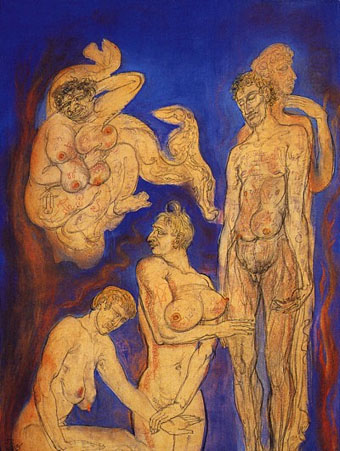
Efflaration (1952) by Austin Osman Spare.

The Austin Spare revival continues with another exhibition, Murmur Become Ceaseless and Myriad at Flat Time House, London, curated by Mark Titchner. Unless I’ve missed something this is a significant moment since it’s the first time Spare’s work has been paired with that of a more contemporary artist, the late John Latham (1921–2006) whose former home provides the exhibition space.

Biographically, the artists have a lot in common: a reticence to engage with the art establishment or the commercial art market; superficial correspondences with the work of their contemporaries but isolation by force of their ideas. The artistic genius of both these artists was, in the main, recognised by their peers, even if the subject of their work was not entirely understood.

In spite of this, discussion of Spare’s practice has largely related to arcana and magic, despite his training in fine art and early mainstream successes. Conversely, Latham’s work has been understood primarily in relation to the conceptual art practices of the 1960s and 70s. This exhibition broadens these perspectives, presenting their work in the context of two parallel experimental practices. (more)

There’s also a somewhat tenuous connection between the pair in the figure of Alan Moore, a Spare enthusiast who in 1992 appeared with John Latham and a number of other literary and artistic types in The Cardinal and the Corpse, a TV film by Iain Sinclair and Chris Petit which really ought to be on YouTube but isn’t. It’s worth a watch if you can find a copy. Murmur Become Ceaseless and Myriad runs until 30th October.

Previously on { feuilleton }
Kenneth Grant, 1924–2011
New Austin Spare grimoires
Austin Spare absinthe
Austin Spare’s Behind the Veil
Austin Osman Spare

Weekend links 77

farmer.jpg

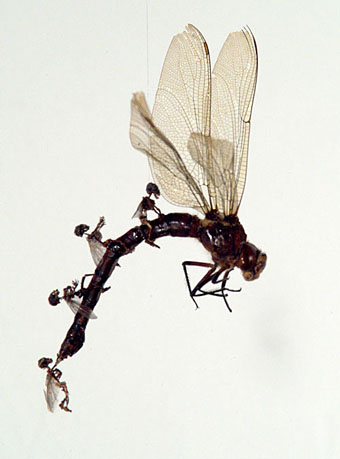
Art by Tessa Farmer.

• An exhibition of Tessa Farmer’s art is running at Viktor Wynd Fine Art, London, until October 30th. On Saturday, October 1st, Strange Attractor hosts Good Neighbours: Faeries, Folklore and the Art of Tessa Farmer also at Viktor Wynd.

Unearthing The Psychedelic Harp: “David Moats talks to harpist and songwriter Serafina Steer about her work with John Foxx and Patrick Wolf, being classically trained, the difficulties of doing live soundtracks and psychedelia.”

• And speaking of psychedelia, Arkhonia is still blogging up a storm here, here and here about the lost Beach Boys album, Smile, the farthest Brian and co. ventured into the tripped-out weirdness of 1967. The complete original recordings will finally be released in November.

• “‘We’ve arrived at a level of commodification that may have negated the concept of counterculture,’ Gibson says in the Paris Review.” William Gibson profiled by Thomas Jones.

One of the qualities I always stress when talking about this design work influenced by Surrealism is its enormous boldness and creative freedom, which is something of a paradox in many cases, since the Czech and Polish designs were created under communist regimes. So, while Uncanny documents a significant current in the history of 20th-century visual culture, the show also has a polemical intention aimed, quite deliberately, at our circumstances now. Students who encounter these images in lectures sometimes feel constrained by their conception of what they — or their teachers — regard as acceptable in today’s marketplace. At times, this has struck me as being a form of insidious self-censorship. (more)

Rick Poynor: Jan Švankmajer and the Graphic Uncanny.

• The exhibition curated by Mr Poynor last year, Uncanny: Surrealism and Graphic Design, is now showing at the Kunsthal in Rotterdam until early December. Related: MizEnScen’s somber, surrealist collages.

Howard Pyle’s Book of Pirates (1921) at Golden Age Comic Book Stories, the Urtext of buccaneer imagery.

bonnat.jpg

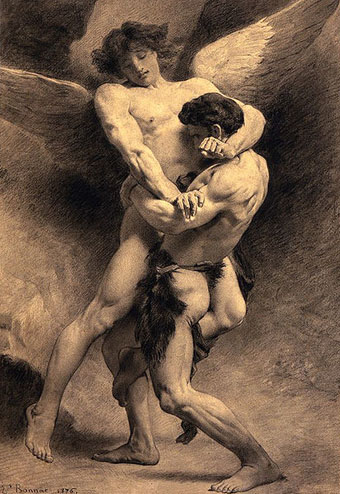
Another of those homoerotic religious pictures: Jacob Wrestling with the Angel (1876) by Léon Bonnat. Via Babylon Baroque.

• Celebrating the 250th anniversary of Laurence Sterne’s marbled page: Emblem of My Work.

John Martin’s Pompeii painting finally restored after 1928 Tate flood damage.

The Spectral Dimension: “where the paranormal and popular culture collide”.

The Writing of Stones (1970) by Roger Caillois at 50 Watts.

Mercury Arc Rectifiers.

• When silliness was an avant garde strategy: video from 1974 of Brian Eno performing China My China and (in better quality) The Seven Deadly Finns. (Go here for lyrics of the latter.)

Labyrinths

labyrinth.jpg

The Breamore Miz-Maze, Hampshire. Photo by Jim Champion.

As part of the work-related research this week I was looking for designs of old turf labyrinths. It turns out I have two pages of the things in a book I’d earlier considered dropping into Oxfam so that particular volume may have gained a reprieve. Before I went to the bookshelves I’d been browsing the rather wonderful Labyrinthos site which is just the kind of detailed resource you hope to find in these circumstances. There we find an explanation for the difference between a maze and a labyrinth (the general rule being that a maze has more than one choice of route), and a wealth of examples from ancient history to the present day. I’ve long been fascinated by the labyrinths found in churches and cathedrals, of which the most famous example is the one in Chartres Cathedral. They’re a rare incidence of a symbolic device in Christian architecture which is near-universal, and which has clear antecedents in the labyrinths and mazes found in ancient temples. Labyrinthos has a guide to some of the surviving examples to be found in England. As to England’s turf labyrinths, there’s a page devoted to those here with a number of photos.

Previously on { feuilleton }
Jeppe Hein’s mirror labyrinth

Weekend links 76

aftertime.jpg

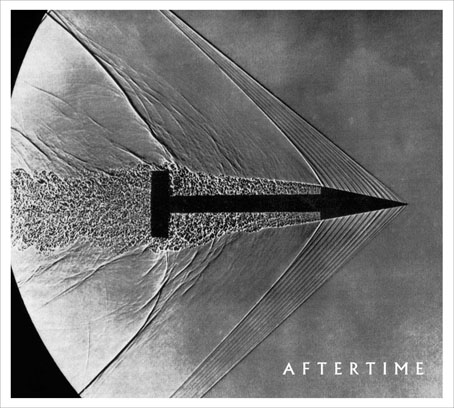
Despite appearances I’m still doing bits of design and layout work for various musicians. In the past week I’ve been trying to reorganise this sprawling website a little so it’s easier to add new work quickly and easily. One recent job was more layout than design, a CD and vinyl package for a Roly Porter collection of instrumentals entitled Aftertime. Each track on the album is named after a different planet from Frank Herbert’s Dune books although the music isn’t as illustrative as that implies. Porter’s use of an Ondes Martenot and various acoustic instruments which he subjects to degrees of distortion is just the kind of thing I like hearing. One track can be heard at FACT where Porter is interviewed about his work. Aftertime is released this month on the Subtext label.

It is a rollicking saga that involves all sorts of things not normally associated with think tanks – chickens, pirate radio, retired colonels, Jean-Paul Sartre, Screaming Lord Sutch, and at its heart is a dramatic and brutal killing committed by one of the very men who helped bring about the resurgence of the free market in Britain.

Adam Curtis on the strange history of Britain’s think tanks and their hidden agendas.

• Other assorted music business: Getting down to the Cabinessence: “This is the first of what may become an intermittent series of observations about Smile, and how Brian Wilson tried to put his dream on this planet.” | After The Flood: Talk Talk’s Laughing Stock 20-Years On: a lengthy and detailed Quietus piece on one of the best albums of the 1990s. | Jonathan Barnbrook uses an old analogue video synth to create a visual accompaniment for Interplay by John Foxx & The Maths. The HD version is an eye-searing delight.

Meredith Yayanos favours the sister instrument of the Ondes Martenot, the theremin, which she uses to provide a spooky score for a new film, Empty Rooms. There’s more spectral ambience at her SoundCloud page.

giovani.jpg

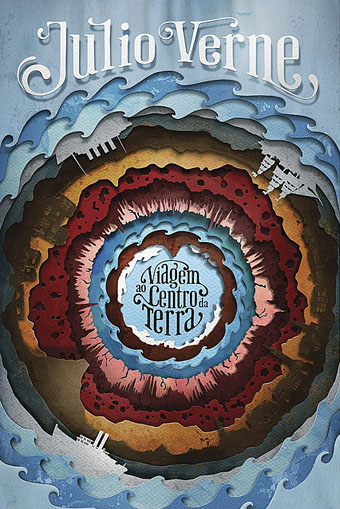
A Jules Verne cover by Carlo Giovani for Editora Ática.

• Sculptor and writer Josiah McElheny transforms the Whitechapel Gallery into a hall of mirrors.

Jacob’s Lament, an animated collaboration between illustrator Ian Miller and Stijn Windig.

Pornographic Poem (1967) by John Giorno.

Oscar Wilde grandson scorns “new” play.

• Manhattan in marble by Yutaka Sone.

Paul Atreides pt. 1 (1978) by Richard Pinhas | Harkonnen (1979) by Zed (Bernard Szajner) | Prophecy Theme (1984) by Brian Eno.

Richard Hamilton, 1922–2011

whitealbum.jpg

The Beatles aka The White Album (1968) by The Beatles. Design by Richard Hamilton.

Hamilton admires Hunger but he has little time for the other Young British Artists. He can’t imagine a conversation with Tracey Emin lasting more than five minutes – too tedious! – and though he was quite interested in Hirst’s sharks, his paintings bore him half to death. He believes that this generation is “ignorant… they have no understanding of art history. [Their work] is a waste of time. So much of what they’re doing has already been done, and not only by Duchamp, even. You think: you’re 50 years too late, mate.” Don’t even get him started on Sarah Lucas and her antics with cigarettes.

Richard Hamilton: A masterclass from the father of pop art

A few words to note the passing of British artist Richard Hamilton whose death was announced this week. I’ve retained an affection for Hamilton’s work over the years for a couple of reasons. As the creator of the 1956 collage Just What is it that Makes Today’s Homes So Different, So Appealing? he inadvertently gave a name to the emerging Pop Art movement with which he was to be indelibly connected, and I’ve written a few times here about my teenage enthusiasm for Pop Art and Surrealism. Hamilton’s work was more familiar to me at the age of 13 than that of many other artists. I responded to the immediacy of Pop Art even though it was over by the 1970s, just as I responded to the inherent weirdness of Surrealism which at that time was back in fashion. On my first visit to London in the mid-70s I rushed to the Tate Gallery (as Tate Britain was then known) to see some of the paintings and sculptures I’d been reading about in art books, and it was one of Hamilton’s works that stood out on that first visit, Swingeing London 67 (f), his painting of Mick Jagger’s drug arrest which I knew from photos although I hadn’t seen it in colour before. Most surprising—and something which reproductions still don’t quite convey—was seeing the pieces of metal stuck onto the canvas to form the handcuffs on the wrists of Jagger and Robert Fraser. It was already a shock that day being in one of the world’s major art galleries; it was even more of a shock to see this painting whose metal elements gave it a vivid presence beyond the pictorial surface as though it was caught halfway between painting and sculpture. It’s a presence which brings to the fore the “aura” which Walter Benjamin discusses in The Work of Art in the Age of Mechanical Reproduction (1936), an atmosphere possessed by an original work which will always be absent from a reproduction.

Another work I was fascinated by that day was the 1966 version of Marcel Duchamp’s The Bride Stripped Bare by Her Bachelors, Even (aka The Large Glass) which Hamilton had meticulously copied from the original at the Philadelphia Museum of Art. Hamilton made copies of a number of Duchamp’s works with the artist’s permission, and while his painting of Mick Jagger may have its own substantial aura, his Duchamp copy also has an aura of its own despite being a reproduction. What would Walter have made of that, I wonder? Duchamp is the first conceptual artist, and some trace of his inspiration can be found in Hamilton’s design two years later for The White Album, the 1968 release by The Beatles whose blank sleeve with its embossed name and unique serial number made it the first conceptual album cover. Hamilton has never received the same credit for this as Peter Blake receives for his Sgt. Pepper sleeve. On the packaging for the recent White Album CD acknowledgement was given to the designers who put the reissue together but the only mention of Hamilton was in the tiny list of thanks from the original printing. It’s a small detail from a long career but we can at least remember his contribution to music history today.

Guardian obituary | Richard Hamilton in pictures | Richard Hamilton’s altered images