Viktor Koen’s Dark Peculiar Toys

koen1.jpg

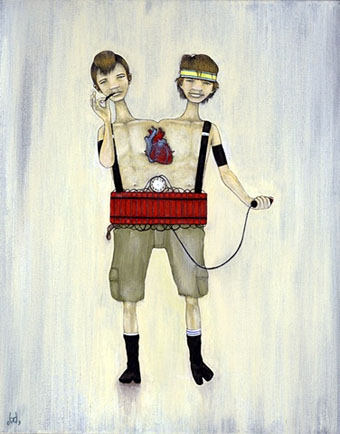
Toy No. 20

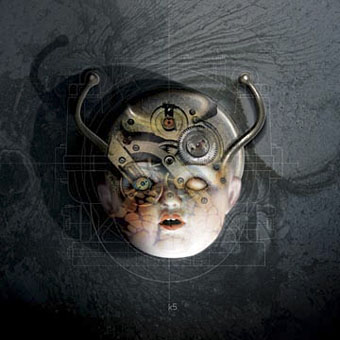
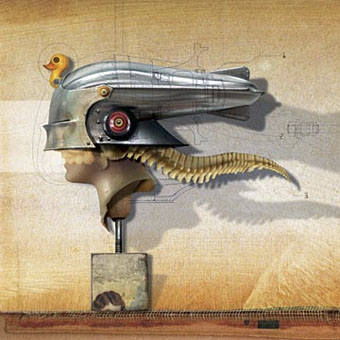
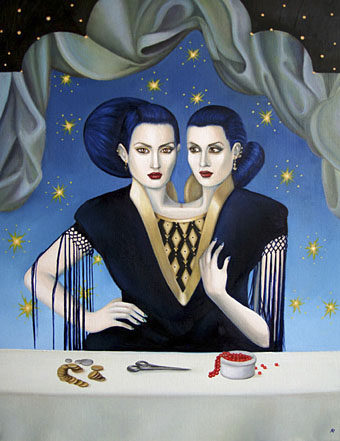
Two prints by artist Viktor Koen who was born in Greece but currently lives in the US. Koen’s Dark Peculiar Toys will be showing throughout October at United Photo Industries, Brooklyn, New York. This month there’s also an exhibition of dismembered toys showing at the October Gallery in London. Benin artist Gérard Quenum‘s salvaged doll heads and limbs are repurposed in a series of sculptures he calls Dolls Never Die.

koen2.jpg

Toy No. 15

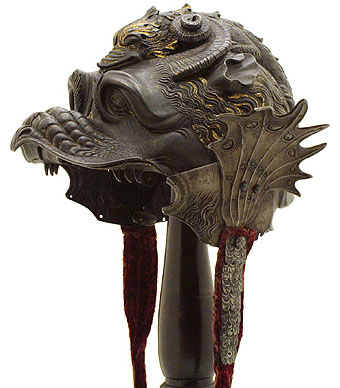
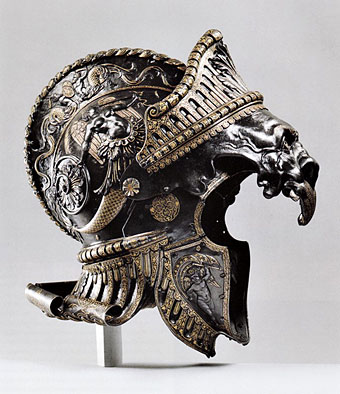
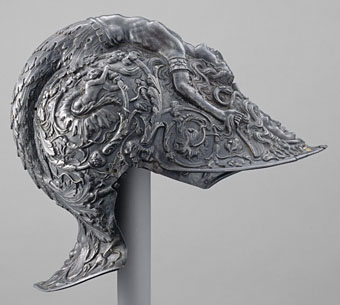
Burgonets by Filippo Negroli

negroli1.jpg

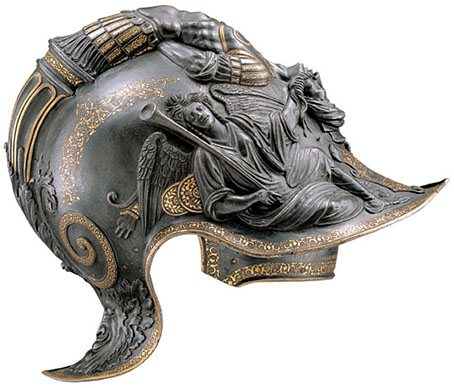
Parade burgonet of Emperor Charles V (1545).

burgonet a. A very light casque, or steel cap, for the use of the infantry, especially pikemen. b. A helmet with a visor, so fitted to the gorget or neck-piece, that the head could be turned without exposing the neck.

Filippo Negroli (c. 1510–1579) was a Renaissance master of ceremonial armour as is evident from these few examples. Fascinating seeing the kind of elaborate grotesquerie more commonly found in engraved prints rendered into wearable three-dimensional form. Burgonet number four can be viewed in detail at the Google Art Project. There’s more of Negroli’s work at Flickr.

negroli2.jpg

Burgonet (c. 1532–35).

negroli3.jpg

Burgonet Alla Romana Antica (no date).

negroli4.jpg

Burgonet (1543).

Previously on { feuilleton }
Leonardo’s warrior

Weekend links 116

sherer.jpg

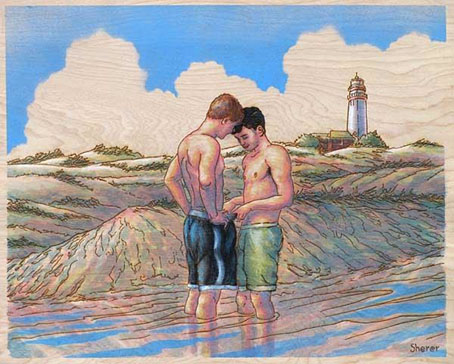
Ankle Deep, a pyrograph by Robert Sherer whose work is showcased at The Advocate.

• “Bertrand Russell wrote in 1932, during another period of economic distress, ‘that immense harm is caused by the belief that work is virtuous, and that what needs to be preached in modern industrial societies is quite different from what always has been preached.’ ” From The Devilishness Of Idleness by Alex Gallo-Brown. Related: Owen Hatherley says “It’s the 21st century – why are we working so much?”

Restoring James Joyce’s book of the night: Joyce biographer Gordon Bowker reviews the new edition of Finnegans Wake. Over at the NYRB Michael Chabon has a great piece about his own relationship with Joyce’s novel that manages to make some very un-NYRB references to Cthulhu, the Necronomicon and Michael Moorcock’s Elric. Related: Leopold’s Day, a limited edition (and expensive) map of Dublin using typography to depict the people and places of Bloomsday.

Verbally, it feels as though Burroughs, Joyce and Beckett are text messaging haikus back and forth: ‘beautiful/last/random fragments of poetry/finding syllables,/the waters fall/the waves fall/musical./pencil murmuring’.

James Kidd on A Humument by Tom Phillips.

The Expanding Universe (1980), an album of early computer music by American composer Laurie Spiegel, will be reissued with additional recordings in September.

• A previously unreleased remix by Surgeon of Teenage Lighting by Coil has been made public.

collard.jpg

Small Museum of Nature and Industry (2010) by Susan Collard.

Queer Kids In America, a photo project by M. Sharkey.

Walter Benjamin’s Grave: A Profane Illumination.

The Visual Art and Design of Famous Writers.

Nylon Sculptures by Rosa Verloop.

Froschroom (1994) by Mouse on Mars | Bib (1995) by Mouse on Mars | Cache Coeur Naïf (1997) by Mouse on Mars.

Weekend links 111

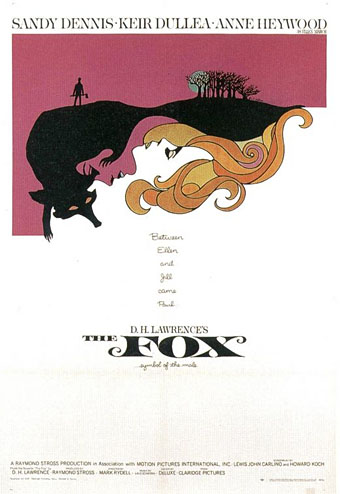
thefox.jpg

The Fox (1968). Design by Bill Gold, art by Leo & Diane Dillon.

Mark Rydell’s The Fox may be regarded unfavourably now for its retrograde idea of a lesbian relationship but that’s still a great poster by the Dillons. Equally retrograde (well it was 1957) is Anders als du und ich, a film about wayward German youth directed by ex-Nazi propagandist Veit Harlan:

Klaus is a young man in post-war Berlin. He is drawn to his friend Manfred and, under the encouragement of their acquaintance, Dr. Winkler, explores the underground world of gay clubs and electronic music. His family begins to learn of his other life and do everything they can to set him straight.

A saving grace is the conspicuous deployment of Oskar Sala’s Trautonium. They’re deviants—of course they like weird electronic music! Sala’s instrument was his own invention which means it has a unique pre-Moog sound, famously used by Alfred Hitchcock in the score for The Birds. YouTube has a collection of the electronica moments from Anders als du und ich. Wait for the wrestling scene…

Netherwood: Last Resort of Aleister Crowley by A Gentleman of Hastings. Related: Jimmy Page’s Lucifer Rising sessions part 1 and part 2.

• “This coming 16 June, [BBC] Radio 4 will be a wall-to-wall Joycefest, kicking off at 9am and running until midnight.”

A World Where Architecture is the Driving Force Behind Society, Core77 on the Cités Obscures of François Schuiten.

• At The Hooded Utilitarian an examination of the thorny problem of adapting Lovecraft for the comics medium.

• Plates from La Plante et ses Applications Ornementales (1897–1900) by Eugene Grasset.

• Coilhouse found a rough copy of Todd Haynes’ Superstar: The Karen Carpenter Story.

Three Quick Ways to Introduce Yourself to the Work of Harlan Ellison.

Daniel Buren’s Monumenta 2012 at the Grand Palais, Paris.

Our Sorrows, a new video from Julia Holter.

I, Cyclops: Monocularity in a 3-D World.

JG Ballard: The Concordance.

• RIP Pete Cosey.

• Pete Cosey with Miles Davis et al, November 1973: Ife | Turnaroundphrase

Max Klinger’s New Salomé

klinger.jpg

The New Salomé (1887–1888) by Max Klinger.

The German Symbolist Max Klinger (1857–1920) is celebrated today for the etchings which comprise his Ein Handschuh (A Glove) series, ten prints that in their curious details and dream-like quality prefigure Surrealism and Giorgio de Chirico’s “metaphysical” paintings. During his life Klinger was highly regarded for his sculpture as well as his etchings: his Beethoven was a centrepiece of the Secession building in Vienna in 1902. His New Salomé is one of the handful of Klinger works at the Google Art Project where I still feel we ought to be able to view sculpture in the round. I’ve seen many photos of this piece before but hadn’t realised until now that the eyes were…what? Rubies? Amber? Whatever they are, their fiery cast ensures that his imperious female sits unequivocally with the Evil Women that proliferated in the late 19th century.

pla.jpg

Salomé (c.1910) by Julio Borrell Pla.

Klinger’s sculpture may have been fashionably misogynist but it was at least a serious piece of art. Twenty years later the Salomé theme had devolved to little more than titillating exotica, as with this vaporous painting by Julio Borrell Pla which I hadn’t come across before. The last gasp of this exhausted trend is William Dieterle’s 1953 film in which Rita Hayworth plays Herod’s daughter as all titillation and little else.

Elsewhere on { feuilleton }
The Salomé archive