Weekend links 454

ewerswunderwald.jpg

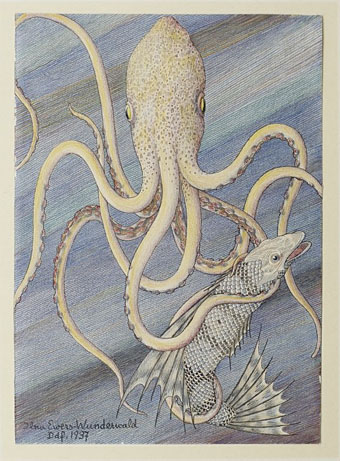
Octopus and Pike (1937) by Ilna Ewers-Wunderwald.

• At Expanding Mind: writer and avant-garde publisher Tosh Berman talks with Erik Davis growing up in postwar California, hipster sexism, the hippie horrors of Topanga canyon, his impressions of family friends like Cameron and Brian Jones, and his charming new memoir Tosh, about growing up with his father, the remarkable underground California artist Wallace Berman.

• At Haute Macabre: A Sentiment of Spirits: Conversations with Handsome Devils Puppets.

• “We felt a huge responsibility.” Behind the landmark Apollo 11 documentary.

Jarman’s work was a statement that conservatism did not, or at least should not, define the perception of Britishness. His vision extended all of the way back to the likes of William Blake, John Dee and Gerard Winstanley, the radicals, mystics and outcasts of English history. His era, on the other hand, looked inwards and pessimistically so. The outward world was solely a free market. Our projected national identity was little else but the retread of colonial fantasies, a faux benevolence to the world that handily discarded the violence and tyranny that built it. Jarman saw through this imaginary landscape, often skewering it in his films.

Adam Scovell on the much-missed radicalism of Derek Jarman

• Director Nicolas Winding Refn: “Film is not an art-form any more.”

• Mix of the week: Secret Thirteen Mix 281 by Blakk Harbor.

• At Greydogtales: Hope Hodgson and the Haunted Ear.

Hans Prinzhorn’s Artistry of the Mentally Ill (1922).

Michael Rother‘s favourite albums.

Renaissance metal

Puppet Theatre (1984) by Thomas Dolby | Puppet Motel (1994) by Laurie Anderson | Maybe You’re My Puppet (2002) by Cliff Martinez
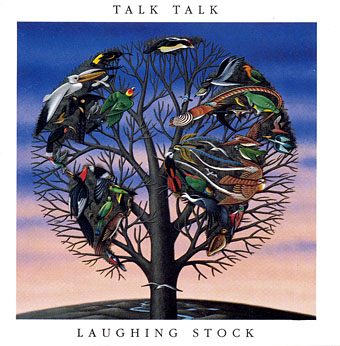
The art of James Marsh

marsh14.jpg

Laughing Stock (1991).

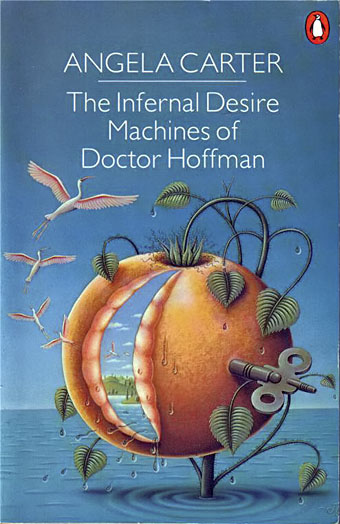
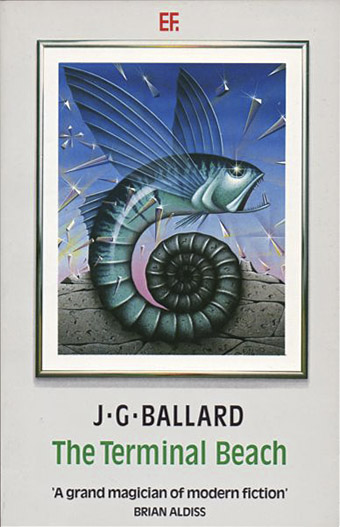
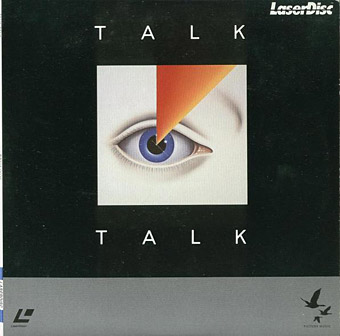
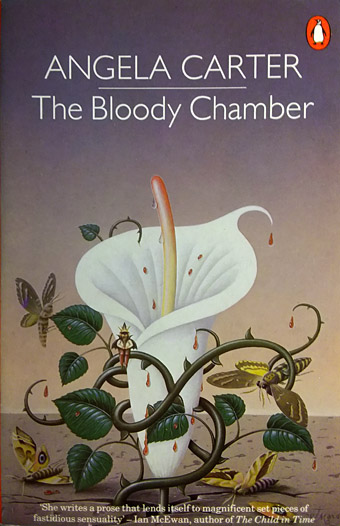
The paintings of James Marsh came to mind this week following news of the death of Talk Talk singer Mark Hollis. Marsh’s art was a feature of all the Talk Talk releases, singles as well as albums, but his work was equally prominent throughout the 1980s on a range of book covers, particularly the series he produced for Angela Carter and JG Ballard. The hard-edged, post-Surrealist style favoured by Marsh was a popular one in the 70s and 80s (among British illustrators, Peter Goodfellow and the late John Holmes worked in a similar manner), and I’ve often had to look twice to see whether a cover is one of his. But while the Magritte-like visual games may be replicated elsewhere, Marsh has a preoccupation with animals—birds and butterflies especially—that sets his paintings apart.

marsh15.jpg

The Bloody Chamber (1981).

I never saw Mark Hollis discuss Marsh’s work but the use of the paintings across all the Talk Talk releases has given the group’s output a coherent look lacking in many of their fashion-chasing contemporaries. The consistency also meant that the cover art was unlikely to overly influence prior perception of their music; there was little warning in 1988 of the musical gulf separating The Colour Of Spring from Spirit Of Eden until stylus met vinyl. Mark Hollis was remembered this week by Rob Young who interviewed him in 1998 when his one and only solo album was released. More from James Marsh’s prolific career may be seen at his website.

marsh12.jpg

The Infernal Desire Machines of Doctor Hoffman (1982).

marsh01.jpg

The Terminal Beach (1984).

marsh04.jpg

Talk Talk (laserdisc, 1984).

Continue reading “The art of James Marsh”

Weekend links 451

smith.jpg

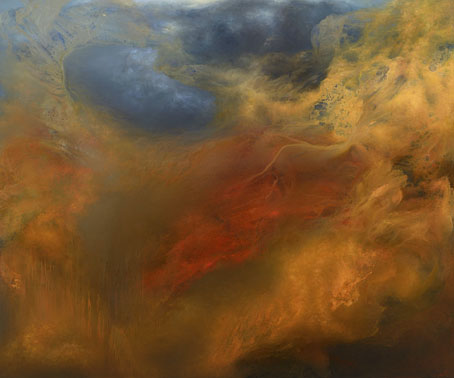
Manifold (2015), a painting by Samantha Keely Smith which will appear in April on the cover of Life Metal, a new album by Sunn O))).

• At Expanding Mind: Professor and queer historian Heather Lukes talks with Erik Davis about Silver Lake riots, gay bikers, house ball scenes, the nostalgia for repression, and the joys and challenges of working on the online archive The Grit and Glamour of Queer LA Subculture.

A Stroke of Ingenious: Chatting Fear and Fantasy with Darius Hinks.  Also this week, Darius Hinks’ The Ingenious (for which I created the cover art) was featured in a Barnes & Noble list of seven attractive (if hazardous) fantastic cities.

• “From the late ’60s and through the ’70s broadcasters invested in home-grown kids’ television, and much of it was decidedly weird.” Paul Walsh on the vanished, thought-provoking strangeness of British TV.

That late surrealism still needs rescuing by curators and critics is perhaps not a sign of its defeat but of the breadth and pervasiveness of its triumph. Could we have Pablo Picasso or Jackson Pollock without surrealism? What about David Lynch, JG Ballard or Angela Carter? As an influence, it’s easy to give [Dorothy Tanning] a crucial place in the canon of feminist art. Louise Bourgeois was born just a year later than Tanning but only started to sew after Tanning had exhibited her first sculptures.

Lara Fiegel on the weird, wild world of Dorothea Tanning

After its own death / Walking in a spiral towards the house by Nivhek, a new album from Liz Harris (Grouper) “recorded using Mellotron, guitar, field recordings, tapes, and broken FX pedals”.

• At Dangerous Minds: Michael Rother (Neu!/Harmonia) on the forthcoming reissue of his solo albums from the 1970s.

Clesse by Clesse, another pseudonymous musical project by Jon Brooks (The Advisory Council et al).

• After Dark: The art of life at night—and in new lights by Francine Prose.

Elena Lazic on where to begin with Gaspar Noé.

• Mix of the week: Headlands by David Colohan.

Steven Heller‘s confessions of a letterhead.

• RIP Albert Finney.

• Void (2009) by Monolake | Void (2013) by Emptyset | Void (2014) by The Bug feat. Liz Harris

Weekend links 448

becher.jpg

Gas Tanks 1965–2009 by Bernd Becher and Hilla Becher.

• At Dangerous Minds: the drawings produced by Moebius for Maxwell House in 1989 are better than the coffee whose sales they were intended to assist.

Jarman Volume 2: 1987–1994, the BFI’s second collection of Derek Jarman films, is now available for pre-order.

• More Gorey: Cara Giaimo on Edward Gorey’s hoards and collections.

That movie [Susan Slade]—and I even have the paperback novelization of it—is a moment. That’s a perfect example. They would never release that image as a still of the movie. Come see a baby catch on fire! To me, I’m kind of rewriting the films as these scenes. That was a real shock to me as a teenager when I saw that. And I thought, Did that just happen? Her baby caught on fire? I remember in Serial Mom I had a big fight with a film executive who said that you can’t have her set her kid’s friend on fire. You can’t do that. And I said, “Why, it’s been in movies forever.” And I’m thinking of Susan Slade, but I’m thinking there’s no point using that in the argument.

John Waters talking to Gina Telaroli about his films but mostly about his works for the art gallery

Georgina Guthrie on how green became cinema’s loneliest colour.

• Tom Crewe reviews Edward Burne-Jones at Tate Britain.

• Mix of the week: FACT Mix 688 by Steve Hauschildt.

• At Strange Flowers: 19 books for 2019.

Jenzeits Cosmic Worlds by Jenzeits.

• Green Onions (1962) by Booker T. & The MGs | Green (1966) by Ken Nordine | Green Fuz (1969) by Randy Alvey And The Green Fuz

The art of Nick Hyde, 1943–2018

hyde05.jpg

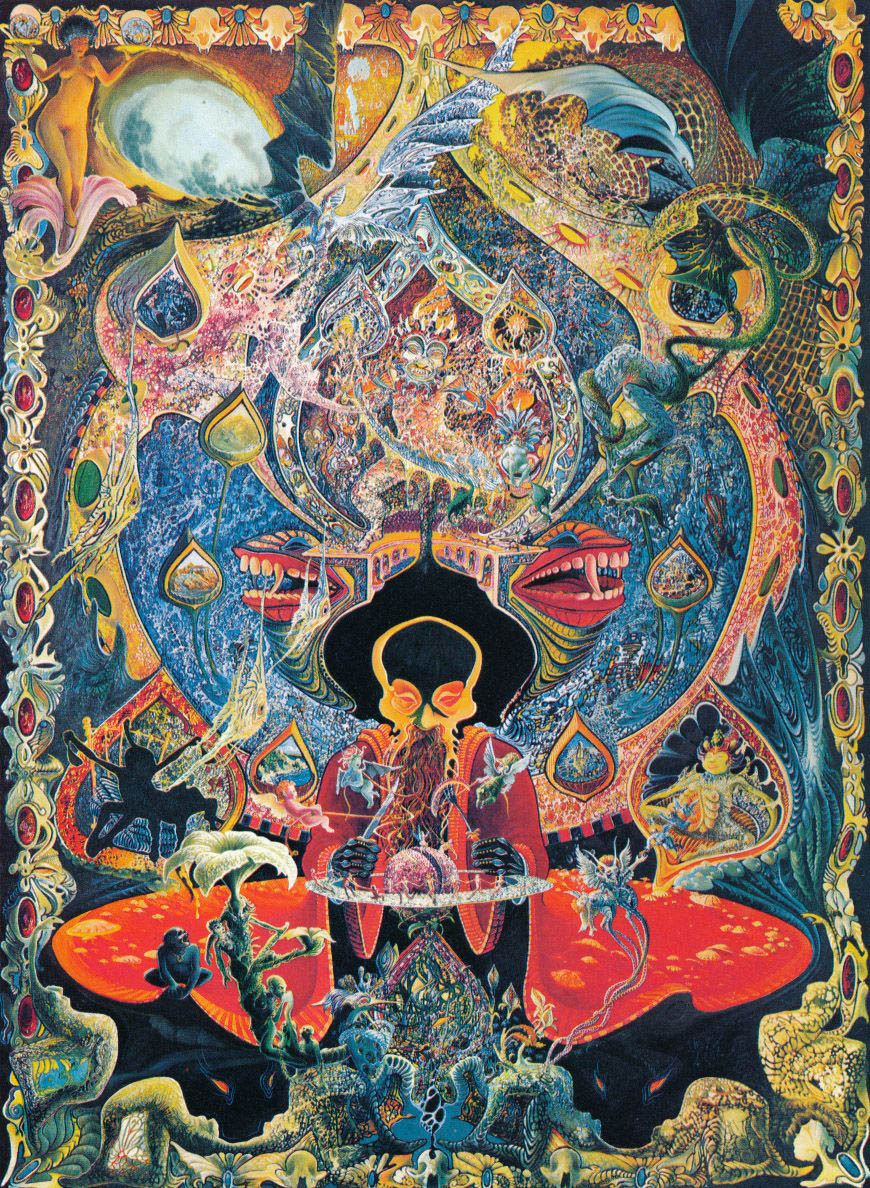
Estate of Man (1967).

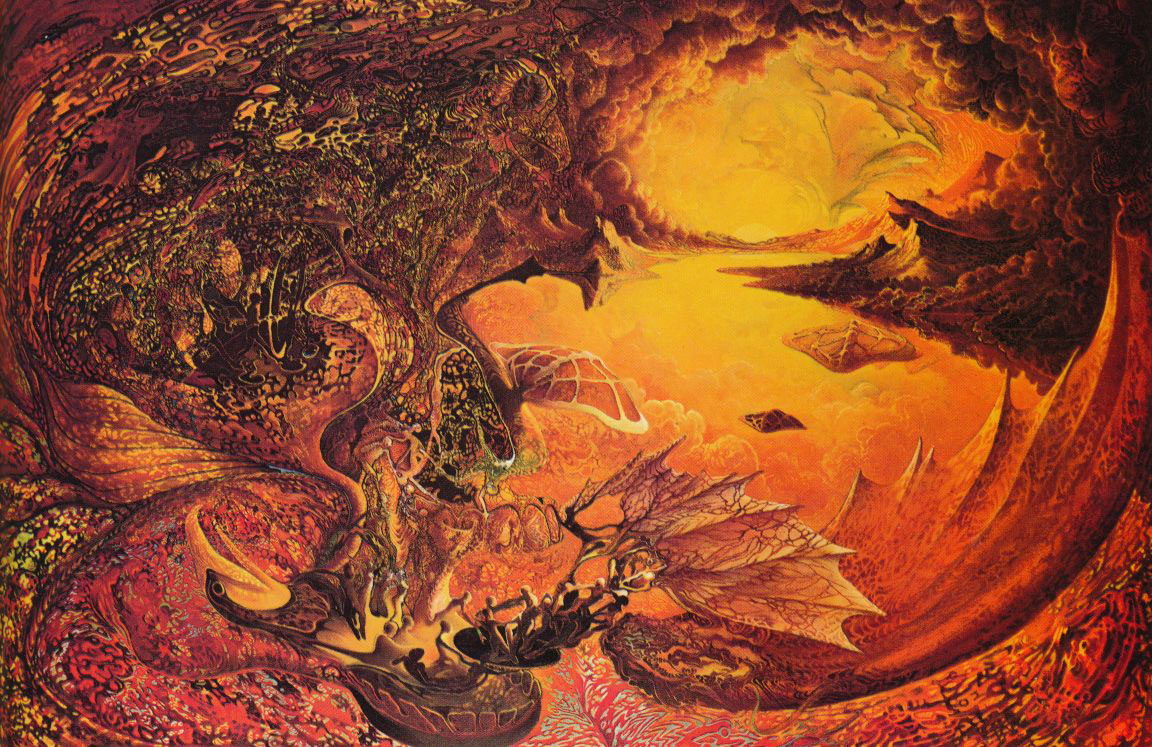
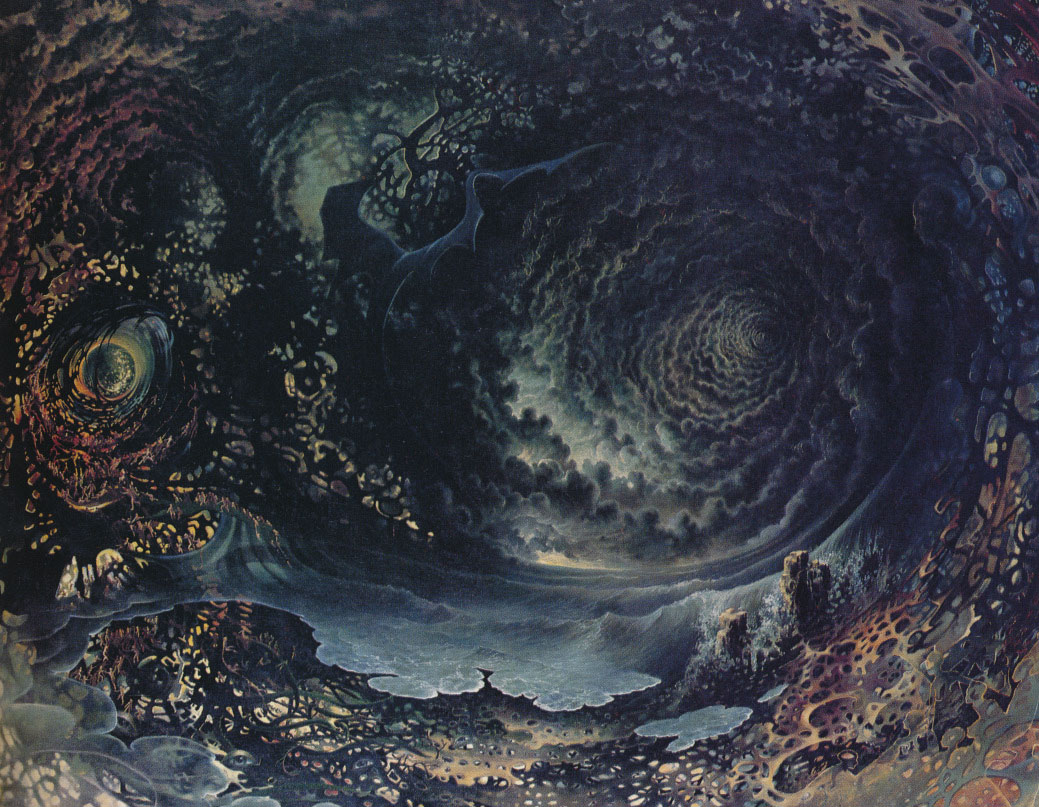
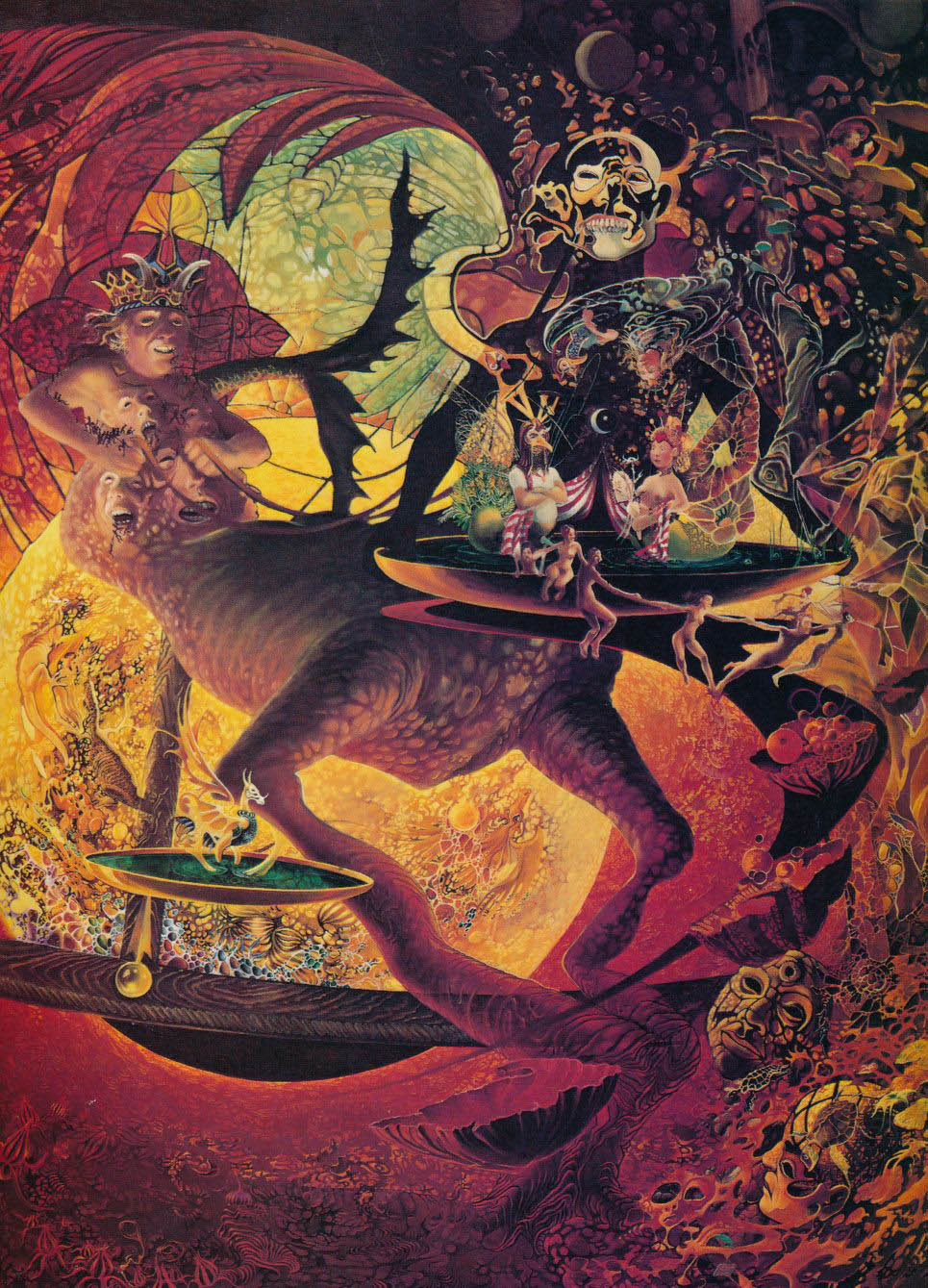
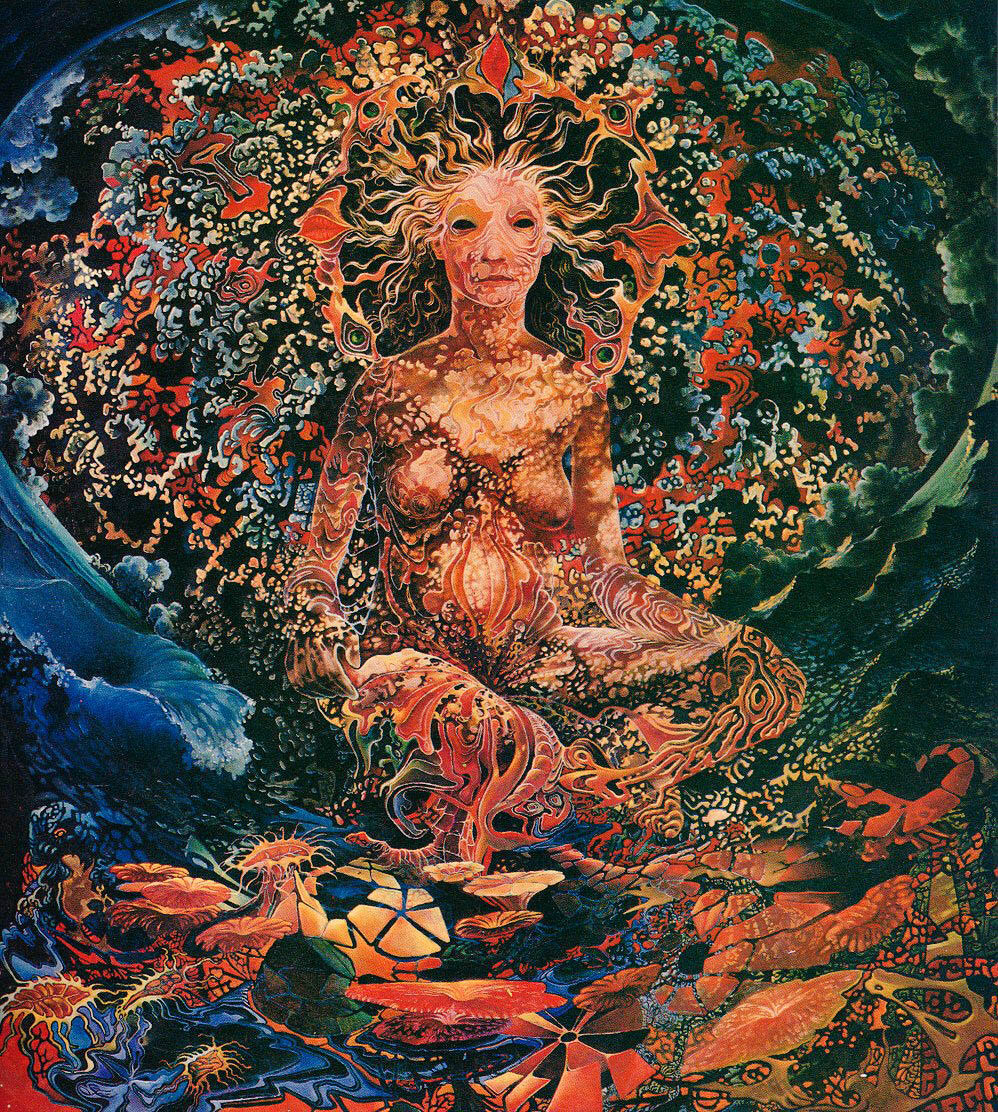
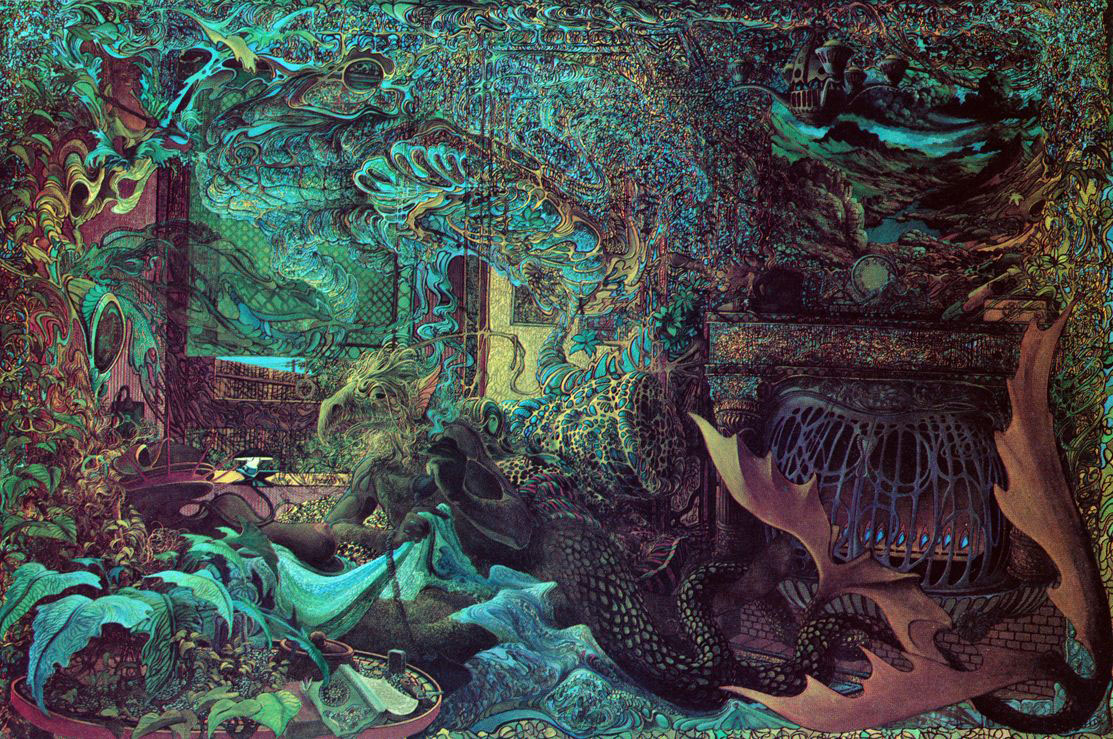
A short tribute to American artist Nick Hyde who I’ve been informed died last month. Hyde’s extraordinary paintings were featured here a few years ago after I found a copy of Visions (1977), an art book devoted to artists of the loosely-affiliated California Visionary school. Most of the paintings in the book are a type of fantastic art (not to be confused with fantasy art) that owes much to the hippy mysticism that later became codified as “New Age”, a vague term which covers a lot of territory. Several of the paintings were featured in the early issues of OMNI magazine but I don’t recall Nick Hyde’s art being among them. Hyde’s early paintings are darker and stranger than those of his Visions contemporaries, and they were ones I inevitably preferred to the rest, hence my earlier post highlighting his work. There isn’t much else I can say about him other than pointing to the official website and posting the following appraisal by Walter Hopps from Visions. All the paintings here are from Visions, and several of them (Abraxas in particular) look like they need to be seen at a much larger size.

hyde06.jpg

Cryptyde (1967).

I am not trying to clean myself of impurities, but to venture into a very real situation. I consider myself a true visionary—it comes to me and I flow with it. My imagery is always a dance.” Nick Hyde, 1976

The powerful nature of Nick Hyde’s art stands in certain important ways vividly apart from that presented here by his visionary colleagues. Rather than scenes of cosmic calm, serene process, or peaceful resolution, Hyde pours forth effulgent compositions of both hallucinatory intensity and tumultuous activity. The myriad visual events and details brought forth in an all-at-once total vision in Hyde’s paintings give rise to a unique tension between what seems the most violent of struggles and the most delicate of dances. In maintaining qualities of such polarity Hyde reveals a mastery of a sinuous, insinuating line structure that both divulges and dissolves images.

hyde03.jpg

Inside Out Breaking Free (1968).

In his extraordinary allegorical painting Estate of Man, human figures are disgorged from a Gothic tracery of lines that suggests the network of nerves of a livid inner eye. Closer inspection reveals the jaws of a hell-mouth that swallows these figures and assimilates them as functioning fibers in a self-conceiving infernal machine. At upper right, however, in a zone of apparent transcendence, Hyde paints a luminist landscape at the moment of sunrise. It is perhaps where one is to find redemption in the Eye of God: or is it merely the burning earth that bears man to offer him to hell?

hyde01.jpg

BethAnn (1969).

Hyde’s painting Abraxas touches on a note of subtle, mordant humor: the mythoid monster and his serpent-headed mate entwined in an infernal lair is, at the same time, a gentleman with his lady, reclining at ease, casually smoking. and telephone in hand. A clock—on the fire-place mantle at the right of the composition—is without hands, and ornamented by two barely perceptible figures. They repeat in reverse the pose of the two polymorphic companions. Abraxas, a god of good and evil, exists in a world abandoned of time, of rhythmic mimesis, of smoldering mockery. —Walter Hopps

hyde02.jpg

Urp (1970).

hyde04.jpg

Abraxas (1971).

Elsewhere on { feuilleton }
The fantastic art archive

Previously on { feuilleton }
Visions and the art of Nick Hyde