Magritte: The False Mirror

magritte2.jpg

Another short film about René Magritte’s paintings, The False Mirror was made three years after the artist’s death in 1970, a time when his work had started to receive widespread international attention. Prior to the 1960s Magritte wasn’t exactly unknown but it wasn’t until the arrival of Pop Art that his paintings began to be reappraised. The production credits for The False Mirror are surprising for such a short piece, the film being directed by art critic David Sylvester (whose book of interviews with Francis Bacon is essential), and photographed by Bruce Beresford, later to become a well-regarded film director. Among the voices reading from the artist’s statements is ELT Mesens, another Belgian artist and friend of Magritte’s whose presence in the later incarnation of the British Surrealist Group gave that small society some authentic gravitas. (George Melly talks about Mesens and the British Surrealists in this film.) The commentary runs over familiar ground: descriptions of the artist’s childhood encounter with a painter in a cemetery (also referred to in Magritte, ou la lecon de chose), and the details of his mother’s suicide (dramatised in David Wheatley’s film). I’d been wondering recently what Magritte might have made of the increasingly excessive prices being paid for his artworks. One of the comments here provides a possible answer when he says he’d be happy if people destroyed his paintings.

Previously on { feuilleton }
Magritte, ou la lecon de chose
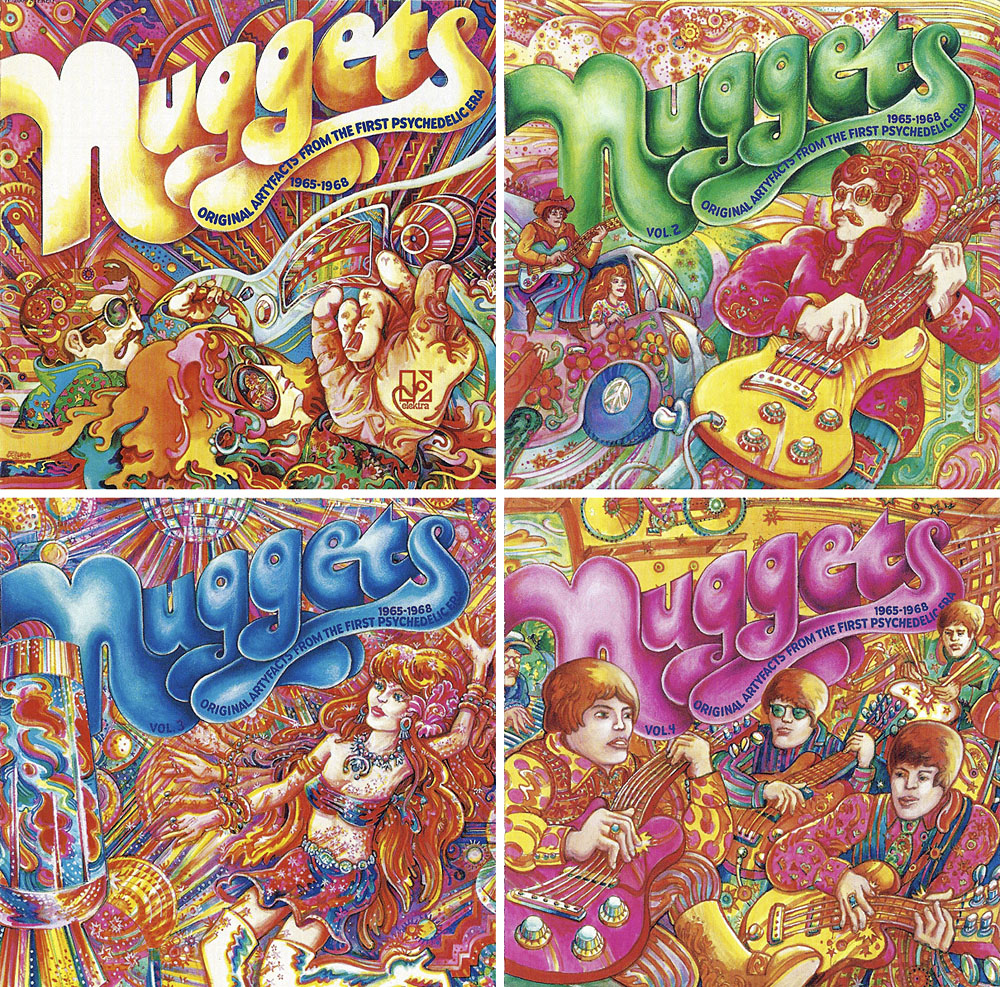
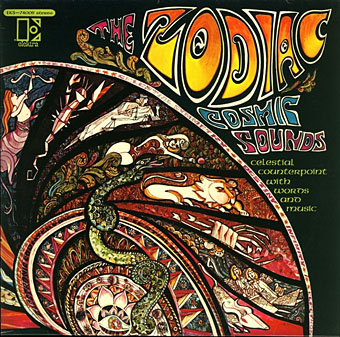
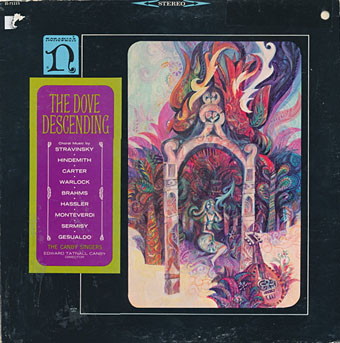
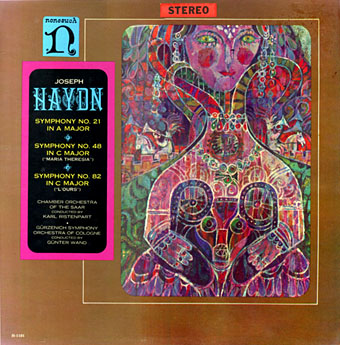
René Magritte album covers
Monsieur René Magritte, a film by Adrian Maben
George Melly’s Memoirs of a Self-Confessed Surrealist
The Secret Life of Edward James
René Magritte by David Wheatley

Magritte, ou la lecon de chose

magritte.jpg

Good to find this one at last with English subtitles. Magritte, ou la lecon de chose is a short study of René Magritte’s paintings made in 1960 by Luc De Hersch. The title translates as “Magritte, or The Object Lesson”, and the film is of note for a few brief scenes in which the artist becomes a performer in order to communicate something of his aesthetic philosophy. We’re also shown a scene of Magritte and friends choosing a title for one of his paintings, while a voiceover provides further explication of the Magrittian view of reality. Given the access the director had to the artist, the film is frustratingly short but it serves as a reminder that there was a time when Magritte’s paintings seemed much more mysterious than they do today.

Previously on { feuilleton }
René Magritte album covers
Monsieur René Magritte, a film by Adrian Maben
George Melly’s Memoirs of a Self-Confessed Surrealist
The Secret Life of Edward James
René Magritte by David Wheatley

Weekend links 635

bubble.jpg

A close-up image of the surface of a soap bubble. The image reveals ‘lipid islands’ of soap floating on a very thin film of water. The film on which the soap floats is so thin that it does not interfere with the light hitting it, therefore allowing the light to pass through. This creates an appearance of a black abyss. Magnification x250.”

• Coming soon from Strange Attractor Press: Everything Keeps Dissolving, Conversations with Coil edited by Nick Soulsby. I helped out a little with this one so I’m looking forward to seeing it. And since the cult fervour around the group remains undiminished, anyone interested in buying a copy is advised to do so sooner rather than later.

• There are over 90 stories in The Complete Short Stories of JG Ballard (quantities vary according to edition) but few of them have been adapted into other media. The Drowned Giant is an exception, an animated short directed by Tim Miller.

• “You could spend your life exploring its dream logic without arriving at a definitive destination.” Anne Billson on the mysteries of Lucile Hadžihalilović’s Earwig.

• Meta-mix of the week: links to yearly mixes of favourite ambient releases by A Strangely Isolated Place.

• At Spoon & Tamago: Matchstick cookies keep the flame of tradition alive.

• At Dennis Cooper’s: George A. Romero Day.

Felicia Atkinson’s favourite music.

• RIP Wolfgang Petersen.

Das Boot: Titel (1981) by Klaus Doldinger | Martin (1983) by Soft Cell | Everything Keeps Dissolving (2000) by Coil

Weekend links 634

chaffee.jpg

Cover for Amazing Stories, October 1992, by Douglas Chaffee. A delightfully strange painting that suggests a no doubt unintentional homoerotic scenario when divorced from its original context. Via.

• “The most curious aspect of Buckminster Fuller’s arc is that he became a counterculture icon while entrenched in the very things that betrayed its spirit.” Pradeep Niroula on Buckminster Fuller (again) whose self-importance is deflated in a new biography, Inventor of the Future: The Visionary Life of Buckminster Fuller by Alec Nevala-Lee.

• “I love both King Diamond and Weird Al. Lana del Rey and Anna von Hausswolff. Golden age illustrations of elegantly levitating fairies in a lush vibrant summer garden and the gothic charcoal rendering of melancholy moth singed by a candle’s flame.” S. Elizabeth talking to Luna Luna Magazine about inspirations and The Art of Darkness.

• “I’m writing this from my office which has a record player, currently about eight thousand records, and just one CD.” Vinyl-head Jonny Trunk talking to Norman Records about the finding and releasing of rare music.

A painter’s brilliant achievements, the unique traits of his particular style, rest on an abiding substratum of coordinated specialized crafts, a body of knowledge and practice safeguarded by a tradition upheld by the guilds. Beneath the glimmer and foreground of art history, like a powerful underground river, flow the patterns of training and production developed in the crafts. Art history is centred on individual talents romantically bringing forth their creations on their own, out of nothing. Craft is collective and anonymous. Someone had to weave the pieces of cloth that form the giant canvas of Las Meninas. Someone had to sew them together so that the stitching would show as little as possible. Someone had to cut and to assemble the struts for its support and then nail to them a canvas which in fact is not of the highest quality. It seems that Velázquez enjoyed the roughness of a surface that favoured his subtle veils and ambiguities. The loose manner of painting developed in Venice is linked to the quality of the pigments that could be purchased there, as well as to the oil medium and the thick, porous quality of a cloth that allowed subtle veils and ambiguities that are impossible to achieve on the surface of a wood panel.

Antonio Muñoz Molina on the materiality of painting, and its highest expression in the art of Diego Velázquez

• The films of Japanese director Kinuyo Tanaka are criminally overlooked, says James Balmont.

Winners of the Nature TTL Photographer of the Year 2022.

• From 2012: The Disappeared by Salman Rushdie.

• At Dennis Cooper’s: Standish Lawder Day.

• New music: Octopus by Sunfear.

Come Sta, La Luna (1974) by Can | Fontana Di Luna (1978) by Michael Rother | La Luna En Tu Mirada (2003) by Ry Cooder & Manuel Galbán

Corgi SF Collector’s Library

corgi02.jpg

Cover artist unknown.

“Here, for the connoisseur, for the devotee of the SF genre, and for those who like their reading to combine excitement with good writing, is the Corgi SF Collector’s Library – a series that brings, in a uniform edition, many of the Greats of SF – standard classics, contemporary prizewinners, and controversial fiction, fantasy, and fact…”

Only in the 1970s would you find a line of SF paperbacks with all the titles set in Thalia, a Victorian typeface revived by the post-psychedelia predilection for any design that was florid and ornate. Corgi’s SF Collector’s Library was published from 1973 to 1976, arriving just as my reading was moving from child-friendly SF to adult fiction. Consequently, I bought quite a few of these books, and still own a couple of them. The design was uniform but with a surprising amount of variation for such a short-lived series. The background colours ranged from deep blue to purple, while the card used for the covers was regular paperback stock for some of the titles with the majority using textured card, a treatment that further distinguished the series from its rivals on the bookshelves.

corgi12.jpg

Art by Joe Petagno.

Looking at these covers again I’ve been wondering if the idea of framing the artwork in a circle was borrowed from Penguin’s run of HG Wells reprints from 1967. Corgi had done something similar the same year with their Ray Bradbury series (all with art by Bruce Pennington) but the Wells editions went through several reprints, and the SF Collector’s Library follows their form even down to allowing the artwork to break the frame.

corgi03.jpg

Art by Bruce Pennington.

The samples here are a small selection of the series which featured a fair representation of British SF illustrators of the time. None of the artists were credited on the covers, however—a poor showing on the part of Corgi—so a few of them remain unidentified.

corgi01.jpg

Art by Tony Roberts.

corgi05.jpg

Cover artist unknown.

Continue reading “Corgi SF Collector’s Library”