Weekend links 705

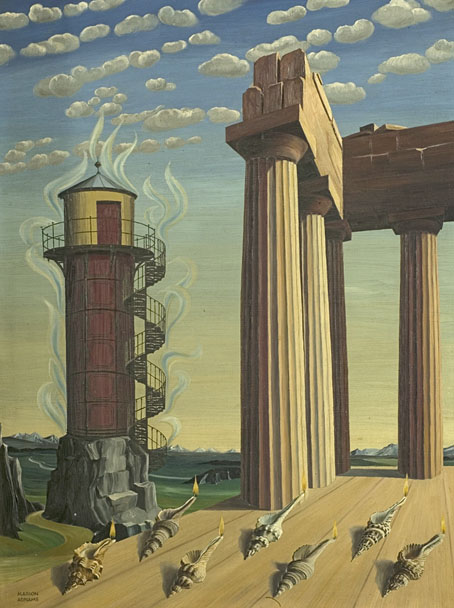
adnams.jpg

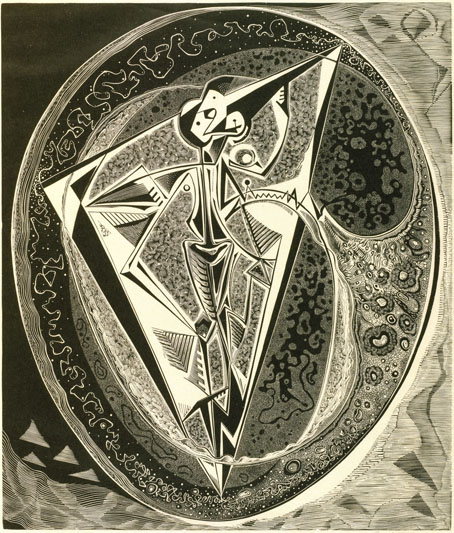
The Seven Lamps (c.1956) by Marion Elizabeth Adnams.

• At Spoon & Tamago: All 54 playing cards reinterpreted through still-life photography by Yuni Yoshida.

• At Colossal: Photographer Mikko Lagerstedt illuminates the magical solitude of the Nordic winter.

• At 3:AM Magazine: Alexander B. Joy explores the 9th minute of Andrei Tarkovsky’s Solaris.

• At Dennis Cooper’s: The Seven Godlike Books of James McCourt.

• Mix of the week: Winter Solstice 5 at Ambientblog.

Entries for the RSPCA Young Photographer 2023.

Artmaker Blog curated by Bruce Sterling.

• New music: Earth Drone by The Owl.

Ace Of Spades (1965) by Link Wray | Jack Of Diamonds (1966) by The Daily Flash | Pack Of Cards (1970) by Nat Cole

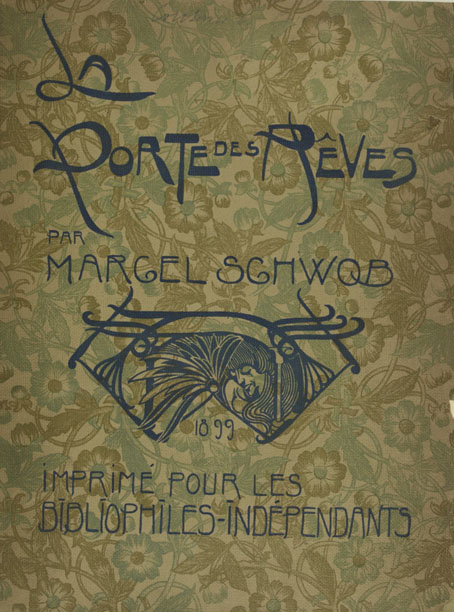
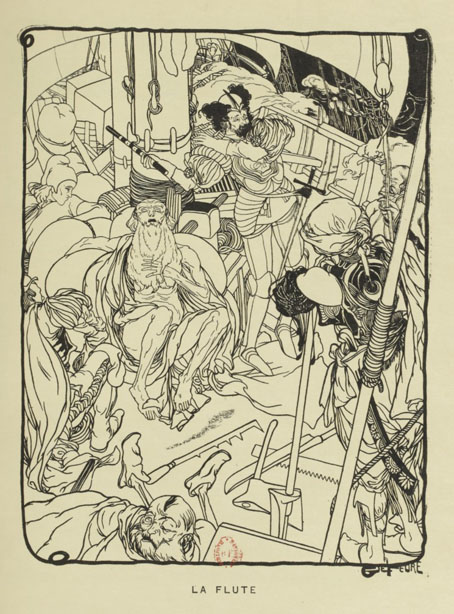
Georges de Feure’s Gate of Dreams

defeure01.jpg

The gate in question, La Porte des Rêves (1899), is a collection of stories by Symbolist writer Marcel Schwob, illustrated in its first edition by Georges de Feure (1868–1943). The collection is actually a kind of “best of Schwob”, being compiled from stories which had already appeared a few years before in other collections. Both Schwob and de Feure were French, and the artist is one of the few whose work may be found in collections of Symbolist art as well as books about Art Nouveau design; you’d think there’d be many more among the conterminous movements but this isn’t the case.

defeure02.jpg

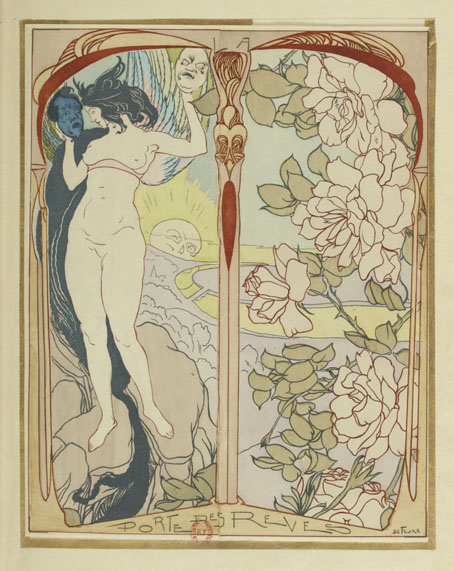
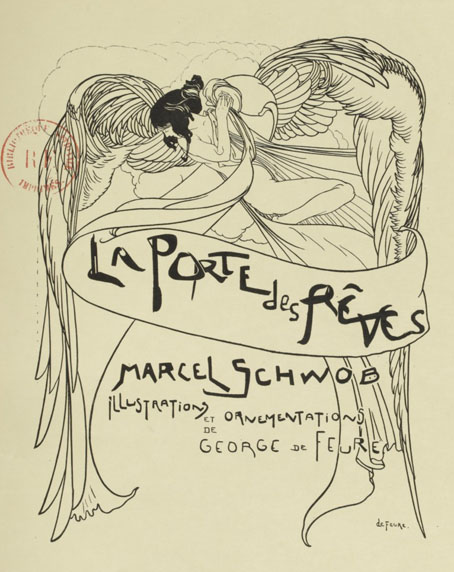
Women are a persistent subject in de Feure’s work, especially the sinister variety who were a staple in fin-de-siècle fiction. Some of these may be found in La Porte des Rêves which features a larger quantity of de Feure’s black-and-white drawing than I’ve seen elsewhere. In a reversal of my usual preferences, I prefer de Feure’s colour work, but anything of his is worth seeing. For a taste of Marcel Schwob’s approach to writing, which included textual collage, see this interview with translator Kit Schluter.

defeure03.jpg

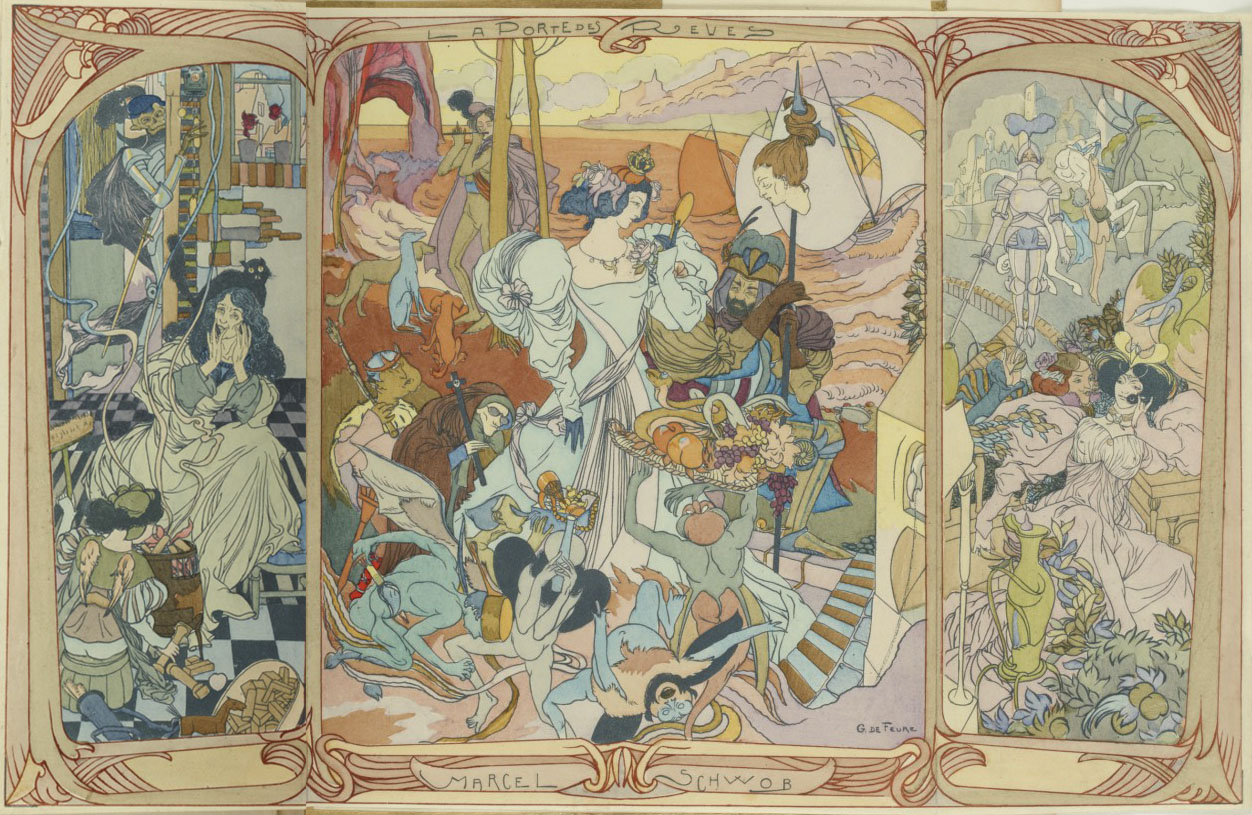
A triple-page spread.

defeure04.jpg

defeure05.jpg

Continue reading “Georges de Feure’s Gate of Dreams”

The Parade and Baron Verdigris

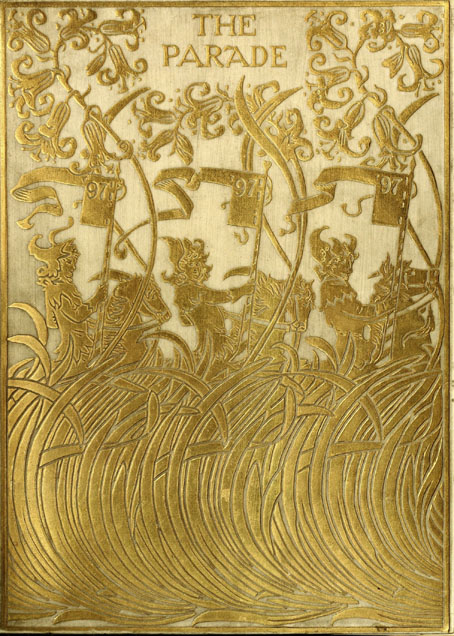
parade01.jpg

Design by Paul Woodroffe.

The Parade, subtitled An Illustrated Gift Book for Boys and Girls, is something that children with wealthy parents or relatives might have received as a Christmas present in December 1897. The contents are an unusual mix of fairy tales, frivolous seasonal fare—A Christmas Mummery, complete with songs and music—and adventure stories set in other parts of the world. The collection was edited by Gleeson White, an art critic whose former position as editor of The Studio magazine explains the very Studio-friendly choice of illustrators.

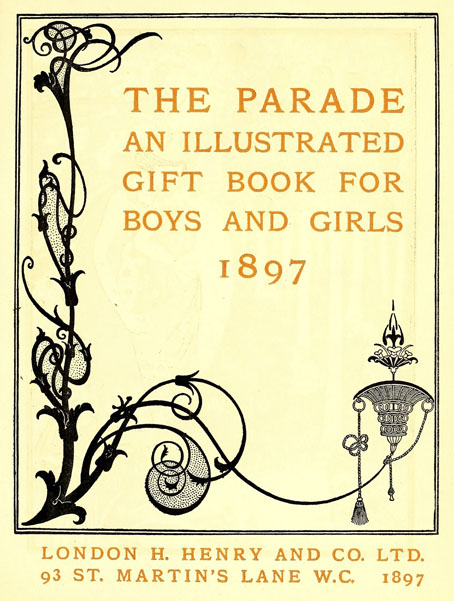
parade02.jpg

The design on the title page is a curious piece by Aubrey Beardsley, one with less authority than the most of the other drawings he was producing in his penultimate year. Those dots filling out the arabesque plant forms are the kinds of things that amateurs do when they’re uncertain about whether or not to decorate a design. The tendril which terminates in a tasselled confection is, however, a typical example of the artist’s bizarre invention, the kind of caprice that used to infuriate the critics who disliked his work. Beardsley’s career had been launched four years earlier with a profile in The Studio, but by 1897 he was often struggling for money after being fired from The Yellow Book in the wake of the Oscar Wilde scandal. Gleeson White is to be commended for supporting him at a time when many others refused to do so.

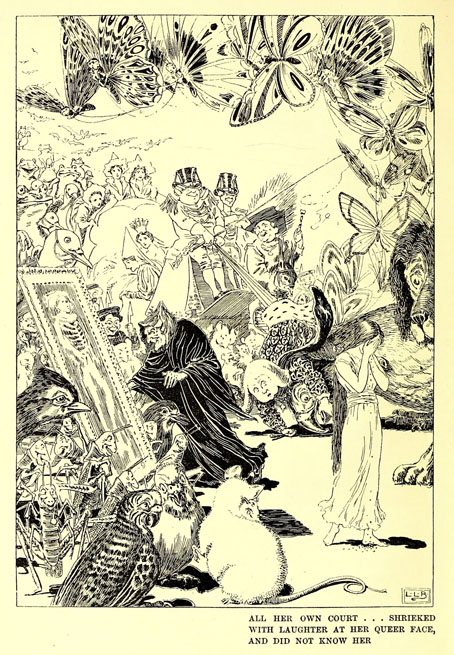
parade03.jpg

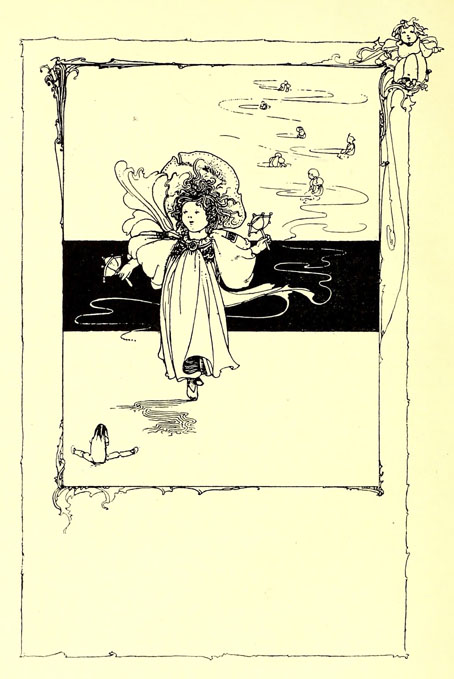
L. Leslie Brooke.

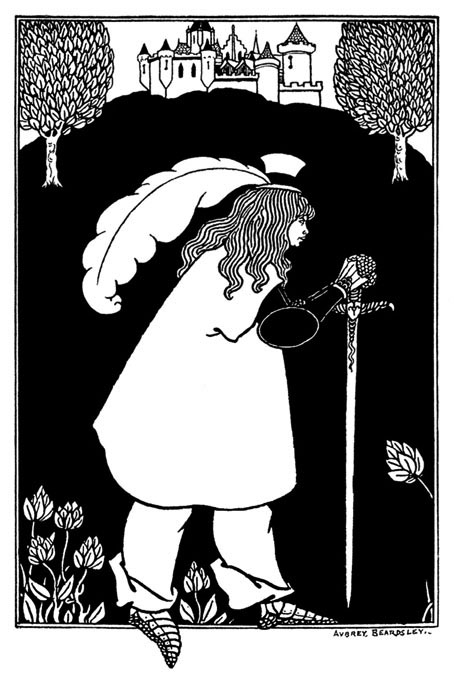
Elsewhere in The Parade there are contributions both written and pictorial from Beardsley’s friend, Max Beerbohm; also a story by Richard Burton, a writer you wouldn’t usually expect to find in a book aimed at children. The list of illustrators includes Charles Robinson, Laurence Housman and Manchester’s own Alfred Garth Jones. Beardsley didn’t draw anything else for The Parade but he’s mentioned again in a list of titles advertised in the book’s final pages as having provided a frontispiece for Baron Verdigris, “A Romance of the Reversed Direction” by one Jocelyn Quilp. The title was unfamiliar, and I wasn’t sure at first whether I’d seen the illustration, but the drawing shown below appears in two of my Beardsley books—albeit at small sizes—including the copious Brian Reade collection from 1967.

beardsley.jpg

“Baron Verdigris” sounds like a minor character from Michael Moorcock’s Dancers at the End of Time trilogy, while the improbable “Jocelyn Quilp” turns out to be a nom de plume of Halliwell Sutcliffe whose book is described as a “singular novella, a curious amalgam of parodies based on a time-travelling theme“; shades of the Dancers again. It’s tempting to think that this may be the sole example of Aubrey Beardsley illustrating science fiction (or something like it)—the book is generic enough to be listed at ISFDB—but Brian Reade describes the story as “pseudo-mediaeval and facetious”, “dedicated to ‘Fin-de-Siécle-ism, the Sensational Novel, and the Conventional Drawing-Room Ballad'”. That does at least explain the peculiarities of the drawing. Maybe the Moorcock comparison is an apt one after all.

More illustrations from The Parade:

parade04.jpg

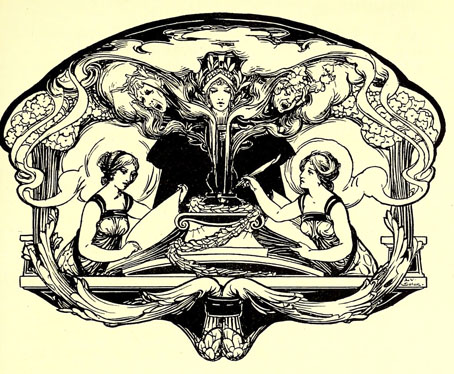
Charles Robinson.

parade05.jpg

Léon V. Solon.

Continue reading “The Parade and Baron Verdigris”

Weekend links 704

hermes.jpg

The Yolk (1953) by Gertrude Hermes.

• “By 1910, a quarter of the 129 million litres of alcohol consumed annually by Frenchmen was absinthe. Of course, the wine industry was threatened by this growing desire for ‘industrial spirits.’ The Pernod Company was the primary producer, but there were dozens of distilleries offering variations of the ambrosial concoction. The Green Fairy had become the Green Curse.” Barnaby Conrad III on the intersections of absinthe and art.

• At Wormwoodiana: “The Zombie of Great Peru is a transgressive novel written in 1697 by Pierre–Corneille Blessebois…a memoir of occultism, seduction, slapstick, and humiliation, set in the racial and sexual hothouse of colonial Guadeloupe. It contains the first appearance of the word ‘zombie’ in literature.” Doug Skinner, the translator of a new edition, talks to Bill Ectric about the book.

• “I have been lucky to have the time to understand, or misunderstand, the concept of sound. It’s all about the sound. I don’t play styles, I don’t play genres, I don’t play jazz. I play my repertoire, my language, my own poetry.” Bill Laswell talking to Paul Acquaro and David Cristol about his career as player and producer.

• New music: Rhan-Tegoth by Cryo Chamber Collaboration. A couple of months ago I was wondering whether Cryo Chamber would be continuing their series of Lovecraftian albums, and, if so, which entity they might choose for the theme of the next one. Now we know.

• “Zines, at their most glorious, are indifferent to dignity, reckless in the statements they reel off, determined to make a virtue of their limited resources.” Sukhdev Sandhu on the history of the fanzine.

• At Unquiet Things: Hazy Shade of Winter: The Artwork of Julius Sergius von Klever.

• Mix of the week: DreamScenes – December 2023 at Ambientblog.

• At the Daily Heller: Daniel Pelavin’s Pipe Dreams.

• Old music: Buchla Christmas by Warner Jepson.

• At Dennis Cooper’s: Isaac Julien Day.

Pipeline (1962) by The Chantays | Pipeline (2005) by Monolake | Banzai Pipeline (2020) by The Surfrajettes
Weekend links 703

hallbeck.jpg

Njommelsaska i Lappland (1856) by Carl Svantje Hallbeck.

101 hidden gems: the greatest films you’ve never seen. Not another clickbait listicle of Hollywood fare that you really have seen, this is 101 films from Sight & Sound‘s annual poll of critics and directors, each of which only received a single vote. Cinema from the silent era to the present day, “from every continent but Antarctica”, all presented on a single page, and with accompanying notes from the voters. I’ve only seen four of these so it’s a list to mine for the future.

• 2024 will see the 100th anniversary of the publication of the first Surrealist manifestos, so the following new books are making their presences known before the celebratory rush. At Colossal: extracts from New Surrealism: The Uncanny in Contemporary Painting by Robert Zeller; at AnotherMag: photos by Coco Capítan of Salvador Dalí’s home at Port Lligat.

• “Cocteau was like one of those magicians who, having announced that they are going to reveal the secret of one trick, immediately perform another.” Pierre Caizergues introducing extracts from The Secrets of Beauty, a small book of aphorisms by Jean Cocteau, newly translated into English by Juliet Powys.

• More Michael Powell: “Scorsese says The Red Shoes is in his DNA”: Thelma Schoonmaker on her life and work with Michael Powell and his friend Marty.

Dennis Cooper’s favourite fiction, poetry, non-fiction, film, art, and internet of 2023. Thanks again for the link here!

• At The Daily Heller: Book covers by Iris Alba (1935–1993), art director, illustrator and graphic designer.

• At Smithsonian Magazine: See the newest underwater sculptures residing on the floor of the Caribbean.

• At Wormwoodiana: Douglas A. Anderson goes looking for the fantasy fiction of Raymond Chandler.

• At Public Domain Review: Paige Hirschey on Anna Atkins’ cyanotypes.

Entries for the Northern Lights Photographer of the Year 2023.

• At Bibliothèque Gay: Der Mann in der Photographie, 1954.

Aurora (1971) by Tonto’s Expanding Head Band | Aurora (2005) by Alva Noto + Ryuichi Sakamoto | Aurora Liminalis (2013) by William Basinski + Richard Chartier