Petulia film posters

petulia1.jpg

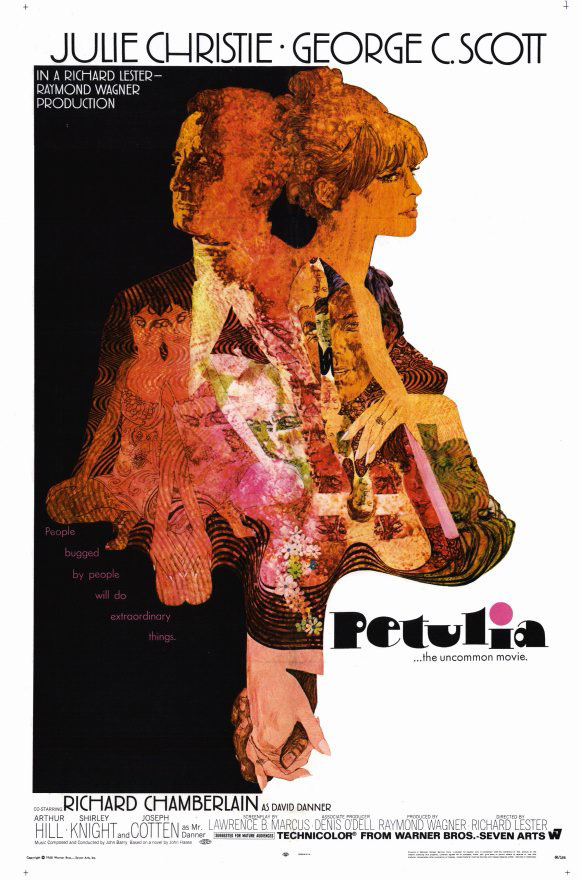
Illustration by Bob Peak.

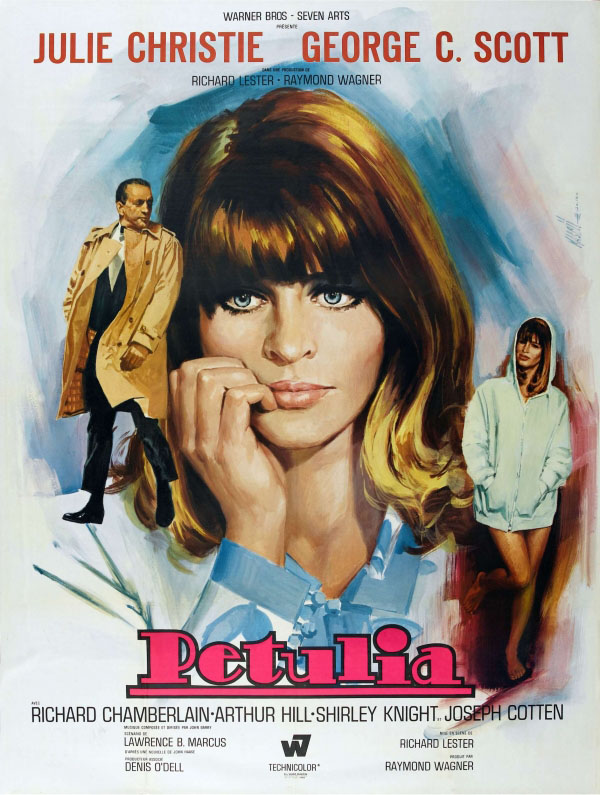
Further examples of those things you find when you’re searching for something else, these posters for Richard Lester’s Petulia (1968) are a good example of just how differently the same film can be presented by its advertising materials. Petulia (“the uncommon movie”) is a fascinating, unjustly neglected gem, a serious adult drama quite unlike the comedies (or comic dramas) Lester was making before and after. Nicolas Roeg photographed Petulia shortly before embarking on his own directing career, capturing San Francisco just after the Summer of Love in a more documentary fashion than the exploitation films of the period. There are nods to the psychedelic scene with party appearances by Big Brother and the Holding Company, and the Grateful Dead, but the narrative concerns the flipside of hippiedom with a group of middle-class professionals ensnared in adultery and marital failure.

A commonly remarked feature of Petulia is Antony Gibbs’ fragmented editing style which flashes backwards and forwards throughout, even showing events that never happen. The technique is usually taken to be derived from Alain Resnais although Gibbs had earlier edited The Knack…and How to Get It for Lester which is often as fragmented, albeit for a more comic effect. What’s notable about the technique is that Gibbs went on to edit Nicolas Roeg’s first two features, Performance (co-directed with Donald Cammell) and Walkabout, both of which take the fragmentation even further, creating the style which Roeg made his own.
petulia4.jpg

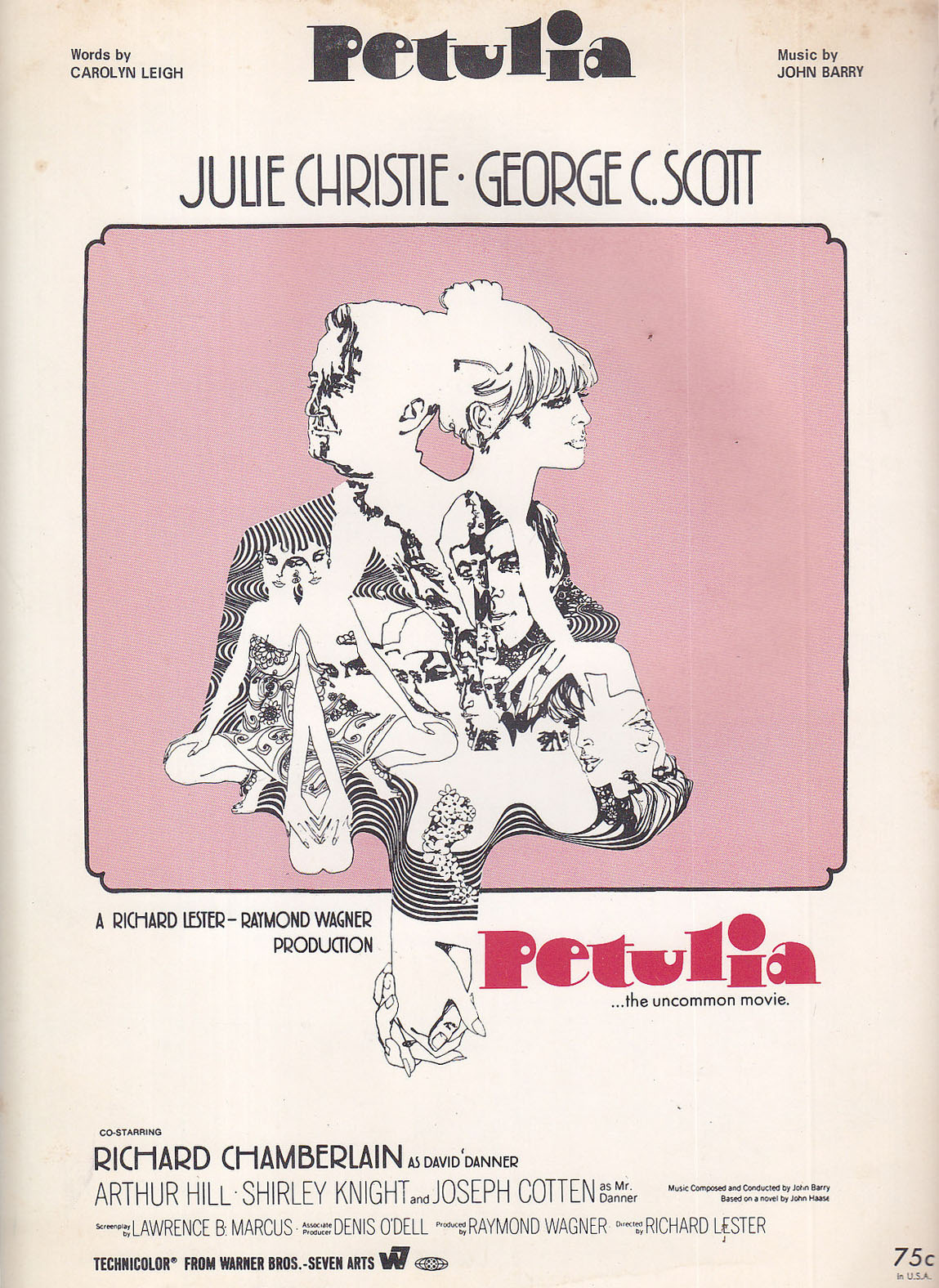
The poster that caught my attention was the marvellous one by Bob Peak who manages to depict the awkward relationship between the two leads—holding hands yet facing away from each other—whilst alluding to the psychedelic backdrop in the details. It’s difficult to tell at a small size but the sheet music design above shows that Peak’s drawing is a complex arrangement of blended faces, the reflected figure of a woman and a pattern of Bridget Riley swirls. If I was still collecting film posters I’d be sorely tempted to buy one of these.
petulia2.jpg

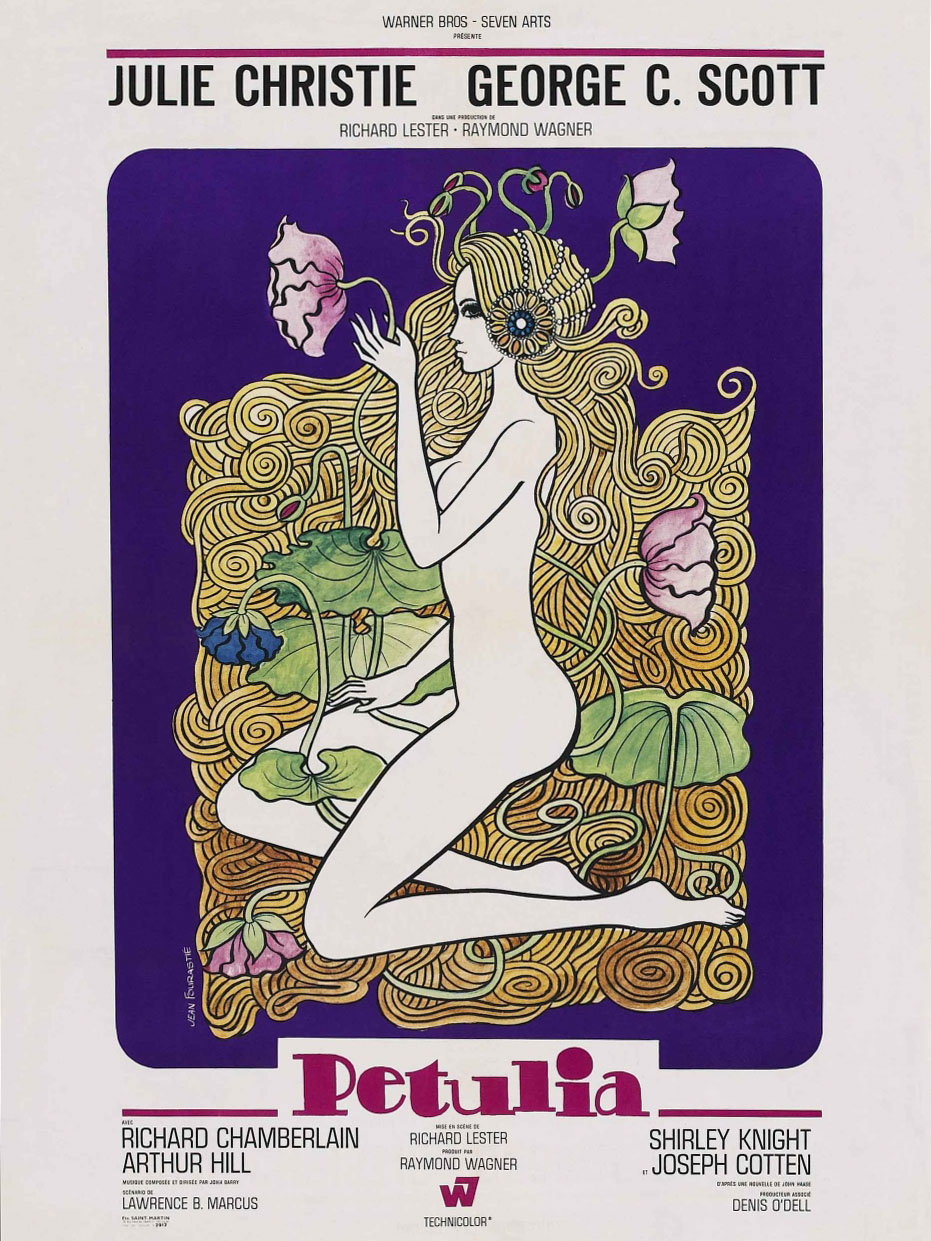
Illustration by Jean Fourastié.

Compared to which this pair of French designs veer off in opposite and unsatisfying directions. Jean Fourastié seems to have been under the impression that the story concerned a San Francisco flower child not a bored housewife, while Jean Mascii’s painting isn’t inaccurate but is more suited to a romance paperback. Big heads were apparently Mascii’s métier even if there were no people in the film.
petulia3.jpg

Illustration by Jean Mascii.

Petulia has been available on DVD for a while now, it’s well worth seeking out. Watch the trailer here.

Previously on { feuilleton }
Lucifer Rising posters
Wild Salomés
Druillet’s vampires
Bob Peak revisited
Alice in Acidland
Salomé posters
Polish posters: Freedom on the Fence
Kaleidoscope: the switched-on thriller
The Robing of The Birds
Franciszek Starowieyski, 1930–2009
Dallamano’s Dorian Gray
Czech film posters
The poster art of Richard Amsel
Bollywood posters
Lussuria, Invidia, Superbia
The poster art of Bob Peak
A premonition of Premonition
Metropolis posters
Film noir posters

Weekend links 129

proffer.jpg

Daughters of Maternal Impression by Arabella Proffer.

A genre’s landscape should be littered with used tropes half-visible through their own smoke & surrounded by salvage artists with welding sets, otherwise it isn’t a genre at all.

M. John Harrison, incisive as ever, on what he memorably labels “Pink Slime Fiction”. Elsewhere (and at much greater length) Cowardice, Laziness and Irony: How Science Fiction Lost the Future by Jonathan McCalmont, and a two-part Paul Kincaid interview here and here.

• “Once upon a time, in almost every city, many rivers flowed. Why did they disappear? How? And could we see them again? This documentary tries to find answers by meeting visionary urban thinkers, activists and artists from around the world.” A trailer for Lost Rivers, written and directed by Caroline Bâcle. Related (and mentioned here before), London’s Lost Rivers: A Walker’s Guide by Tom Bolton.

Ghosts in the Machine: “Curated by Massimiliano Gioni and Gary Carrion-Murayari, a recent exhibition was imagined as a Wunderkammer simultaneously tracing and questioning the relationship between people and technology.” And in Istanbul a Wunderkammer of a different kind: Rick Poynor looks at Orhan Pamuk’s Museum of Innocence.

• “There’s a vast territory still to be explored…” Bristol duo Emptyset (James Ginzburg & Paul Purgas), many of whose releases I’ve designed, talk about their music. Tracks from their new EP on the Raster-Noton label can be heard here. You’re going to need bigger speakers.

• “I liked doing it one time but I don’t want to become the gay porn soundtrack guy.” Ben Chasny of Six Organs of Admittance talking to Sir Richard Bishop about one of his more unusual commissions.

durham.jpg

Double Vision (2009) by Bonnie Durham.

FACT mix 349: Silent Servant puts together a great selection of music old and new with the emphasis on the grit of the early Industrial era.

• Read Joyce’s Ulysses line by line, for the next 22 years, with Frank Delaney’s podcast.

Borges and the Plain Sense of Things, an article from 2006 by Gabriel Josipovici.

Clive Hicks-Jenkins on Equus and seeing your inspirations come full circle.

• At Pinterest: A few nice paintings of men

Spunk [arts] magazine

Derelict London

• Ritualistic Bug Use (2009) by Pink Skull | Demiurge Variations (2012) by Emptyset | Utopian Disaster (End) (2012) by Silent Servant.

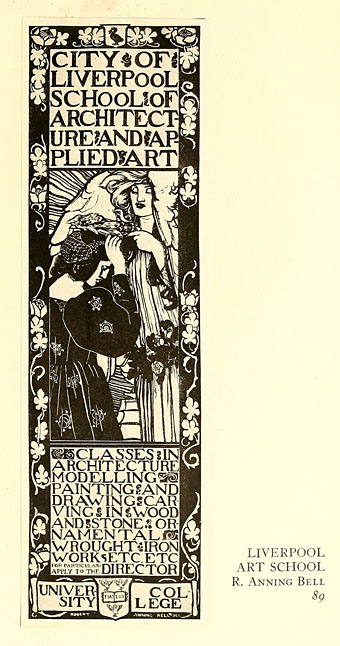
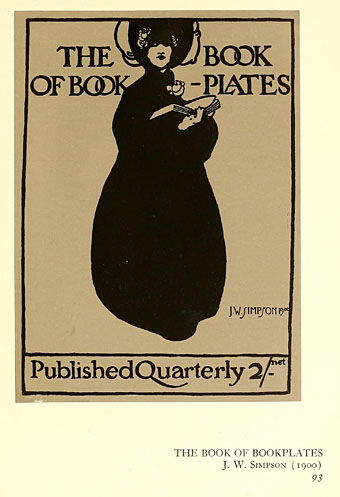
Posters: A Critical Study, 1913

posters01

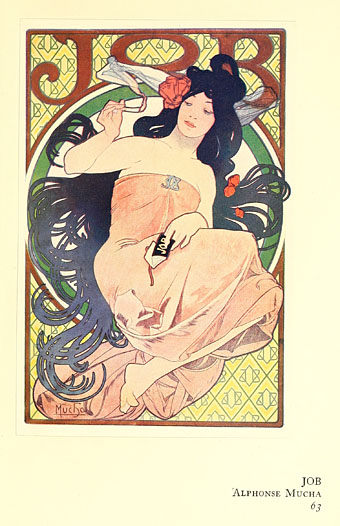
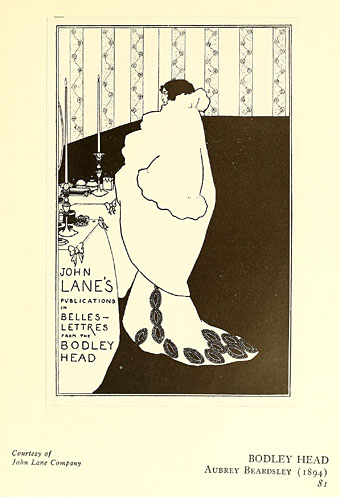
An appraisal of the state of poster design from almost a century ago by Charles Matlack Price. Lots of the names you’d expect from Europe and the United States—Steinlen, Mucha, Beardsley, Will Bradley, Maxfield Parrish, etc—plus a number of examples I hadn’t seen before. Also a surprising scarcity of Italians and Germans. Scroll down for a remarkably advanced dancer with a guitar by Will Bradley from 1895, a design that anticipates the flourishing of Cubism and abstracted graphics a few years later. Price’s book may be browsed here or downloaded here.

posters02

posters03

posters04

Continue reading “Posters: A Critical Study, 1913”

The art of Guido Reni, 1575–1642

reni01.jpg

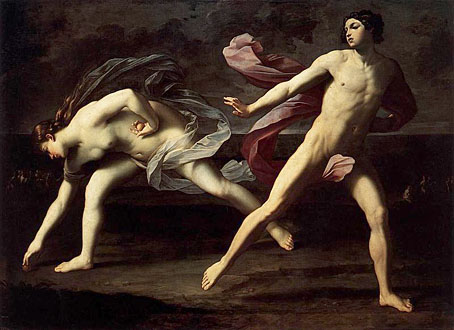
Atalanta and Hippomenes (c. 1612).

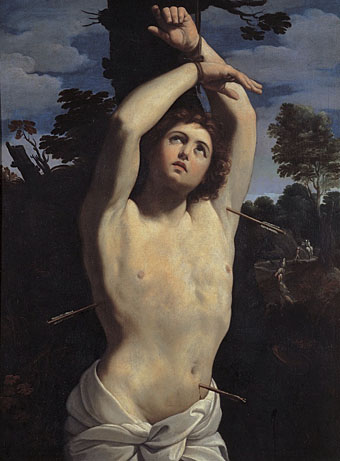
More golden apples appear in this painting by Guido Reni, not the most famous ones in art history—those would be all the Apples of Discord seen in the various Judgements of Paris—these are the fruit of the sacred tree in the Garden of the Hesperides which Hippomenes drops to prevent Atalanta from beating him in a race. The object of interest here isn’t the apples but the near-naked male, a favourite subject for Baroque artist Guido Reni whose work strikes viewers today as significantly homoerotic. This interpretation is by no means a recent one: Oscar Wilde was famously smitten with Reni’s depiction of Saint Sebastian (below) when he saw the painting in Genoa; in the 20th century the same painting (or one of Reni’s other Sebastians) excited the 12-year-old protagonist in Yukio Mishima’s novel Confessions of a Mask. Here’s what GLBTQ has to say about Reni:

Given the fierce homophobia prevailing in Europe during the Baroque era, historians seeking to reconstruct the lifestyles and works of queer artists often have to depend upon undocumented anecdotes and innuendoes.

Utilizing this type of evidence (including rumors about his supposed disdain of women, his possible romantic involvement with his long-time assistant, his interest in cross-dressing, and his “delicate” mannerisms), recent scholars interpret Guido Reni (1575–1642) as a gay artist.

The disdain of women is referred to in an earlier account, as are other pertinent details:

He was accustomed to paint with his mantle about him, gathered gracefully over his left arm. His pupils, of whom he had a great number—at one period no less than eighty, drawn from nearly every nation of Europe—vied with each other to serve him, esteeming themselves fortunate to have opportunities to clean his brushes or to prepare his palette. He had no dearth of models in the multitude of youths and disciples which surrounded him; but all that Guido cared of them was to refresh his memory by viewing their limbs and torsos, and after that he could adjust them and correct their imperfections.

In the same way any head sufficed him for a model. Being once besought by Count Aldovrandi to confide in him who the lady was of whom he availed himself in drawing his beautiful Madonnas and Magdalens, he made his color-grinder, a fellow of scoundrelly visage, sit down, and commanding him to look upward, drew from him such a marvelous head of a saint that it seemed as if it had been done by magic. Better than any other artist he understood how to portray upturned faces, and boasted that he knew a hundred ways of making heads with their eyes lifted to heaven. He often declared that his favorite, models were the ‘Venus of Medici’ and the wonderful heads in the Niobe group.

He was always in great fear of sorcery and poisoning, and for that reason could not endure women in his house, abhorring to have any dealings with them, and, when such were unavoidable, hurrying them through as rapidly as possible. Old women were his especial detestation, and he always fled from them, and lamented grievously if one of them should appear when he was about beginning or closing some commission.

From Guido Reni (1903)

That’s one way of either justifying your misogyny or explaining to the neighbours why your house is full of young men with no women.

reni10.jpg

Saint Sebastian (1615).

Speculation about the sexuality of artists from past centuries seldom leads anywhere but it can be a fun parlour game, provided you take accounts like the one above with a pinch of salt. In Reni’s case you’d have to point to the many paintings where a religious subject is used as the merest pretext for some shirtless male pulchritude. This was a common ploy in other areas of art: landscape painting evolved as a genre in its own right when post-Renaissance artists began to shrink the religious figures who were the ostensible subject of their commissions into the corner of a field or the shadows of a valley; the imagination could be given free rein by the expedient of painting an apocalypse or a Temptation of St Anthony.

Reni lets loose his temperament by returning to a range of religious subjects that happen to feature attractive youths. Even his picture of Sacred Love defeating Profane Love (below) shows a divine figure who seems to represent more of the libido than the subject should require. Elsewhere he follows Caravaggio with a youthful John the Baptist preaching in the wilderness in an almost total state of nature. Reni’s angels are some of the most androgynous figures you’ll find in Baroque painting; the model for his very girlish Archangel Gabriel also appears as Jesus in another painting, raising a somewhat scandalous implication as to the real paternity of Christ.

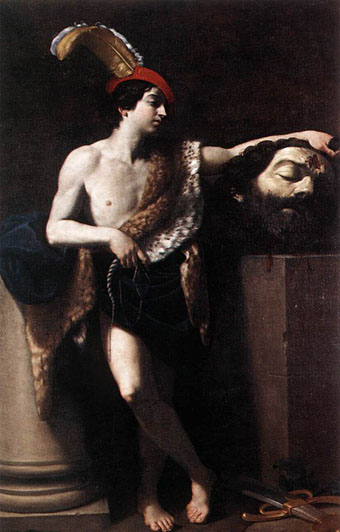
reni07.jpg

David with the Head of Goliath (1605).

The following selection of paintings is a prejudiced choice, of course. Some of these can be seen at a much larger size at the Google Art Project. Frivolous speculation aside, at his best Reni could be very good indeed as in this superb portrait of Saint Matthew with another androgynous angel. It’s no surprise to read that his work was in great demand throughout his life.

Continue reading “The art of Guido Reni, 1575–1642”

Hanging in Lovecrafton

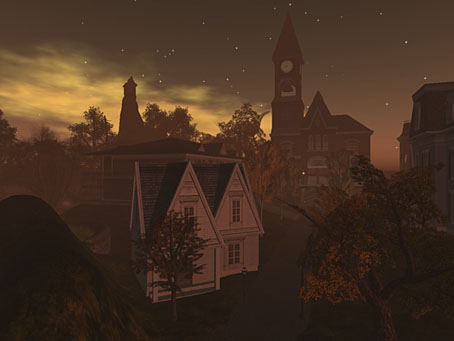
lovecrafton01.jpg

Lovecrafton.

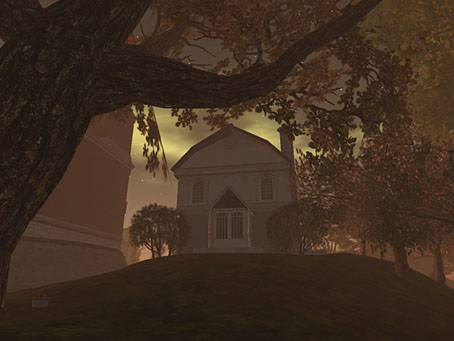
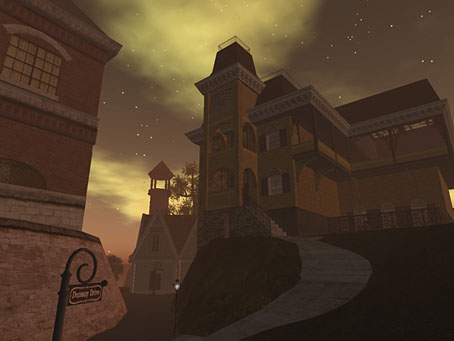
I’ve had online art exhibitions in the past but this month some of my work can be seen inside a virtual space. Lovecrafton is a Lovecraft-themed town in Second Life created by illustrator John Aardema. As is evident from the screenshots, the atmosphere is suitably autumnal with the requisite Colonial architecture. I was slightly surprised by these views, almost everything I’d seen of Second Life in the past looked overlit and underdeveloped, giving the impression of a crude computer game.

lovecrafton02.jpg

Carter Family Homestead.

I’ve not visited Lovecrafton but if you have a Second Life account you can access it via this link. Lovecraft-derived artwork by several artists will be displayed in the art gallery there throughout October, all of it annotated and linked to the websites of each artist.

lovecrafton03.jpg

The art gallery.

lovecrafton04.jpg

Continue reading “Hanging in Lovecrafton”