Dunsany’s highwaymen

pledge.jpg

The Pledge.

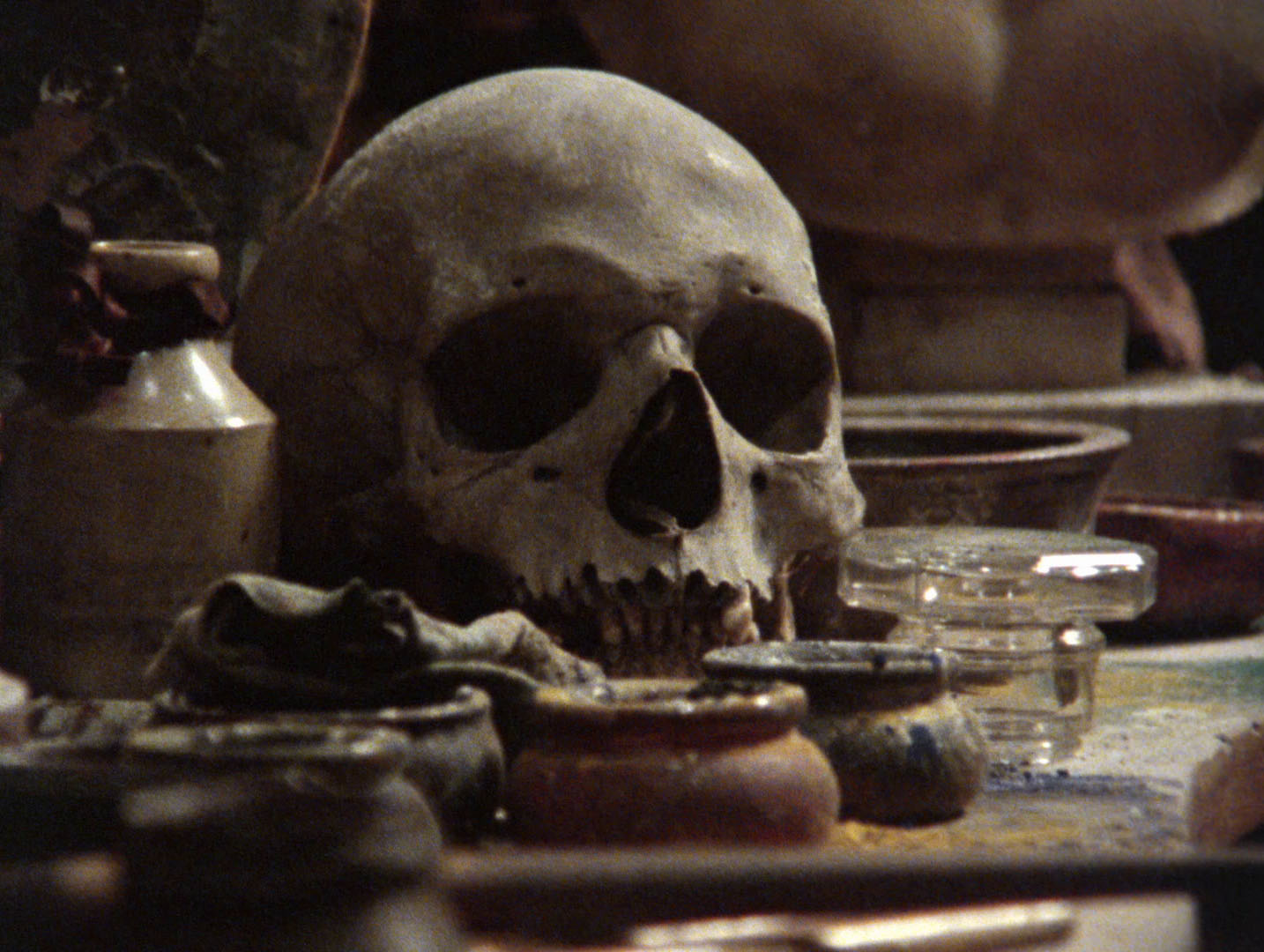
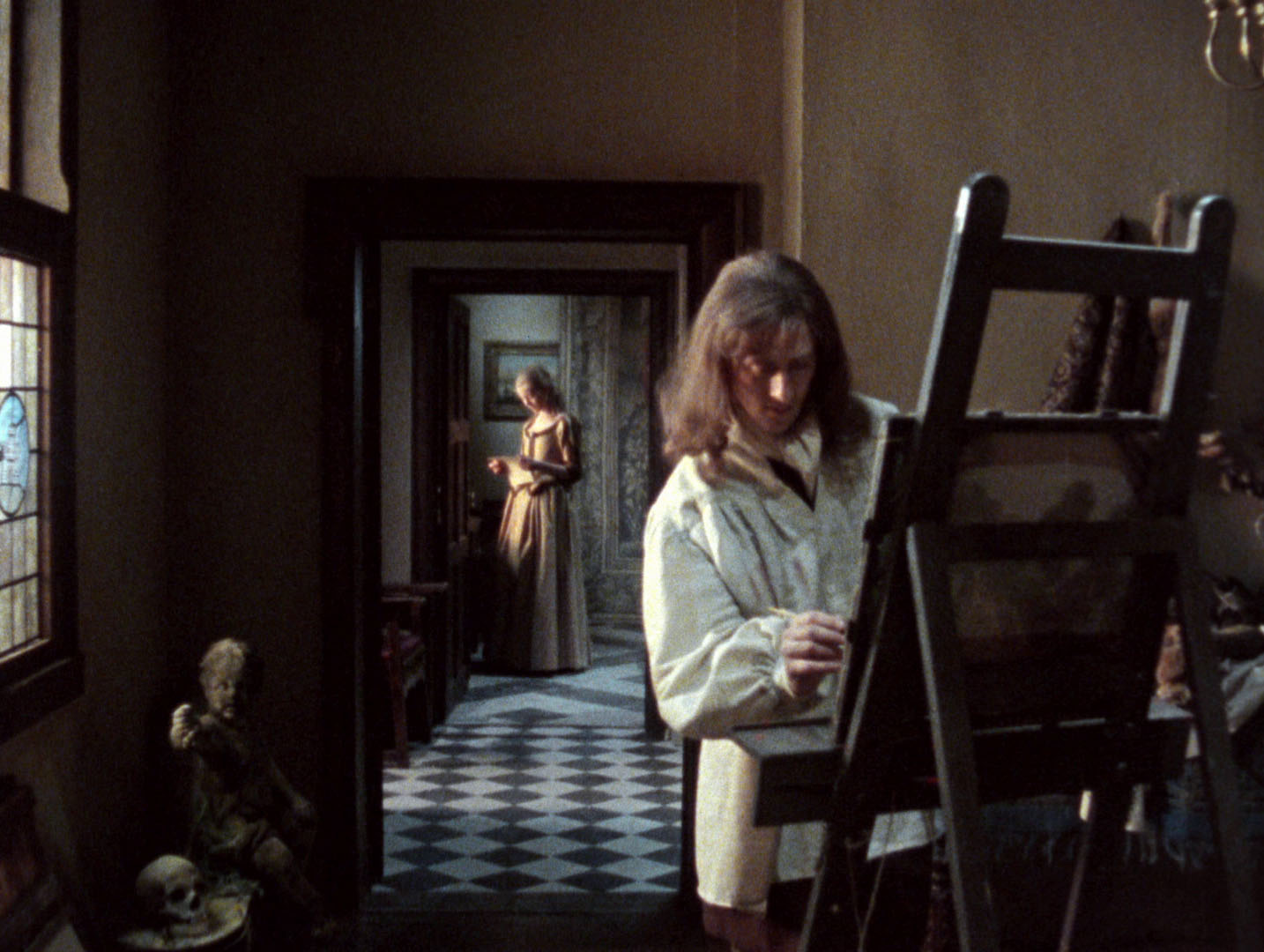
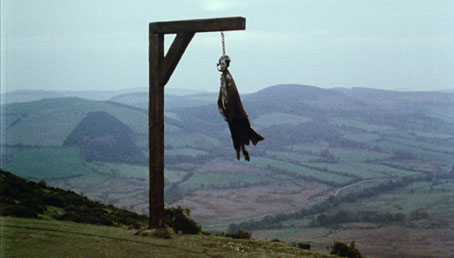
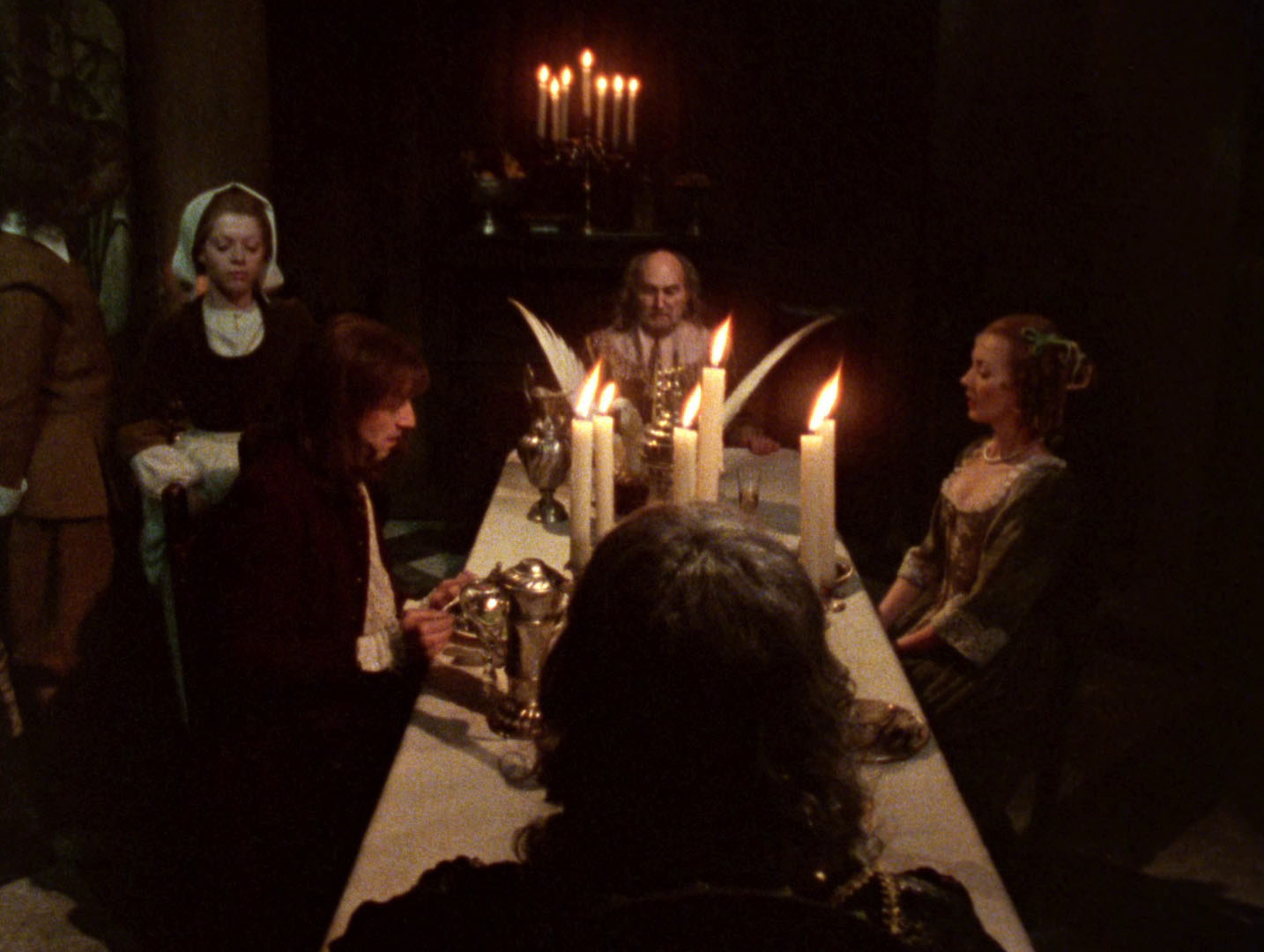
As mentioned last week, the BFI’s DVD of Schalcken the Painter includes as extras two short films by other directors. Edward Abraham’s The Pit (1962) is an adaptation of Poe’s The Pit and the Pendulum which is creditable but lacks the sustained malevolence of Jan Švankmajer’s version. The second film is The Pledge (1981), a 21-minute adaptation by Digby Rumsey of The Highwaymen, a short story by Lord Dunsany. This is unusual for being one of the very few film adaptations of Dunsany, Rumsey being responsible for two others: Nature and Time (1976), and In the Twilight (1978). Since this is a low-budget work it’s no surprise that the story is a historical piece rather than one of the florid fantasies so beloved of HP Lovecraft. A trio of highwaymen decide to rescue the hanging body of their former comrade and inter it in a bishop’s tomb. (The bishop’s bones, they decide, can go in the earth.) The story is so slight it’s more of a curio than anything, and would probably be better seen along with with the other Dunsany adaptations. Of note is a typically jaunty score by Michael Nyman, while Nyman’s later collaborator, Peter Greenaway, assisted with the editing. If nothing else, Greenaway would have appreciated the film’s macabre nature.
sime.jpg

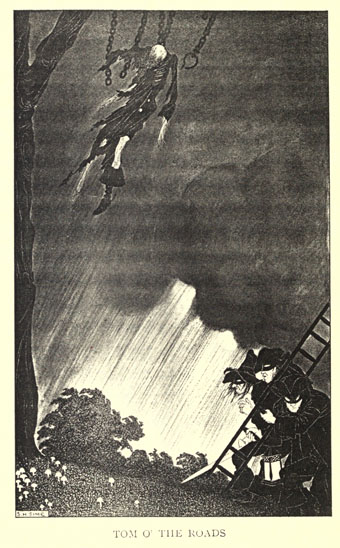
Illustration for The Highwaymen by Sidney Sime.

The original story appeared in Dunsany’s 1908 collection The Sword of Welleran and Other Stories. The Internet Archive has a scan of the entire book with illustrations from Sidney Sime’s prime period. The depiction of the scene at the gibbet is a lot more atmospheric than in the film but then that’s the advantage of the illustrator: there’s no need to worry about a budget.

Previously on { feuilleton }
Schalcken the Painter revisited
The Pendulum, the Pit and Hope
Sidney Sime paintings
Haschisch Hallucinations by HE Gowers
Sidney Sime and Lord Dunsany
The art of A. Reinheimer

reinheimer02.jpg

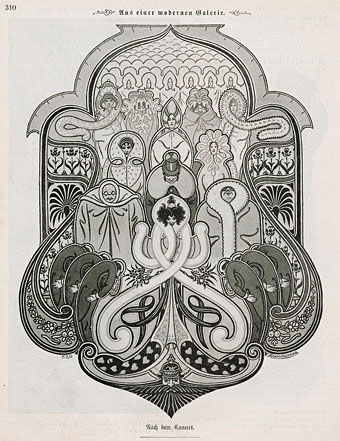
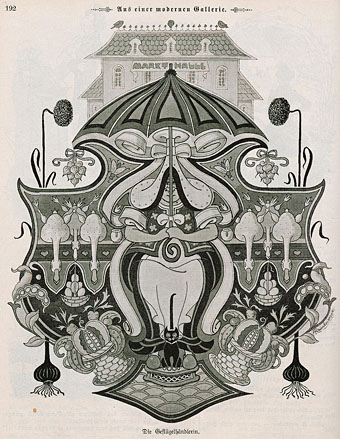
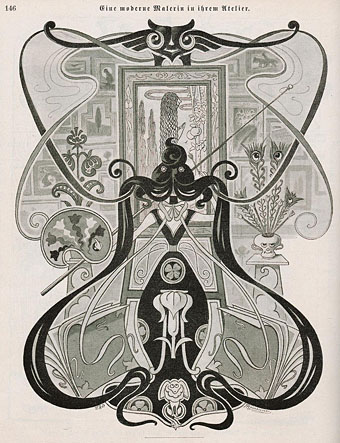
Who was A. Reinheimer? That’s a good question to which I have no answer other than telling you that he or she was an illustrator for German humour periodical Fliegende Blätter circa 1900. These drawings caught my eye for being rare examples of the Art Nouveau style deployed for comedic purposes. The intent was no doubt to poke some fun at the style itself—most of these pictures depict contemporary scenes in the “modern style”—but they’re also good compositions which could easily work as more typical Art Nouveau illustrations if their cartoony qualities were reduced. All the pages are from the University of Heidelberg digital archives which has a complete run of the magazine from 1844–1944.

reinheimer03.jpg

reinheimer04.jpg

Continue reading “The art of A. Reinheimer”

Weekend links 187

delia.jpg

Delia Derbyshire (2007) by Iker Spozio.

Whatever you think of Doctor Who, Delia Derbyshire’s recording of Ron Grainer’s theme tune is a landmark piece of electronic music. Those glassy electronic tones still sound unique today, not least for their having been created using rudimentary oscillators and much laborious tape editing. In Radiophonic Workshop: the shadowy pioneers of electronic sound, Joe Muggs looks at the history of the BBC’s electronic composers. If you’re a Radiophonic-head then the Alchemists of Sound TV documentary from 2003 is essential viewing.

There’s more (there’s always more): Delia Derbyshire – Sculptress of Sound: part one of a seven-part radio documentary about the great electronic music composer, and Blue Veils and Golden Sands, Martyn Wade’s radio play about Delia. Related: Delia-Derbyshire.org, Delia Derbyshire: An audiological chronology and A History of the Doctor Who theme. And don’t miss: Silence Is Requested In The Ultimate Abyss (1969) by Welfare State and White Noise, an incredible slice of electro-psychedelia from the John Peel Presents Top Gear album.

• “Why don’t books for grown-ups have illustrations any more?” asks Christopher Howse. Some of them do, this past week I’ve been finishing a new series of illustrations for a story anthology.

• From 2006: Ian Penman on cigarettes, espionage, and the masterful (and superior) television adaptation of Tinker, Tailor, Soldier, Spy.

It was Malcolm [McLaren] who suggested that the main characters be a boy who looks like a girl who looks like a boy and vice versa. What was strange was that, actually, in 1985 this was nobody’s vision of the fashion industry. Since then, fashion and fascism have crept closer: you’ve got John Galliano doing his promotional bits for the Third Reich, you’ve got Alexander McQueen killing himself, you’ve got Versace and that horrible, violent stalker coming for him. Since it was written, almost all of it has come true apart from the nuclear winter, but I think we’re working on that. The actual society that the story happens in is much more like the society we have now than culture was in 1985.

Alan Moore on Fashion Beast, Situationism, and why he hates superheroes.

• KW Jeter talks about his latest novel, Fiendish Schemes, and the “cultural juggernaut” that is steampunk.

• Grit and Social Dynamics in Smoke Ghost: Elwin Cotman on the weird fiction of Fritz Leiber.

The Secret Lives of the Vatican’s Gay Cardinals, Monks, and Other Clergy Members.

Don Cherry & Organic Music Theatre, live in the RAI TV studios, 1976.

• Otherworldly Art and Photography: Mlle Ghoul finds the best things.

• From 1998: Rahma Khazam on composer Bernard Parmegiani.

• Mix of the week: Marshland: The Mix by Hackneymarshman.

• “Let’s colonize the clouds of Venus,” says Ian Steadman.

J. Hoberman on David Cronenberg’s Visual Shock.

The Delian Mode (1968) by Delia Derbyshire | Tom Baker (1981) by The Human League | Doctor Who? (1984) by Doctor Pablo & The Dub Syndicate

Schalcken’s paintings

schalcken3.jpg

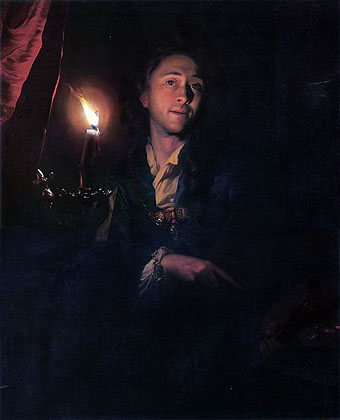
Self Portrait by Candlelight (1695).

One additional pleasure of Le Fanu’s story and Leslie Megahey’s film is the way they draw attention to the work of an artist who might otherwise have remained overshadowed by his more famous contemporaries. Ever since seeing the meticulous chiaroscuro of Joseph Wright’s An Experiment on a Bird in an Air Pump (1768) I’ve been fascinated by paintings which feature a single artificial light source. Candlelit pictures are a particular fascination since these aren’t easy to paint even today when you can photograph the required scene beforehand. How much more difficult would it be painting a candlelit scene by candlelight alone? Works of this nature demonstrate an artist’s fascination with limited sources of light but also serve as displays of expertise, as did so much Dutch painting of Schalcken’s time with its emphasis on photo-realist representation.

schalcken5.jpg

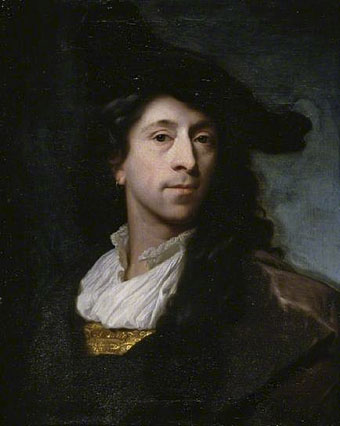
Self Portrait (no date).

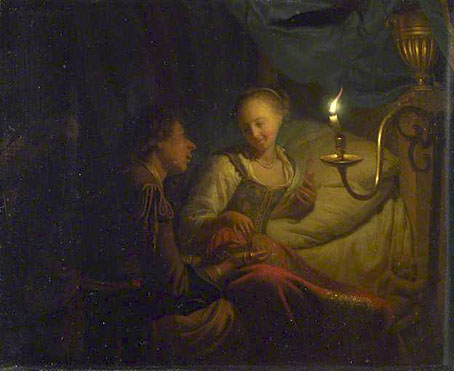
This small selection of paintings by Godfried Schalcken (1643–1706) shows some of the pictures that appear in Megahey’s film, or which we see being posed or replicated. At the end I’ve included Schalcken’s own take on the Salomé story which means his work can now be ushered into the Salomé archive. More of Schalcken’s work may be seen at Wikimedia Commons and the BBC’s Your Paintings site. One significant picture is unavailable: the painting which Le Fanu describes at the opening of his story. In his interview about the making of the film Megahey says that they searched the entire catalogue of Schalcken paintings but were unable to find a single picture that matches the one described in Le Fanu’s story. The painting seen in the film (which is perfectly rendered in Schalcken’s style) was created especially for the production.

schalcken6.jpg

A Candlelight Scene: A Man offering a Gold Chain and Coins to a Girl seated on a Bed (c. 1665–70).

Continue reading “Schalcken’s paintings”

Schalcken the Painter revisited

schalcken1.jpg

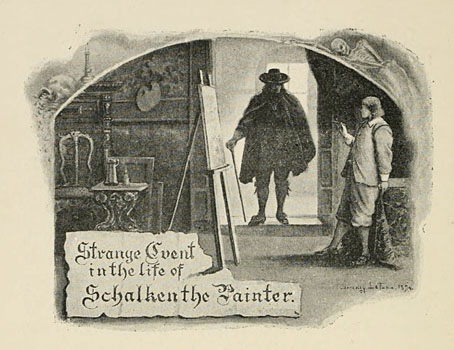
Illustration by Brinsley Sheridan Le Fanu from The Watcher and Other Weird Stories (1894) by J. Sheridan Le Fanu.

The stranger stopped at the door of the room, and displayed his form and face completely. He wore a dark-coloured cloth cloak, which was short and full, not falling quite to the knees; his legs were cased in dark purple silk stockings, and his shoes were adorned with roses of the same colour. The opening of the cloak in front showed the under-suit to consist of some very dark, perhaps sable material, and his hands were enclosed in a pair of heavy leather gloves which ran up considerably above the wrist, in the manner of a gauntlet. In one hand he carried his walking-stick and his hat, which he had removed, and the other hung heavily by his side. A quantity of grizzled hair descended in long tresses from his head, and its folds rested upon the plaits of a stiff ruff, which effectually concealed his neck.

So far all was well; but the face!

Strange Event in the Life of Schalken the Painter (1839) by J. Sheridan Le Fanu.

schalcken2.jpg

Compare this shot to the inferior YouTube version.

I enthused at some length about Leslie Megahey’s 1979 television film Schalcken the Painter last year so there’s no need to repeat myself. This post serves notice that the film is available at last in another marvellous dual-format release from the BFI, replete with extras, and the usual authoritative booklet notes. The Blu-ray transfer is a revelation after years spent watching an old VHS copy (the versions of YouTube are even worse). I noted before the astonishing lighting by cameraman John Hooper which successfully replicates not only the Dutch interiors so familiar from Vermeer, but also the candlelit chiaroscuro of Godfried Schalcken’s own paintings. (Le Fanu, incidentally, spelled the painter’s name “Schalken”.) Blu-ray quality might seem like overkill for a low-budget TV drama, however well-made, but this film in particular demands it, especially when the interiors begin to darken along with the story.

schalcken3.jpg

Cheryl Kennedy and Jeremy Clyde.

Among the extras there’s a 39-minute interview with Leslie Megahey and John Hooper about the making of the film. The combination of scenes based on period paintings plus candlelit interiors always makes me think of Barry Lyndon so it’s a surprise to discover that Megahey didn’t have this in mind at all. The film owes more, he says, to Blanche (1972) by Walerian Borowczyk, a period feature film which utilises a similarly flat shooting style with scenes based on medieval art. I’ve only seen Borowczyk’s earlier animated films, some of which have featured in previous posts, so this is one to look for in future.

schalcken4.jpg

In addition to the making-of piece there are two short films: The Pit (1962, 27 mins), directed by Edward Abraham, based on Poe’s Pit and the Pendulum, and The Pledge (1981, 21 mins) directed by Digby Rumsey, based on a short story by Lord Dunsany. I’ve not watched either of these yet, it seemed unfair to follow Megahey’s film with lesser fare.

After such unbridled enthusiasm it goes without saying that this is an essential purchase for anyone who enjoys the BBC’s ghost films of the 1970s. I’m biased towards Megahey’s productions but I find this a superior work to many of the MR James films. Megahey filmed another drama about a painter in 1987, Cariani and the Courtesans. It’s a non-supernatural piece but also has Charles Gray narrating and John Hooper behind the camera. I’ve not seen it for years so I’ll continue to hope it may also see a reissue soon.

Previously on { feuilleton }
Schalcken the Painter
Leslie Megahey’s Bluebeard
The Watcher and Other Weird Stories by J. Sheridan Le Fanu
Chiaroscuro