Weekend links 28

/shah1.jpg

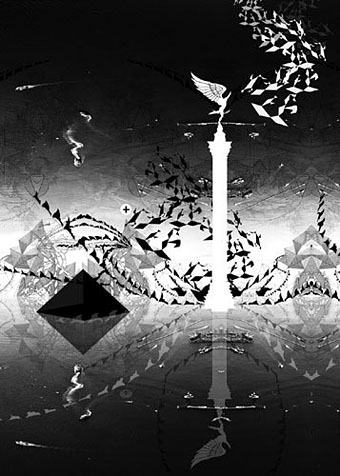
The Expansion of the First Great Ornamental Age: 3 Distances (2009) by Seher Shah.

Great Female Artists? Think Karachi. “One reason for the unusually high ratio of female artists in Pakistan has to do with the fact that the art industry has not traditionally been viewed as a lucrative business by men, says South Asian art historian Savita Apte, who administers the internationally renowned Abraaj Capital Art Prize. Until very recently, creatively inclined males tended to focus on fields such as advertising or illustration, leaving the art field wide open for some very talented women.” Related: artist Seher Shah (and also here).

• Hardformat looks at the luxury/collectors/whatever edition of the forthcoming Brian Eno album. “What’s the music like?” Colin asks. Indeed.

Strange Flowers is “a celebration of the most extraordinary, eccentric and unfairly forgotten figures of the past 200 years”.

Warsaw Warble: Illustration and design in Poland, 1917 to 1938. More marvels from A Journey Round My Skull.

• Strange Attractor hosts talks at London’s Little Shoppe of Horrors throughout the autumn.

• Barney Bubbles in Mojo and more details of the new edition of Paul Gorman’s BB book.

• A blog devoted to all things having to do with Howard Pyle (1853–1911).

Erik Davis on Dreaming, Writing, Philip K Dick and Lovecraft.

10 Reading Revolutions Before E-Books.

Secular Exorcisms by Evan J Peterson.

• RIP Jean Benoît.

Street haikus.

I Put A Spell On You (1965) by Screamin’ Jay Hawkins; I Put A Spell On You (1965) by Nina Simone; I Put A Spell On You (2001) by Natacha Atlas.
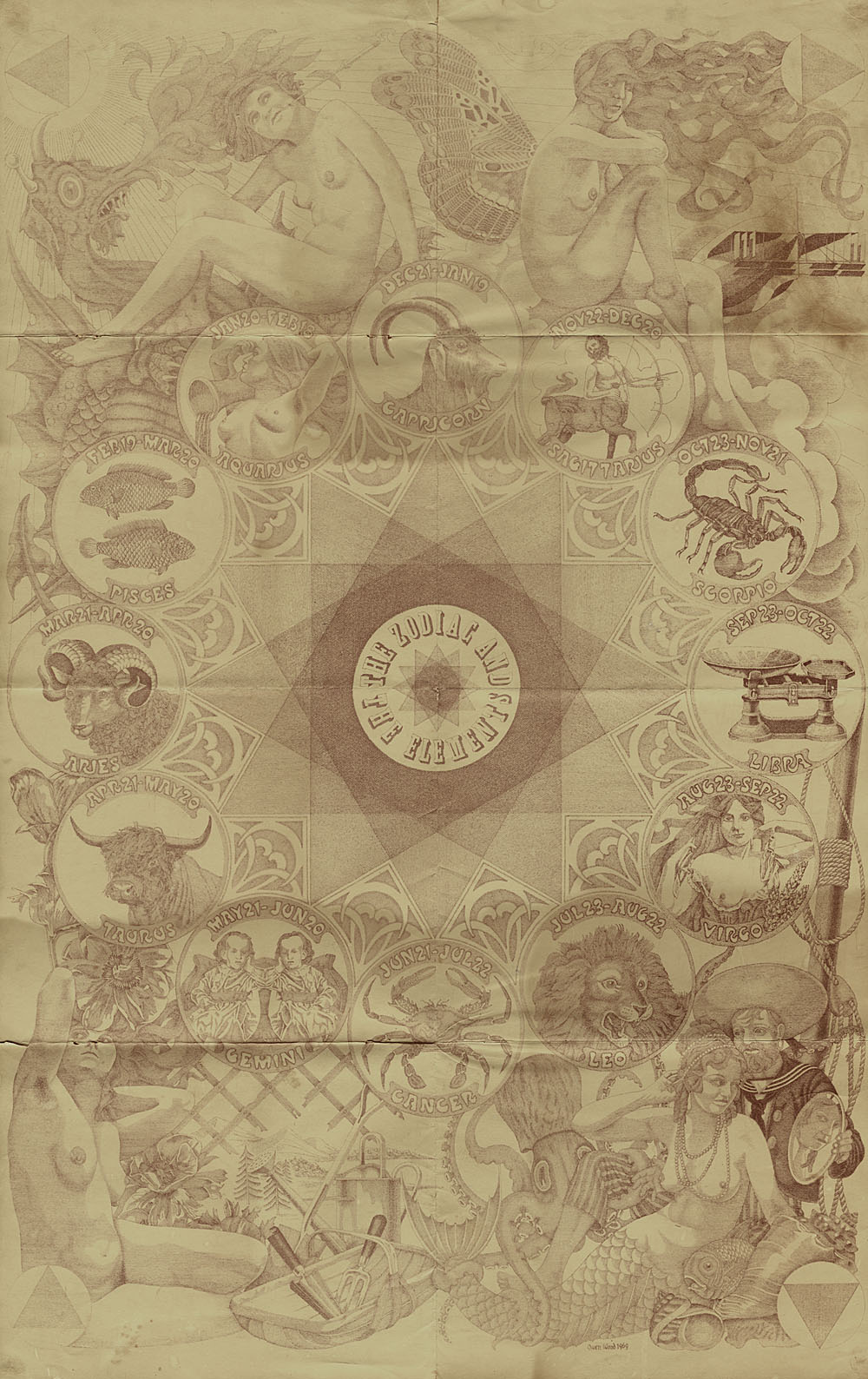
Owen Wood’s Zodiac

wood-zodiac.jpg

Yesterday’s zodiacal illustrations reminded me of this grubby item (depicting the twelve houses of the zodiac and four elements) which I took the trouble to scan since there’s no other example of it on the web. (Click for a larger version.) The artist, Owen Wood, was a highly-regarded illustrator commissioned to produce a poster in 1969 for the landmark magazine Man, Myth & Magic which was serialised weekly in the UK the following year. MMM had a few other giveaways in their early issues but Wood’s poster was by far the best piece. I thought I might have another copy somewhere but it didn’t turn up in a cursory search; if I find it I’ll replace this one. Wood’s very fine and intricate line-drawing deserves better appraisal than this dishevelled item which suffered from being pinned in too many smoke-filled rooms over the years. This obituary of the artist has details of his career.

wood-zodiac2.jpg

Fire (detail).

Elsewhere on { feuilleton }
The illustrators archive

Previously on { feuilleton }
Palladini’s Zodiac
Austin Osman Spare

Palladini’s Zodiac

palladini06.jpg

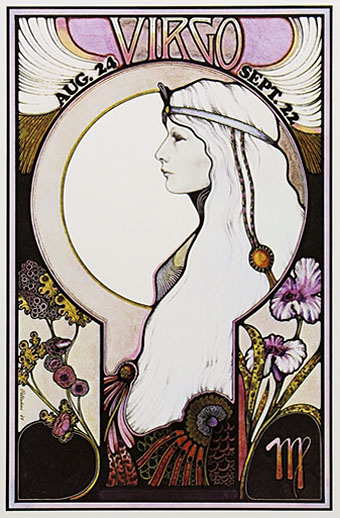
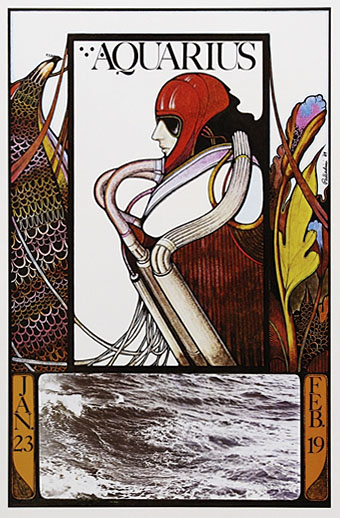
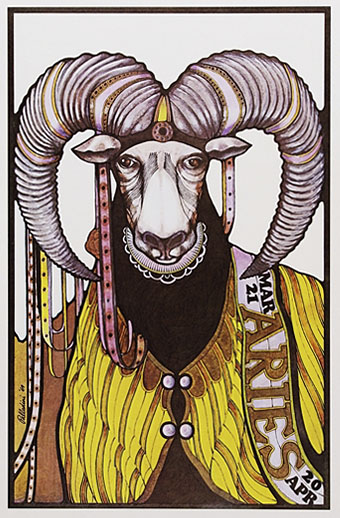
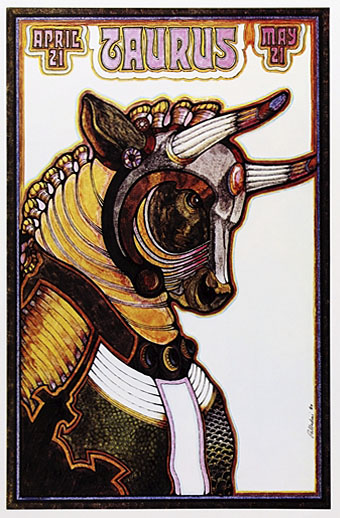
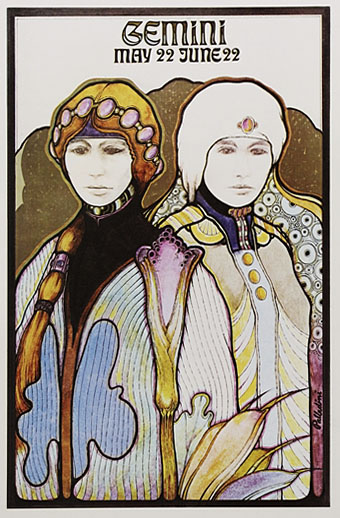
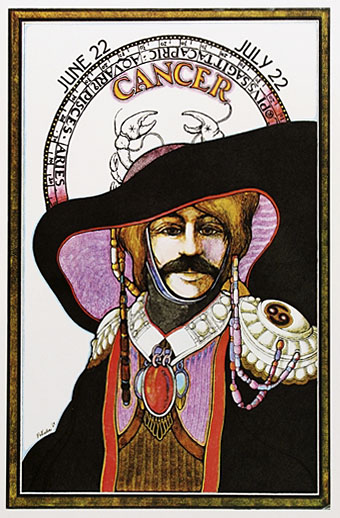
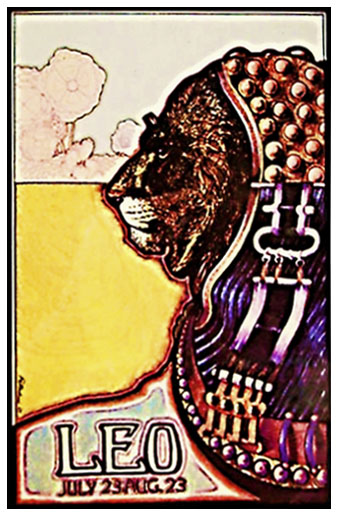
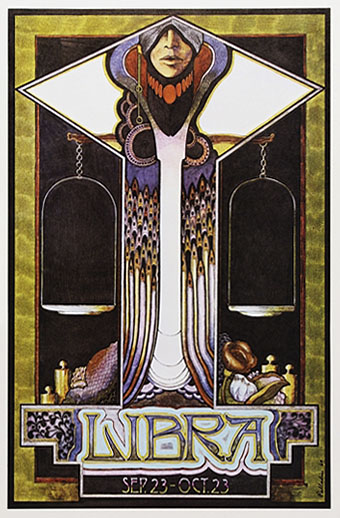
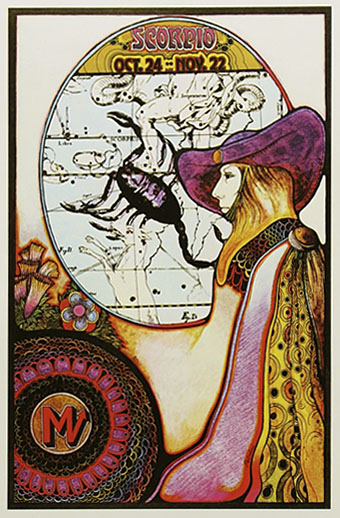
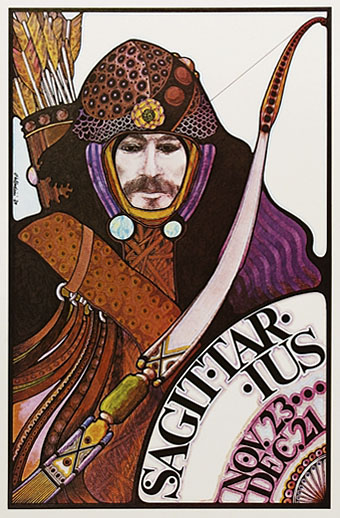
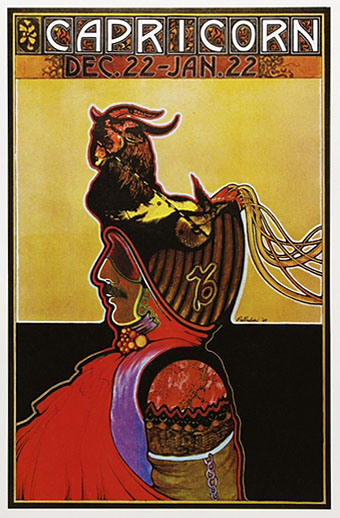
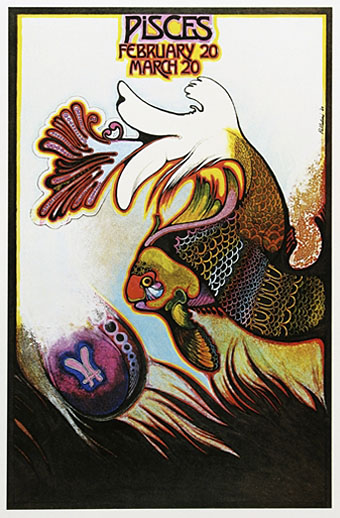
David Palladini’s poster for Werner Herzog’s Nosferatu the Vampyre has been mentioned here twice in the past week so it seemed only fair to see whether any of his other work matched that splendid piece. The artist has worked for years as a book illustrator but seems to receive most attention these days for his Aquarian Tarot deck, first produced in 1970 and still being sold today. Many of the card designs show something like the kind of stained-glass window approach he used for his film poster but with less decoration. Far closer to the Herzog piece is a series of posters he made in 1969 depicting his own interpretation of the signs of the zodiac. Every mention I’ve seen of these notes their scarcity which is a shame when many of them are such striking designs. Of particular interest to this Aubrey Beardsley obsessive is seeing that the scale shapes which Palladini put into the “N” of his Nosferatu lettering may, as I guessed, go back to the similar shapes which Aubrey borrowed from Whistler’s Peacock Room; see the peacock-like bird in Aquarius below.

This page has some examples of the Major Arcana designs from Palladini’s Tarot. More of his zodiac posters follow, all of which are courtesy Meibohm Fine Arts.

palladini11.jpg

palladini01.jpg

palladini02.jpg

palladini03.jpg

palladini04.jpg

palladini05.jpg

palladini07.jpg

palladini08.jpg

palladini09.jpg

palladini10.jpg

palladini12.jpg

Elsewhere on { feuilleton }
The illustrators archive

Previously on { feuilleton }
Druillet’s vampires
The Art Nouveau dance goes on forever
The Sapphire Museum of Magic and Occultism
The art of Pamela Colman Smith, 1878–1951
Layered Orders: Crowley’s Thoth Deck and the Tarot
Whistler’s Peacock Room
The Major Arcana

Druillet’s vampires

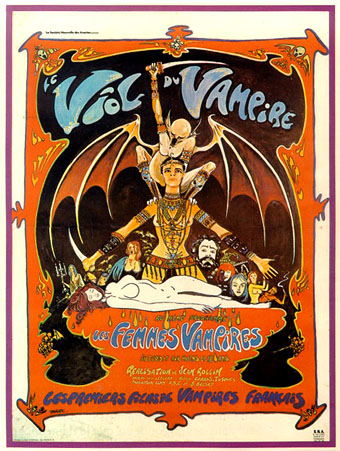
vampire3.jpg

Le Viol du Vampire (1968) or Rape of the Vampire (stay classy, Jean!); re-titled Queen of the Vampires for the Anglophone world.

We’re so inundated these days with vampires and—worse—fucking zombies, that I’ll be perfectly happy if I never see another bloodsucker or shambling corpse again. But let’s overlook the degrading of horror staples for a moment to consider Philippe Druillet‘s excursions into the art of the cinema poster.

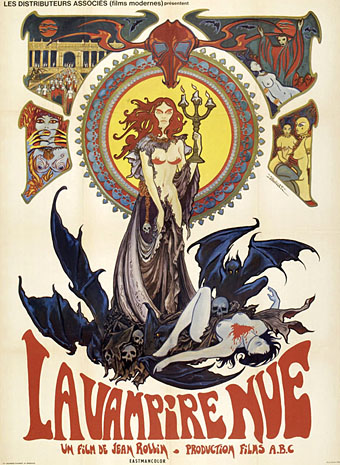
vampire1.jpg

La Vampire Nue (1969).

These pieces are for Jean Rollin‘s first three films, additions to the groovy-lesbian-vampire-with-false-eyelashes-and-bare-boobs sub-genre made at a time—the late 60s—when all the European film studios, Hammer included, were pushing the erotic content of their films more than had previously been dared. Rollin’s erotic comic strip from 1967, Saga de Xam, featured art contributions from Druillet, among others, which no doubt explains the choice of artist. As with David Palladini’s fantastic design for Werner Herzog’s Nosferatu the Vampyre (1979), these are further examples of how unique and distinctive film posters once were in a way they rarely are today. (Druillet, incidentally, produced his own adaptation of Nosferatu in 1989.)

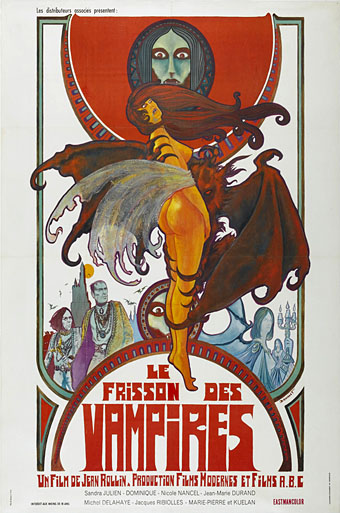
vampire2.jpg

Le Frisson des Vampires (1970).

Pages from the fabulously rare Saga de Xam feature in the Art Nouveau catalogue that was the subject of yesterday’s post. So too does Druillet’s poster for Le Frisson des Vampires although any of these pieces would have made suitable inclusions. Even more than in his comic strips Druillet’s work here shows the overt influence of Alphonse Mucha.

Most of Rollin’s films seem to be available on DVD should you be desperate for some fangs and boobs. I’d much rather see Saga de Xam be reissued; it’s been out of print since 1967 and the copies available go for upwards of £200. This site has samples of the pages and there’s a post about the book (in French) here. For more about Jean Rollin, see Fascination: the Jean Rollin Experience.

Elsewhere on { feuilleton }
The illustrators archive

Previously on { feuilleton }
The Art Nouveau dance goes on forever
Salammbô illustrated
Druillet meets Hodgson
The music of Igor Wakhévitch
Nosferatu

The Art Nouveau dance goes on forever

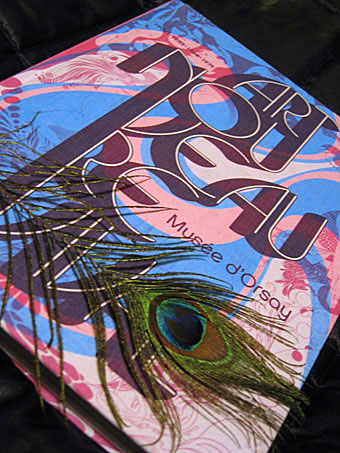
nouveau1.jpg

Catalogue for Art Nouveau Revival 1900 . 1933 . 1966 . 1974. Peacock feather not included.

Regular readers may recall my mention of the Musée d’Orsay exhibition Art Nouveau Revival which was launched late last year. I didn’t get to see the exhibition, unfortunately, but this week I finally ordered a copy of the catalogue, an expensive cloth-bound volume with essays (in French) by Philippe Thiébaut, Stephen Calloway, Irene de Guttry, Thierry Taittinger and Philippe Thieryre. Despite the ruinous postal charges incurred by the book’s weight this was worth every euro, it being the kind of polymorphous production which in solipsistic moments one can choose to believe was created solely for your own benefit.

nouveau3.jpg

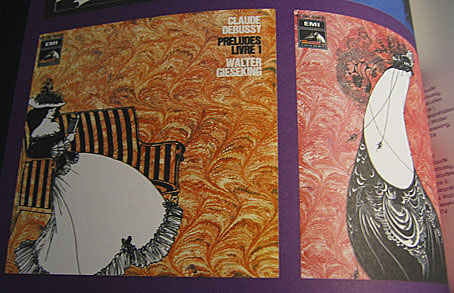
Aubrey again, album covers from 1974.

Much of the subject matter has been explored here in various small ways, with the curators following the influence of Art Nouveau through Surrealism (mainly Dalí) to the psychedelic art of the 1960s and on into the Pop Nouveau (for want of a better term) which flourished in the first half of the 1970s. Among the familiar Aubrey Beardsley graphics and psychedelic posters there are also some pleasantly surprising inclusions, including illustrations by Philippe Jullian (yes, I’m still intending on writing about him at some point), yet more Beardsley album covers, film posters, and even some of the sillier films of the late-60s such as Casino Royale. Being a French exhibition there’s a section devoted to comic strips which includes work by Moebius, Philippe Druillet and Guido Crepax.

nouveau2.jpg

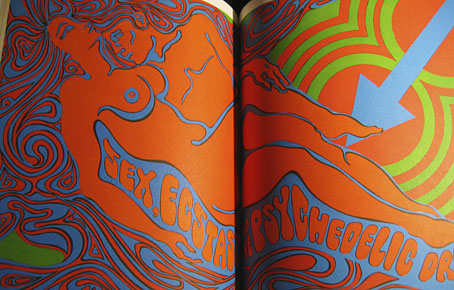
Sex and LSD, a spread from Playboy, 1967.

It’s common to see parallels drawn between the 1890s and the 1960s but the strange blooms of vulgarised fin de siècle style which burgeoned in the wake of psychedelia are seldom given much attention. One of the great things about this catalogue is the amount of ephemera the curators chose to include such as magazine ads and trend-chasing album sleeves. It was precisely this blend of 1890s + 1960s + 1970s I sought to capture in my recent cover for Dodgem Logic. As I said, it’s an expensive book but for anyone drawn to this aesthetic hothouse it’s also an essential purchase. Art Nouveau Revival can be ordered direct from the museum shop. Further samples follow.

Continue reading “The Art Nouveau dance goes on forever”