A Trip to Mars

mars3.jpg

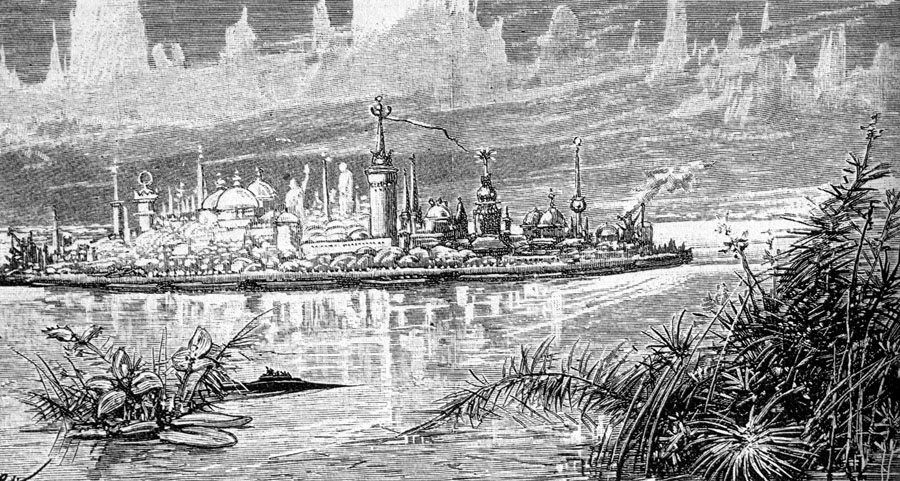
A floating Martian city from Letters from the Planets (1890) by WS Lach-Szyrma. Illustration by Paul Handy.

In honour of the remarkable landing on Mars of the Curiosity Rover, a handful of random illustrations from the vast stock of imagery generated by the Red Planet over the past century-and-a-half. When it comes to Mars I’m afraid you can keep your terraforming and geodesic domes, I prefer the more fanciful scenarios involving air-boats, cloaks and actual canals. Paul Handy’s illustration above shows what I believe is a Venusian vehicle sailing past a Martian city, Lach-Szyrma’s book concerning a journey through the solar system. I only have small copies of these pictures in a book, so far they don’t seem to have turned up online.

mars2.jpg

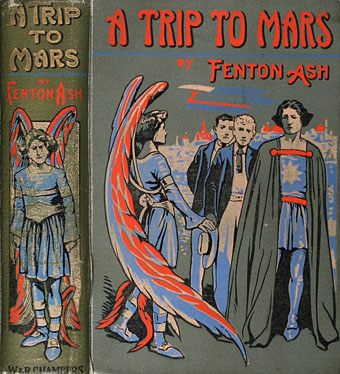
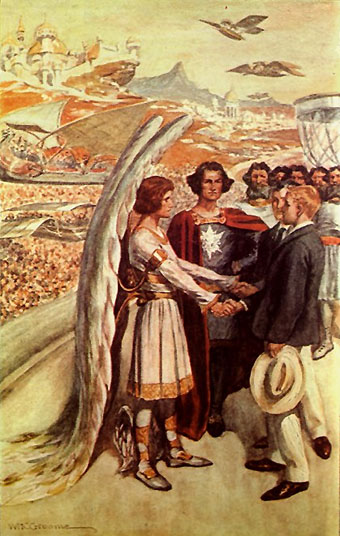
A Trip to Mars (1909) by Fenton Ash. Illustrations by WHC Groome.

Fenton Ash was the nom de plume of British author Francis Henry Atkins. A Trip to Mars concerns another exploratory journey taken this time by a pair of Edwardian schoolboys.

mars1.jpg

Continue reading “A Trip to Mars”

Weekend links 120

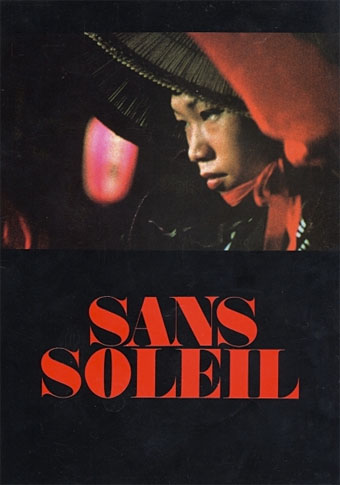
sanssoleil.jpg

• More Nabokov: The University Poem by Vladimir Nabokov, translated by Dmitri Nabokov and read by Ralph Fiennes. And Breitensträter – Paolino, a short story from Nabokov’s Russian period that’s only just been translated into English.

• More LSD: “For decades, the U.S. government banned medical studies of the effects of LSD. But for one longtime, elite researcher, the promise of mind-blowing revelations was just too tempting,” says Tim Doody.

• More Marker: The Guarded Intimacy of Sans soleil by Jonathan Rosenbaum, The Revolutionary Cinema of Chris Marker by Patrick Higgins, and Chris Marker’s Faces by Brian Dillon.

• “A private realm, not easily penetrated, from which emerged music that would give rise to so much of the music we know today.” Guy Horton on Kraftwerk’s Kling Klang studio.

• A narrative from the swamps of Borneo: BLDGBLOG on the mephitic enigma of London’s sewers.

• At Coilhouse: The Incredibly True Adventures of Gerda Wegener and Lili Elbe.

• “What some people call idleness is often the best investment,” says Ed Smith.

• Book cover design: Rick Poynor on Pierre Faucheux and Le Livre de Poche.

• Metaphysical psychedelia: Erik Davis on Rick Griffin: Superstar.

Diamanda Galás discusses her 13 favourite albums.

• Rudy Rucker’s Memories of Kurt Gödel.

• The Men of the Folies Bergère

Olympics or gay porn?

Smoketography

The songs of bowhead whales | Another Moon Song (2009) by Espers | One Thousand Birds (2012) by Six Organs of Admittance.

Albert Robida’s Vieux Paris

vieux1.jpg

After several posts about Albert Robida it seems more-or-less mandatory to write something about his spectacular creation for the Paris Exposition Universelle of 1900. “Vieux Paris” was an elaborate theme park-style attraction that sought to recreate some of the lost buildings of medieval Paris on the right bank of the Seine, a short distance from the Trocadero. (The international pavilions were situated on the opposite bank.) Robida is remembered today for his science fiction but he was given this job as a result of books such as Paris de siècle en siècle; le coeur de Paris, splendeurs et souvenirs (1896) which explored life in the historic city. Vieux Paris was planned by the artist, with the buildings being created by a team of architects under the direction of Léon Benouville. As with modern theme parks, teams of actors and other staff were costumed in order to convey the requisite period flavour. The birds-eye drawing is the best view I’ve seen of the construction, the pages being from Albert Quantin’s L’Exposition du siècle.

vieux2.jpg

From the Brooklyn Museum’s Flickr set.

vieux3.jpg

Photo by Michel Berthaud at Luna Commons.

Previously on { feuilleton }
The End of Books, 1894
Le Vingtième Siècle by Albert Robida
La Vie Électrique by Albert Robida
The Lumière Brothers at the Exposition Universelle
Le Grand Globe Céleste, 1900
Tony Grubhofer’s Exposition Universelle sketches
The Cambodian Pavilion, Paris, 1900
Le Manoir a l’Envers
Suchard at the Exposition Universelle
Esquisses Décoratives by René Binet
Le Palais de l’Optique, 1900
Exposition Universelle films
Exposition jewellery
Exposition Universelle catalogue
Exposition Universelle publications
Exposition cornucopia
Return to the Exposition Universelle
The Palais Lumineux
Louis Bonnier’s exposition dreams
Exposition Universelle, 1900

Haçienda ephemera

hac01.jpg

Haçienda Members’ Newsletter IV, 1982. (The head collaged onto the male figure is from RanXerox by Tanino Liberatore.)

Searching through some papers at the weekend turned up something I’d completely forgotten about: a members’ newsletter for Manchester’s Haçienda club. When the place first opened you needed to be a member to get in, unless you already knew a member in which case you could be signed in as a guest. One reason the place was so empty in its first couple of years was the restricted access, a policy they later dropped.

haccard.jpg

I paid for my membership in September 1982 since I was eager to see William Burroughs appearing in the Final Academy event on October 4th. I think the newsletter must have arrived with the nice Peter Saville-designed card. If there were any other newsletters after this I never received any but then I was never a conscientious club-goer and only went there if there was a decent band playing.

hacflyer.jpg

And speaking of decent bands, I also found this flyer, the only one I have from that period. Einstürzende Neubauten played the Haçienda twice, in August 1983 and February 1985, and I saw them on both occasions. The flyer is for the second event and is a lot more typical of Haçienda products than the fanzine-style newsletter. Neubauten’s first appearance there was sparsely attended but remains one of the best events I’ve witnessed. This was at the tail end of their metal-bashing period, and the performance that night involved a lot of hammering, flames, showers of sparks and broken glass flying into the audience. The climax came when one of them picked up the pneumatic road-drill they used for their noise-making and drilled straight into the concrete wall at the side of the stage. The machine was left hanging there to the consternation of the club staff. A few months later they staged their notorious performance at the ICA in London which was cut short when they started dismantling the stage. The second Haçienda gig drew a larger crowd but was a more subdued affair which would have disappointed those who were yelling for destruction between the songs.

The Haçienda is demolished now so that drilling incident may be seen as a precursor of the inevitable. But the history persists in exhibitions like the recent one at the V&A in London which recreated some of the decor. The typewritten and photocopied members’ newsletter shows a more humble origin than the usual “design classic” label that gets endlessly recycled. Further page scans follow, or you can download a PDF I made. The last two scans in this post are a sheet of guest passes for members to fill, and that ultimate low-tech item: a handwritten and photocopied events list for late 1982. I don’t remember Jah Wobble playing the day after the Burroughs event; I would have liked to have seen that one as well.

hac02.jpg

hac03.jpg

Continue reading “Haçienda ephemera”

Silent Engine

schutze1.jpg

Artist/composer Paul Schütze unveiled some new photo prints this weekend, a series he calls Silent Engine. At first glance I thought the view on the left above was indeed an engine interior, with that radial construction being some kind of extractor fan. But these are actually nocturnal views of one of my favourite places in London, Sir John Soane’s Museum in Lincoln’s Inn Fields. The photos use only the available light which makes Soane’s collection of ancient sculpture and architectural fragments seem like the components of some antiquarian generator. Anyone familiar with Schütze’s 1997 album Second Site will know that this isn’t the first time he’s applied the word “engine” to architecture.

schutze2.jpg

Previously on { feuilleton }
Paul Schütze online