Weekend links 222

wicker.jpg

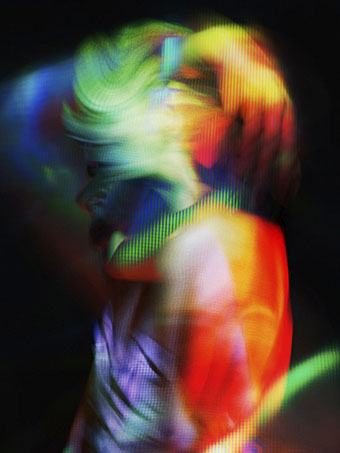
A self-portrait by Nadia Wicker from her Projectie series.

• “And boy, did that Rain Parade sleeve look cool with its picture of the insouciant band sitting in front of large hot-house (or glass palace), the sky behind them tinted a sickly shade of apocalypse pink…” Joe Banks on the Rain Parade’s finest moment, Explosions In The Glass Palace.

• “…there are pleasures to be had from books beyond being lightly entertained. There is the pleasure of being challenged; the pleasure of feeling one’s range and capacities expanding…” Rebecca Mead on the pleasure of reading to impress yourself.

• “If Gengoroh Tagame performed the acts he drew in his comics he’d probably be dead or in jail,” says Zac Bayly, interviewing Tagame for BUTT.

Crime does not fascinate James Joyce as it fascinates the rest of us—the suggestion of crime dismays him. He tells me that one of his handicaps in writing Work in Progress is that he has no interest in crime of any kind, and he feels that this book which deals with the night-life of humanity should have reference to that which is associated with the night-life of cities—crime. But he cannot get criminal action into the work. With his dislike of violence goes another dislike—the dislike of any sentimental relation. Violence in the physical life, sentimentality in the emotional life, are to him equally distressing. The sentimental part of Swift’s life repels him as much as the violence of some of his writing.

Padraic Colum attended Joyce’s 47th birthday party.

• I’m currently reading The Wanderer, “a weird document” by Timothy J. Jarvis, which is officially published this week.

The Changes, another remarkable children’s TV series from the 1970s, is out on DVD next week.

Sir Richard Bishop has made all 14 of his solo albums available as free downloads.

• “How long do CDs last? It depends, but definitely not forever,” says Laura Sydell.

• “Readers absorb less on e-readers than on paper, study finds

• Book designer Craig Mod wants to talk about margins.

• Mix of the week: a mix for The Quietus by Helm.

Ozu’s passageways

• The Rain Parade: No Easy Way Down (BBC TV, 1984) | No Easy Way Down (studio, 1984) | No Easy Way Down (Tokyo, 1984)

Weekend links 221

cornell.jpg

Untitled (Penny Arcade Portrait of Lauren Bacall) (1946) by Joseph Cornell.

• Having been a Bernard Szajner enthusiast for many years it’s good to see his music receiving some belated reappraisal. David McKenna talked to Szajner about his Visions Of Dune album (which is being reissued by InFiné next month), laser harps, The (Hypothetical) Prophets, and working with Howard Devoto.

• Priscilla Frank posts some big views of Marjorie Cameron’s occult paintings as a preview of the forthcoming exhibition at MOCA Pacific Design Center, Los Angeles.

• Fascinating reading in light of the recent kerfuffle over True Detective, Christopher Loring Knowles on the possible sources of HP Lovecraft’s Cthulhu Mythos.

Those who set up oppositions between the electronic technology and that of the printing press perpetuate Frollo’s fallacy. They want us to believe that the book—an instrument as perfect as the wheel or the knife, capable of holding memory and experience, an instrument that is truly interactive, allowing us to begin and end a text wherever we choose, to annotate in the margins, to give its reading a rhythm at will—should be discarded in favor of a newer tool. Such intransigent choices result in technocratic extremism. In an intelligent world, electronic devices and printed books share the space of our work desks and offer each of us different qualities and reading possibilities. Context, whether intellectual or material, matters, as most readers know.

Alberto Manguel, lucid as always, on the act and import of reading.

• “It’s time to give prog rock’s artist-in-residence Roger Dean his due,” says Amber Frost. No argument there, I did my bit in 2010.

• “Why do the covers of so many self-published books look like shit?” asks B. David Zarley.

• Mixes of the week: FACT mix 455 by Airhead, and Secret Thirteen mix 225 by Clock DVA.

• At Core77: Rain Noe chooses favourite skyscraper photos by Russian urban explorers.

• “O, Excellent Air Bag”: Mike Jay on the nitrous oxide fad of the early 19th century.

Nick Carr goes in search of Manhattan’s last remaining skybridges.

Lauren Bacall at Pinterest.

• Shaï Hulud (1979) by Zed (Bernard Szajner) | Welcome (To Death Row) (1980) by Bernard Szajner | Person To Person (1982) by The (Hypothetical) Prophets

Angkor in Paris, 1931

angkor1.jpg

Searching for old photos of the Boi de Vincennes turned up some startling images from another exposition that I’d not come across before. The Paris Colonial Exposition filled a corner of the city’s largest park with a variety of exhibits and pavilions intended by the government of the day to show the colonial enterprise in a positive light. Among the replicas of buildings from overseas there was this spectacular reconstruction in plaster of the temple at Angkor Wat, built to represent the French presence in Indochina. No one would dream of creating such an exposition today, of course, and the idea was controversial at the time. To their credit, the authorities did allow the Communist Party to stage their own exhibit showing the damaging and exploitative nature of colonialism.

angkor2.jpg

Politics aside, I’m fascinated by the idea of a full-scale Cambodian temple materialising in the heart of Paris. The Exposition Universelle of 1900 had its share of replicas: the Swiss exhibit was a miniature mountainside populated with a chalet, cows and milkmaids, while one bank of the Seine was taken over by Albert Robida’s reconstruction of medieval Paris. Neither of those seem as surprising as this resurrection of Angkor, especially in the spotlit night shots. I’ve been wondering what the Surrealists would have made of this and the juxtapositions presented by the other reconstructions. André Breton was a member of the Communist Party at the time (they expelled him in 1933) so I’d expect from his point of view at least the exposition would have been dismissed as bourgeois propaganda.

angkor3.jpg

Among the many web pages with photos of the exposition this Flickr set of Dutch tourist pictures is particularly good. Traces of the pavilions still remain, including some of the Nagas from the avenue leading to the temple.

angkor4.jpg

Continue reading “Angkor in Paris, 1931”

Weekend links 220

waliszewska.jpg

Untitled painting by Aleksandra Waliszewska.

• Ben Wheatley’s forthcoming film of High-Rise by JG Ballard now has its own Tumblr. This will no doubt be spoilerific so I won’t keep on visiting but it’s there if you require it. More Ballardianism: “Worshipping the Crash” at BLDGBLOG.

• “Aickman wandered through the sixties fantasy landscape like some curmudgeonly fetch, returning from the fin de siècle heyday of the ghost story.” Boyd Tonkin profiles Robert Aickman, writer of peerless “strange stories”.

• At Dangerous Minds: “Raise a glass to Cthulhu at the Lovecraft Bar”. Looks more like a Captain Nemo bar to me (not that there’s anything wrong with that) but I appreciate the gesture.

But to demand that a work be “relatable” expresses a different expectation: that the work itself be somehow accommodating to, or reflective of, the experience of the reader or viewer. The reader or viewer remains passive in the face of the book or movie or play: she expects the work to be done for her.

Rebecca Mead on The Scourge of Relatability

• “Space as a paranoid, static rumble featuring: 20jfg, Ben Frost & Daníel Bjarnason, Coil & Eduard Artemiev”. 20 Jazz Funk Greats on the pleasures of the Solaris soundtrack.

• What do Hawkwind, Harry Nilsson, Stereolab and The Supremes have in common? David Stubbs examines the legacy of Neu! and Klaus Dinger’s “Dingerbeat”.

• A reminder that A Year in the Country features a host of worthwhile links and associations for the Hauntologically persuaded.

Rouge Louboutin, an ad by David Lynch. Related: An improptu biscuit ad by the Eccentronic Research Council.

• Mix of the week (a year old but no matter): JG Ballard Zoom Lens Mix by Bernholz.

• At 50 Watts: More illustrated sheet music covers by Einar Nerman.

Five book cover designers and the books that inspire them.

Tove Jansson would have been 100 this week.

Pangaea with modern borders

Solaris: Dream (1990) by Edward Artemyev [sic] | Solaris (2000) by Photek | Simulacra I (2011) by Ben Frost & Daníel Bjarnason

Weekend links 218

white.jpg

The End of a Thousand Years (2014) by Hilary White. Via Phantasmaphile.

• It’s taken a while to shamble into the world but A Mountain Walked, an anthology of Cthulhu Mythos stories edited by leading Lovecraft scholar ST Joshi, will be published by Centipede Press next month. The publisher’s page for the book shows that my contribution will be facing Joshi’s introduction which is something I wasn’t aware of until this week. It also says the 692-page limited edition is sold out, although book dealers often buy collectible volumes such as this to sell on after adding their own markup. Be warned that it was listed on Amazon at $160 so if there are copies available anywhere they won’t be cheap.

• It’s not such a surprise to hear that magic mushrooms were an inspiration for Frank Herbert’s Dune. David Lynch’s film of Dune receives passing mention in this profile by Jeremy Kay of Lynch and the Twin Peaks film/TV series.

• “Whitechapel station is one of Giambattista Piranesi’s imaginary prisons, colonised by frantic electrical engineers and watched over by CCTV.” Will Wiles on the chaos and tangled energy of modern cities.

The word perfume comes from the French root “fume”—smoke—and where there’s smoke, there’s fire! I think most people are turned on sexually by scents and smells. Certain body odours can be very sexually stimulating. We purposefully chose certain ingredients for my Obscenity perfume that are associated with occult or religious rituals, including vetiver, labdanum, and oud, and others that are considered aphrodisiacal, including patchouli and sandalwood. The point of Obscenity is that there is no conflict between the religious and the sexual, and in fact they should be completely complimentary. The fragrance is meant to stimulate you sexually, but it also literally contains water from Lourdes, so it also has religious notes and perhaps even healing properties!

Bruce LaBruce talks to Kathy Grayson about his new fragrance, Obscenity

The Baffler, “a journal of iconoclastic wit and cultural analysis” relaunches with full access to its archives from 1988 to the present.

Pineal, the new album by Othon, is dark and “properly, brilliantly queer,” says David Peschek.

• At Core77: How to improve the audio quality of vinyl records with wood glue.

• P. Adams Sitney interviews Kenneth Anger on WNYC’s Arts Forum (1972).

• At BibliOdyssey: Le Bestiaire Fabuleux by Jean Lurçat.

• Mix of the week: Secret Thirteen mix 123 by Evol.

Meawbin the Creepy Cat

Perfumed Metal (1981) by Chrome | Fragrance (Ode To Perfume) (1982) by Holger Czukay | The Perfume (2006) by Johnny Klimek, Reinhold Heil, Tom Tykwer