Weekend links 828

williams.jpg

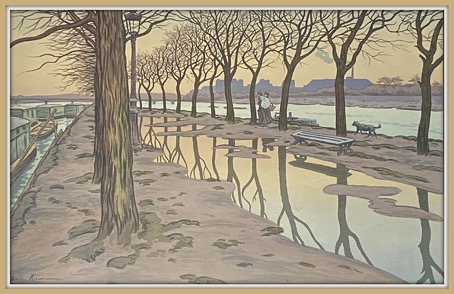
Visitation (1976) by Gilbert Williams.

• “It’s the perfect storm of a UFO case.” Daniel Lavelle explores the Rendlesham Forest mystery of 1980, Britain’s own answer to the Roswell Incident. The case has more substantial documentation than most close encounters but it also has its share of conflicting reports, claims and interpretations. The truth is out there but it’s not evenly distributed.

The Science of Spooky Sounds: Kristen French talks to researcher Rodney Schmaltz about his theory that infrasound may be responsible for the haunted feelings people experience in some buildings.

• New music: Six Organs of Admittance featuring The Six Organs Olive Choir by Six Organs of Admittance; Blue Loops by Kevin Richard Martin; Passage of Time: The Music of Michael F. Hunt by Michael F. Hunt.

• At The Daily Heller: Steven Heller on The Complete Zap Comix, an expensive reprint of the pioneering underground title coming soon from Fantagraphics.

• Coming soon from Strange Attractor: A Walking Flame: Selected Magical Writings of Ithell Colquhoun edited by Amy Hale.

• At Colossal: Linocuts by Eduardo Robledo celebrate Mexican heritage and community.

• Object of the week at the BFI is Vic Fair’s poster for The Man Who Fell to Earth.

• The Strange World of…Hildur Guðnadóttir.

Wide-band WebSDR in Enschede, NL

Lights At Rendlesham (2012) by Time Columns | Rendlesham Forest (1980) (2019) by Grey Frequency | Lights Over Woodbridge (2021) by A Farewell To Hexes

Doodlin’ – Impressions of Len Lye

doodlin1.jpg

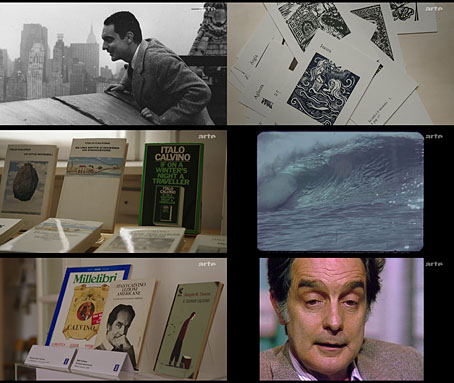
Finally, finally, Keith Griffiths’ documentary about Len Lye (1901–1980) turns up on YouTube. Doodlin’ – Impressions of Len Lye was made in 1987, and is one of several films that Griffiths made about avant-garde film-makers. There’s some slight crossover with his later history of abstract cinema—Stan Brakhage turns up in both films—but Lye was always much more than a film-maker despite his pioneering work of the 1930s. Doodlin’ charts Lye’s progress from his youth in New Zealand, where his earliest artistic impulses were oriented towards painting, to his travels through Samoa and Australia, and from there to London where almost by accident he ended up making short, semi-abstract films for the General Post Office’s promotional division. The single constant in Lye’s life was a restless creativity, something he later brought to kinetic sculpture after he moved to America in the 1940s. Lye is justly celebrated for his short films: Free Radicals (1958/79) is an extraordinary piece of abstract cinema, white lines and marks scratched onto the emulsion of a strip of unprocessed film that jump and flash in time to a recording of African drums. Griffiths’ documentary is a reminder that Lye was also an artist who was never constrained by a single medium.

doodlin2.jpg

Elsewhere on { feuilleton }
The abstract cinema archive

Art on film: Pandora and the Flying Dutchman

pandora1.jpg

Continuing an occasional series about artworks in feature films. This is a minor entry but a worthwhile one if only to draw some attention to an unusual fantasy film by Albert Lewin, an equally unusual director. Pandora and the Flying Dutchman was made in 1951, a British film with an American star (Ava Gardner) and a Spanish setting. Gardner plays Pandora Reynolds, an American nightclub singer living in the coastal town of Esperanza where she’s the centre of attention for the small colony of stuffy middle-class Brits who also live there. Like her mythical namesake, Pandora is a source of endless trouble, only in this case the evils are the result of the romantic chaos she provokes. Her own romantic desires are upset when a mysterious yacht anchors off the coast, its sole occupant being Hendrik van der Zee (James Mason) who we soon learn is the Flying Dutchman of legend, doomed to sail the seas until he can find salvation in the love of a woman who will die for him.

pandora6.jpg

Pandora with one of the many statues that surround the home of Fielding the archaeologist.

Lewin’s film was restored recently after having been out of circulation for many years. I’d been intending to see it again after reading about the restoration which could only be an improvement on the terrible copy that used to turn up late at night on British TV. Further impetus was prompted by a book review for The Spectator in which Michael Moorcock notes similarities between the film and the stories by JG Ballard which were collected as Vermilion Sands. I’ve never seen Ballard mention the film but the Vermilion Sands stories have long been favourites of mine. The film moved to the top of the viewing list.

pandora7.jpg

Esperanza or Vermilion Sands? Hendrik is lured by Pandora’s piano-playing.

The key connection to Ballard is Surrealist (or-pre-Surrealist) painting, a detail of Pandora and the Flying Dutchman that I’d forgotten all about. Albert Lewin only directed six films; he also wrote each one, and was very determined in his attempts to bring a touch of artistic class to Anglophone cinema. Pandora and the Flying Dutchman was his fourth feature after The Moon and Sixpence and The Picture of Dorian Gray—each an adaptation of a novel where painting is an important element of the story—and The Private Affairs of Bel Ami, a film that was promoted with a Surrealist painting competition on the theme of the temptation of St Anthony. Max Ernst won the competition, and his picture appears at the end of the film, a colour insert in an otherwise black-and-white feature. Lewin did the same for The Picture of Dorian Gray, another black-and-white film where the portrait paintings (including Ivan Albright’s unforgettably corrupted canvas) are shown in colour inserts.

pandora2.jpg

Continue reading “Art on film: Pandora and the Flying Dutchman”

Weekend links 827

phillips.jpg

Dante in his Study with Episodes from the Inferno (1978) by Tom Phillips.

• “This set, featuring two of the surviving members of Cabaret Voltaire, is as clear and powerful as any of the live albums the group released while Richard H. Kirk was alive.” Derek Walmsley, reviewing what we’ve been told will be the last ever Cabaret Voltaire album. I can also vouch for its excellence but then I’m not what you might call an impartial listener. My copy arrived in the post only a couple of hours before Boards Of Canada made the announcement they’d been teasing for the past two weeks—the new BOC album, Inferno, will be released at the end of May—a coincidence that felt vaguely significant. “How random is random?” as William Burroughs used to say. It’s tempting to describe the moment as the passing of a creative torch but I doubt either of the groups would agree. Boards Of Canada’s approach to electronic music has always been very different to that of Cabaret Voltaire: less aggressive, more melodic, more pastoral, more concerned with memories and the past than with the present or the near future. But the promotional videos for Inferno are reminiscent of the scratch videos that Cabaret Voltaire were creating in the 1980s: degraded VHS assemblages collaged from TV broadcasts and home-movie footage, visual equivalents of a tuning dial running through the shortwave radio spectrum. Then there’s the latest BOC album art which, when taken with details from the teaser video, foregrounds the same fascination with American bastardisations of Christianity that the Cabs were referring to in Sluggin’ Fer Jesus and The Covenant, The Sword And The Arm Of The Lord. I’ll leave it to others to play with the interpretations that can be brought to an album title like Inferno. We’ll no doubt be seeing a great deal of journalistic musing around this and related issues before and after the end of May.

• Jiří Barta’s Expressionist animated adaptation of the Pied Piper story, Krysař (1985), has turned up in high definition at YouTube. Ignore the credit for Wilfred Jackson, an American animation director who had nothing to do with Barta’s film.

• At Public Domain Review: Magic by return of post: Allan Johnson explores the history of those mail-order occult outfits whose ads fill out the pages of the early American pulps.

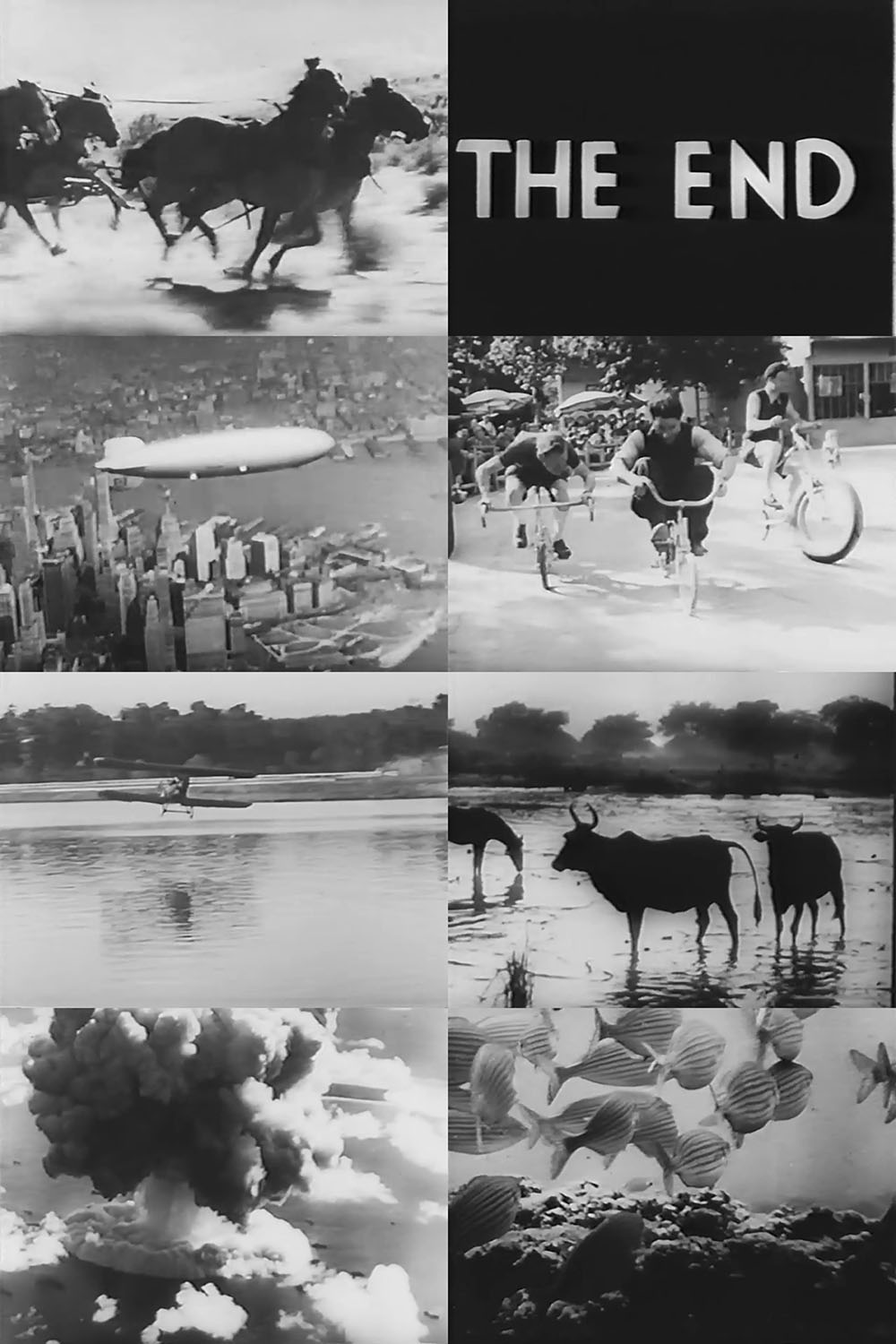
Visual Music: a lecture by Simon Reynolds describing the use of electronic music as a soundtrack for abstract cinema.

• At the BFI: Anton Bitel selects 10 great Brazilian horror films.

• There’s more intermediate eyeball fodder at Unquiet Things.

Your Name in Landsat

FruitierThanThou

Disco Inferno (1976) by The Trammps | Inferno (Main Title Theme) (1980) by Keith Emerson | Om Riff From The Cosmic Inferno (2005) by IAO Chant From The Cosmic Inferno

Kay Nielsen’s Book of Death

nielsen-bd05.jpg

Disconsolate.

More unknown Kay Nielsen, although “little-known” would be more accurate since the sombre nature of these drawings has made them popular among the image-hoarders in the Tumblr labyrinth. Nielsen created the series known as The Book of Death around 1910 when he was an art student studying in Paris, the “Book” being a cycle of ten (or more?) drawings that chart the progress of one of those Pierrots who we find mourning a lost love. The series was exhibited in London but wasn’t published in full during Nielsen’s lifetime, although a couple of the drawings did see print a few years after their completion. The Illustrated London News published one of them in 1913 when Nielsen’s work was showcased in the magazine’s Christmas special; two more appeared a year later in The Studio where Nielsen’s work was analysed by Marion Hepworth Dixon.

nielsen-bd08.jpg

Consolation.

Information about the series is so scant my cursory searches haven’t been able to locate a reliable list of the pictures, or any idea of the order they might follow. The Studio, for example, mentions a picture labelled “Omen” but doesn’t say what the picture looks like. What you see here is a guess at the labelling and an attempt at an order. The problem is complicated by the fact that Nielsen was drawing other Pierrot figures at this time so I can’t be certain that all the pictures are part of the series. They are all Nielsen’s work, however.

nielsen-bd07.jpg

Desolation (or Solitude).

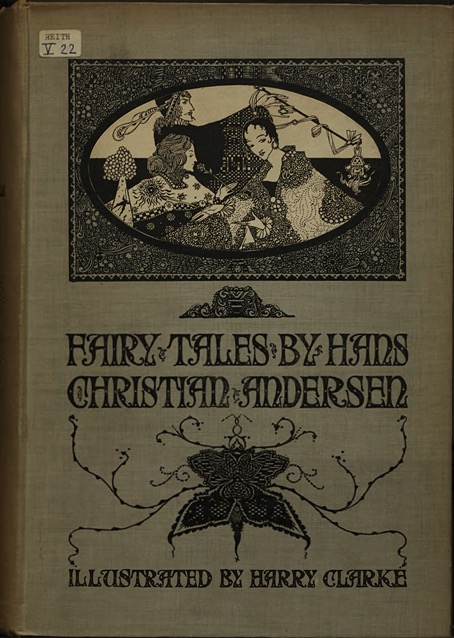
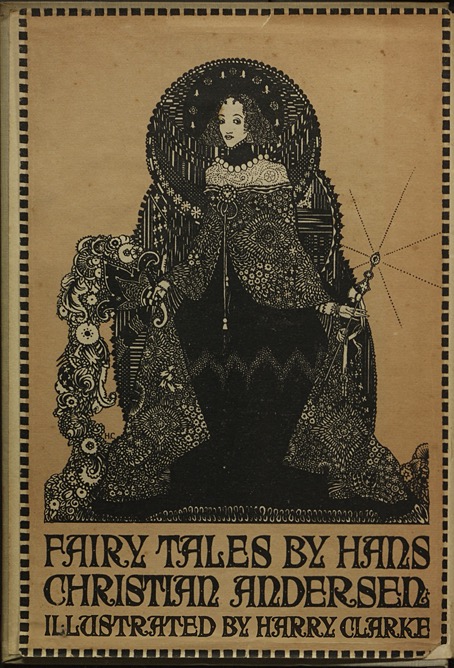
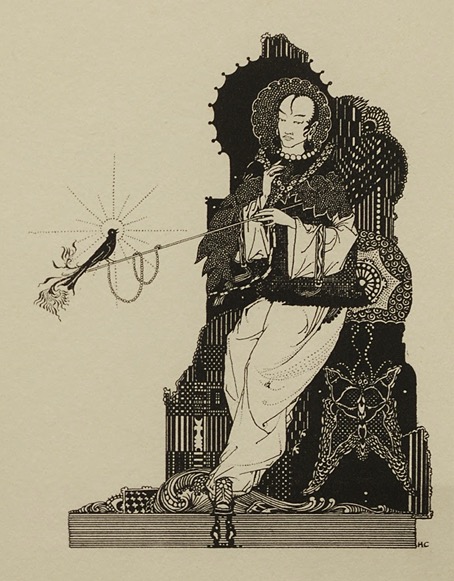
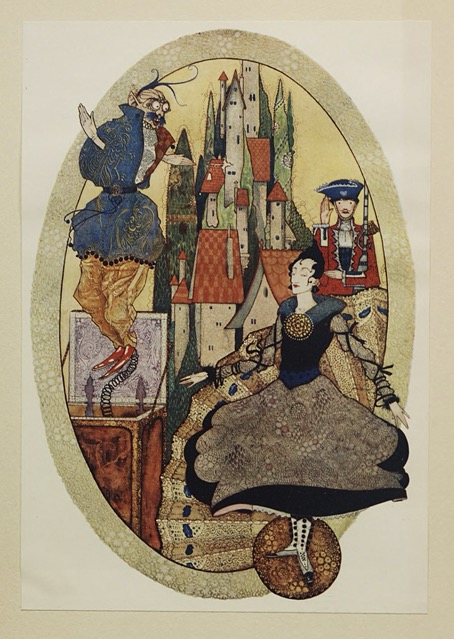
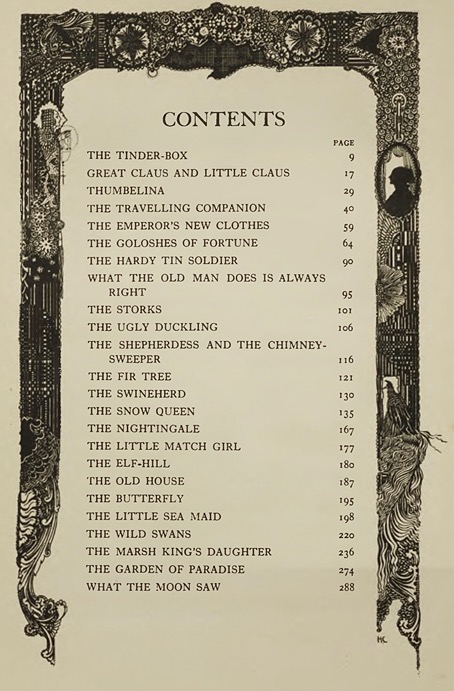
Of greater certainty is the way the series differs from Nielsen’s later illustrations, showing the artist proceeding in an opposite direction to that of his contemporary, Harry Clarke. Where Clarke’s illustration work evolved from delicate fairy-tale scenes to the horrors in Poe, Goethe and Swinburne, Nielsen abandoned fin-de-siècle morbidity for his meticulous blending of the art styles of the East and West. Marion Hepworth Dixon makes a great deal of the influence of Beardsley on Nielsen’s early drawings, something that’s most evident in his black-and-white art here and elsewhere. In 1910 he was still developing his own style so there may be other influences at work—Sidney Sime, perhaps—but without further research it’s difficult to say.

nielsen-bd06.jpg

Yearning.

nielsen-bd04.jpg

The Vision.

Continue reading “Kay Nielsen’s Book of Death”