Weekend links 568

gekko.jpg

Dragon Rising to the Heavens (1897) by Ogata Gekko.

• “Electronic music of the past is often portrayed in a dreamy, magical light—a hazy historical landscape filled with misty, otherworldly sounds. But while the music of a bygone era may seem ineffable, it is not inaccessible.” Geeta Dayal reviews Reminded by the Instruments: David Tudor’s Music by You Nakai.

• Modular Therapy: Mute Records boss Daniel Miller and former snooker champ turned kraut-psych powerhouse Steve Davis discuss their love of modular synthesisers, ill-fated Jools Holland collaborations, commandeering Elton John’s ARP 2600 and more.

• “Some contemporary art is a little bit like an intellectual game…I’m not a big fan of this kind of stuff, because I’m a musician.” Ryoji Ikeda presents: point of no return.

One of the tunnels that Turrell has completed is 854 feet long. When the moon passes overhead, its light streams down the tunnel, refracting through a six-foot-diameter lens and projecting an image of the moon onto an eight-foot-high disk of white marble below. The work is built to align most perfectly during the Major Lunar Standstill every 18.61 years. The next occurrence will be in April 2025. To calculate the alignment, Turrell worked closely with astronomers and astrophysicists. Because the universe is expanding, he must account for imperceptible changes in the geometry of the galaxy. He has designed the tunnel, like other features of the crater, to be most precise in about 2,000 years. Turrell’s friends sometimes joke that’s also when he’ll finish the project.

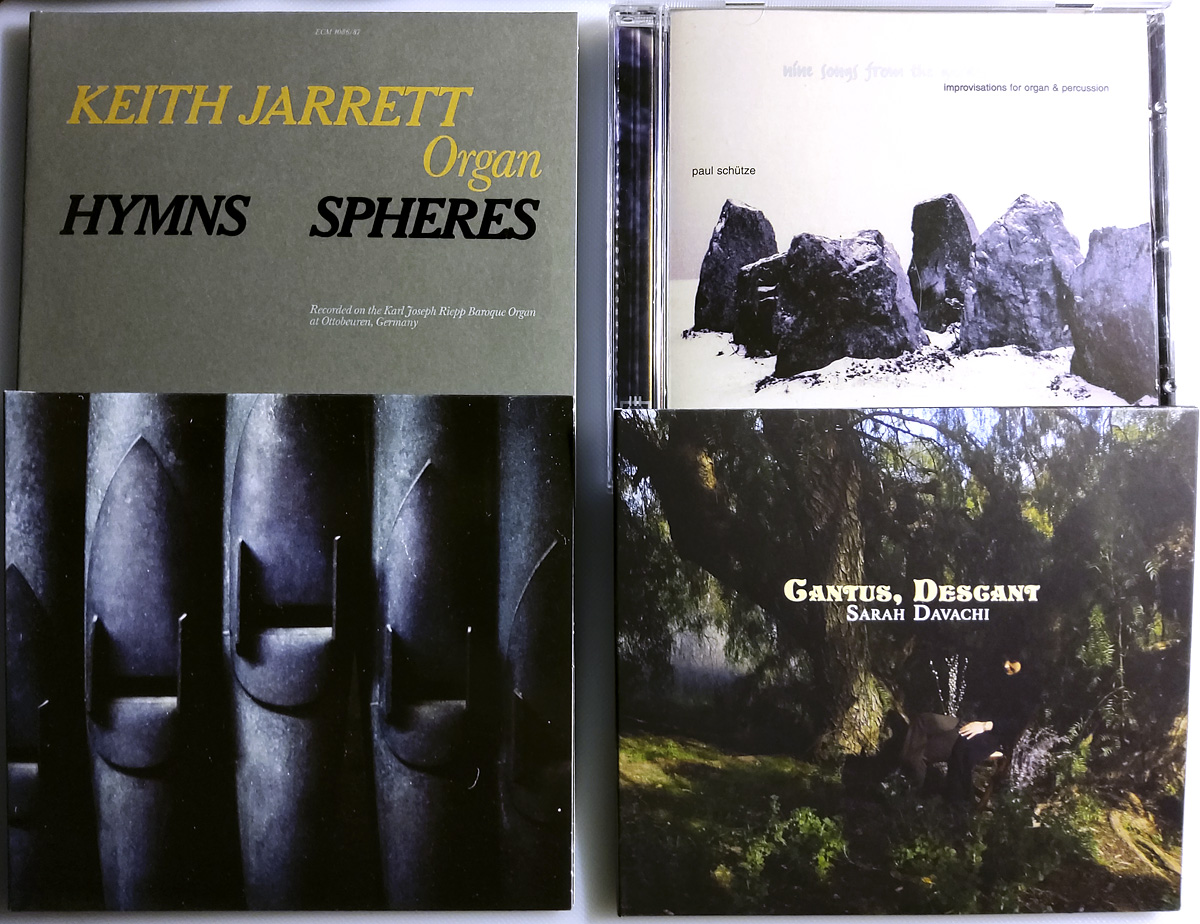
Wil S. Hylton on an exclusive visit to James Turrell’s astronomical art complex at Roden Crater, Arizona. Related: 147 Orbiting 1 Through 6 for 5, Music for Roden Crater by Paul Schütze (with free download of an excerpt from the 5-hour piece)

• New music: The Black Mill Tapes, Volume 5 by Pye Corner Audio, and Interreferences by Richard Chartier.

• At Spoon & Tamago: Dense pencil drawings of retro-future worlds by Yota Tsukino.

“‘I’m bursting with fiction’: Alan Moore announces five-volume fantasy epic”.

• At Dennis Cooper’s: Lindsay Anderson Day.

Beverly Glenn-Copeland’s favourite music.

Volcano Diving (1989) by David Van Tieghem | Crater Scar (1994) by Main | Eye Of The Volcano (2006) by Stereolab
Weekend links 561

ghostbox.jpg

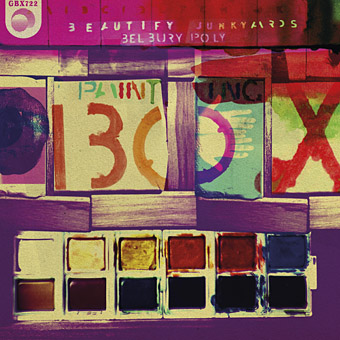
The next release on the Ghost Box label, Painting Box is a collaborative seven-inch single by Beautify Junkyards and Belbury Poly, the A-side of which is a cover of a song by The Incredible String Band. Available on 30th April. Design, as always, is by Julian House.

• “What is good for you as a person is often bad for you as a writer. People will tell you that this not true, and some of the people who will tell you that are also writers, but they are bad writers, at least when they try to convince you, and themselves, that the most important thing for a fiction writer to have is compassion.” Brock Clarke on the case for meanness in fiction.

• The week in non-human intelligence: “Life beyond human has to play by the rules of natural selection,” says David P. Barash, and Thomas Moynihan on dolphin intelligence and humanity’s cosmic future.

Ilia Rogatchevski speaks with historian Juliane Fürst about her new history of Soviet hippies and the counterculture of the former USSR.

• Mushroom with a view: Karen Schechner at Bookforum talks with Bett Williams about her mycological journey.

• Retro instinct versus future fetish: Fergal Kinney on Stereolab’s Emperor Tomato Ketchup 25 years on.

• At Dennis Cooper’s: Spotlight on…JG Ballard: The Atrocity Exhibition (1970).

This is Hexagon Sun: A feature-length video on Boards of Canada.

• Mix of the week: The Ides by The Ephemeral Man.

• New music: Gyropedie by Anne Guthrie.

Paintbox (1967) by Pink Floyd | Orgone Box (1989) by Haruomi Hosono | God Box (1996) by Paul Schütze & Andrew Hulme

Weekend links 554

yokoo.jpg

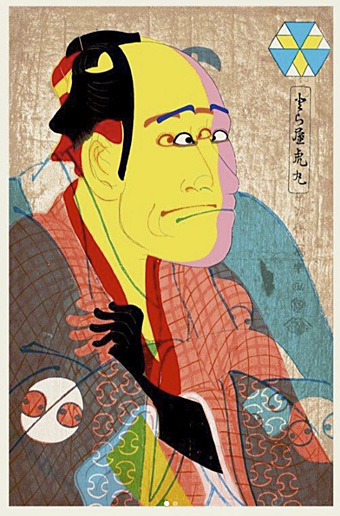
Tadanori Yokoo Emphasizes Deliberate Misalignment in Contemporary Woodblock Series.

• Another week, another Paris Review essay on Leonora Carrington. This time it’s Olga Tokarczuk exploring eccentricity as feminism. At the same publication there’s more eccentricity in Lucy Scholes‘ feature about the neglected novels of Irene Handl, a woman best known for the characters she played in many British films and TV dramas. I’ve long been curious about Handl’s writing career so this was good to see.

• “The denial of our participation in the world, [Fisher] implies—the disavowal of our desire for iPhones even as we diligently think anti-capitalist thoughts—is incapacitating. It leads to a regressive utopianism that cannot envision going through capitalism, but only retreating or escaping from it, into a primitive past or fictional future.” Lola Seaton on the ghosts of Mark Fisher.

• More ghosts: Paranormal is the latest collection of spooky, atmospheric electronica from Grey Frequency, “an audio document exploring extraordinary phenomena which have challenged orthodox science, but which have also grown and evolved as part of contemporary culture and a wider folkloric landscape.”

• “Items billed as THE BEST EVER can stop us cold, and even cause us to take them for granted, never reassessing them, as we instead gesture, often without thought, to where they sit in the corner, under a halo and backdrop of blue ribbons.” Colin Fleming on Miles Davis and Kind Of Blue.

• “Diaboliques and Psycho both achieve something very rare: a perfect plot twist but an unspoilable movie,” says Milan Terlunen.

• Richard Kirk returns once more as “Cabaret Voltaire” with a new recording, Billion Dollar.

• Even more Leonora Carrington: some of the cards from her Tarot deck.

DJ Food on Zodiac Posters by Simboli Design, 1969.

Kodak Ghosts (1970) by Michael Chapman | Plight (The Spiralling Of Winter Ghosts) (1988) by David Sylvian & Holger Czukay | The Ghosts Of Animals (1995) by Paul Schütze

Weekend links 541

finlay.jpg

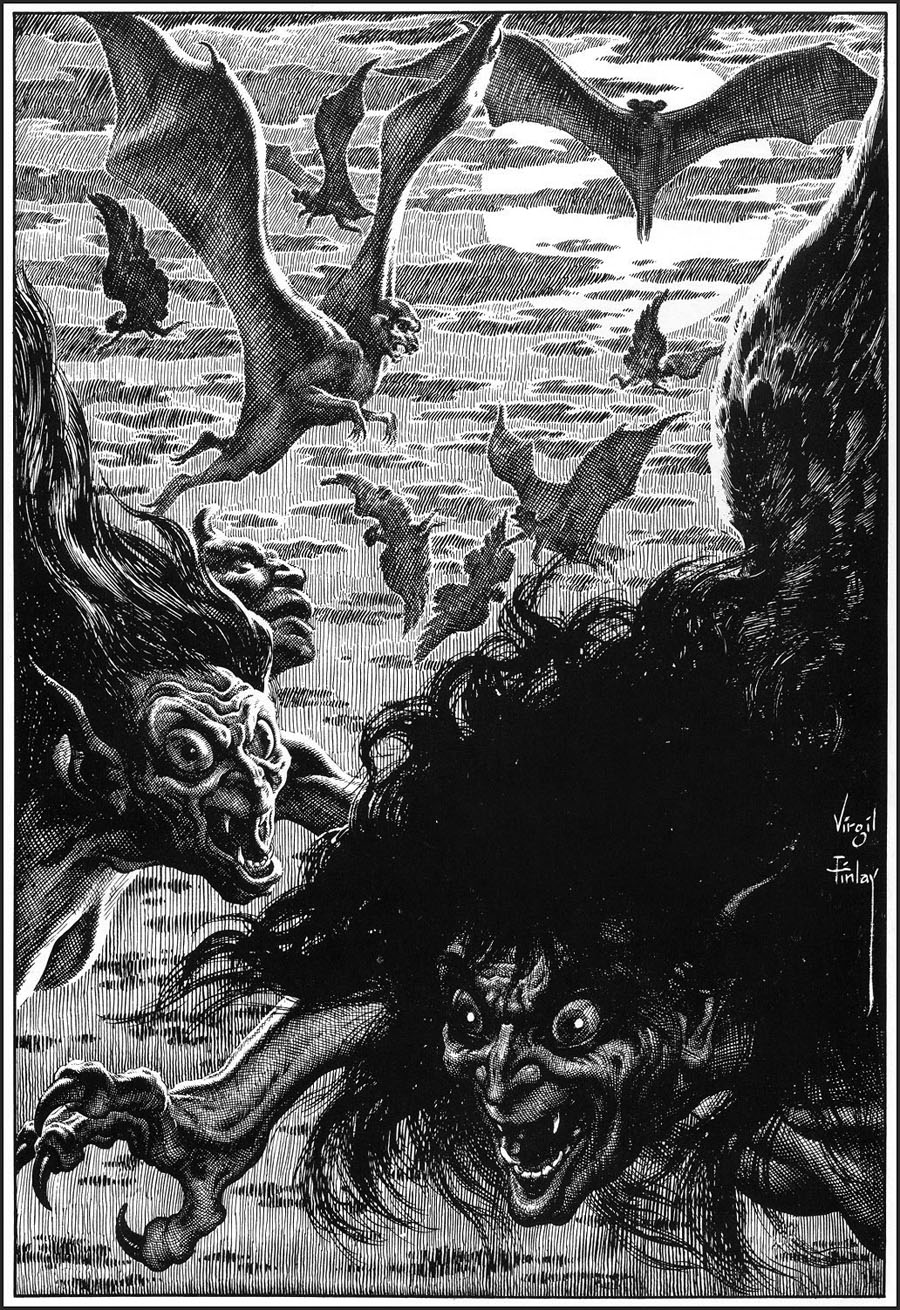
Virgil Finlay illustrates Hallowe’en in a Suburb by HP Lovecraft for Weird Tales, September 1952.

• Literary Hub does Halloween with an abundance with Draculas, a lazy option but the pieces are good ones nonetheless: Olivia Rutigliano attempts to rank the 50 best (screen) Draculas, and also recalls the Broadway production designed by Edward Gorey. At the same site, Katie Yee discovers that The Addams Family (1991) is really about the importance of books.

• The inevitable film lists: the always reliable Anne Billson selects the scariest ghosts in cinema; at Dennis Cooper’s, TheNeanderthalSkull curates…DC’s Weirdo Halloween Horror Movie Marathon, a list featuring a couple of oddities which have appeared in previous weekend links.

• More books bound with human skin: Megan Rosenbloom, author of Dark Archives: A Librarian’s Investigation into the Science and History of Books Bound in Human Skin discusses the subject with S. Elizabeth.

Beyond all this, however, readers are most likely to read De Quincey for his compellingly strange writing on opium and its effect on the mind. For it is opium, rather than the opium-eater, he writes in Confessions, who “is the true hero of the tale”. He explains the drug cannot of itself create imaginative visions—the man “whose talk is of oxen” will probably dream about oxen. But for De Quincey, with his love for reverie, it gives “an inner eye and power of intuition for the vision and the mysteries of our human nature”. Wine “robs a man of his self-possession: opium greatly invigorates it”. It “gives an expansion to the heart and the benevolent affections”. “This”, he claims, “is the doctrine of the true church on the subject of opium: of which church I acknowledge myself to be the only member.”

“Thomas De Quincey’s revelatory writing deserves greater attention,” says Jane Darcy

• New music: Weeping Ghost by John Carpenter is a preview of the forthcoming Lost Themes III; Moments Of Clarity is a new album of psychedelic(ish) songs from Professor Yaffle.

• “How now, you secret, black, and midnight hags!” Sean Connery (RIP) was often playing kings in later life but he started early with this performance as Macbeth in 1961. (Ta to TjZ for the link!)

• Mixes of the week: a (non-Halloween) guest mix by Paul Schütze for Toneshift, and the by-now traditional Samhain Séance Mix from The Ephemeral Man.

Clive Hicks-Jenkins’ big new adventure: an illustrated “reinvention” of Jean Cocteau’s La Belle et la Bête.

Drew McDowall (of Coil, et al) talks Musick, magick and sacred materiality.

• “No one loves the smell of a Kindle,” says Thomas O’Dwyer.

Brüder des Schattens (1979) by Popol Vuh | Nosferatu (1988) by Art Zoyd | Vampires At Large (2012) by John Zorn