H.P.L.

hpl.jpg

It’s that man again. Presenting the latest reworked page from the ongoing reconstruction/improvement of my Haunter of the Dark book. The picture will illustrate “Abdul Alhazred”, the final section of Alan Moore’s text for The Great Old Ones in which HP Lovecraft is positioned at Malkuth, the “Kingdom” in Alan’s eldritch Kabbalah. This makes Lovecraft himself the receptive vessel of the energies descending from the spheres above, while paradoxically being the source of those energies. Or some of them at least… The Great Old Ones is a Mythos Kabbalah which features Dagon, Hastur, Tsathoggua and Yig as well as Cthulhu and the rest. Alan doesn’t subscribe to Kenneth Grant’s baseless theory that Lovecraft really was a receptacle for transmissions from interdimensional entities, but the incorporation of the writer into his own pantheon isn’t unprecedented. Abdul Alhazred was a childhood persona of Lovecraft’s before he assigned the name to the author of Al Azif, or the Necronomicon; further personas may be found in Through the Gates of the Silver Key (“Ward Phillips”), Robert Bloch’s The Suicide in the Study (“Luveh-Keraph, priest of Bast”), and other fictions.

hpl.jpg

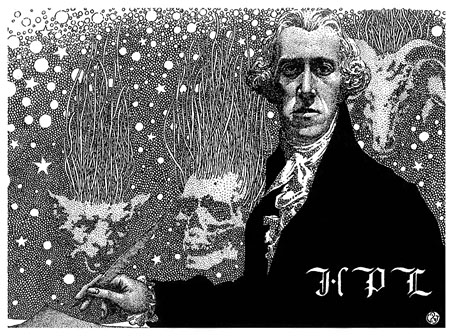
HPL (1937) by Virgil Finlay.

Whether this literary sport warrants the apparently limitless production of Lovecraftian art featuring the man himself, usually sprouting or festooned with tentacles, is a debatable matter. Virgil Finlay began the fantastic portrait trend in 1937 with his memorial depiction of the author writing with a quill pen while dressed in 18th-century garb. The earliest example that I can think of showing Lovecraft paired with the ubiquitous tentacles was the Moebius cover for Lettres d’Arkham in 1975, although there may well be other drawings prior to this. I’ve often wondered what Lovecraft would have made of the deluge of publications and images derived from his work, especially those that place him inside the products of his imagination.

moebius.jpg

Cover art by Moebius, 1975.

And speaking of which… I was at a loss at first with how to approach a new Lovecraft portrait, all I knew was that one was necessary. The original Malkuth picture from 1999 is another poor Photoshop job which has nevertheless been reused elsewhere on a few occasions, even appearing in 2007 on the cover of an issue of FATE magazine. For the new version I started with the portrait itself, using white lines on black to copy the same portrait photograph that formed the centre of the older picture. This was then duplicated and flipped horizontally to create a kind of Janus head which gives the portrait a suitably weird quality without wreathing it in tentacles. The mirrored head harks back to a sequence of treated photos by JK Potter which I first saw in the Heavy Metal Lovecraft special in 1979. Potter had used the same portrait photo to create effects that were somewhat compromised by poor reproduction, leading me to be believe that I’d created something slightly different to the first panel in his sequence. While researching this post I turned up an earlier version of the artwork which appeared on the back of the first issue of a US fanzine, Fantasy Mongers, also in 1979. The clearer reproduction revealed that the first head in Potter’s sequence is almost identical to my own. Ah well…

jkpotter.jpg

Photo art by JK Potter from the back cover of Fantasy Mongers #1, 1979.

The rest of the picture was improvised around this central image. Having drawn the portrait in white-on-black I decided to use a similar technique for the other elements. The Cthulhoid pillars are based on those in my Red-Night Rites painting from 1997, one of which appeared in the 1999 picture. The smaller figure on the right is from one of the photos that Wilfred Talman took while wandering the streets of New York with Lovecraft and Frank Belknap Long. This also appeared in the 1999 picture but for the new version I’ve emphasised what appears to be a book that Lovecraft is carrying in his right hand. Searching around for a complementary figure that might represent Abdul Alhazred turned up a 19th-century photo of a character who not only looked the part but is also standing in a manner similar to the Talman Lovecraft. If you look closely he’s also carrying a book, an addition of my own which turns him into the author of Al Azif. The polyhedra supporting the pair aren’t as arbitrary as they may seem. The spheres serve a dual purpose, preventing the figures from floating in space (or standing in water) while also relating to the Sephiroth of Malkuth which is identified with the Earth in the Kabbalistic scheme of planetary associations.

The next reworked picture will be Tsathoggua which is being polished rather than completely overhauled. I’m hoping I might have this done by the end of the month but I’m still chipping away at The Dunwich Horror while doing all this, as well as working on things which pay the bills. (I’ve just finished designing and illustrating another book.) Further progress will be announced in due course.

Elsewhere on { feuilleton }
The Lovecraft archive

Previously on { feuilleton }
The Return of the Crawling Chaos
Lettering Lovecraft
Weird ekphrasis and the Dunwich Horrors
Kadath and Yog-Sothoth
Another view over Yuggoth

Weekend links 801

waterhouse.jpg

The Magic Circle (1886) by John William Waterhouse.

The Moon and Serpent Bumper Book of Magic has just been published in France by Editions Delcourt. A preview here shows how carefully they’ve managed to translate and reletter my page designs.

• Among the new titles at Standard Ebooks, the home of free, high-quality, public-domain texts: Algernon Blackwood’s stories of John Silence, occult detective.

• Relevant to some of my recent reading: The Necronomicon Wars, an examination of the many attempts to give life to HP Lovecraft’s fictional grimoire.

Altered States is tremendously exciting to watch—and not only during its psychedelic interludes when goat Jesus is being crucified and writhing red figures are toppling, Hieronymus Bosch–like, into hell and abstract splotches give the impression of cells endlessly dividing or murky membranes dissolving and beautiful women stare into Magritte skies and waves of lava crash as though the molten core of humanity itself were erupting. Even in its quieter moments, it is a beautiful film, with Hurt’s every appearance shot by cinematographer Jordan Cronenweth to emphasize his character’s alien otherworldliness.

Jessica Kiang explores the creation of Ken Russell’s flawed but fascinating psychedelic feature, Altered States

• A new catalogue of lots at another After Dark: Gay Art and Culture online auction. Homoerotic art, photos, historic porn. etc.

Tarot decks through the ages: a video showing some of the cards from Victoria and Albert Museum’s collection.

• More psychedelia: Neuroscientist Grigori Guitchounts asks “What is your brain doing on psychedelics?”

• At the Daily Heller: Ryan Hughes has published a weighty collection of his typeface designs.

• Old music: Caged (25th Anniversary Edition) by Ian Boddy & Chris Carter.

• At the BFI: Rory Doherty selects 10 great Technicolor melodramas.

• At Dennis Cooper’s: The Old School Horrors of Terence Fisher.

Photographs from the 2025 Wildlife Photographer of the Year.

Ambientblog celebrates 20 years of existence.

• RIP Dave Ball.

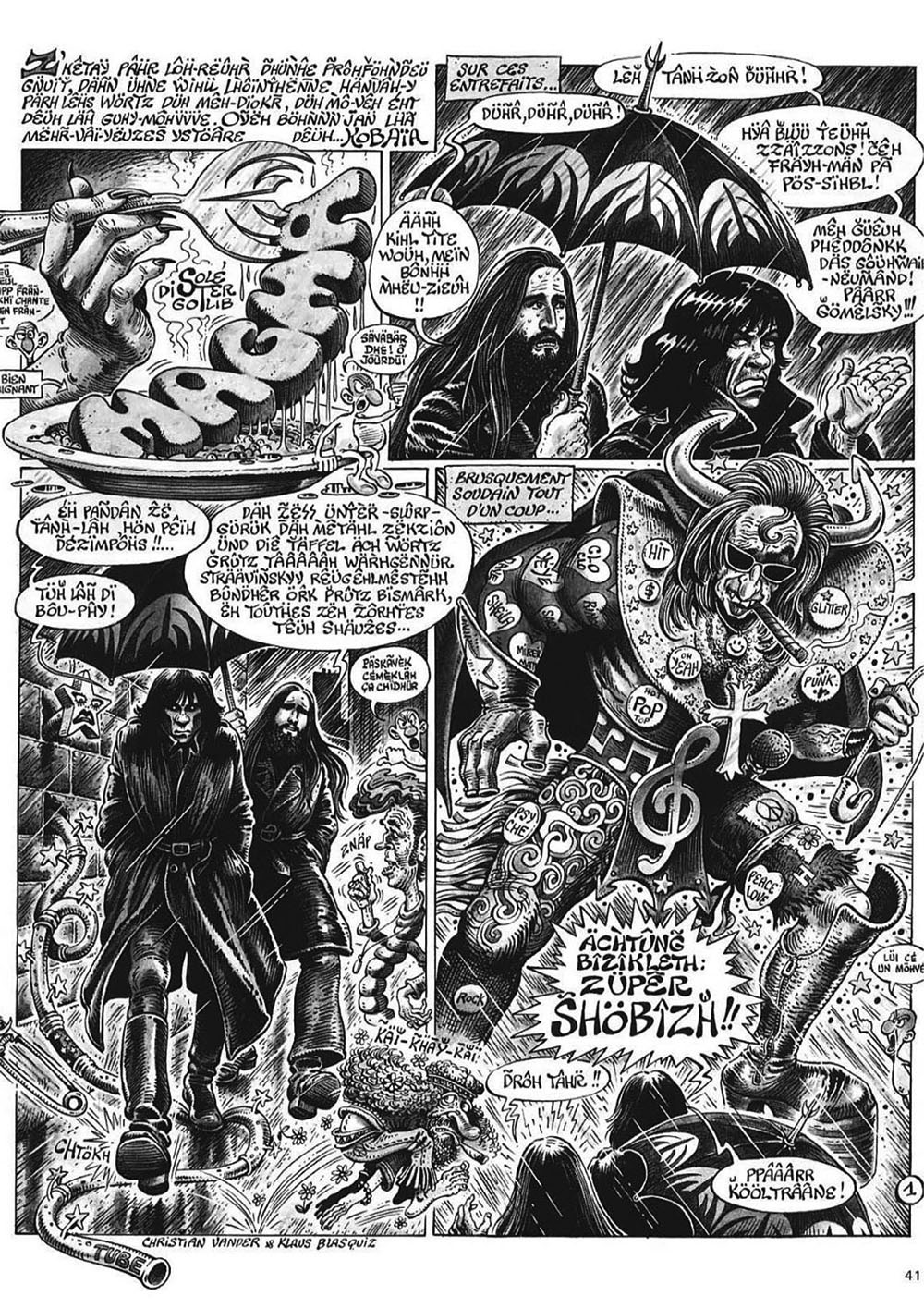
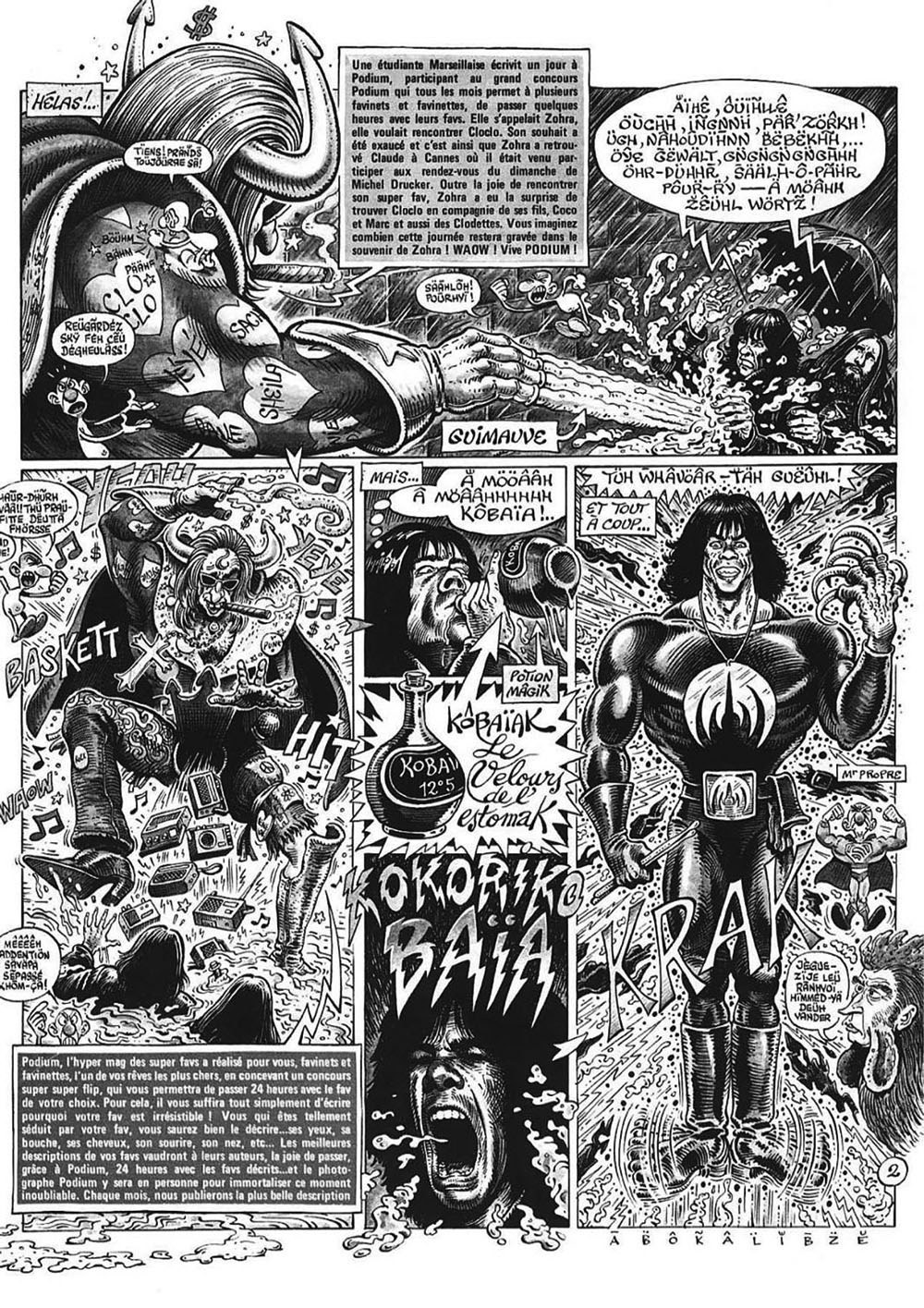
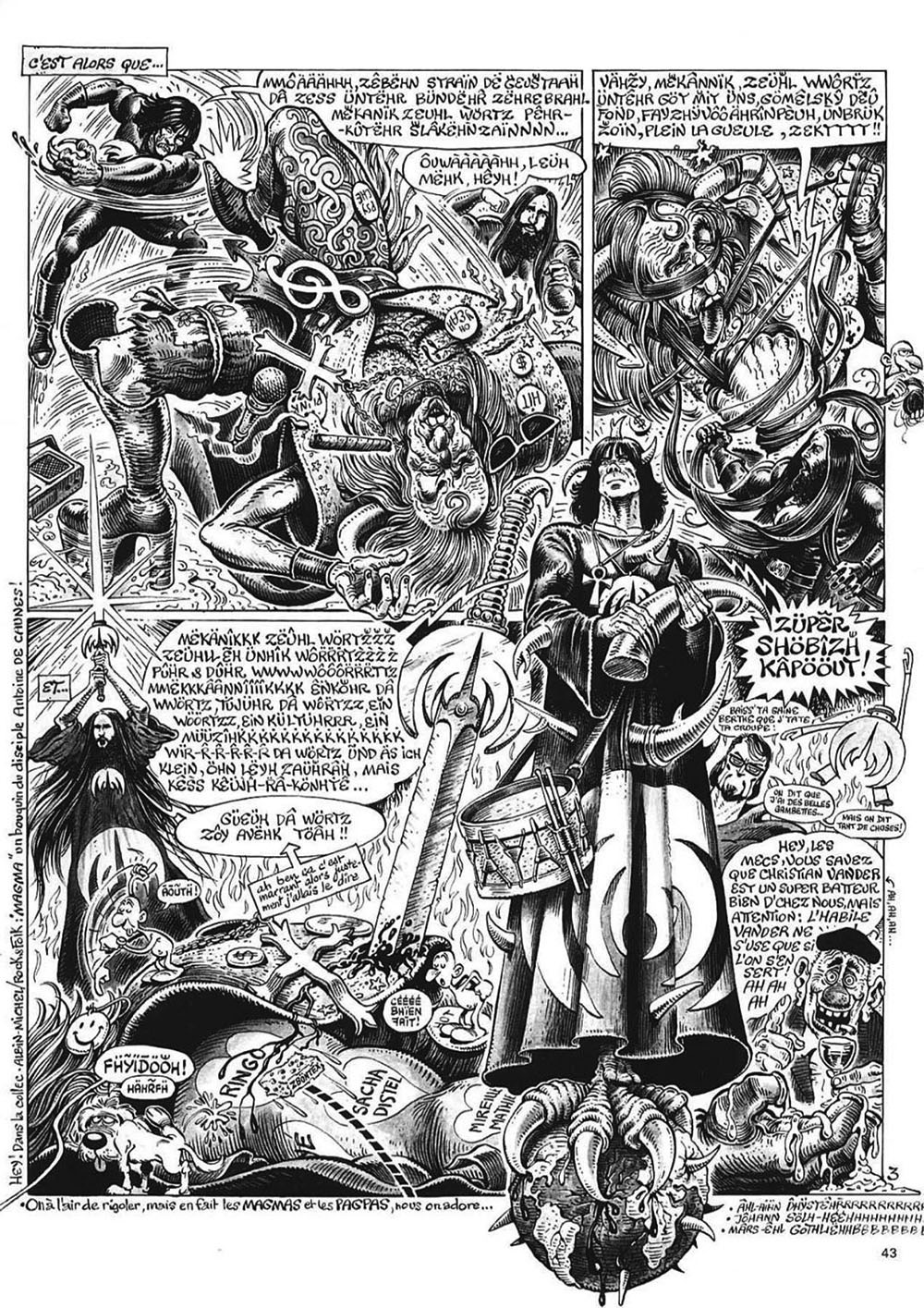
Necronomicon (1970) by Les Baxter | Liriïk Necronomicus Kahnt (1975) by Magma | Necronomicon–The Magus (2004) by John Zorn

Innsmouth, Japanese-style

innsmouth3.jpg

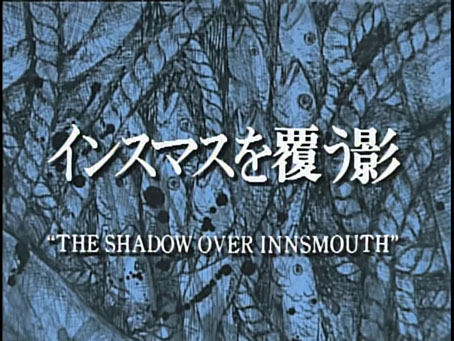
When it comes to film and TV dramas based on the writings of HP Lovecraft I’ve always been very selective, to a degree that I avoid most adaptations unless they receive reviews good enough to provoke my curiosity. I do, however, keep an eye out for unusual (or unusually inventive) adaptations whose shortcomings I’m prepared to forgive if they promise to be more than another wearying trudge through cinematic cliches. Such is the case with this Japanese TV adaptation of The Shadow Over Innsmouth which was written and directed by Chiaki Konaka in 1992.

innsmouth1.jpg

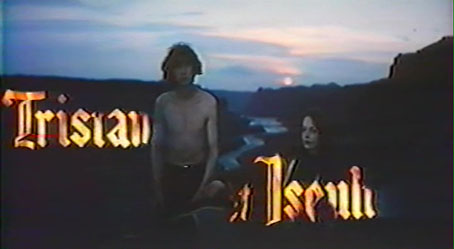
Konaka’s adaptation isn’t immediately attractive, being shot entirely on video, a very unsympathetic format for horror productions when the harshness of the image works against any attempts to create an eerie atmosphere. (Even The Stone Tape suffers in this area.) Konaka presents a sketch of Lovecraft’s story which he updates to the present day and moves to contemporary Japan, with no explanation as to why the Japanese coastline is a home to towns with names like “Innsmouth”, “Arkham” and “Dunwich”. Lovecraft’s detailed history of the blighted backwater and its inhabitants is also ignored. Konaka’s narrative begins with an unnamed photo-journalist (Renji Ishibashi) securing a job at a travel magazine where he convinces the editor that the remote coastal town of “Insumasu” is worthy of a feature. As with the anonymous narrator of Lovecraft’s story, the photographer is drawn to the place as much by ancestral impulses as by his curiosity about a place where a strange fish-human corpse has been washed ashore.

innsmouth2.jpg

Konaka’s direction is more functional than suspenseful, with the photographer’s biographical history telegraphed so much in advance that none of the revelations come as a surprise. The soundtrack is also very uneven, being a collage of music borrowed from other films: there’s a brief snatch of Goblin’s Suspiria score at one point, and I think the repeated flute refrain is borrowed from a Preisner score. This is a well-made adaptation all the same even if the Japanese Innsmouth isn’t as deteriorated as the decayed fishing town that Lovecraft describes. (To be fair, any film depicting Lovecraft’s Innsmouth would require a serious budget to do the place justice.) Fishy details abound, and Konaka uses green light as a recurrent motif that refers to Innsmouth’s secret history, like an inversion of the emerald glow that signifies magic or the supernatural in John Boorman’s Excalibur. I was especially pleased to see borrowings from the George Hay Necronomicon during a cermonial invocation to Dagon that takes place in a cave. Later on we see a copy of the Hay book being perused by the curator of the Innsmouth museum. This makes a change from the tiresome ubiquity of the “Simon” Necronomicon whose sigils are always turning up in Lovecraftian adaptations when people are at a loss to create symbols of their own. The symbology in the Hay book was the work of Robert Turner, an occultist with an aesthetic sensibility more finely attuned to the world of the Cthulhu Mythos.

Chiaki Konaka has been described as bringing a Lovecraftian influence to his other work but when most of this is anime scripts for juvenile fare like the Digimon franchise you can’t expect very much. One of his credits is for something called Cthulhu’s Secret Record but I’ve no idea what this might be. Konaka’s The Shadow Over Innsmouth many be viewed in full here. The translated subtitles are larger than I prefer (and in vivid green) but I’m still pleased that someone went to the trouble of making this curio available to a wider audience.

Elsewhere on { feuilleton }
The Lovecraft archive

The Return of the Sorcerer

sorcerer1.jpg

The story’s first appearance in Strange Tales of Mystery and Terror, September 1931. No illustrator credited.

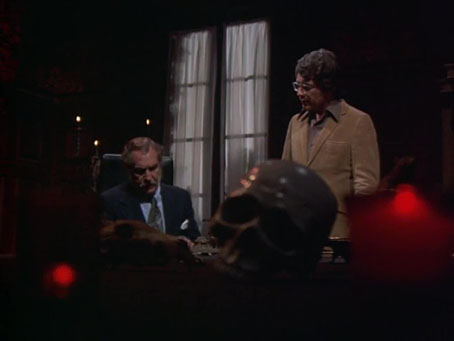
Rod Serling’s Night Gallery is a series I’d have happily watched if one of the UK channels had rebroadcast it in the 1980s, the way that Channel 4 did with the original Twilight Zone. This weekend I watched for the first time the opening episode of Night Gallery‘s third and final season, an adaptation by Halsted Welles of Clark Ashton Smith’s The Return of the Sorcerer. Smith is a writer whose works are still mostly neglected by film and television but he was in good company in Night Gallery, a series which featured adaptations of stories by a number of fellow Weird Tales writers including HP Lovecraft, Fritz Leiber and Robert Bloch. The story is one of Smith’s modern-day horror tales in which a poverty-stricken translator is offered a lucrative position at an old and sinister house, a place where a fearful occultist requires translations of an ancient volume. The Arabic text turns out to be passages from an early edition of everybody’s favourite forbidden tome, the Necronomicon, and Smith’s story, which was published in Strange Tales of Mystery and Terror in 1931, is the first outside Lovecraft’s own to mention the book, thus beginning the expansion of the Cthulhu Mythos by other hands.

sorcerer2.jpg

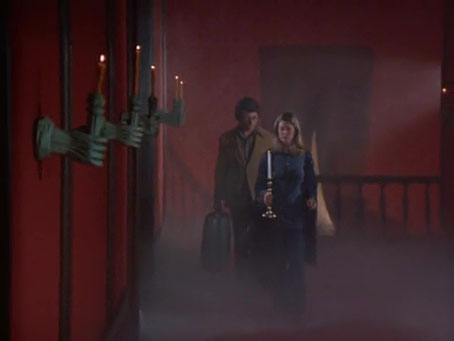
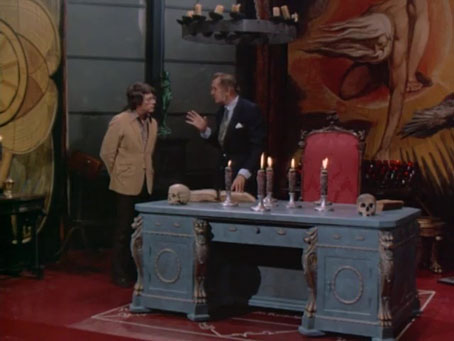
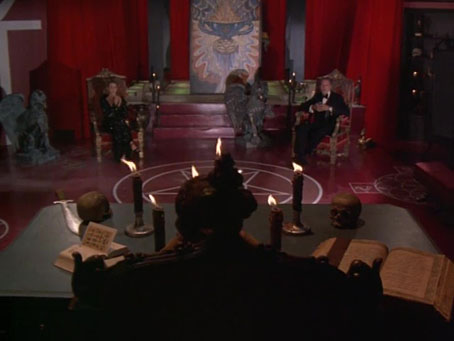
The Night Gallery adaptation was broadcast in 1972. Unlike the first two seasons, where episodes ran for an hour, the third season reduced the running time to under 30 minutes which doesn’t give director Jeannot Szwarc (credited as Jean Szwarc) any time to build up the suspense, if he was capable of such a thing. If you’ve ever seen any of Swarc’s feature films you know not to raise your expectations. As a compensation for the absense of atmosphere we get some striking set designs and a decent cast. The fearful magus, John Carnby, is played by Vincent Price, encountering the Necronomicon for the second time in his career after he’d earlier used the book to summon an eldritch monstrosity in Roger Corman’s The Haunted Palace. Bill Bixby plays the wary translator, while Patricia Sterling is Carnby’s toad-loving partner in Satanism, an addition to the story by Halstead Welles, whose presence adds an extra dimension to the proceedings. The episode could never be considered a lost classic but I enjoy seeing stories by the Weird Tales writers making their first infiltrations into the wider culture. This one is worth watching for Vincent Price and the magical decor alone. I think I ought to go looking for more Night Gallery episodes.

sorcerer3.jpg

More of those Cocteau hands-through-the-wall. Bixby’s character doesn’t seem very perturbed that the scarlet hall is filled with mysterious vapours.

sorcerer4.jpg

Mystical decor: on the left, Frieda Harris’s Ace of Discs from the Thoth Tarot deck; on the right, The Ancient of Days by William Blake.

sorcerer5.jpg

Mystical/Satanic decor: the painting in the background is Frieda Harris’s Ace of Cups from the Thoth Tarot deck.

Previously on { feuilleton }
The Cthulhu Mythos in the pulps
Illustrating Zothique
The Plutonian Drug
More trip texts
Yuggoth details
The Garden of Adompha
The City of the Singing Flame
Haschisch Hallucinations by HE Gowers
Odes and Sonnets by Clark Ashton Smith
Clark Ashton Smith book covers

McCallum reads Lovecraft

mccallum1.jpg

Art by Leo and Diane Dillon.

RIP David McCallum, who I prefer to remember for his role as one half of the weirdest-TV-duo-ever, Sapphire and Steel. McCallum was a minor sex symbol in the 1960s, thanks to The Man from U.N.C.L.E., a celebrity that led to his conducting a series of instrumental pop albums. I’ve never heard any of these but they have their champions. They were followed in the 1970s by a number of readings for the Caedmon label which included three albums of HP Lovecraft stories. The Dunwich Horror is one I’ve referred to in the past since I used to own a knackered copy. As a reading it’s pretty good, slightly edited but with the novelty of allowing you to hear McCallum recite the famous “As a foulness shall ye know them” passage from the Necronomicon. These commissions no doubt came about simply because McCallum was available but his Lovecraft recordings gain a deeper resonance in the light of his later exploits with Joanna Lumley in the haunted corridors of Time. Some of the malign forces that Sapphire and Steel face aren’t so distant from Lovecraft’s interdimensional “Old Ones”, unfathomable entities seeking ingress to the material universe.

mccallum2.jpg

Cover art uncredited.

All of the McCallum Lovecraft albums are now on YouTube so the curious may listen to the recordings without searching for rare (and expensive) vinyl:

The Rats in the Walls (1973)
The Dunwich Horror (1976)
The Haunter of the Dark (1979)

The reading of The Rats in the Walls doesn’t edit Lovecraft’s xenophobia so anyone unwilling to hear a racial epithet used as a name for a pet cat should avoid that particular recording. The first album, which included a sleeve note from August Derleth, is also the only one of the three that was reissued. I wonder whether The Dunwich Horror might have fared better if it didn’t have such appallingly amateurish cover art. A shame the Dillons weren’t able to illustrate that one as well.

mccallum3.jpg

Art by Les Katz.

Elsewhere on { feuilleton }
The Lovecraft archive

Previously on { feuilleton }
Haunted Corridors: The Temporal Enigmas of Sapphire and Steel