Weekend links 791

transparent.jpg

Cover design by Marian Bantjes for a 2009 series of Nabokov reprints.

• “It is quite unlike the bland featurelessnesses of the current fiction in which dull creative writing students chat to dull creative writing students (there is today a generalised fear of imaginative invention and giving offence).” Jonathan Meades on late style and Vladimir Nabokov’s Transparent Things.

• Cathi Unsworth remembers the late Roger K. Burton, founder of London’s unique exhibition and venue space, The Horse Hospital.

• New music: Interior of an Edifice Under the Sea by Pan American & Kramer; Glass Colored Lilly by Yuki Fujiwara.

• Mixes of the week: DreamScenes – August 2025 at Ambientblog, and Bleep Mix 307 by On-U Sound.

• At the BFI: Michael Brooke chooses 10 great Eastern European science-fiction films.

• At The Wire: David Toop and Ania Psenitsnikova on moving beyond music and dance.

• At Colossal: Weird Buildings celebrates architects who think outside the box.

Verbal #12 includes new fiction by Michael Moorcock, among others.

• At Unquiet Things: Exquisite incantations in clay by Forest Rogers.

• Steven Heller’s font of the month is Experimo.

Dale Cornish’s favourite albums.

Tenth Letter of the Alphabet

Ecstasy Symphony/Transparent Radiation (Flashback) (1987) by Spacemen 3 | Almost Transparent Blue (1996) by David Toop | Transparent (1997) by Reflection
Weekend links 178

bantjes.jpg

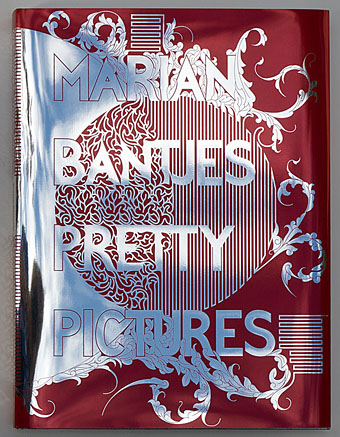
Pretty Pictures, a new book by designer Marian Bantjes, is out on October 1st.

• A writer admired by Angela Carter, Michael Moorcock, Harlan Ellison, Anthony Burgess, Jonathan Meades and Iain Sinclair; a “writer’s writer…[whose] best stories bear comparison with the Ficciones of Jorge Luis Borges”; a writer with an “unsettling quality to his writing, a whiff of brimstone that links him to fin-de-siècle occult figures such as HP Lovecraft—and even, at a further remove, Aleister Crowley”. David Collard explains why you may want to read something by Gerald Kersh (1911–1968), four of whose books are being republished.

• The Eccentronic Research Council and Maxine Peake pay homage to Delia Derbyshire’s The Dreams project with a new single out at the end of the month (Pye Corner Audio and Carol Morley appear on the flip). Ms Peake’s barm-cake reverie may be heard here.

• “Applying for grants, writing artist statements, showing up to openings—artists have to do far more than just make art if they want to find an audience for it.” Jen Graves on lies and deception in the art world.

The material does not make the work. The life does not make the art. Exactly the opposite. The work creates the material. The art creates the life. Did Trinidad exist before Naipaul? Did cargo ships exist before Joseph Conrad? Did Newark and the New Jersey suburbs exist before Philip Roth? Did women in playgrounds in New York City exist before Grace Paley? See how the writer invents the material? These places did not exist as literary subjects. They were invisible to literature. The magic of a great book is that it makes its own subject seem inevitable. The danger is, it makes the subject seem like the source of power in the work.

Phyllis Rose on life and literature.

• Mix of the week: Secret Thirteen Mix 087, 40 minutes of original electronic music by Geistform (Rafael Martinez Espinosa).

• “You’ve Got This“, an It Gets Better-style video support campaign for people recently diagnosed with HIV.

• At Dangerous Minds: Babalon Working: Brian Butler’s trippy occult odyssey with Paz de la Huerta.

Manfred Mohr‘s computer-created artwork, from the 1960s to the present.

Robert Macfarlane on the strange world of urban exploration.

Rick Poynor on Bohumil Stepan’s Family Album of Oddities.

• Oli Warwick talks to Martin Jenkins, aka Pye Corner Audio.

• The 384-page BUTT calendar for 2014 is now on sale.

• Pye Corner Audio: We Have Visitors (2010) | Toward Light (2011) | The Mirror Ball Cracked (2012)

Gilded volumes

thomson.jpg

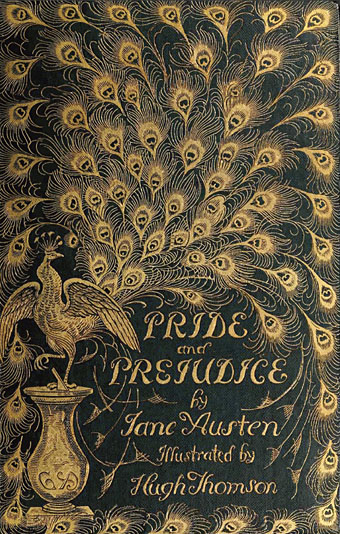
The cover of an 1894 edition of Jane Austen’s novel designed by Hugh Thomson (1860–1920). The so-called “Peacock Edition” is illustrated throughout and a copy can be yours for £845 should you be so inclined. Or you can go to the Internet Archive and download the same edition for free. Thomson’s lavish cover design is absolutely right for the 1890s and as such would have suited Oscar Wilde far more than Jane Austen. AbeBooks drew my attention to this with a feature on rare books with gilded covers where, needless to say, all the titles are very expensive. A lot more reasonable but just as lavish is I Wonder by Marian Bantjes, the perfect gift for anyone who enjoys the art of book design.

Elsewhere on { feuilleton }
The book covers archive

Previously on { feuilleton }
I Wonder by Marian Bantjes

Weekend links 36

high_society.jpg

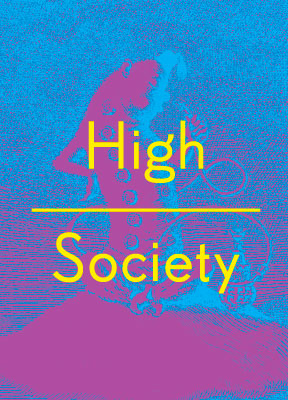
Mervyn Peake’s Caterpillar from Alice’s Adventures in Wonderland finds itself used to promote High Society, an exhibition at the Wellcome Collection devoted to the long history of human drug-taking. There’s more about the exhibition here and also an accompanying book by Mike Jay from Thames & Hudson. Related: The Most Dangerous Drug:

A group of British drug experts gathered by the Independent Scientific Committee on Drugs (ISCD) rated alcohol higher than most or all of the other drugs for health damage, mortality, impairment of mental functioning, accidental injury, economic cost, loss of relationships, and negative impact on community.

• Unless the magazine Man, Myth & Magic was advertised on TV in 1970 (and I suspect it would have been) Austin Osman Spare’s work has never been seen on British television, certainly not in any detail or with a credit to the artist. This week the BBC finally paid him some attention with a brief spot on The Culture Show as a result of the Fallen Visionary exhibition which is still running (until November 14) in London. Alan Moore, Fulgur‘s Robert Ansell and others attempt to summarise Spare’s career in seven minutes.

fujita.jpg

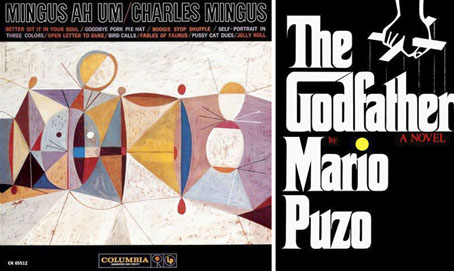
Neil Fujita designs: Mingus Ah Um (1959) and The Godfather (1969).

• RIP graphic designer Neil Fujita. Related:

“By taking the “G” and extending it to the “D,” I created a house for “God.” The way the word was designed was part of the logo and so was the type design. So when Paramount Pictures does a film version or Random House, which bought out the book from Putnam, does another Godfather book, I still get a design credit. In fact, before the first Godfather film opened in New York I saw a huge billboard going up in Times Square with my design on it. I actually got them to stop work on it until we were able to come to an agreement.” Waxing Chromatic: An Interview with S. Neil Fujita

French SF illustration. Related: Where did science fiction come from? A primer on the pulps, a feature by Jess Nevins with some of the craziest covers you’ll see this month.

• Gay-bashers in 1970s San Francisco had to beware the wrath of the Lavender Panthers.

• More Marian Bantjes as she discusses her work in an audio interview.

Music from Saharan cellphones.

Origami Beauty Shots.

Krautrock.com

Better Git It In Your Soul (1959) by Charles Mingus.

Weekend links 35

cr.jpg

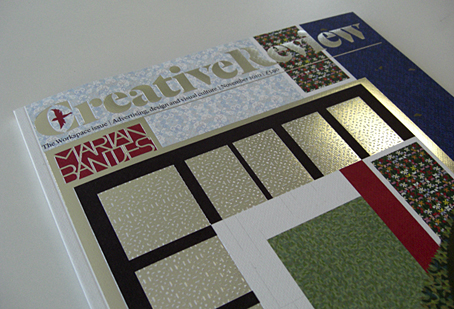
Marian Bantjes designs the cover of the latest Creative Review and there’s a feature about her work inside.

• “…the question: ‘was Shakespeare gay?’ strikes me as so daft as to be barely worth answering. Of course he was. Arguably he was bisexual, of sorts, but his heart was never on his straight side.” Don Paterson throws the cat among the pigeons in an examination of the Shakespeare’s sonnets. Related (sort of): Shakespeare and Company: The bookshop that thinks it’s a hotel. Also related: Jeanette Winterson revisits Shakespeare and Company.

100 orbs of light float in the Schuylkill River. Also in Philadelphia: Animators Amok in a Curiosity Cabinet: the Brothers Quay are making a film in the Mütter Museum. Can’t wait to see it.

• More Alan Moore: Fossil Angels, a lengthy essay about magic and the occult, was written in 2002 but hasn’t been given a public airing until now.

Alberto Manguel is always worth reading:

As Borges was well aware even then, the history of literature is the history of this paradox. On the one hand, the deeply rooted intuition writers have that the world exists, in Mallarmé’s much-abused phrase, to result in a beautiful book (or, as Borges would have it, even a mediocre book), and, on the other hand, to know that the muse governing the enterprise is, as Mallarmé called her, the Muse of Impotence (or, to use a freer translation, the Muse of Impossibility). Mallarmé added later that all who have ever written anything, even those we call geniuses, have attempted this ultimate Book, the Book with a capital B. And all have failed.

• Here Comes Everybody: Wake In Progress is a self-described “foolhardy attempt to illustrate Finnegans Wake”. Easier to illustrate than make a film of the book, I’d have thought, and Mary Ellen Bute already attempted the latter.

hoffmeister.jpg

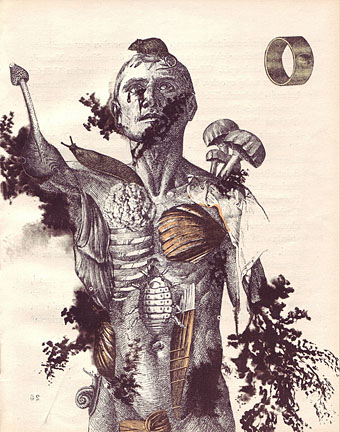
Psychic Explosion: Adolf Hoffmeister’s illustrations for a 1967 edition of Lautréamont’s Poesies at A Journey Round My Skull.

Craig Colorusso’s Sun Boxes can be seen at Turner Falls, Massachusetts, during November.

Clive Hicks-Jenkins has a book and retrospective exhibition of his art due next year.

• A sneak peek into The Steampunk Bible to which I’m a contributor. And also here.

• “Human or other; depends who comes”: the Ballardian films of Paul Williams.

Transmission (1979) by Joy Division; Transmission (1995) by Low; Monkey (2010) by Robert Plant.