Jaki Liebezeit times ten

jaki11.jpg

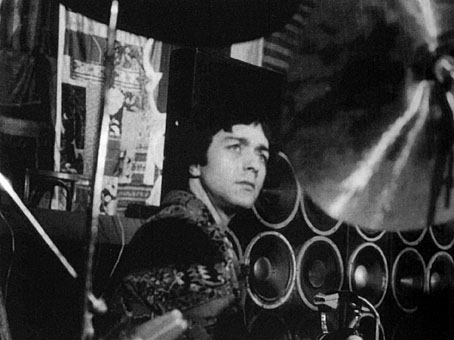
Jaki Liebezeit.

One thing to note about the late Jaki Liebezeit is that everyone liked Can in the 1970s, which means that everyone liked Jaki Liebezeit’s drumming. When the music wars were raging in 1976, Can were one of the few groups from the hippy side of the barricade given a pass by the punks. Prog-heads liked Can because of the rock grooves and complex improvisations; punks enjoyed the muscular insistence of songs like Father Cannot Yell and Halleluwah. David Bowie liked Can; Brian Eno liked Can enough to let Jaki Liebezeit guest on Before And After Science (Eno also made this tribute video for the Can DVD); John Lydon when he was still Johnny Rotten played Halleluwah on his Capital Radio show in 1977 together with other favourite records; a year later, Pete Shelley wrote a sleeve note for a Can compilation (and the first Can album I bought), Cannibalism; Mark E. Smith liked Can (of course); Siouxsie called Jaki Liebezeit “the best drummer in the world,” while Jah Wobble would go on to work with Liebezeit on numerous recordings under his own name and as a guest on other albums. Some of the Wobble recordings appear below. If there’s a minimum of Can music in the following list that’s mainly because Mute/Spoon keep the back catalogue away from British users of YouTube. I don’t mind that; the absence of the prime stuff means I can draw attention to some examples of Jaki Liebezeit’s post-Can work which might otherwise be overlooked.
jaki01.jpg

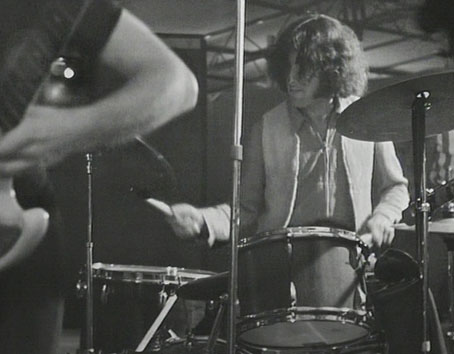
Mother Sky/Deadlock (1970) by Can.

Two numbers from the fantastic live set the group played on German TV for an audience of ecstatic/bored/stoned hippies.
jaki02.jpg

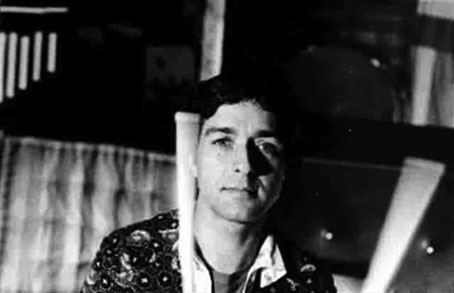
Jaki Liebezeit drum solo (1970).

In the Can Book Liebezeit says he never played drum solos but he was forgetting about this example from the group’s early days.
jaki03.jpg

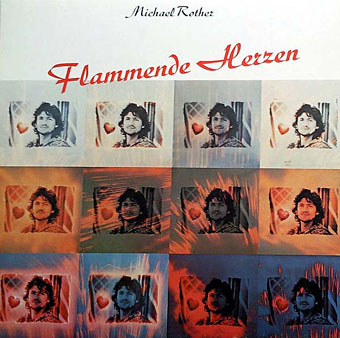
Flammende Herzen (1977) by Michael Rother.

Michael Rother’s first solo album was also his best after leaving Neu! The album is essentially a duet between Rother and Liebezeit, with Rother playing all instruments apart from the drums.
jaki04.jpg

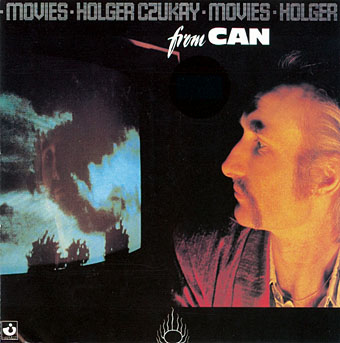
Oh Lord Give Us More Money (1979) by Holger Czukay.

In which Holger Czukay takes the Can song Hunters And Collectors, removes the vocals then extends and remixes the whole thing into a 13-minute collage blending the music with BBC sound effects and vocal samples taken from radio and TV. Samplers didn’t exist in 1979, this was all done with tape, and it’s incredible. I forget whether it was Jaki Liebezeit or Michael Karoli who said they didn’t recognise their playing afterwards (probably the latter) but Leibezeit’s drums sustain the entire piece. He also plays on the rest of the album. Movies is Czukay’s masterpiece, and more true to the questing, inventive spirit of Can than the albums the group made after Landed. Another track, Persian Love, samples Middle Eastern vocalists two years before My Life In The Bush Of Ghosts. Eno was paying attention.

Continue reading “Jaki Liebezeit times ten”

Weekend links 341

fountaingod.jpg

Fountain (1917) by R. Mutt (Marcel Duchamp), and God (1917) by Elsa von Freytag-Loringhoven.

• “What is there left to know about David Bowie? What is there left to unearth?” asks Ian Penman whose lengthy review of recent Bowie books is better by far than a shelf full of cash-in doorstops.

Strázci z hlubin casu is a collection of stories by HP Lovecraft and August Derleth from Czech publisher Volvox Globator. The book reprints artwork of mine on the cover and inside.

• Mixes of the week: Through December by David Colohan, At Alien Altars: A Conjurer’s Hexmas by Seraphic Manta, and Secret Thirteen Mix 204 by James Welburn.

• “Something vindictive resides in soot.” Timothy Jarvis on the weird fiction of Stefan Grabiński. From 2003: China Miéville on Grabiński.

• Paintings by Jakub Rozalski of eastern European peasants with mechas and werewolves.

Colm Tóibín on James Joyce’s A Portrait of the Artist as a Young Man, 100 years on.

Jesse Singal on why straight rural men (in the USA) have “bud-sex” with each other.

Mark Valentine recommends books on tasseography, or divination by tea leaves.

• “Northampton Calling: A Conversation with Alan Moore,” by Rob Vollmar.

Bill Schutt at Scientific American asks what human flesh tastes like.

Gwendolyn Nix on the Tritone, aka The Devil’s Musical Interval.

• At Dennis Cooper’s: _Black_Acrylic presents…Penda’s Fen Day.

• The latest Buddha Machine from FM3 is Philip Glass-themed.

Listen to The Wire’s top 50 releases of 2016

Tritone (Musica Diablo) (1980) by Tuxedomoon | Diabolus In Musica (1987) by The Foetus All Nude Review | Tritone (Musica Diablo) (2016) by Aksak Maboul

Weekend links 331

jacobsen.jpg

Ekeko (2016) by Jon Jacobsen.

Outer Space (1999), a short film by Peter Tscherkassky using reprocessed footage taken from The Entity (1982).

Pye Corner Audio playing live for 77 minutes at New Forms Festival, Vancouver 2016.

Salvador Dalí‘s rare Surrealist cookbook republished for the first time in over 40 years.

Keeping On Keeping On by Alan Bennett; extracts from the writer’s most recent diaries.

The Hagströmer Medico-Historical Library is a new source for free antique images.

• The shopfronts of independent Paris photographed by Sebastian Erras.

The Edge of the Ceiling (1980) is a short film about writer Alan Garner.

• Mix of the week: Secret Thirteen Mix 198 by Bestial Mouths.

Brenda S G Walter on eviscerating the body of Black Metal.

• “When did new age music become cool?” asks Geeta Dayal.

Barok Main, a new piece from Mica Levi & Oliver Coates.

• American gay magazine XY has been relaunched.

• Confessions of a vinyl junkie by David Bowie.

Touch Radio archive at the British Library.

Harvard’s collection of glass flowers.

Michelle Stuart‘s Magical Land Art.

Dali’s Car (1969) by Captain Beefheart & His Magic Band | Save Me From Dali (1980) by Snakefinger | Salvador Dali’s Garden Party (1989) by Television Personalities

Weekend links 326

schaechter.jpg

Anchoress by Judith Schaechter.

• The publication of Alan Moore’s Jerusalem is imminent so the NYT asked him about his favourite books and writers of the moment. For the next post I’ll be writing about my own involvement with Moore’s novel.

Chris Campion on David Bowie and the missing soundtrack: the amazing story behind The Man Who Fell to Earth. Related: cinematographer Anthony Richmond on his memories of shooting the film.

Mr Beatnick on how the B-side of Change The Beat by Beside became the most sampled song of all time.

Lisa Hix on An Un-Conventional Thirst: Collecting 7Up’s most beautiful, hallucinatory billboards.

Rub Out The Word: Steve Buscemi & Elliott Sharp present texts by William Burroughs.

• Opening next month at the Corridor Gallery, Brighton (UK): An exhibition of art by Ian Miller.

• Folk singer Shirley Collins will be releasing a new album, Lodestar, her first for over 35 years.

A trip to the mythical Isle of Tiki, Polynesian Pop and A/C Eden.

• Mix of the week: Harvest Hymns by Melmoth The Wanderer.

• Wandering In Space: composer Jherek Bischoff interviewed.

Heavy Water is a new short film by Adam Scovell.

• “When will New York sink?” asks Andrew Rice.

The World’s Largest Synthesizer

The Thai Occult by Jenx

• RIP Richard Neville

The Other Without

We Are Cult

Heavy Rock (1976) by Sound Dimension | Heavy Charm (1995) by The Ear | Heavy Water (2008) by Crackle

Weekend links 323

taylor.jpg

Mescaline Woods (1969) by Gage Taylor.

• The soundtrack to The Man Who Fell to Earth will be released for the first time next month in a double-disc set (CD & vinyl). This isn’t, as some people have hoped, David Bowie’s unheard music for the film, but a collection of the pre-existing songs and other pieces, plus the original compositions by John Phillips. Consequence of Sound has a track list.

• At Scream Addicts: Joe R. Lansdale talks about the only film adaptation of Shirley Jackson’s The Haunting of Hill House that you need to see: the 1963 version directed by Robert Wise.

• The new wave of new age: How music’s most maligned genre finally became cool by Adam Bychawski.

• Transmissions From The Abyss: Dark ambient music for the perfect headspace by S. Elizabeth.

Jason Farrago reviews Art Aids America, an exhibition at the Bronx Museum, New York.

Curse Go Back: a limited reissue of tape experiments by William Burroughs.

Samuel Wigley on Notorious at 70: toasting Hitchcock’s dark masterpiece.

Toyah Willcox remembers working with Derek Jarman on The Tempest.

• “Why are musicians so obsessed with David Lynch?” asks Selim Bulut.

• Read the original 32-page programme for Fritz Lang’s Metropolis.

David Parkinson chooses 10 essential films starring Oliver Reed.

• Mixes of the week: The Sounds of the Dawn NTS radio shows.

Keith Haring envisions Manhattan as a kingdom of penises.

Frank Guan on Massive Attack’s Blue Lines, 25 years on.

Honky Tonk Pts 1 & 2 (1956) by Bill Doggett | I’ve Told Every Little Star (1961) by Linda Scott | I’m Deranged (1995) by David Bowie