More CthulhuPress

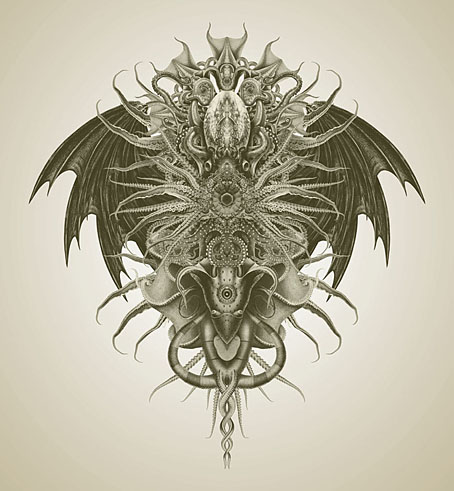
cthulhoid.jpg

Cthulhoid (2012).

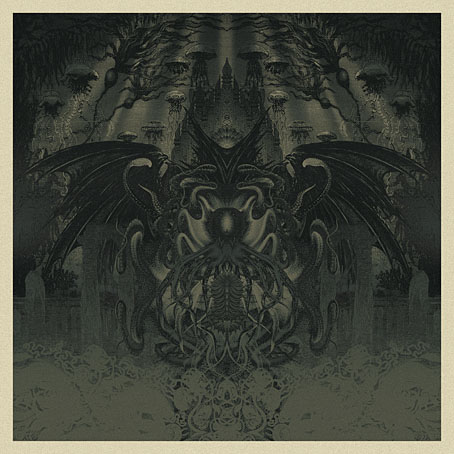
I finally found time this weekend to add these recent works to my CafePress shops so they’re now available as prints. I’ll add a few more products later on although not everything at CafePress suits either square images or work with large amounts of detail. Click on the pictures for the links.I don’t think I’ve mentioned before that Cthulhoid will soon be appearing soon on the cover of a Lovecraftian fiction collection edited by ST Joshi. The book is A Mountain Walked: Great Tales of the Cthulhu Mythos from Centipede Press. I haven’t been given a publication date yet but it’ll probably be out early next year.

And do I need to say for the fifth or sixth time that these pictures are also a part of this year’s Cthulhu Calendar? They are. Thanks to everyone who’s bought a copy so far.

deprofundis.jpg

De Profundis (2012).

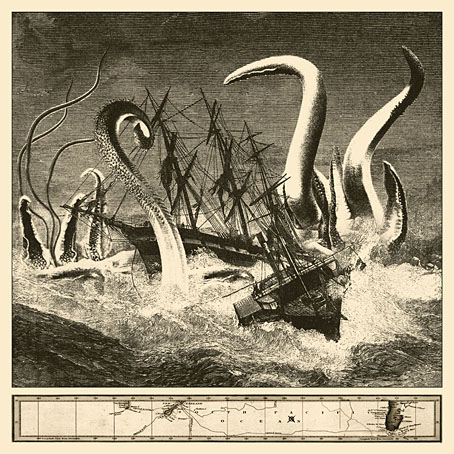
tentaclelatitudes.jpg

S. Latitude 47°9?, W. Longitude 126°43? (2012).

Previously on { feuilleton }
Cthulhu Calendar
S. Latitude 47°9′, W. Longitude 126°43′
Resurgam variations
De Profundis
Cthulhoid and Artflakes
Cthulhu for sale
Cthulhu God
Cthulhu under glass
CthulhuPress
Cubist Cthulhu

Weekend links 132

janini1.jpg

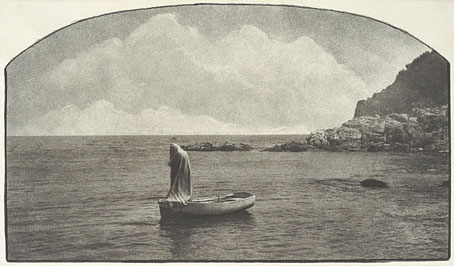
La Hora del Fantasma (no date) by Joaquim Pla Janini.

• Many of the art links featured here are tips from Thom Ayres, so it’s only right to point to his new album project which he’s funding through Kickstarter and embellishing with his own nature photography.

• Anne Billson is another writer beguiled by Philippe Jullian’s masterwork, Dreamers of Decadence. And thanks to Ms Billson for drawing attention to the insane opening of Crime Without Passion (1934).

• Does this fake ad for The Necronomicon use one of my Cthulhu pictures? Possibly. Get the picture for yourself in this year’s Cthulhu calendar. (My thanks to everyone who’s bought a copy so far.)

To break the ice, I talk about books: he is delighted to discover that I have read his beloved Denton Welch, also J. W. Dunne’s An Experiment With Time. I have found them in my old school library, and know both have been a tremendous influence on him in different ways. Knowing of his interest I also mention that I have just read Colin Wilson’s The Quest For Wilhelm Reich, published the year before. He likes Wilson, he says, jokes that “the Colonel” with his cottage in Wales in Wilson’s Return of the Lloigor and his own Colonel Sutton-Smith from The Discipline of DE are one and the same. On something of a roll, I mention Real Magic by Isaac Bonewits, and he acknowledges that it has “some good information” – but is much more enthusiastic about Magic: An Occult Primer by David Conway [years later I would discover that Burroughs & Conway had in fact exchanged letters on various subjects pertaining to magic, occultism, and psychic phenomena – but that is decidedly another story!]

Matthew Levi Stevens recalls The Final Academy and an encounter with William Burroughs thirty years ago.

Locomotif: A short survey of trains, music & experiments: Gautam Pemmaraju on Kraftwerk, Pierre Schaeffer, Luigi Russolo and others.

A flip-through of The Graphic Canon, volume 2. Wait to the end and you’ll see a couple of my Dorian Gray pages. Imprint has a review of the book.

• Julian Bell reviews two new books about Romantic painter Caspar David Friedrich.

Alan Moore talks to The Occupied Times about art, education and anarchism.

• Colin Dickey reviews Vilém Flusser’s Vampyroteuthis Infernalis: A Treatise.
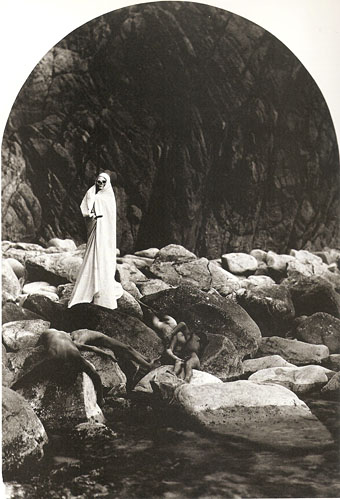
janini2.jpg

Las Parcas II (1930) by Joaquim Pla Janini.

• Michael Newton reviews A Natural History of Ghosts by Roger Clarke.

• Golden Age Comic Book Stories revisits the work of Sidney Sime.

Front Free Endpaper asks “What’s in an inscription…?”

Mormon Missionary Positions

Amateur Aesthete

Ghosts (1981) by Japan | Ghosts (2008) by Ladytron | Ghosts (2012) by Monolake.

Tentacles #5: Art Nouveau

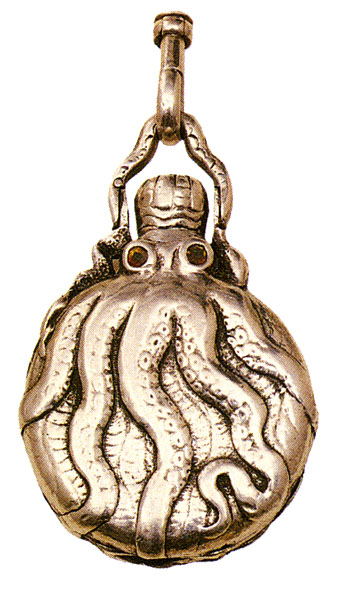
watch.jpg

Fob watch (c. 1890) made by Gorham for Tiffany.

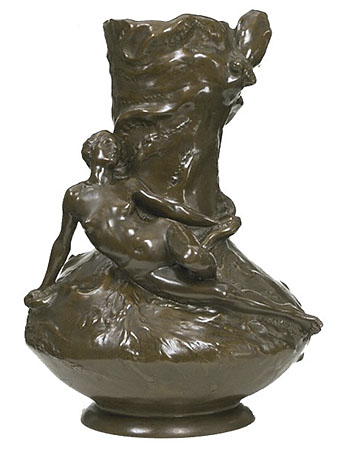
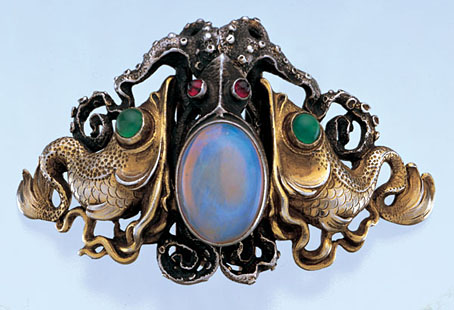
Concluding a week of tentacular posts. I was tempted to do something about tentacle porn but that subject has already been covered here, and besides, there’s rather a lot of it around these days. Given the writhing nature of octopus limbs you’d expect there to be far more octopoid Art Nouveau design than there is. The Art Nouveau style was exceptional in allowing the octopus to become a design motif, probably the first time in Western Europe the animal had been given its decorative due since the Ancient Greeks, Minoans and other Mediterranean civilisations used it to pattern dishes and vases. The remoteness of the animal is no doubt one reason it was shunned for so long in northern countries: British sailors used to refer to octopuses as “devil-fishes”, a term that appears in William Hope Hodgson’s fiction. Octopuses in Europe weren’t part of the general culture the way they are in Japan. It took the appearance of Ernst Haeckel’s Kunst-Formen der Natur, published from 1899 to 1904, to bring the aesthetic attractions of the stranger varieties of marine life to a wide audience.

ledru.jpg

The Prey (1895), bronze by Auguste Ledru.

vignette.jpg

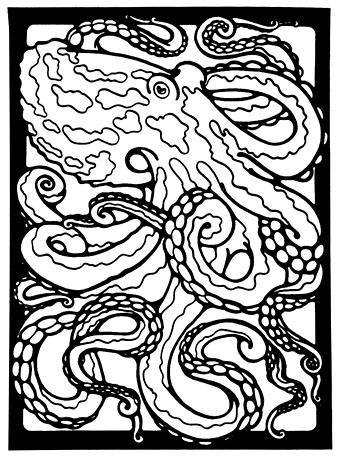
From Animal Vignettes (c. 1900)

rothmuller1.jpg

Buckle in silver, gilt, opal, garnet, chalcedony (c. 1900) by Karl Rothmüller.

Continue reading “Tentacles #5: Art Nouveau”

Tentacles #4: Cthulhu in Poland

vesper1.jpg

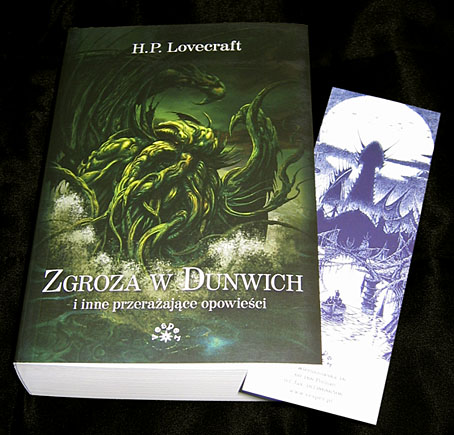
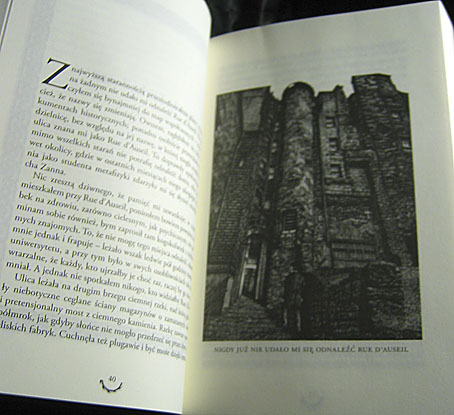
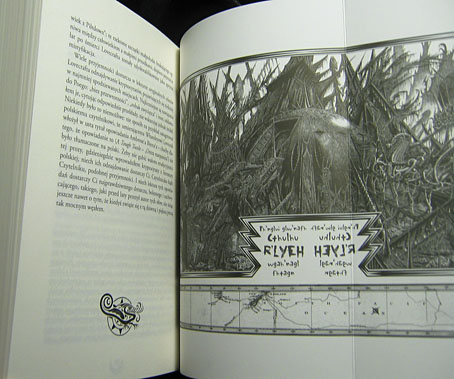
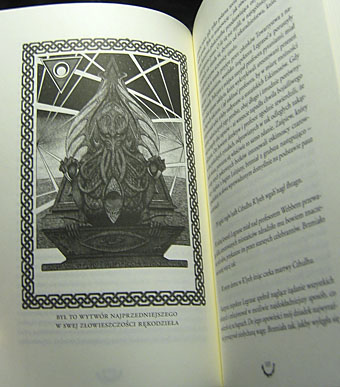
Several months ago Polish publisher Vesper asked to use some of my Lovecraft art for a Polish collection of the author’s work. Their weighty paperback just happened to arrive during this tentacle-themed week, an event which also gives me an opportunity to mention again (how could I not?) that two of these pieces can be found in the new Cthulhu Calendar. An ideal Halloween gift! Breaks the ice at eldritch parties! Etc. By coincidence I also received a book this week about vampire squid but I’ll say more about that after I’ve had a chance to read it.

vesper4.jpg

Despite Cthulhu being on the cover, the title of the book is (according to Google) The Dunwich Horror and Other Scary Stories which is no doubt a better sell with “horror” being up front. There are only fifteen stories but the page count runs to 792 since most of them are the later, longer works, including the entirety of At the Mountains of Madness and The Case of Charles Dexter Ward. A number of my illustrations are used within, one of which—the drawing of Advocates’ Close in Edinburgh which first appeared in The Haunter of the Dark—gets repurposed as an illustration for The Music of Erich Zann (above). Quite a fitting use, I think.

vesper2.jpg

In addition you also get my widescreen view of R’lyeh as a spread on the inside of the French flaps. And my copy came with a nice R’lyeh bookmark. Those interested can order the book here.

vesper3.jpg

Elsewhere on { feuilleton }
The Lovecraft archive

Tentacles #1: The Boats of the ‘Glen Carrig’

boats-1945.jpg

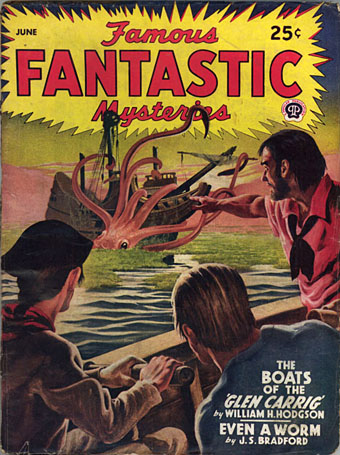
Famous Fantastic Mysteries, June 1945. Illustration by Lawrence (Sterne Stevens).

Following last week’s revelation of Lovecraftian horror, I thought it might be worth demonstrating just how much the tentacle-menacing-a-ship scenario is owned by William Hope Hodgson. The Boats of the ‘Glen Carrig’ (1907) is one of Hodgson’s lesser novels, overshadowed by the cosmic horrors of The House on the Borderland and The Night Land, but it’s a memorable work all the same. The narrative fits into his cycle of Sargasso Sea stories: a small band of 18th-century sailors, survivors of the wreck of the ‘Glen Carrig’, drift across the Atlantic into the weed-strewn “cemetery of the oceans” where they have to fight off giant octopuses and the predations of “weed men”, humanoid creatures with tentacular hands. As will be seen below, it’s the attack on a wrecked ship trapped in the weed that many of the illustrators have chosen to focus on.

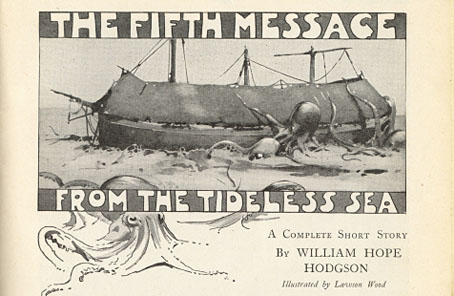
tideless-1911.jpg

Illustration by Lawson Wood (1911).

This was something I hadn’t seen before: an illustration for a story with a scenario very similar to ‘Glen Carrig’ where the sailors journey under canvas in their lifeboats. Another tale of the sinister Sargasso:

This is the fifth message that I have sent abroad over the loathsome surface of this vast Weed-World, praying that it may come to the open sea ere the lifting power of my fire-balloon be gone, and yet, if it come there, how shall I be the better for it? Yet write I must, or go mad, and so I choose to write, though feeling as I write that no living creature, save it be some giant octopus that lives in the weed about me, will ever see the thing I write. (more)

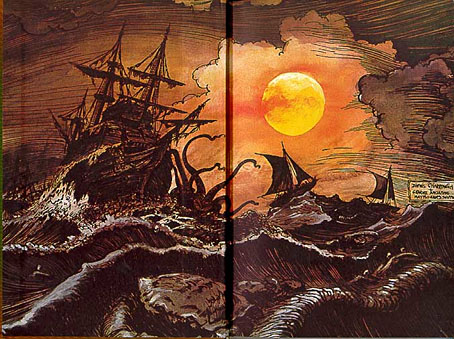
boats-1971-1.jpg

Les Canots du “Glen Carrig” / La Maison au bord du monde / Les pirates fantômes (1971). Illustration by Philippe Druillet.

A French Hodgson collection, the octopoid cover of which can be seen here. These were the endpapers; the rest of Druillet’s illustrations can be seen here.

Continue reading “Tentacles #1: The Boats of the ‘Glen Carrig’”