Pink Narcissus: James Bidgood and Tuxedomoon

tuxedomoon.jpg

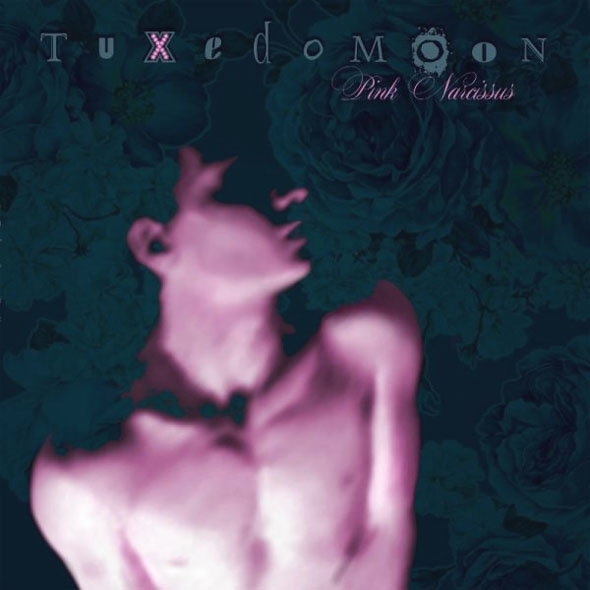
Pink Narcissus (2014) by Tuxedomoon. Design by Flavien Thieurmel.

I’ve never paid much attention to Record Store Day, despite promoting it here on a couple of occasions, and paid even less attention this year now that the event has turned into an opportunity for some of the larger labels to fleece the punters. Consequently, I missed any mention of a new release from Tuxedomoon which Crammed Discs put out as part of this year’s vinyl deluge. I’ve been listening to Tuxedomoon for years so any new release is worthy of attention, especially when their last studio album, Vapour Trails (2007) was a particularly good one, with the added bonus of packaging by Jonathan Barnbrook.
bidgood.jpg

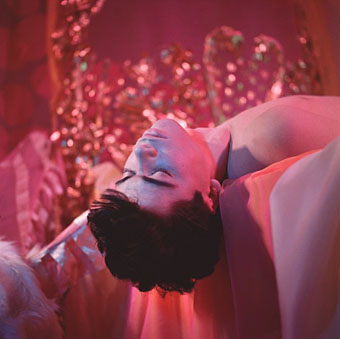
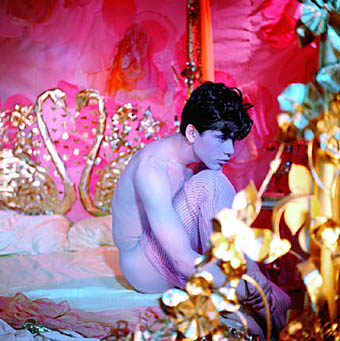
Hanging Off Bed, a still from Pink Narcissus, mid- to late 1960s.

The new album, Pink Narcissus, is a recording of the group’s live soundtrack performance for the film of the same name by James Bidgood, a luscious micro-budget, homoerotic labour-of-love filmed in the 1960s on 8mm in the cramped confines of Bidgood’s New York apartment. The original soundtrack comprises selections of romantic classical music by Mussorgsky and Prokofiev so the replacing of the score isn’t as much of an imposition as it can be when bands co-opt old films. I already liked Bidgood’s film a great deal so Tuxedomoon’s score is like a marriage made in heaven (and they once recorded their own version of In Heaven). Having watched the film synched to the new album I was impressed by how well the group matched the shifting moods. From their earliest releases Tuxedomoon’s music has tended towards the cinematic so you’d expect them to provide a sympathetic treatment; they’ve also recorded a few scores in the past, including one for their own ambitious film/stage performance, Ghost Sonata. But Pink Narcissus matches the scenes much more effectively than the classical selections, the group even work in a pause then a shift to a new style when Bidgood’s star boy, Bobby Kendall, puts a record on his wind-up gramophone. The only drawback in running the music with the film is that the album is 10 minutes short, possibly because of the limitations of the vinyl format. YouTube user bigniouxx has a few brief clips of the live performance at the L’Etrange Festival in Paris.
bidgood2.jpg

Blue Boy, a still from Pink Narcissus, mid- to late 1960s.

If the BFI ever reissues the film I hope they consider using the full Tuxedomoon score as an alternative soundtrack the way they did on the Peter de Rome porn films, some of which are scored by Stephen Thrower. Bidgood’s film is still available on DVD with a detailed booklet and a great interview with the director; the BFI also has it on their video-on-demand service. Despite its age and its campy glamour Pink Narcissus is still pretty pornographic in places, not as much as Peter de Rome’s films (or today’s porn, for that matter) but there’s enough wanking and erections to keep it off many TV networks. The album, housed in a great sleeve designed by Flavien Thieurmel, may be bought direct from Crammed Discs.

James Bidgood’s photography at ClampArt

Previously on { feuilleton }
William E. Jones on Fred Halsted
Flamboyant excess: the art of Steven Arnold
James Bidgood

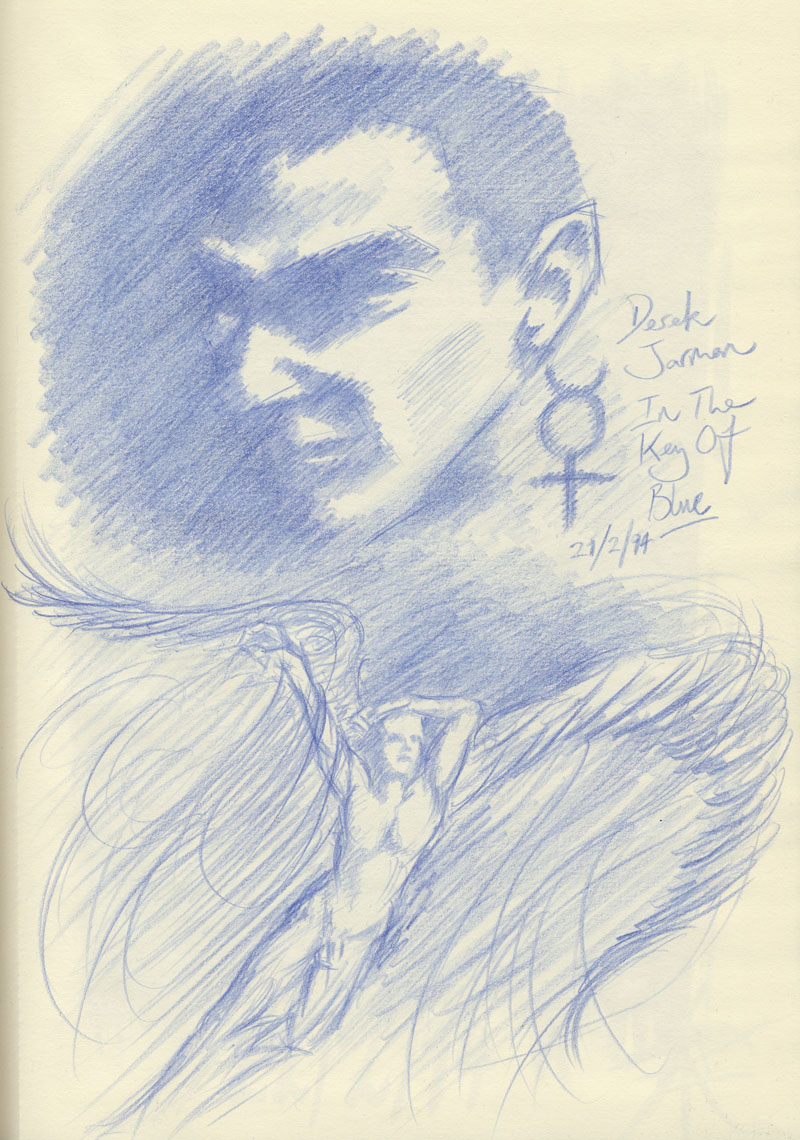
Derek Jarman In The Key Of Blue

jarman.jpg

Derek Jarman died 20 years ago today. I was keeping a sketchbook at the time, something I’ve seldom bothered with before or since, and this was my reaction to the news a couple of days later, possibly drawn whilst watching one the TV documentaries which were being screened at the time.

Some current news items:
England’s alchemist, a piece by Philip Hoare
Unseen nightclub film to get London premiere
‘So Mum covered me in cooking oil. Then Dad came home’
Queer Pagan Punk, a season of films by Jarman and others, is currently running at the BFI Southbank.

Previously on { feuilleton }
The Dream Machine
Jarman (all this maddening beauty)
Sebastiane by Derek Jarman
A Journey to Avebury by Derek Jarman
Derek Jarman’s music videos
Derek Jarman’s Neutron
Mister Jarman, Mister Moore and Doctor Dee
The Tempest illustrated
In the Shadow of the Sun by Derek Jarman
Derek Jarman at the Serpentine
The Angelic Conversation
The life and work of Derek Jarman

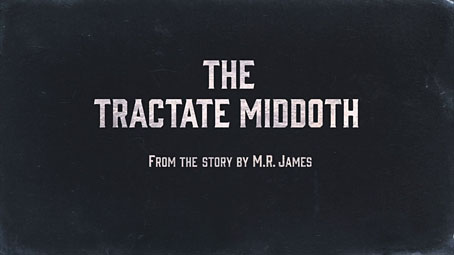
The Tractate Middoth

tractate1.jpg

The recent interest in the BBC’s Ghost Story for Christmas series has been a thing of mixed blessings, as is often the case when nostalgia fuels a reappraisal. On the one hand aficionados such as myself no longer have to hoard and swap rare tapes or video files now that the BFI has made all the films available on DVD; the interest in those films, and in similar works, has had the additional benefit of resurrecting related TV dramas and series such as Dead of Night (1972), and Leslie Megahey’s exceptional Schalcken the Painter (1979).

On the debit side, the revival of the series in 2005 has been a patchy affair, with results ranging from the very good (A View from a Hill), to the not-so-bad (Number 13), to the disgracefully bad (the 2010 adaptation of Whistle and I’ll Come to You). All these dramas continue the tradition of adapting stories by MR James, a writer whose work is now the first choice for any future stories in the series, and whose oeuvre overshadows that of other possible candidates for adaptation. Whether this last development is a good or bad one depends on your view of James’s fiction.

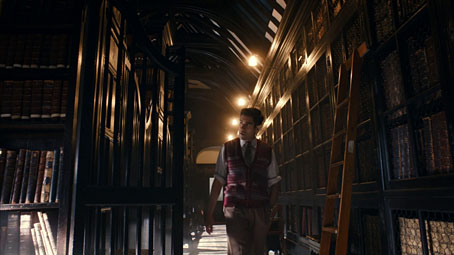
tractate2.jpg

Sacha Dhawan among the dusty tomes.

This year we had a new James adaptation, The Tractate Middoth, written and directed by Mark Gatiss, followed by an hour-long documentary about MR James which Gatiss presented. Gatiss and his League of Gentlemen colleagues have been vocal in their enthusiasm for the British film and television ghost story, and for its literary antecedents: last year the team contributed a commentary track to the recent reissue of Blood on Satan’s Claw; League writer Jeremy Dyson has an essay in the BFI’s DVD/BR release of The Innocents; Reece Shearsmith has recorded several readings of Robert Aickman’s superb short stories; Dyson directed, and Gatiss acted in, The Cicerones (aka The Guides, 2002), an adaptation of an Aickman story. The latter was well-intentioned but a short running time combined with a very literal transcription of Aickman’s ambiguities made for a disappointing end result. The Cicerones made me apprehensive for what we might see with The Tractate Middoth but I’m pleased to report that all concerns were unfounded: Gatiss’s film is not only the best MR James adaptation since The Ash Tree (1975) but is the best film in this series since The Signalman in 1976. (Although Schalcken the Painter was screened during Christmas 1979 it wasn’t intended as a continuation of the Christmas ghost stories.) This bodes well for the future of the series, and confirms the importance of having a writer and director with a sympathy for the material.

Continue reading “The Tractate Middoth”

Weekend links 191

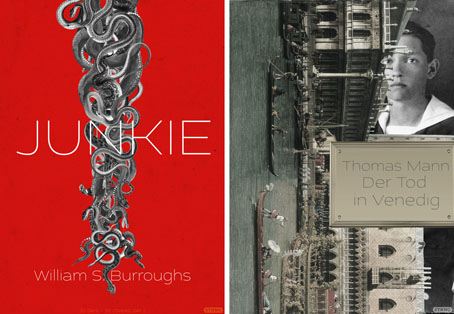
strongowski.jpg

Two cover designs from Eliash Strongowski’s 30 Days—30 Covers project.

My thanks once again to Dennis Cooper for placing this blog on his end-of-year lists. Meanwhile. one of the albums I designed earlier this year, Cold Mission by Logos, made the 30 Best Album Covers of 2013 list at FACT.

• “Many of their more outlandish ideas never saw fruition: an organ powered by an entire factory, an electro-acoustic orchestra mounted on a fleet of airplanes.” Colin McSwiggen reviews Sound in Z: Experiments in Sound and Electronic Music in Early 20th Century Russia by Andrey Smirnov.

Queer Pagan Punk, a major film retrospective of the work of Derek Jarman, will take place in February and March 2014 at the BFI Southbank, London.

• “For over forty years, Iain Sinclair’s work has combined obsessive myth-making with urban despair. But what do we know about him?” asks Fatema Ahmed.

• “Rather than trying to intercept alien communications, perhaps we should go looking for alien artefacts.”

• Mix of the week: Radio Belbury Programme 12, and Winter Hours, the Cafe Kaput 2013 winter mix.

BEEP BEEP. BLOOP BLEEP: Road Runner cartoons soundtracked by a Eurorack synthesizer.

Historia Discordia: Documenting the Origins, History & Chaos of the Discordian Society.

gebbie.jpg

Pink Boy by Melinda Gebbie.

Suffered From The Night: Queering Stoker’s Dracula edited by Steve Berman.

• At Dangerous Minds: An interview with soundtrack composer Cliff Martinez.

Sarah Schoenfeld puts recreational drugs under the microscope.

• Powerplant Art-déco, a set of photos by Romain Veillon.

Adrian Curry chooses the best film posters of 2013.

Portent’s Content Idea Generator

Tarkovsky at Pinterest

The Sea Named Solaris (1977) by Tomita | Is That What Everybody Wants? (2002) by Cliff Martinez | Reyja (2011) by Ben Frost & Daníel Bjarnason

Weekend links 190

lipton.jpg

Seam Stress (1987) by Laurie LiptonThe Drawings of Laurie Lipton is out now from Last Gasp.

• The Quietus continues to be essential reading: John Doran talks to Richard H Kirk about Cabaret Voltaire | Sarah Angliss, musician and inventor of music machines, talks to Stuart Huggett | “…the most overt literary lodestar for The Art Of Falling Apart is John Rechy, trailblazing chronicler of the gay underbelly of hustlers and queens zig-zagging across America, and author of Numbers, the book from which Soft Cell’s song takes its name.” Matthew Lindsay looks back at Soft Cell’s second (and best) album.

• “The English have something of a tradition where they like to scare you out of your mind at Christmas, a kind of sobering up of the senses by forces that seem to be beyond them.” Colin Fleming on The Signal-Man by Charles Dickens. More ghosts: Lisa Kerrigan explains why she loves Nigel Kneale’s 1989 TV adaptation of The Woman in Black by Susan Hill, and the BFI resurrects The Mistletoe Bough (1904), “the oldest film version of a classic Christmas ghost story”.

• “…the story is filled with a whole mess of embarrassed and embarrassing euphemisms for (ahem) big dick—stiff language, so to speak, like ‘bludgeon,’ like ‘giant concupiscence’ and ‘ostentatious organ.'” Steven Cordova on A Visit to Priapus and Other Stories by Glenway Wescott.

• “Never produced, the screenplay for The Way to Santiago is credited to Orson Welles. A quick look at the text leaves no doubt it was the work of the Citizen Kane filmmaker when he was at the peak of his arrogant brilliance. The script begins: ‘My face fills the frame.'”

• If you’re at all interested in the current state of the British musical underground, the end-of-year lists at Ears For Eyes are worth your attention.

Pee-wee’s (Remastered) Christmas Adventure: An interview with Paul Reubens. Related: Grace Jones sings Little Drummer Boy for Pee-wee.

• “I’m like a drag queen at Halloween.” John Waters on his favourite time of year: Christmas.

• Mix of the week: Secret Thirteen Mix 099, an “(anti)Christmas mix” by Robert Curgenven.

• The British Library makes over a million free-to-use images available at Flickr Commons.

• Lost in Translation: Notes on adapting Ballard by Calum Marsh.

MR James at Pinterest.

Book Map by Dorothy.

Martin (1983) by Soft Cell | Ghost Talk (1985) by Cabaret Voltaire | For Laika (2011) by Spacedog