Weekend links 91

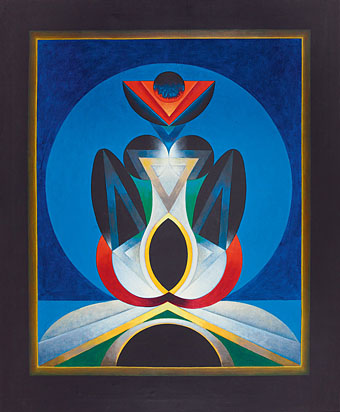
santosh.jpg

Untitled (1978) by GR Santosh at 50 Watts.

Evertype Publishing produces a range of Lewis Carroll special editions including Ailice’s Àventurs in Wunnerland (a translation in Scots), Alicia in Terra Mirabili (a Latin version), and an edition printed in the Nyctographic Square Alphabet devised by Carroll.

• This week’s bookshop animations: Type Books, Toronto presents The Joy of Books while at Shakespeare and Company, Paris, Spike Jonze and Simon Cahn explore the erotic life of book covers in Mourir Auprès de Toi.

• Invisible Girls and Phantom Ladies, a 1982 article on sexism in (US superhero) comics by Alan Moore. Thirty years on, things haven’t improved much at all.

I reread it now, 35 years later, and I am struck by its capacity to change like a magic mirror. Where I had originally seen it as a book about writing, about becoming a writer, I now see it as a book about reading, about taking one’s place in the chain. Where I once assumed it was a book about eternal youth, I now see it as a book about growing up, about learning to live.

Tilda Swinton on Virginia Woolf’s Orlando

Dark Water, Lovecraftian carpet designs (yes, carpets) by Kirill Rozhkov. Danish carpet manufacturer Ege has a catalogue showing the finished products.

Neil Gaiman ventures into the treacherous labyrinth of M. John Harrison’s Viriconium.

Nicholas Lezard reviews The White People and Other Weird Stories by Arthur Machen.
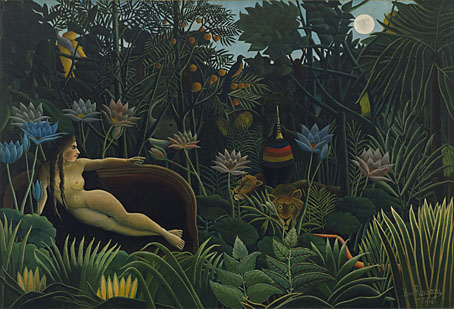
rousseau.jpg

The Dream (1910) by Henri Rousseau at the Google Art Project.

• Reassessing the Saul Bass and Alfred Hitchcock Collaboration by Pat Kirkham.

• Getting There Too Quickly: Peter Bebergal on Aldous Huxley and Mescaline.

Hidden in the Open: A Photographic Essay of Afro-American Male Couples.

Filles En Aiguilles, a new musical work by Schütze+Hopkins.

RubiCANE’s Erotic Illustrations.

Laurie Anderson has a Godplex.

Alan Bennett on Smut.

The Jungle Line (1975) by Joni Mitchell | The Jungle Line (1981) by Low Noise (Kevin Armstrong, Thomas Dolby, JJ Johnson & Matthew Seligman) | The Jungle Line (2007) by Herbie Hancock with Leonard Cohen.
Weekend links 37

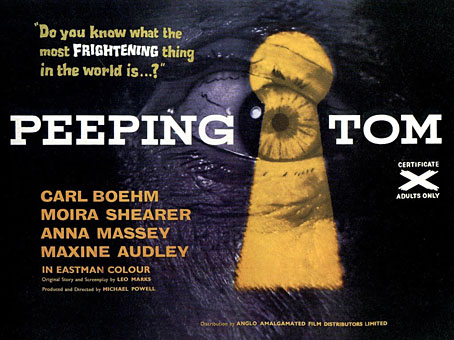
peeping.jpg

Michael Powell’s Peeping Tom is fifty-years old this year, an occasion celebrated with a limited UK cinema run and a reissue on Blu-ray and regular DVD. This was the film which famously ended Powell’s career as a director in Britain for reasons which have never been quite clear. Was the film’s critical vilification the culmination of an impatience with the director’s alleged excesses over the years? Was it an unarticulated discomfort at the way Powell and screenwriter Leo Marks implicated themselves and the audience in the sordid murders they (we) were watching in the dark? Or was the film withdrawn simply because producer Nat Cohen wanted a knighthood and was worried over his reputation as a peddler of “filth”? The bitterest blow for Powell would have been seeing his long-time rival Alfred Hitchcock have another success a few months later with Psycho, a film which allows its audience similar female-slaughtering thrills without questioning the role of the viewer in sustaining the drama. Hitchcock spent much of his career “punishing” women in a manner that verges on outright misogyny yet was indulged all along by audience and critics; Powell made a single film about a murderer and was himself punished for it. His other films often featured strong female characters, and I’ve long regarded him as the superior artist.

The Guardian this week celebrated Powell’s film with a number of articles: Peeping Tom may have been nasty but it didn’t deserve critics’ cold shoulder, Peeping Tom, pornography and the press, The Peeping Tom timebomb.

A Wizard of Earthsea: an unfilmed screenplay from 1983 by Michael Powell and Ursula K Le Guin based on Le Guin’s first two Earthsea novels.

1860.jpg

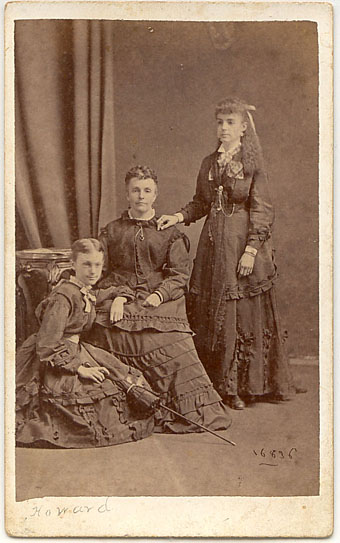
A boy in a dress with mother and sister, 1860. Yesterday was the 12th Annual Transgender Day of Remembrance.

Quaintance by Reed Massengill and Dian Hanson, in which the pioneer of 20th century beefcake art gets the heavyweight Taschen treatment. Expensive but they’re making these volumes for obsessives. Related: Hide/Seek: Difference and Desire in American Portraiture, an exhibition of gay and lesbian art at the Smithsonian’s National Portrait Gallery. The gallery has a preview of the exhibition here. On a more humble level, BUTT magazine has a recreation of Quentin Crisp’s inevitably messy New York City apartment.

• From gay art to gay song and dance: Queer To The Core!: Queer Rock From The Vaults! Super-rare novelty singles with titles like Queer Police by Billy Devroe and The Devilaires. Meanwhile Cleveland Street: The Musical is a forthcoming stage celebration of Victorian London’s notorious male brothel. By Glenn Chandler, creator of the popular TV detective series Taggart (!) whose earlier musicals have titles like Boys of the Empire and Scouts in Bondage.

pejic.jpg

Strikingly androgynous male model Andrej Pejic photographed by Armin Morbach. There’s a lot more Andrej Pejic at Homotography.

Thrilling Wonder Stories II, “eight hours of architectural futurism featuring an unbelievable line-up of novelists, game designers, animators, scientists, comic book artists, architects, and more”. At the Architectural Association, London, November 26.

• “The iPad is one of the oldest things in the world…a pad or a slate.” Artist Tom Phillips reworks A Humument for a new medium. Related: Creating new books from old, in which Jonathan Safran Foer follows Phillips’ lead by cutting words from Bruno Schulz’s Street of Crocodiles to create a new work, Tree of Codes.

• “Technology is turning us into switchboard operators in the communication networks of our own lives.” I know the feeling. Rick Poynor on the seductive tyranny of design technology.

• Comic artist Moebius gets the Tumblr treatment. And speaking of Tumblr, my thanks to everyone who’s been reblogging the Cephalopod Bride.

Skull Comics, 1970–72, at Golden Age Comic Book Stories. Underground artists excavate Lovecraftian horrors, among other things.

The lost town of Dunwich.

The Bells of Dunwich (1975) by Stone Angel | Dunwich Beach, Autumn, 1960 (1982) by Brian Eno.

Polish posters: Freedom on the Fence

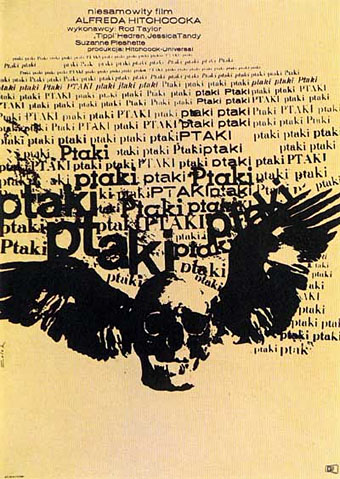
ptaki.jpg

Poster for Alfred Hitchcock’s The Birds, designed by Bronislaw Zelek (1965).

Freedom on the Fence is a 40-minute documentary film by Andrea Marks about the history of the Polish poster which includes a look at the many unique cinema and theatre designs produced in the 1960s and ’70s. Marks spent ten years working on this short film, interviewing many of the artists responsible for designs such as the one above. While searching around for links I came across a brief interview with {feuilleton} favourite Franciszek Starowieyski who died in February.

As to the current state of the art form in Poland, Marks has this unsurprising but still dispiriting note:

The Polish government no longer finances most cultural events; theatres cannot afford to publish artistic posters, and the idea of a film as an excuse to make a poster has vanished. Ironically, although the climate of Communism was a good ground for creating posters, the freedom of a free market society has resulted in a more restrictive climate for the creation of powerful posters. The art form is forever changed. A few concerned collectors and publishers, such as Krzysztof Dydo and Edmund Lewandowski, are attempting to keep the art form alive by commissioning and publishing new works, but their efforts alone will not overcome the situation. It is hoped that an outside appreciation of pre-1980s poster design history in Poland will ultimately help to encourage the government and private interests to commission more posters from Polish artists.

Freedom on the Fence is due to be released on DVD later this year.

An interview with the director

Previously on { feuilleton }
The Robing of The Birds
Franciszek Starowieyski, 1930–2009
Czech film posters

The Robing of The Birds

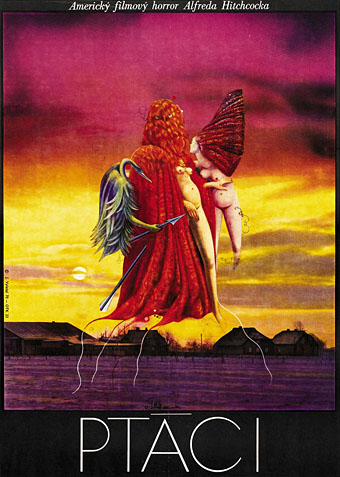
birds.jpg

Yet another of those curious Eastern European film posters which, to our Hollywood-colonised eyes, seem to violate all the conventions of cinema marketing. This example is a painting by Josef Vyletal for a 1970 Czech release of Alfred Hitchcock’s The Birds. Surrealist art enthusiasts will immediately identify the floating figures as being cut loose from Max Ernst’s The Robing of the Bride (1940). Compared to some Czech and Polish posters, the associations here aren’t so surprising; Ernst identified his alter-ego as a bird-headed individual named Loplop. Birds and bird-headed humans recur throughout his work. Hitchcock, meanwhile, famously commissioned Salvador Dalí to design the dream sequences in Spellbound (1945). One of Ernst’s few appearances as an actor is in Hans Richter’s Dreams That Money Can Buy (1947) a very Surrealist film which also features scenes informed by Ernst’s work. It’s a shame more directors didn’t take the opportunity to employ these talents while they were still alive.

Previously on { feuilleton }
Ballard and the painters
Franciszek Starowieyski, 1930–2009
Czech film posters
Hitchcock on film
Judex, from Feuillade to Franju
Impressions de la Haute Mongolie revisited
Dalí and Film