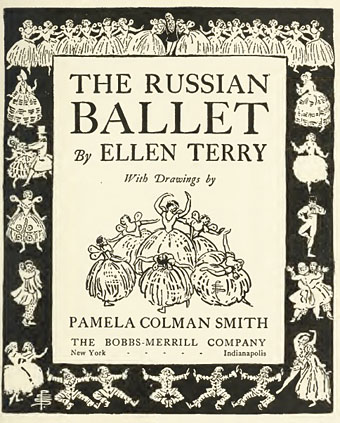
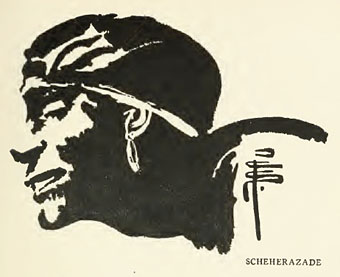
Another chance find at the Internet Archive. This small book from 1913 is an appraisal of Diaghilev’s Ballets Russes written by noted actress Ellen Terry and with illustrations—which Archive.org doesn’t mention—by Pamela Colman Smith, an artist whose Tarot designs are some of the most successful ever created yet who received little credit for her work while she was alive. It’s a shame that the Internet Archive perpetuates this state of affairs despite her name on the book’s title page. This is a fascinating set of ink sketches all of which are marked by the distinctive monogram familiar from her Tarot cards. One of the drawings in the book is also marked by an obscene doodle; I’ll leave it to the curious to discover which one.
Into the Media Web by Michael Moorcock
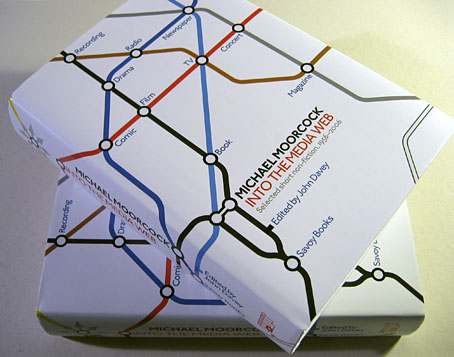
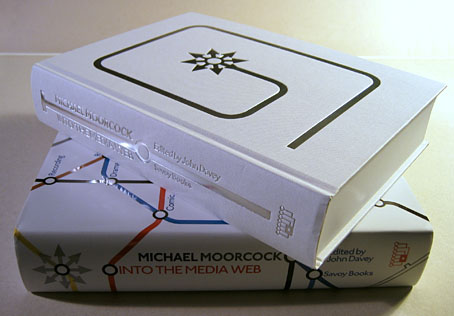
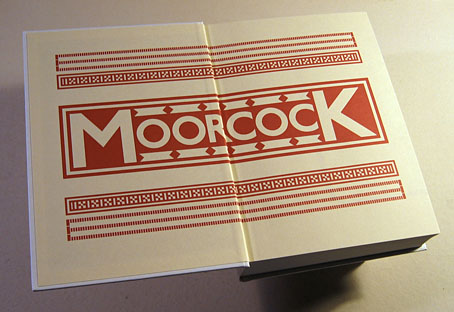
Here at last is the book I spent a good part of last year designing. Into the Media Web is a huge volume as befits a huge talent, 720 pages of Michael Moorcock’s non-fiction spanning fifty years of his career from his days writing for sf and fantasy fanzines, through to journalism, reviews and articles for major newspapers and magazines. Moorcock expert John Davey did an amazingly thorough job of compiling, editing and annotating it all, and it’s been a considerable pleasure to design such an important collection. Alan Moore provided the substantial introduction. Savoy Books haven’t announced a price yet but it’s going to be about £45 since it’s another limited edition and weighs a ton. Into the Media Web makes a fine companion to last year’s The Best of Michael Moorcock from Tachyon, also edited by John Davey (with Ann & Jeff VanderMeer) and whose interior I also designed. Details about Into the Media Web‘s design follow below.
The dust jacket is matt white with a spot UV layer which picks out the titles and lines in gloss.
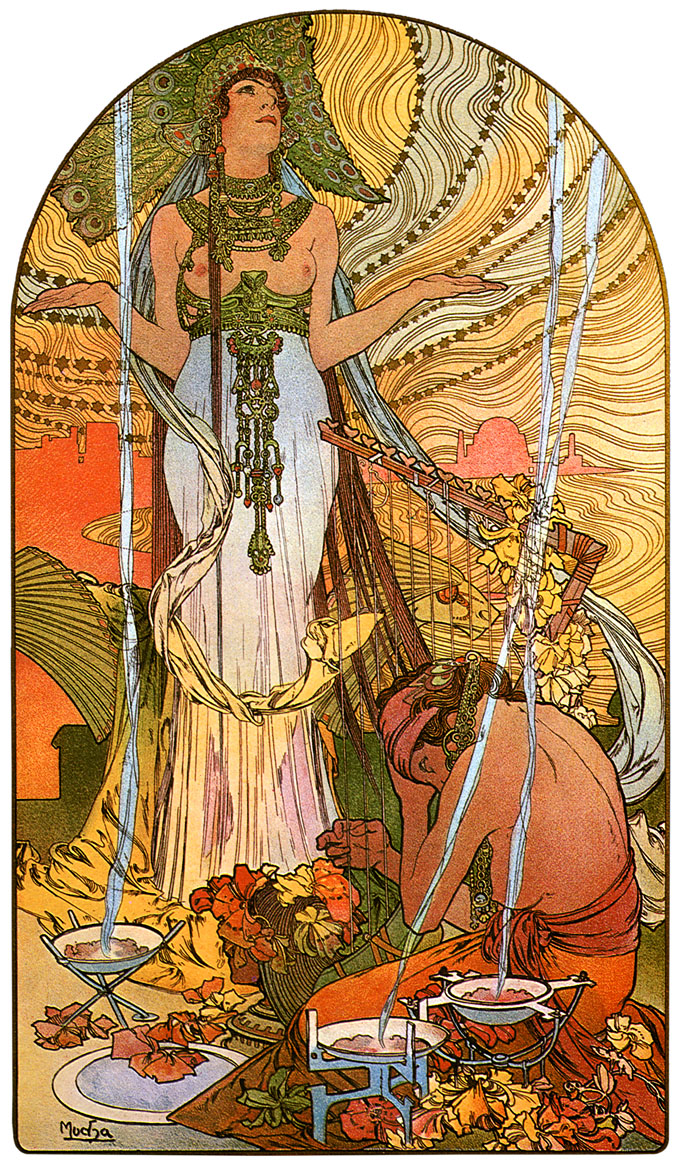
Salammbô illustrated
Salammbô by Alphonse Mucha (1897).
Alphonse Mucha’s gorgeous rendering of Flaubert’s Carthaginian heroine isn’t included in the many illustrated editions at this Salammbô site but plenty of other adaptations are. Examples range from faithful renderings by George Rochegrosse and Mahlon Blaine to drawings which are less successful or even downright bad. Also included are panels from Philippe Druillet‘s bizarre science fiction adaptation from the 1980s, a version which is often closer to Frank Herbert than Gustave Flaubert although many of the compositions are striking. One of these was used for a sleeve illustration by Richard Pinhas on his excellent East West album in 1980. And by coincidence, Druillet’s site mentions a forthcoming exhibition of his Salammbô nudes at the Galerie Pascal Gabert on May 20th.
Elsewhere on { feuilleton }
• The album covers archive
• The illustrators archive
Previously on { feuilleton }
• The art of Mahlon Blaine, 1894–1969
• Druillet meets Hodgson
• The music of Igor Wakhévitch
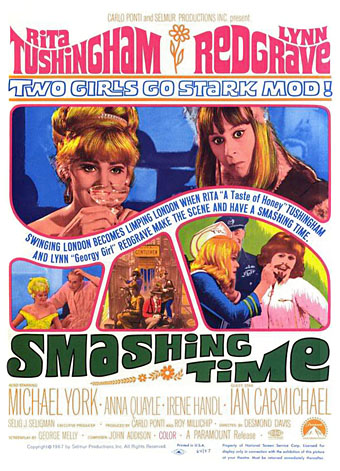
Lynn Redgrave, 1943–2010

Lynn Redgrave did a lot more than just Georgy Girl (1966) and Smashing Time (1967), of course, but the latter especially made an indelible impression on me when it turned up on TV in the early 1970s. George Melly’s smart and funny poke at the pretensions of Swinging London has a satirical edge which meant nothing to a nine-year-old, I just loved the exaggerated modishness, the Richard Lester-style wacky direction and especially Lynn and Rita, two girls from “up north” who I’d have loved to have as older sisters. I haven’t seen Smashing Time for years, it was one of those films which was so much of its time that it seemed to vanish from TV schedules and was never available in video form. I see there was a DVD release in the US although that’s now been deleted. Happily YouTube is more reliable, so here’s Rita and the splendidly camp Murray Melvin (both of whom were in A Taste of Honey) in the ‘Too Much’ boutique, and Lynn recording I’m So Young, the song which makes her a pop star. Austin Powers is a fake, baby, this is the real thing.
Previously on { feuilleton }
• Through the Wonderwall
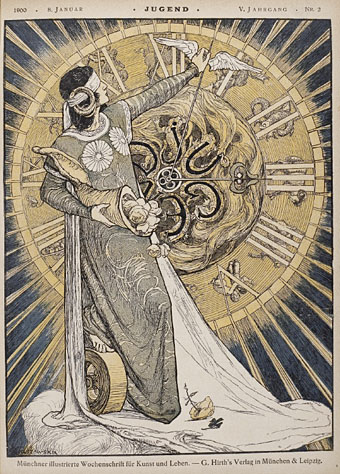
Jugend, 1900

Continuing the rake through back issues of Jugend magazine, the German fin de siècle periodical of “art and life”, this post covers the year 1900 and will be the final Jugend image trawl. I mentioned in the post for 1899 that the magazine loses its Art Nouveau dynamism as the years pass. 1900 represents the point where all the graphics which make Jugend valued today—and which gave the name to the German manifestation of Art Nouveau: Jugendstil—are being pushed aside by the burgeoning nationalist and militarist fervour which led eventually to the First World War. At this point a couple of the notable Art Nouveau stylists such as Otto Eckman and Julius Diez are still present, and the work of Hugo Höppener, aka “Fidus” is increasingly prominent. In subsequent years the eccentric Fidus is mostly on his own, pursuing his obsession with naked figures, and his work seems even more curious in such staid surrounds. As before, anyone wanting to see more of these graphics is advised to explore the bound volumes at the Heidelberg University archive. The two books for 1900 can be found here and here.

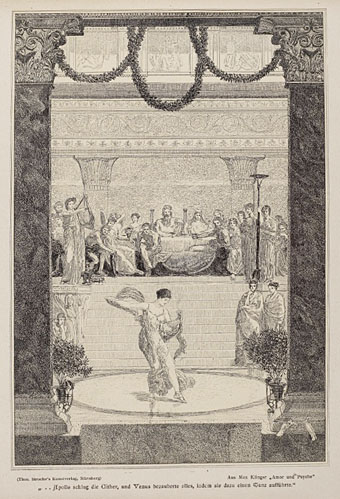
A picture by the Symbolist and Secession artist, Max Klinger.

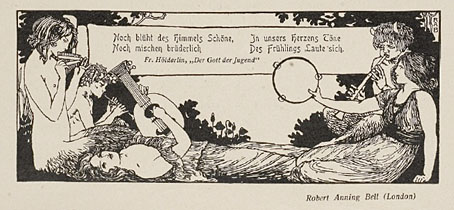
Nymphs and satyrs by English artist and illustrator Robert Anning Bell.