Golem, 2012

golem.jpg

“There are always more golems,” I wrote back in August, and here’s another. The artificial entity this time is a military computer that’s the subject of Golem XIV (1973), a science fiction story by Stanisław Lem that was later expanded into a novel:

The book is written from the perspective of a military AI computer who obtains consciousness and starts to increase his own intelligence, moving towards personal technological singularity. It pauses its own development for a while in order to be able to communicate with humans before ascending too far and losing any ability for intellectual contact with them. During this period, Golem XIV gives several lectures and indeed serves as a mouthpiece for Lem’s own research claims. The lectures focus on mankind’s place in the process of evolution and the possible biological and intellectual future of humanity. (more)

Golem (2012) is a seven-minute film by Patrick Mccue & Tobias Wiesner which uses elaborate and detailed CGI to illustrate Lem’s story. The music is an original piece by Cliff Martinez that in its final moments echoes his score for Steven Soderbergh’s Solaris (2002). Watch it here. (Via Coudal.)

Previously on { feuilleton }
More Golems
Das Haus zur letzten Latern
Hugo Steiner-Prag’s Golem
Barta’s Golem

Borobudur panoramas

borobudur1.jpg

Photo by Ursula & David Molenda.

Panoramas of Borobudur, the Buddhist monument in Magelang, Central Java, which lay undisturbed and overgrown for centuries until restoration began following the British occupation of the island in the 19th century. The bell-like structures are stupas, many of which contain statues of the Buddha in different symbolic postures. The entire monument is a complex three-dimensional map of the Buddhist cosmology: pilgrims ascend from the lowest level reading the bas-reliefs and visiting each Buddha in turn. Wikipedia has a detailed account of both the history of the monument and its meaning as a piece of religious architecture.

borobudur2.jpg

Photo by Ursula & David Molenda.

borobudur3.jpg

Photo by Lanang Lintang.

borobudur4.jpg

Photo by Lanang Lintang.

Elsewhere on { feuilleton }
The panoramas archive

Long Live the New Flesh: The Films of David Cronenberg

cronenberg.jpg

I used to have this documentary on tape but it vanished years ago so it’s good to find it again on YouTube. Long Live the New Flesh: The Films of David Cronenberg was directed by Laurens C. Postma and broadcast on British television in 1987 as a tie-in with the UK release of Cronenberg’s The Fly. The writer was Chris Rodley who subsequently directed some equally good documentaries of his own including the South Bank Show feature about the making of Naked Lunch (now present as an extra on the Naked Lunch DVD), A Very British Psycho about Michael Powell’s Peeping Tom (clips of which can be found in this film), and Donald Cammell: The Ultimate Performance.

Postma’s film captures Cronenberg when he was starting to gain visibility outside the science fiction and horror genres he’d mostly been working in up to this point. Among the interviewees are Martin Scorsese, an early champion, and Stephen King, whose The Dead Zone Cronenberg adapted in 1983. In the critical corner there’s the late film critic Robin Wood who the producers possibly chose on account of his being the voice of dissent in Piers Handling’s 1983 study of Cronenberg’s films The Shape of Rage. Wood isn’t as tiresomely ideological here as he is in Handling’s book (where you can play a drinking game if you count the times he uses the phrase “bourgeois patriarchal capitalism”) but he still seemed to find something reactionary and “unprogressive” (in a political sense) about Cronenberg’s work. Elsewhere there are clips of the films from Shivers on, and I’d forgotten about the comparisons Rodley and Postma make between Cronenberg’s work and Michael Powell’s still astonishing Peeping Tom.

Long Live the New Flesh is 67 minutes long and unfortunately chopped into chunks on the YouTube copy. Watch it here:

Part 1 | part 2 | part 3 | part 4 | part 5 | part 6 | part 7

Wildeana #8

happy.jpg

Illustration by H. Paul.

Continuing an occasional series.

Front Free Endpaper has illustrations by one H. Paul from a “talking book” adaptation of Wilde’s The Happy Prince. This was a hardcover volume published in 1948 which came with a 78rpm vinyl disc containing a recording of the story by BBC newsreader Frank Phillips. Callum found the reading on YouTube. By coincidence I discovered this week that Klaus Kinski recorded some of Wilde’s stories in 1959, German versions of The Happy Prince (again) and The Selfish Giant, and also a reading of The Young King.

Wilde is strikingly prophetic in his denunciations of what he describes here as “authoritarian socialism”.  He says again that in the present state of affairs, at least some men with the advantages of privilege manage to find themselves, to realise their potential “If the Socialism is authoritarian; if there are governments to be armed with economic power as they are now with political power; if, in a word, we are to have industrial tyrannies, then the last state of man will be worse than the first.”  At least some can have freedom now, in this state, no-one would at all. Wilde sees no virtue at all in the equitable distribution of misery.  The collectivism of compunction which existed in Soviet Russia or Mao’s China was precisely the nightmare scenario he was warning against. It seems clear though that Wilde actually thought the sheer unattractiveness of this made it unlikely. “I hardly think any Socialist, nowadays, would seriously propose that an inspector should call every morning to see that each citizen rose up and did manual labour for eight hours”.  He may have ‘hardly thought’ it, but at the same time Wilde wrote this there were plenty of socialists who had just such a vision in mind – and sadly their type were to proliferate, and in some areas to predominate. No wonder that The Soul of Man was an inspiration to many revolutionaries rebelling against the Tsars of Russia, but was later suppressed and banned by Stalin himself.

Ben Granger takes a lengthy and perceptive look at The Soul of Man Under Socialism (1891), an essay of Wilde’s that seldom receives the same degree of attention as his other works.

• “As the weeks have gone by, it’s become clear to my actors that Dorian is the work of a much darker – more radical, and more modern – writer than the flippant genius we’re all so familiar with.” So says Neil Bartlett whose new stage production of The Picture of Dorian Gray is currently running at the Abbey Theatre, Dublin.

• A recipe for Oscar Wilde Strawberry Champagne cocktails? Yes, please.

Elsewhere on { feuilleton }
The Oscar Wilde archive

Weekend links 130

teraoka.jpg

Sarah and Writhing Octopus (New Wave Series, 1992) by Masami Teraoka.

Strange Flowers continues to push all my buttons. For a while now I’d been intent on writing something about the strange (unbuilt) temples designed by German artist/obsessive naturist Fidus (Hugo Höppener) but I reckon James has done a better job than I would have managed. Also last week he wrote about Schloss Schleißheim, a palatial estate outside Munich with connections to Last Year in Marienbad and another eccentric, pseudonymous German artist: Alastair (Hans Henning Voigt).

• The circus poster that inspired John Lennon’s Sgt. Pepper song Being For The Benefit Of Mr. Kite! has been reproduced as a limited edition letterpress print. Related: Wikipedia’s page about Pablo Fanque (1796–1871), “the first black circus proprietor in Britain”.

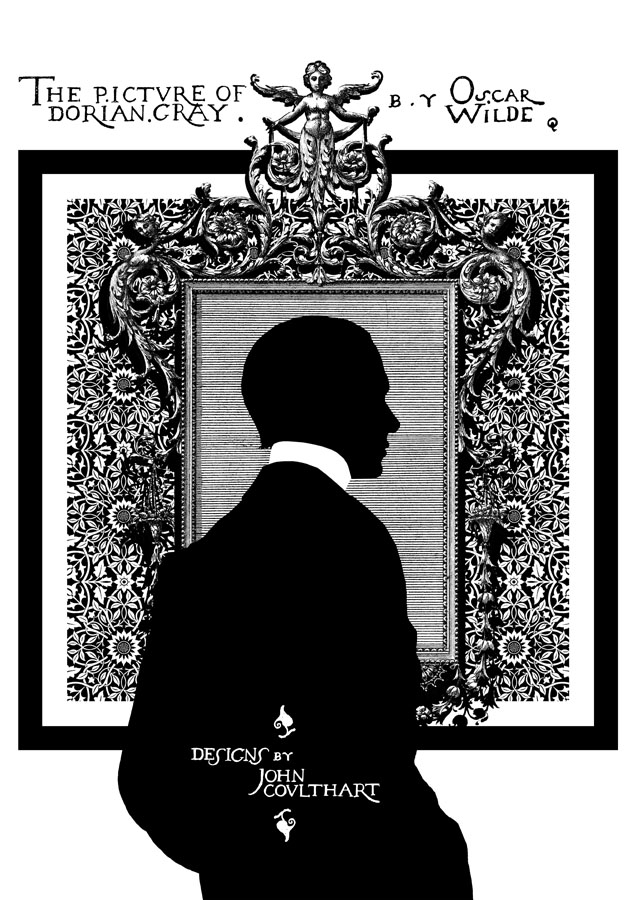
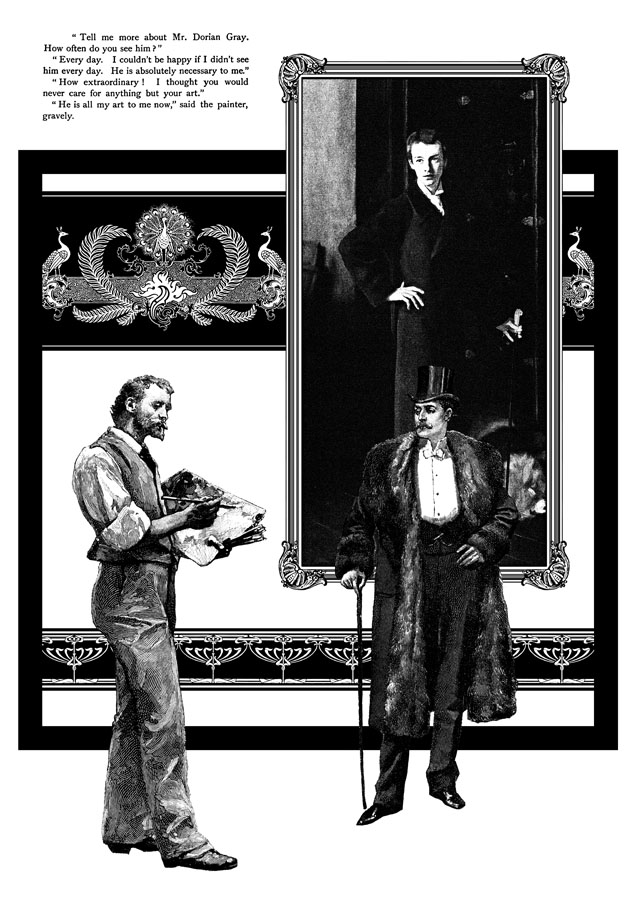
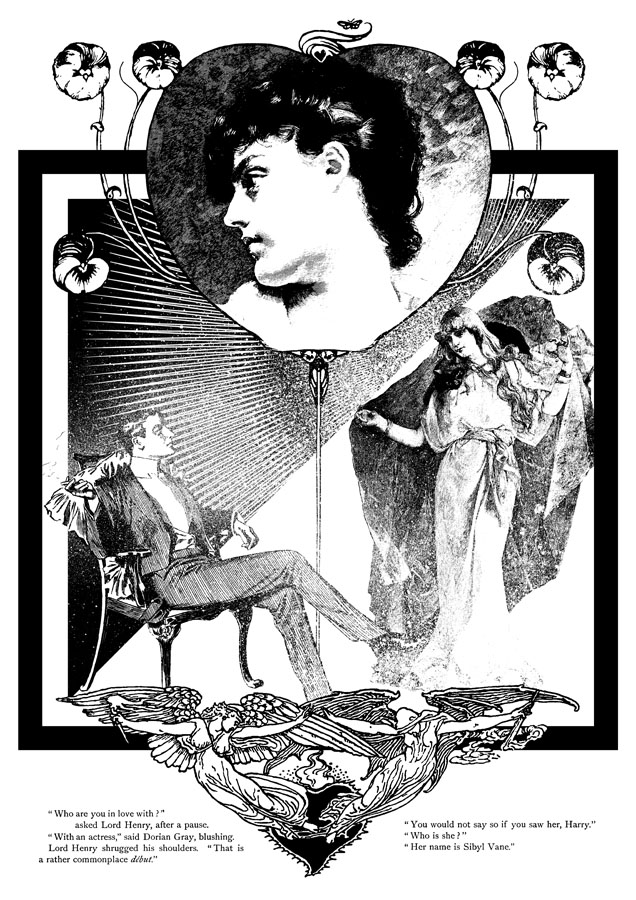
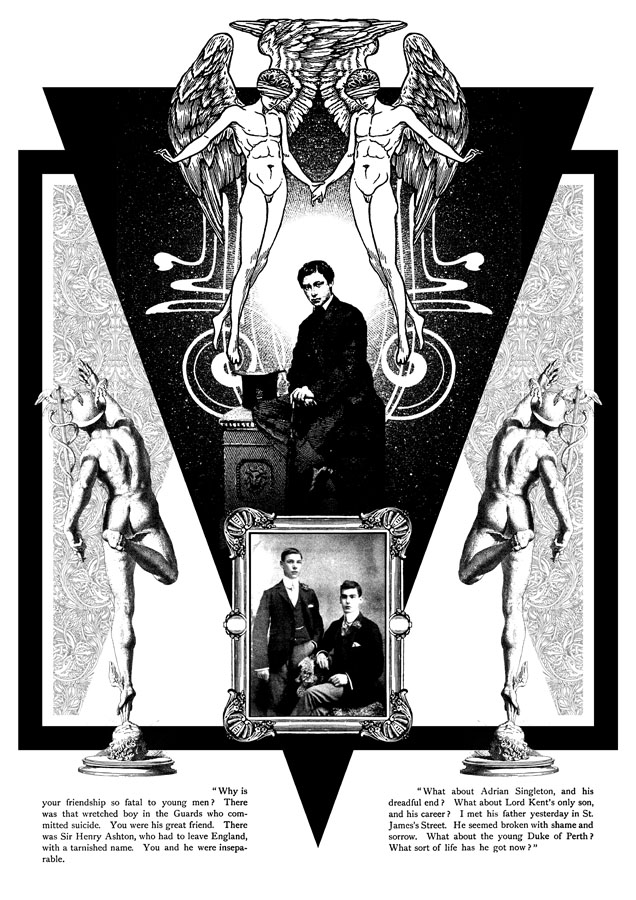
• The first two volumes of The Graphic Canon, both edited by Russ Kick, are reviewed at Literary Kicks. I’ve not seen either of these yet but volume 2 contains my interpretation of The Picture of Dorian Gray. Related: the second book previewed at Brain Pickings.

You only have to read [Alan Bennett’s] diaries to see that, underneath the wit and humour and sandwich-filled pottering around old churches, there is a deep resentment at what has happened to England in his lifetime and an instinctive distrust, sometimes amounting to deep loathing, of most politicians. Listening, for instance, to Alan Clark and Kenneth Clarke talking on the radio about the arrest of General Pinochet in 1998, he writes: “Both have that built-in shrug characteristic of 80s Conservatism, electrodes on the testicles a small price to pay when economic recovery’s at stake.”

Michael Billington on Alan Bennett: a quiet radical

Hauntologists mine the past for music’s future: Mark Pilkington draws a Venn diagram encompassing Coil, Broadcast, the Ghost Box label, Arthur Machen, MR James, Nigel Kneale, Iain Sinclair and others.

Hell Is a City: the making of a cult classic – in pictures. The mean streets of Manchester given the thriller treatment by Hammer Films in 1959. The film is released on DVD this month.

The Function Room: The Kollection, Matt Leyshon’s debut volume of horror stories, has just been published. The cover painting is one of my pieces from the 1990s.

New Worlds magazine (now apparently known as “Michael Moorcock’s New Worlds“) has been relaunched online.

konahin.jpg

A drawing from Anatomy (part 1), a series by Alex Konahin.

• The forthcoming Scott Walker album, Bish Bosch, will be released on December 3rd. 4AD has a trailer.

Cormac McCarthy Cuts to the Bone: Noah Gallagher Shannon on the early drafts of Blood Meridian.

• The Velvet Underground of English Letters: Simon Sellars Discusses JG Ballard.

• Michelle Dean on The Comfort of Bad Books.

The typewriter repairers of Los Angeles

Cats With Famous People

Marienbad (1987) by Sonoko | Komm Nach Marienbad (2011) by Marienbad | Marienbad (2012) by Julia Holter.

(Thanks to Ian and Pedro for this week’s picture links!)