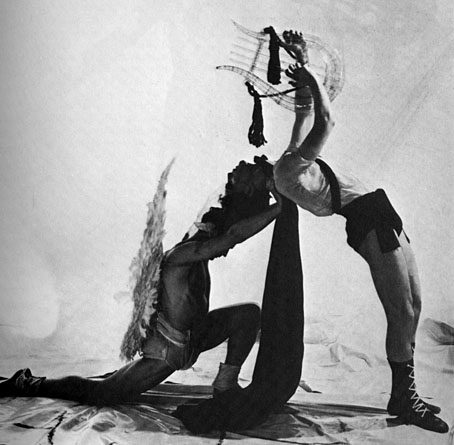
Fetish photographer Rick Castro

castro.jpg

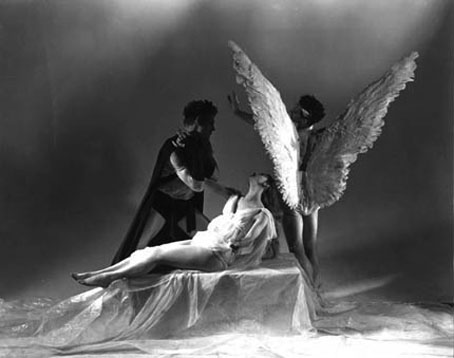
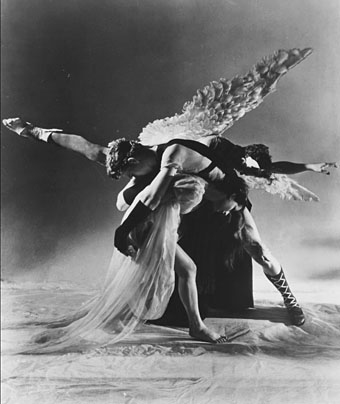
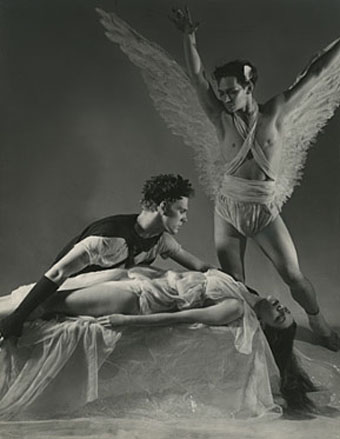
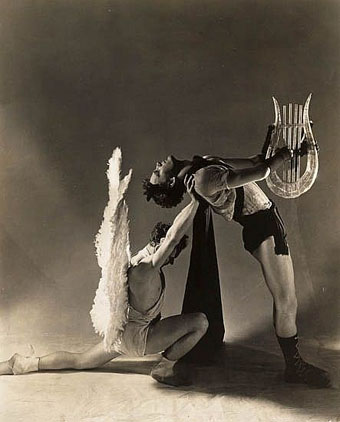
Photographs by Rick Castro.

Presenting another guest post from John Wisniewski who back in May contributed an interview with William E. Jones about gay film director Fred Halsted. The subject this time is Rick Castro, pioneering bondage/S&M photographer, and also the proprietor of the Antebellum Gallery in Los Angeles which bills itself as the only fetish gallery in America. Castro has worked with Joel-Peter Witkin and Bruce LaBruce, and also photographed subjects as diverse as the Dalai Lama and Kenneth Anger, neither of them in bondage, unfortunately. As before, John offers a list of ten questions. Read on to discover why hustlers always used to wear white jeans (I have wondered about this)…

* * *

John Wisniewski: When did you begin photographing?

Rick Castro: 1986…around June…. My first photo was of my longtime friend (and former GF!), Odessa. I was a wardrobe stylist at the time, so I dressed her like Morticia Addams. Very high contrast/high shadowed B&W.

My second photo was of Tony Ward. I cast him for his first “mainstream” photo shoot. Editorial for a now defunct men’s magazine, INSTYLE, (published by porn mag IN TOUCH). We were working for photographer Albert Sanchez at the time. Between takes I’d dressed him up in full leather fantasy—leather hood, harness, gauntlets, codpiece, boots and horsetail!

JW: Whom are some of your influences in photography and art?

RC: I like the dead guys: Brassai, Pierre Moliner, F. Holland Day, Julia Margaret Cameron, Otto Dix, Paul Cadmus, Egon Schiele, Tennessee Williams, Pier Paolo Pasolini, Gilles De Rais.

JW: When did you meet fellow photographer Joel-Peter Witkin?

RC: Also during 1986, I bought Joel’s first book. At the back of the book was a request: “I am looking for people with physical deformations, amputees. Quadriplegics, burn victims, persons into extreme S&M, a woman with three breasts, geeks, pinheads, a woman with severe skin disease that will pose in an evening gown, anyone bearing the wounds of Christ, Christ.”

Later that year the new annex of Book Soup on Sunset Blvd hosted the first LA photo exhibit for Joel. I attended, introduced myself and gave him a stack of photos I had taken of my potential “models.” He called me the next morning. From then I worked with Joel on 13 of his most iconic photographs as a wardrobe stylist, costume designer, location scout, model scout, casting director, photo assistant, art director, make up artist and all around assistant.

Continue reading “Fetish photographer Rick Castro”

The poster art of Frank McCarthy

mccarthy06.jpg

The Venetian Affair (1967).

“Murder! Spies! Women!” If you added “guns” and “explosions” to that list you’d have the ingredients of the wild poster art of Frank McCarthy (1924–2002). I used to love posters like this when I was a boy, especially those from the everything-happening-at-once school which, by the look of these examples, was McCarthy’s specialty. Where action films are concerned the posters are often more exciting than the scenes they depict, in part because artists such as McCarthy were often working from their own imaginations as much as from any stills they’d been given.

mccarthy04.jpg

The Caper of the Golden Bulls (1967).

McCarthy had a career painting Western scenes which explains why his horses are so good. Some of his posters are for very well-known films, including a couple of Bond pictures, but I prefer those where he evidently had more of a free reign. The painting for The Caper of the Golden Bulls is a great composition with a use of colour you wouldn’t see today. Below there’s an example of the colossal title lettering that Terry Gilliam used to enjoy parodying. I still wonder which film did this first. Was it Ben-Hur? See more of Frank McCarthy’s poster art here.

mccarthy01.jpg

Genghis Khan (1965).

mccarthy02.jpg

Around the World Under the Sea (1966).

Continue reading “The poster art of Frank McCarthy”

Red Shift by Alan Garner

redshift1.jpg

“I know things, and feel things, but the wrong way round. That’s me: all the right answers at none of the right times. I see and can’t understand. I need to adjust my spectrum, pull myself away from the blue end. I could do with a red shift. Galaxies and Rectors have them. Why not me?”

Red Shift by Alan Garner

More fields in England. It’s good to find this TV film on YouTube since I’ve been telling people about it for years. Red Shift (1973) is classed as the last in Alan Garner’s initial run of fantasy novels, although it’s arguable whether it’s a work of fantasy at all. The themes are typical Garner: the Cheshire landscape, and the long hand of the historic past reaching into the present. Instead of a single story there are three interwoven narratives taking place in different eras: Roman Britain, with an invading legion (based on the lost Ninth Legion) being hunted down by the natives; the English Civil War, and the true story of a massacre that took place at a village church; the present (1973) with teenager Tom struggling to maintain a relationship with his girlfriend, Jan, who’s leaving to study as a nurse. Tom’s narrative is the principal one but each thread contains echoes of the others. Connecting them all is a stone axe head buried by one of the Roman soldiers which is found by a villager hundreds of years later then rediscovered in turn by Tom. It’s a fascinating novel which prefigures Alan Moore’s Voice of the Fire (1996) for the way a single location is examined at different periods of history.

redshift2.jpg

The 75-minute film of Red Shift (1978) was made for the BBC’s Play For Today strand, as was that cult item of mine, Penda’s Fen (1974), and the two have much in common. Writer David Rudkin talked about the “layer upon layer of inheritance” in the Malvern Hills where Penda’s Fen is set, a description that could equally apply to Red Shift. Both plays have intelligent teenage boys as their central characters, and both are demanding rites-of-passage dramas. The great Alan Clarke directed Penda’s Fen while Red Shift was directed by John Mackenzie, better known for (among other things) The Long Good Friday (1980). Garner and Mackenzie collaborated on the screenplay for Red Shift which necessarily condenses the novel. I’d say it does this successfully but then I’ve read the book so may be too familiar with the story as a whole. Success or not, this is another remarkable piece of television drama which you can’t imagine being made today. But it is on YouTube, and for that we may be grateful. Watch it here.

Previously on { feuilleton }
Children of the Stones
Penda’s Fen by David Rudkin

Weekend links 167

field.jpg

Poster by Luke Insect & Kenn Goodall.

In recent years I’ve had little patience for British cinema: too much dour “realism” with little of Alan Clarke’s vitality, too many comedies that aren’t funny, too many Hollywood calling cards, too much Colin Firth… So it’s been a pleasure to see Peter Strickland’s Berberian Sound Studio followed this month by Ben Wheatley’s A Field In England, a pair of films that stand out by daring to be different in a medium which seems to grow more creatively conservative with each passing year. A Field In England adds to the micro-genre of weird British films set around the time of the English Civil War. In place of witchfinders and devil worshippers we have magic, murder, madness, and a field of hallucinogenic mushrooms. Wheatley, like Strickland, takes risks that wouldn’t be allowed with a bigger budget which makes me excited to see what they’ll be doing next. A Field In England is already out on DVD & Blu-ray. The trailer is here. The director talked to Mat Colegate about the genesis of the film (spoiler alert). There’s more big hats and cloaks in this list of ten 17th century films.

• “I like to look at men…the way they look at women,” photographer Ingrid Berthon-Moine says about her pictures of sculpted testicles.

Roger Dean has finally sued James Cameron over the designs for Avatar. Will be interesting to see how this one turns out.

• Google has taken its Street View cameras to Battleship Island, “the most desolate city on earth“.

• The strange fantasy novels of Edward Whittemore are available again in digital editions.

Julia Holter talks about her forthcoming Gigi-inspired album Loud City Song.

• At Pinterest: Maneki-neko, the beckoning cat of good fortune.

Beautiful Books: Decorative Publishers’ Cloth Bindings.

• The abstract paintings of Hilma af Klint (1862–1944).

Lee Brown Coye illustrates August Derleth in 1945.

Bill Laswell’s discography intimidates the collector.

• Mix of the week: Kit Mix #23 by Joseph Burnett.

• The Soundcarriers: Last Broadcast (2010) | Signals (2010) | This Is Normal (2012)

The Running Jumping & Standing Still Film

lester1.jpg

The Beatles’ second feature, Help!, was released on Blu-ray last month. The origin of the film’s visual humour and frenetic style can be found in this short directed by Richard Lester over two weekends in 1959, a collaboration between Lester, Spike Milligan, Peter Sellers and others. It may be nothing more than ten minutes of sight gags but it was enough for The Beatles to seek out Lester as director of their first two features. (Leo McKern, the actor in the opening shot, also appears in Help!) Considering the subsequent influence of those films—from The Monkees’ TV show on into numerous pop videos—this little film is very influential indeed. Watch it here.

lester2.jpg

Previously on { feuilleton }
Petulia film posters