02021

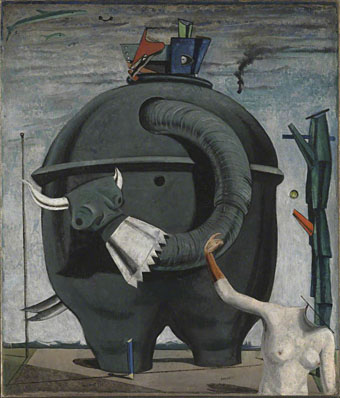
ernst.jpg

The Elephant Celebes (1921) by Max Ernst.

Happy new year. 02021? Read this.

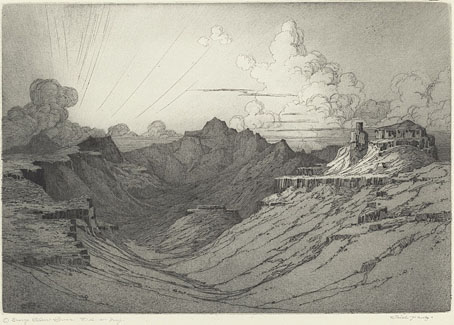
burr.jpg

Desert Sunset (1921) by George Elbert Burr.

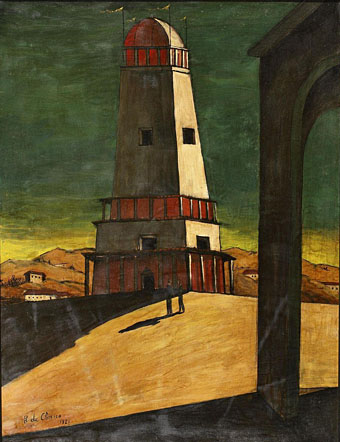
dechirico.jpg

The Great Tower (1921) by Giorgio de Chirico.

hasui.jpg

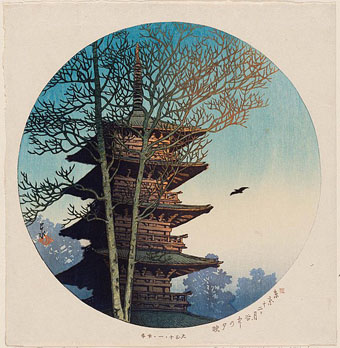
Evening Glow at Yanaka (1921) by Hasui Kawase.

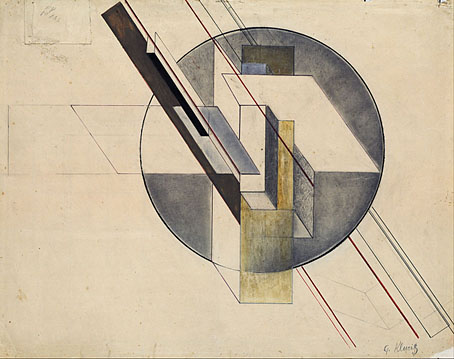
klucis.jpg

Construction (1921) by Gustavs Klucis.

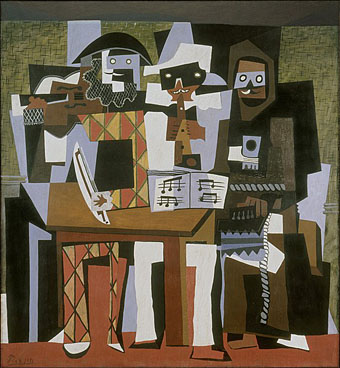
picasso.jpg

Three Musicians (1921) by Pablo Picasso.

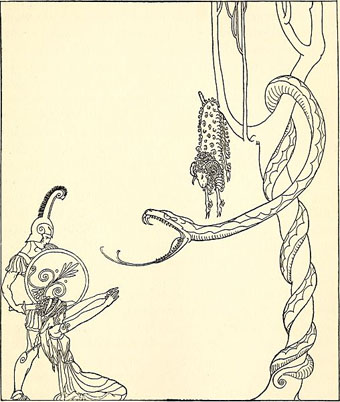
pogany.jpg

Illustration by Willy Pogány for The Golden Fleece and the Heroes Who Lived Before Achilles (1921) by Padraic Colum.

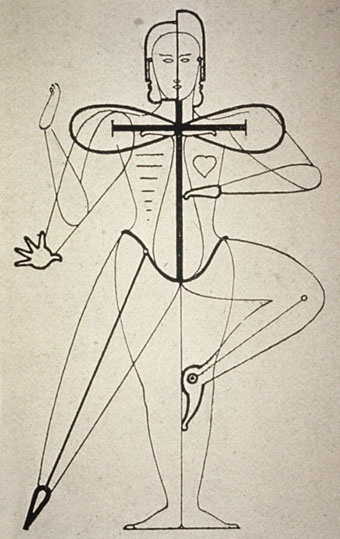
schlemmer.jpg

Sketch of Figural Movement for Dance (1921) by Oskar Schlemmer.

Weekend links 549

fuseli.jpg

The Shepherd’s Dream, from Paradise Lost (1793) by Henry Fuseli.

• “16 April. A card from Tom King with news of the tattoo of me that he had put on his arm: ‘The tattoo remains popular, though bizarrely one person thought it was of Henry Kissinger. It also makes for an amusing conversation during intercourse.’ This suggests the intercourse might be less than fervent, my name in itself something of a detumescent.” Alan Bennett‘s diary for the year is always a highlight of December.

• “I know that if I don’t write, say on holiday, I begin to feel unsettled and uneasy, as I gather people do who are not allowed to dream.” The Paris Review removed its paywall on their Art of Fiction interview with JG Ballard.

• “A biologist and composer have turned the aurora borealis into sound to create a magic melding of art and nature.”

If we let it, dreaming gradually erodes wake centrism—that waking consciousness to which Westerners in particular are inordinately attached. You might think of wake centrism as a pre-Copernican-like worldview that presumes waking to be the centre of the universe of consciousness, while relegating sleeping and dreaming to secondary, subservient positions. It is a matrix, a cultural simulation evolved to support adaptation, yet it inadvertently limits our awareness. Wake centrism is a subtle, consensual, sticky and addictive over-reliance on ordinary ways of perceiving that interfere with our direct personal experience of dreaming. To paraphrase the 16th-century British clergyman Robert Bolton, it is not merely an idea the mind possesses, but an idea that possesses the mind. Wake centrism is a flat-world consciousness. It warns us to stay away from the edges, to refrain from dialoguing with dreams and the unconscious.

Rubin Naiman on sleep and dreams

96th of October: an online fiction magazine dedicated to “tales of the extraordinary”.

• “Punk artist Barney Bubbles joins Manet among works given to UK public in 2020.”

• The results of the Nature Photographer of the Year contest for 2020.

• A list with a difference: Twenty Four Psychic Pop Relics by Woebot.

• Merve Emre on how Leonora Carrington feminized Surrealism.

• Mix of the week: XLR8R Podcast 675 by Teebs.

I Had Too Much To Dream (Last Night) (1966) by The Electric Prunes | The Room Of Ancillary Dreams (2000) by Harold Budd | Blue Dream (2001) by Sussan Deyhim & Richard Horowitz

Harry Clarke online

goddem.jpg

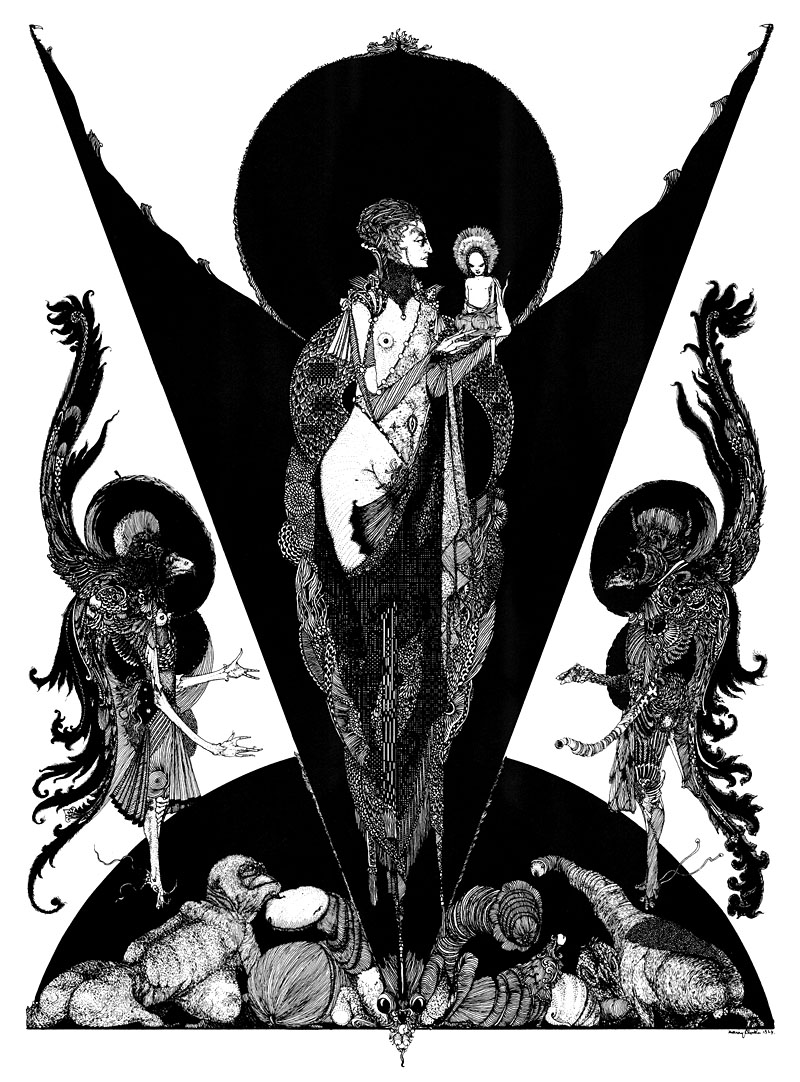
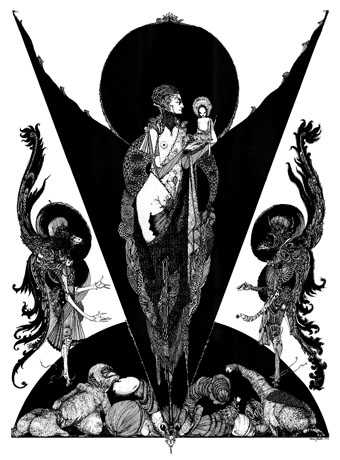
The Devil’s Wife and her Eldest. A frontispiece for The Golden Hind, July, 1924, a magazine edited by Clifford Bax and Austin Osman Spare. I’ve seen this drawing referred to in print as “Goddem with Attendants” although this isn’t how it was titled in the magazine.

It’s taken some time but with a little careful searching it’s now possible to see (almost) all of Harry Clarke’s major works of illustration online. The Poe illustrations have been available in a variety of different scans for many years, their popularity being followed by some of the Faust drawings. But Clarke’s other books are more elusive, so what you have here is links to the most complete collections of illustrations from each title, several of which also include the accompanying text.

This isn’t all of Clarke’s illustration work, of course. He produced many single pieces for magazines, as well as two rare promotional publications for the Irish whiskey distiller, Jameson. If he hadn’t been so tied up with the stained-glass business he inherited there would have been much more. The biographical books mention titles he suggested to publishers as potential projects, a list which includes Dr Jekyll and Mr Hyde, Huysmans’ À rebours, and—most tantalising of all—Bram Stoker’s Dracula.


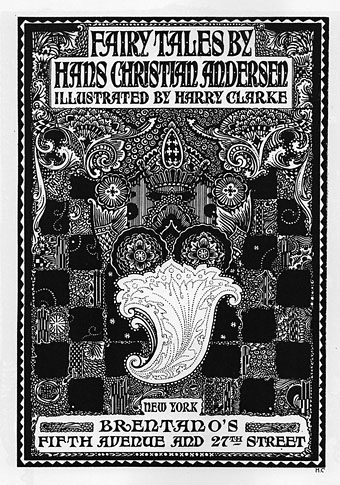
Fairy Tales of Hans Christian Andersen, 1916.
clarke16.jpg

A post at Flickr. Despite Clarke’s achievements as a stained-glass artist his colour illustrations aren’t always as successful as those in black-and-white. That’s certainly the case here.


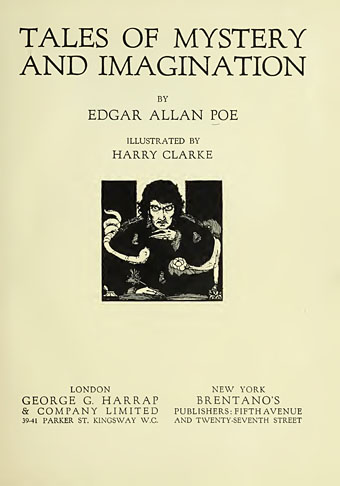
Tales of Mystery and Imagination by Edgar Allan Poe, 1919.
clarke17.jpg

The 1923 edition is at the Internet Archive, a reprint which added several new colour pieces, none of which fare well in this scan. The book is also missing the frontispiece.


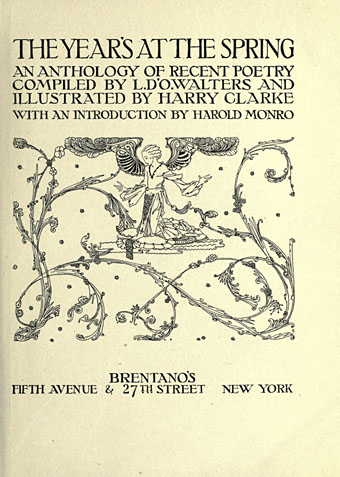
The Year’s at the Spring, edited by Lettice D’Oyly Walters, 1920.
clarke18.jpg

Another complete edition at the Internet Archive.


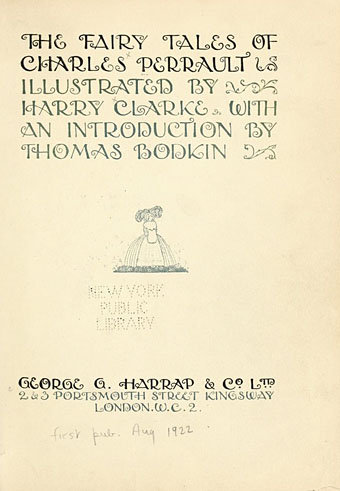
The Fairy Tales of Charles Perrault, 1922.
clarke19.jpg

An almost-complete edition. This one again suffers from a missing frontispiece.


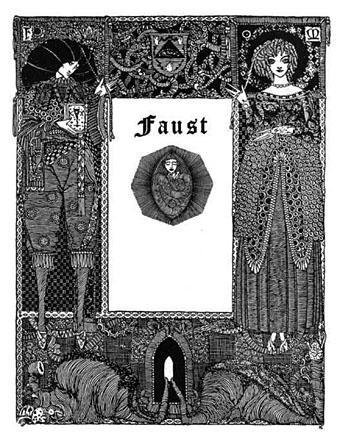
Faust by Johann Wolfgang von Goethe, 1925.
clarke20.jpg

Not great reproductions since this edition is adapted from an e-book, but it does feature all of the black-and-white Faust illustrations in order, and with their accompanying quotes. No colour plates, however.


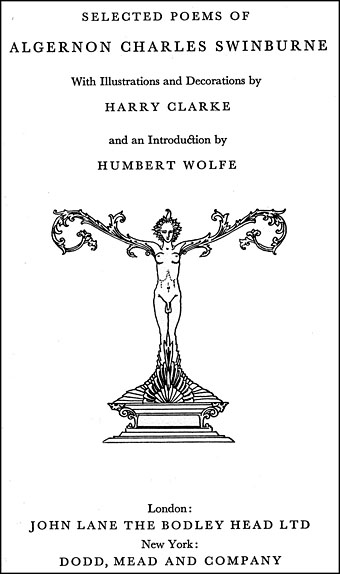
Selected Poems of Algernon Charles Swinburne, 1928.
clarke21.jpg

Clarke’s most Decadent and erotic work, this one has yet to turn up in complete form but the defunct art blog, Golden Age Comic Book Stories, posted all of the art here.

Elsewhere on { feuilleton }
The illustrators archive

Previously on { feuilleton }
Harry Clarke record covers
Thomas Bodkin on Harry Clarke
Harry Clarke: His Graphic Art
Harry Clarke and others in The Studio
Harry Clarke’s Fairy Tales of Charles Perrault
Harry Clarke in colour
The Tinderbox
Harry Clarke and the Elixir of Life
Cardwell Higgins versus Harry Clarke
Modern book illustrators, 1914
Illustrating Poe #3: Harry Clarke
Strangest Genius: The Stained Glass of Harry Clarke
Harry Clarke’s stained glass
Harry Clarke’s The Year’s at the Spring
The art of Harry Clarke, 1889–1931
Weekend links 547

baade.jpg

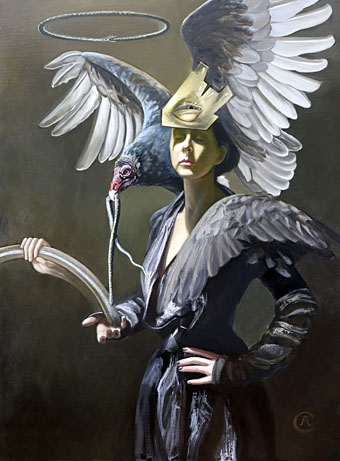
Anti-Vanitas (2018) by Carrie Ann Baade.

• RIP Richard Corben, an artist whose work I wasn’t always keen on but whose enthusiasm for pulp weirdness and cosmic horror was matched by a pulp vitality of his own. Corben’s Den was the first story in the first issue of Heavy Metal, a strip in which Den’s ever-present penis provided some rare equality of nudity in American comics. Corben was also a lifelong Lovecraftian; his 1972 adaptation of The Rats in the Walls is one of the earliest Lovecraft-derived comic strips.

• “Wit was the great man’s defence. Once, crossing Leicester Square with a friend, he looked up and saw a cinema marquee advertising a new film: Michael Redgrave and Dirk Bogarde in The Sea Shall Not Have Them. Coward turned to his friend and said: ‘I don’t see why not. Everyone else has.'” Philip Hoare on Noël Coward’s private lives: the photographs that could have landed him in jail.

• The end of the year brings the lists: Strange Flowers’ Secret Satan, 2020 is a guide to a surfeit of delectable volumes, while at 3 Quarks Daily Dave Maier selects his favourite ambient music of the year.

It’s not an easy life, but for Layne it is better than the alternative. “There is a generation of writers who think that it is a perfectly acceptable thing to accumulate a couple of hundred thousand dollars in student loan debt and go write “takes”—contrary opinion on things like ‘Why Dogs Are Actually The Worst Pet.’” None of it is new, he says, “it’s what people were doing when Rome burned.” But it has left us worse off, he says.

“I feel like we are post-language now,” he says. “Things are more symbolic. The relationship between words and facts and objectivity and their impact seems to have separated to the point where most of the writing that I see, especially on something like Twitter, is by people baffled that people don’t get what they are trying to say. It’s depressing.”

Dominic Rushe on how Ken Layne created an alternative to clickbait in the desert

• “Underworlds, otherworlds, so many passageways on this earth to elsewheres, especially during these weeks of the year.” Nina MacLaughlin on The Shadows below the Shadows.

Dennis Cooper‘s favourite fiction, poetry, non-fiction, film, art, and internet of 2020. Thanks again for the link here!

• The week in strange worlds: The Strange World of Colossive Press, and The Strange World of Robbie Basho.

• The Images Wish To Speak: An interview with artist Carrie Ann Baade.

Jackson Arn on why so many filmmakers have paid homage to Pieter Bruegel.

Physicists nail down the “Magic Number” that shapes the Universe.

Dreams, Built By Hand

Shadow (1990) by Nusrat Fateh Ali Khan | Shadows (1994) by Pram | Shadow Of A Twisted Hand Across My House (2001) by I.E.M.

Weekend links 546

cosmorama.jpg

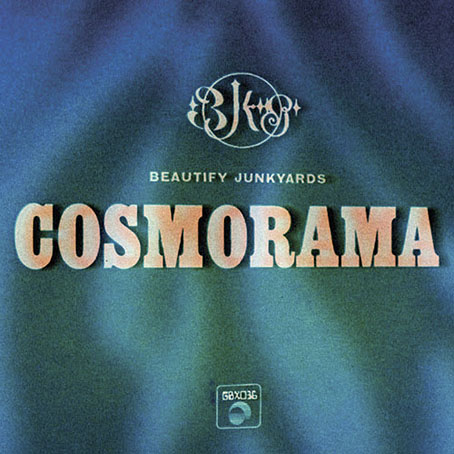
The next release on the Ghost Box label, Cosmorama is “tropicalia tinged psychedelic dream pop” by Beautify Junkyards. The album will be available in January. Design, as always, is by Julian House.

• Reading a review of John Gray’s Straw Dogs several years ago I remember thinking facetiously that Gray should write a follow-up about cats. (Straw Dogs isn’t a book about dogs.) The joke is on me with the publication of Gray’s latest, Feline Philosophy: Cats and the Meaning of Life. I should set up as a literary agent.

• All you need is doom: Plague Notes, Unnamed, Unknown, A Finger Dragged Through Dust, the debut album from My Heart, an Inverted Flame, is released on the 11th of this month. “Absolutely NO guitars were used in the casting of these drone metal voidscapes.” Excellent work.

• What a difference a week makes: “A Utah monolith enchanted millions and then it was gone, leaving mysteries behind.”

• En Pleine Mer: The underwater landscapes of Eugen von Ransonnet-Villez, 1867.

• Imaginative drawings of travel during a pandemic lockdown by Oscar Oiwa.

• The beauty of starling murmurations as photographed by Søren Solkær.

• Cosmic Dancer: Alice Finney on the strange world of Michael Clark.

• Mix of the week: Invaders by The Ephemeral Man.

Cosmos (1972) by Bruno Menny | Gliding Thru The Cosmophonic Dome (1981) by Bernard Xolotl | Radio Cosmos (1981) by Ippu-Do