Weekend links 555

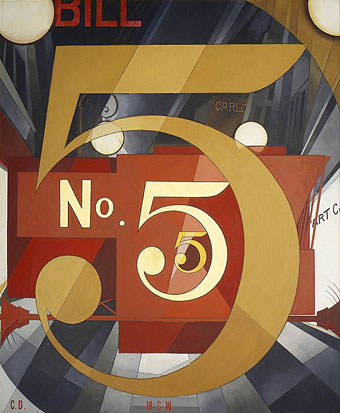
demuth.jpg

I Saw the Figure 5 in Gold (1928) by Charles Demuth.

• “Reading the new edition in 2021, I’m struck by his dismissal of CD-ROMs, of VR, of interactivity; how he anticipates contemporary debates about algorithmic bias…his prescient exhaustion.” Sukhdev Sandhu reviews Brian Eno’s diary for 1995, A Year with Swollen Appendices. Meanwhile, Eno himself says “Artists like me are being censored in Germany—because we support Palestinian rights.”

• “Kink is often pathologized in popular culture: it’s shamed, used as a punchline, and, on the whole, relegated to the margins of desire.” Greg Mania interviews R.O. Kwon and Garth Greenwell about Kink a collection of new stories about unorthodox desires.

• “This album is the king of hauntology. From where I’m sitting, I’m going back to the past, listening to an album imagining the future, imagining the past.” Tom Herdman on the fabulous Time (1981), a science-fiction concept album by the Electric Light Orchestra.

Cavafy, the ultimate Alexandrian, gave us an Alexandria that was already not quite there in his own lifetime. It kept threatening to disappear before his eyes. The apartment where he had made love as a young man had become a business office when he went to revisit it years later; and the days of 1896, of 1901, 1903, 1908, 1909, once filled with so much eros and forbidden love, were already gone and had become distant, elegiac moments that he remembered in poetry alone. The barbarians, like time itself, were at the gates, and everything would be swept in their wake. The barbarians always win, and time is hardly less ruthless. The barbarians may come now or in a century or two, or in a thousand years, as indeed they had come more than once centuries earlier, but come they will, and many more times after that as well, while here was Cavafy, landlocked in this city that is both the transitional home he wishes to flee and the permanent demon that can’t be driven out. He and the city are one and the same, and soon neither will exist. Cavafy’s Alexandria appears in antiquity, in late antiquity, and in modern times. Then it disappears. Cavafy’s city is permanently locked away in a past that refuses to go away.

André Aciman on the poetry of Cavafy and the Alexandrias of memory

DJ Food on the package design for The Superceded Sounds of…The New Obsolescents, which uses a similar foil card to the “Héliophore” stock used by Philips in their cult series of electroacoustic compositions, Prospective 21e Siècle.

Onlyou by Can, is “A relaxed studio session, recorded on a mono taperecorder in 1976 at the Innerspace”. Released in 1982 on a 34-minute cassette sealed inside a can (geddit?), and limited to 100 copies.

Olivia Rutigliano ranks 45 films containing prison escapes. I’d put the Bresson at number one but otherwise, yes.

• “…some kind of future unrealised time…” Mix of the week is a mix for The Wire by Muqata’a.

• RIP Christopher Plummer. Never mind the musical, watch him in The Silent Partner (1978).

• At Ubuweb: short films by Erkki Kurenniemi soundtracked by his own electronic music.

• New music: Neurogenesis by Robert Rich.

Kinky Boots (1964) by Patrick McNee & Honor Blackman | David Watts (1967) by The Kinks | The Dominatrix Sleeps Tonight (Dominant Mix) (1984) by Dominatrix

More Isles of the Dead

janny.jpg

Die Toteninsel by Georg Janny.

Arnold Böcklin’s masterpiece, The Isle of the Dead, is a perennial source of fascination here, in part for the way the picture has fascinated other artists, writers, film-makers, etc, for the past 140 years. Something about the image compels people to rework it according to their own predilections, or to incorporate it into a narrative. Böcklin began this process himself, painting five different versions from 1880 to 1886, one of which was lost during the Second World War. The final version, which is now at the Museum der bildenden Künste in Leipzig, seems to be the favourite among the copyists. Toteninsel.net is a site devoted to cataloguing the influence of the picture but despite considerable thoroughness they don’t seem to have added this watercolour homage by Georg Janny (1864–1935), an Austrian artist and scenic designer.

diefenbach.jpg

Toteninsel (c. 1905) by Karl Wilhelm Diefenbach.

They do have an entry for Karl Wilhelm Diefenbach’s painting but not the painting itself which is a surprising reworking of the Leipzig version. An ostensibly Greek island has gained a domineering portico in an Egyptian style. Böcklin was Swiss but his paintings made a huge impression on the younger generation of German and Austrian artists.

giger.jpg

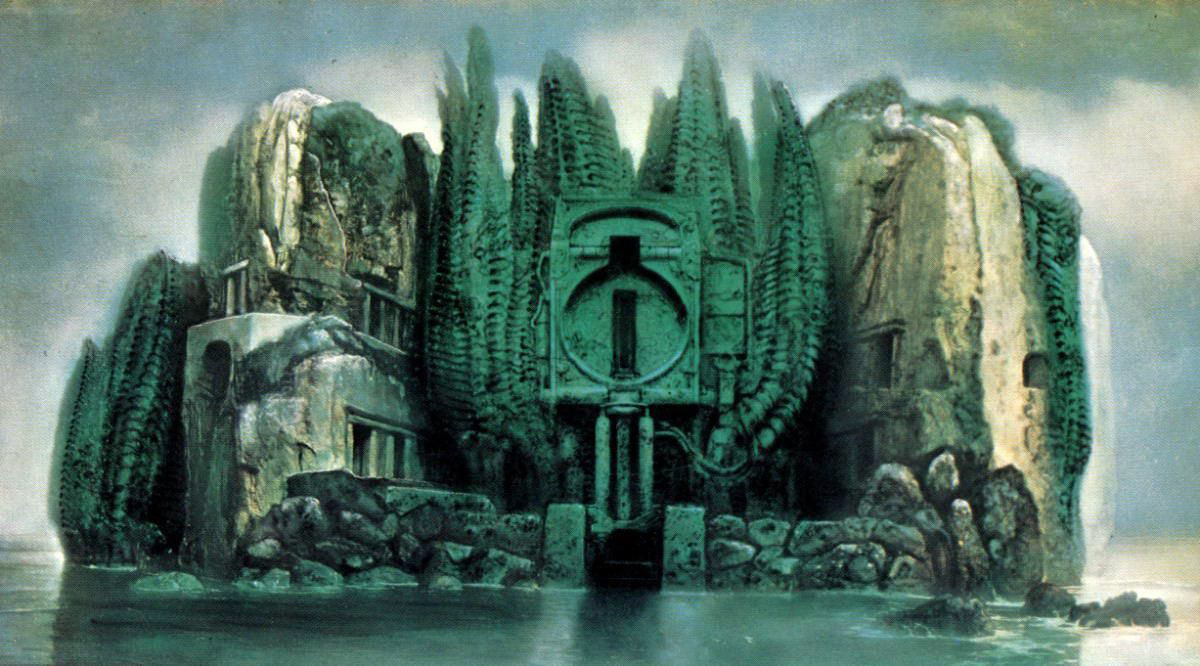
Toteninsel (nach Böcklin) (1975) by HR Giger.

Diefenbach’s picture reminds me of a favourite variation by another Swiss artist, HR Giger, who painted two homages to the Leipzig version in the 1970s. One of these is a fairly close copy, albeit without the funeral boat, and with the addition of Giger’s usual biomechanical details. The other version adds an industrial structure to the stand of cypresses. This is a hatch from the rear of a German refuse vehicle which had provided Giger with a subject for several paintings in his Passagen series. The Surrealist juxtaposition is worthy of Magritte (who also alluded to Böcklin in The Annunciation), drawing a parallel with bodily interment and waste disposal.

Previously on { feuilleton }
Isles of the Dead
A Picture to Dream Over: The Isle of the Dead
The Isle of the Dead in detail
Arnold Böcklin and The Isle of the Dead

Figures of Mortality: Lawrence versus Dalí

lawrence1.jpg

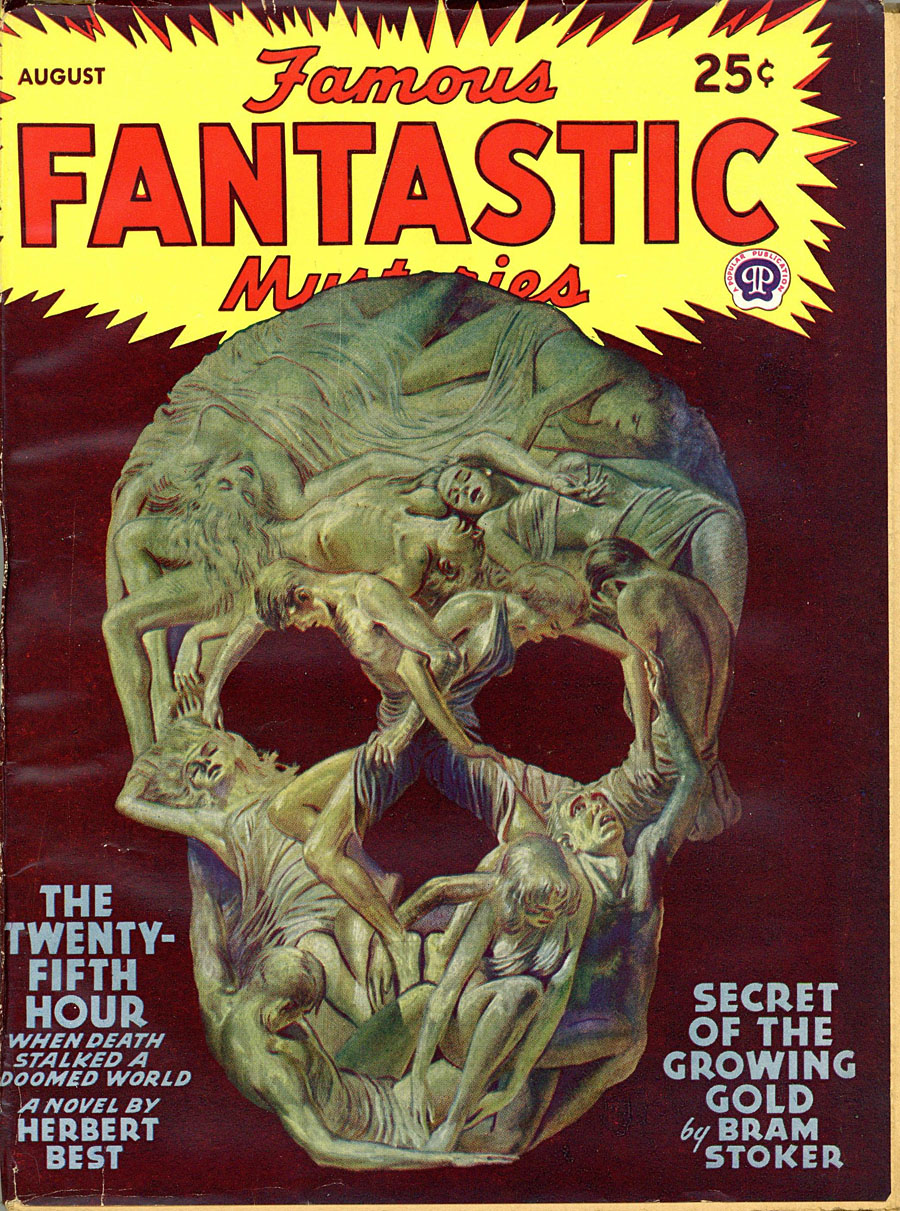
Famous Fantastic Mysteries (August, 1946).

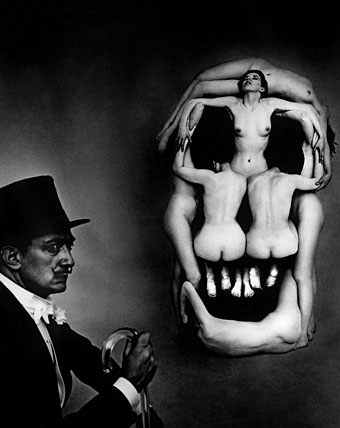
Salvador Dalí and Philippe Halsman popularised the image of a human skull created by an arrangement of bodies in Halsman’s 1951 photo-portrait of the artist, In Voluptas Mors. The assemblage, which was based on a sketch by Dalí, has been imitated by photographers and poster designers but I’ve yet to see any mention of this painted precursor by illustrator Lawrence Sterne Stevens (or “Lawrence” as he was always credited) for Famous Fantastic Mysteries in August, 1946. I’d assume the similarity is a coincidence. The subliminal skull in painting and drawing goes back at least as far as the 1890s (see this post), while Dalí was always very adept at finding and creating visual rhymes. Variations on the skull-from-figures motif appear in paintings throughout his career, one of the earliest being a minor work, Dancer – Skull, from the 1930s. Another painting, a commission for a wartime poster warning US soldiers about the hazards of venereal disease, features a pair of women, and predates Lawrence’s cover by four years.

skull_dali_halsman.jpg

In Voluptas Mors (1951).

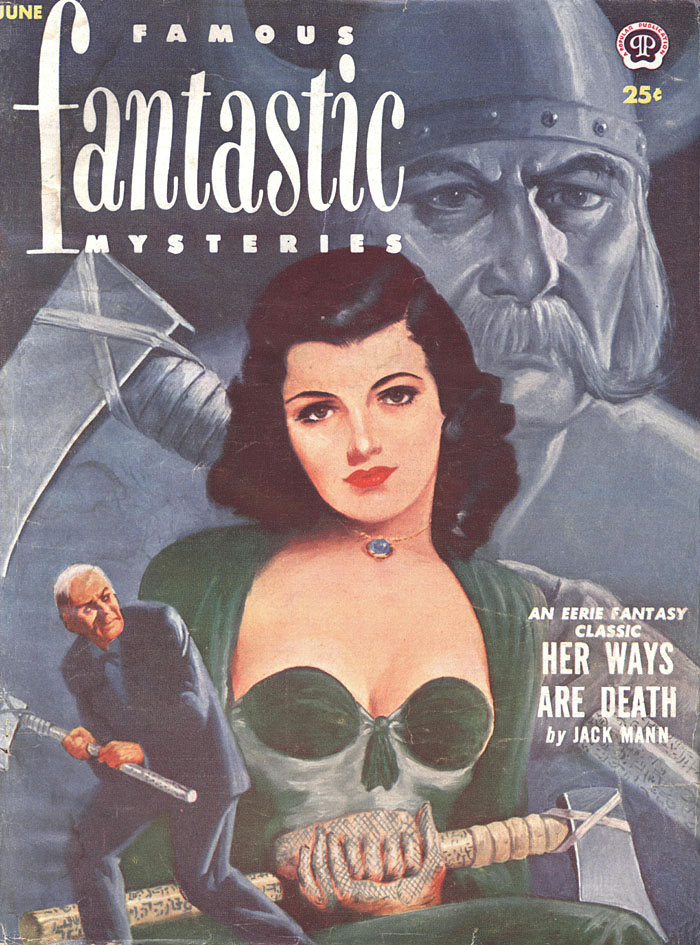
Lawrence deserves credit, however, for having created a more successful arrangement of bodies than Halsman and Dalí managed, although it’s easier to do this in a painting than it is to arrange a group of women in a studio. Some of the limbs of Lawrence’s figures are extended or foreshortened, while the contrast between light and shade has been reduced to aid the composition. Lawrence painted a further variation on the subliminal skull in a cover for Famous Fantastic Mysteries the year after the Dalí/Halsman portrait, while Dalí himself returned to the theme with Skull of Zurbarán in 1956.

lawrence2.jpg

Famous Fantastic Mysteries (June, 1952).

Previously on { feuilleton }
Être Dieu: Dalí versus Wakhévitch
Chance encounters on the dissecting table
Salvador Dalí’s Maze
Dalí in New York
Dalí’s discography
Soft Self-Portrait of Salvador Dalí
Mongolian impressions
Hello Dali!
Dirty Dalí
The skull beneath the skin
Impressions de la Haute Mongolie revisited

Weekend links 553

litherland.jpg

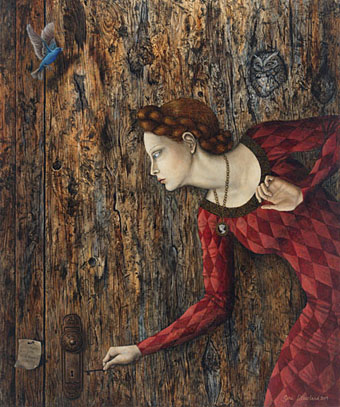
The Unknown Room by Gina Litherland.

• “He admired abstract painters like Mark Rothko, but also derived inspiration from the far less hip Pre-Raphaelite artists of the mid-1800s, especially the painter and poet Dante Gabriel Rossetti. Budd’s dreamy early breakthrough Madrigals of the Rose Angel, which featured a segment titled Rossetti Noise, was deliciously out of step with the hard-edged music of the 1970s.” Geeta Dayal on the late Harold Budd.

• “Here the experience is transformed into something more fabulist, and much more interesting than the memoir. In the novel, delusions of grandeur become real powers.” Elisa Gabbert on Leonora Carrington and The Hearing Trumpet.

• “The Japanese especially loved 3-inch CDs and there are many different examples throughout the 90s and 00s of them being used to great effect as promos.” DJ Food begins a series of posts devoted to one of my favourite music formats.

• New music: Viia, 24 minutes of live synthesis by Kikimore; Music For The Open Air, a free album of ambient music by K. Leimer (Soundcloud login required to download tracks).

• Sensory, Imaginative, and Psychic: S. Elizabeth interviews artist Gina Litherland.

• Puppets, Birds & Wycinanki: Clive Hicks-Jenkins talks to Anna Zaranko.

• Mix of the week: a 3-hour tribute to Monolake by Funky Jeff.

• At Wormwoodiana: The Flint Transmissions.

• At Dennis Cooper’s: Watery, Domestic.

• At Strange Flowers: 21 books for 2021.

Edge Of The Unknown (1973) by Nik Pascal | Unknown Passage (1999) by Robert Musso | The Unknown, Part 2 (2005) by Robin Guthrie & Harold Budd

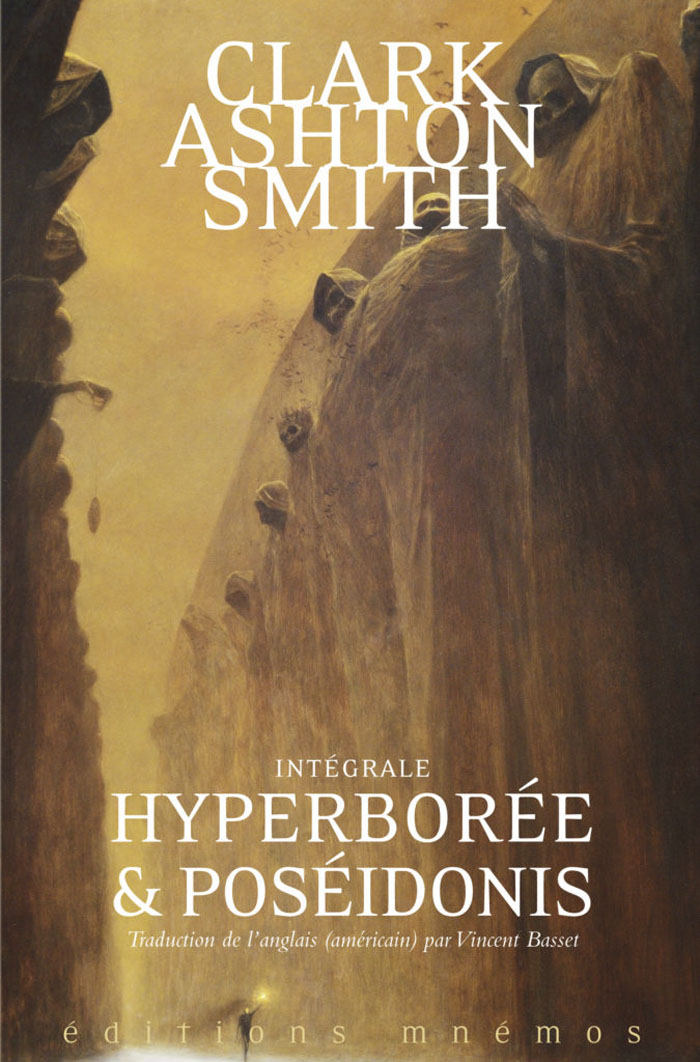
Beksiński at Mnémos

mnemos2.jpg

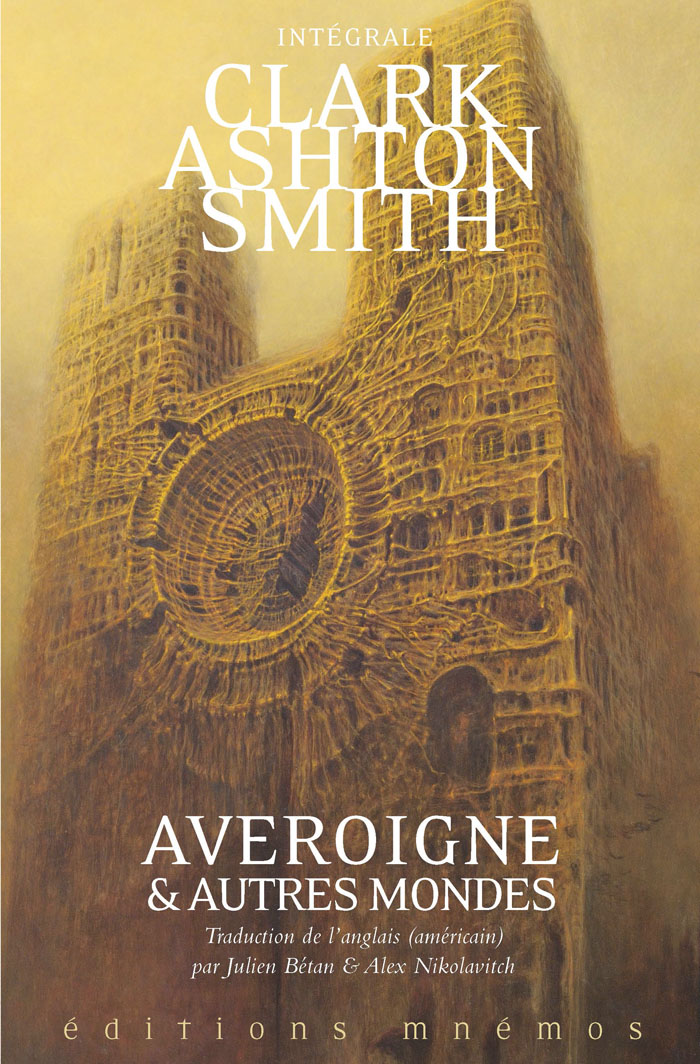
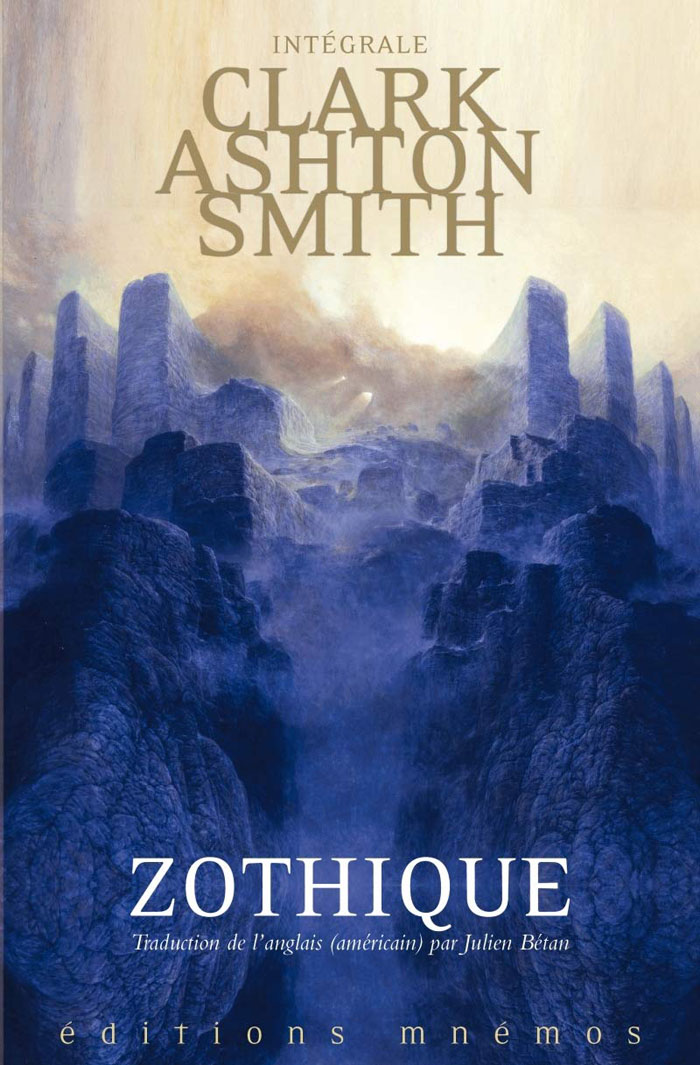
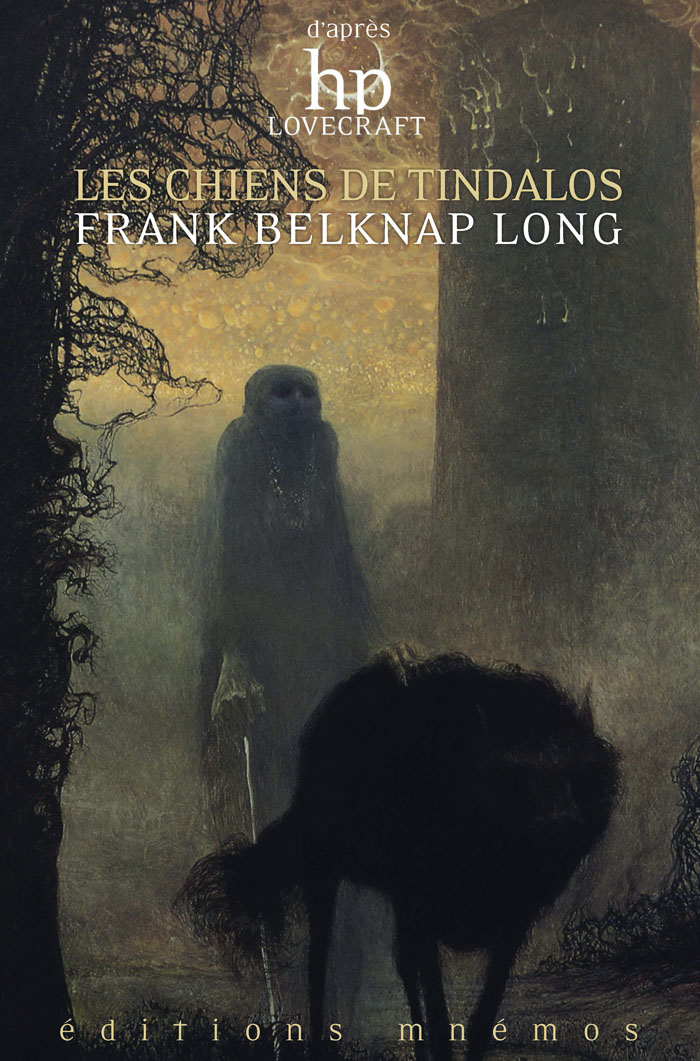
More book covers. Mnémos is a French publisher of horror, fantasy and science fiction some of whose recent titles have their covers filled with paintings by the great Polish artist Zdzisław Beksiński. The pairings of book and picture aren’t always ideal but I appreciate the impulse to choose art from other sources than genre artists. Omni magazine adopted a similar approach in its early issues, matching stories and science features with paintings by artists who are often grouped together as Fantastic Realists: Mati Klarwein, Ernst Fuchs, HR Giger, Bob Venosa, De Es Schwertberger and others. Beksiński’s work was less visible in the late 1970s than that of his contemporaries but one of his (always untitled) paintings did appear in a 1993 issue of the magazine.

mnemos1.jpg

Of the Mnémos covers the one for the collection of Averoigne stories by Clark Ashton Smith is the most immediately fitting, Averoigne being an invented region of France that suits a painting of a Gothic cathedral turned fibrous and fungal. The painting for Zothique, on the other hand, could easily be used for HP Lovecraft’s At the Mountains of Madness, while the dog-like creature on the cover of the Frank Belknap Long collection is nothing like the author’s trans-dimensional hounds. Mnémos have given Lovecraft his own Beksiński covers in a seven-volume collection of translated fiction, Lovecraft, l’intégrale prestige, but there doesn’t seem to be a page anywhere that shows the individual books.

mnemos4.jpg

What the artist would have made of all this attention may be gauged by comments like this one from The Fantastic Art of Beksiński (1998): “Meaning is meaningless to me. I do not care for symbolism, and I paint what I paint without meditating on a story.”

mnemos3.jpg

For more about the anti-symbolist, see The Cursed Paintings of Zdzisław Beksiński by Marek Kepa.

Elsewhere on { feuilleton }
The book covers archive
The fantastic art archive

Previously on { feuilleton }
Cosmic music and cosmic horror