Weekend links 563

tonto.jpg

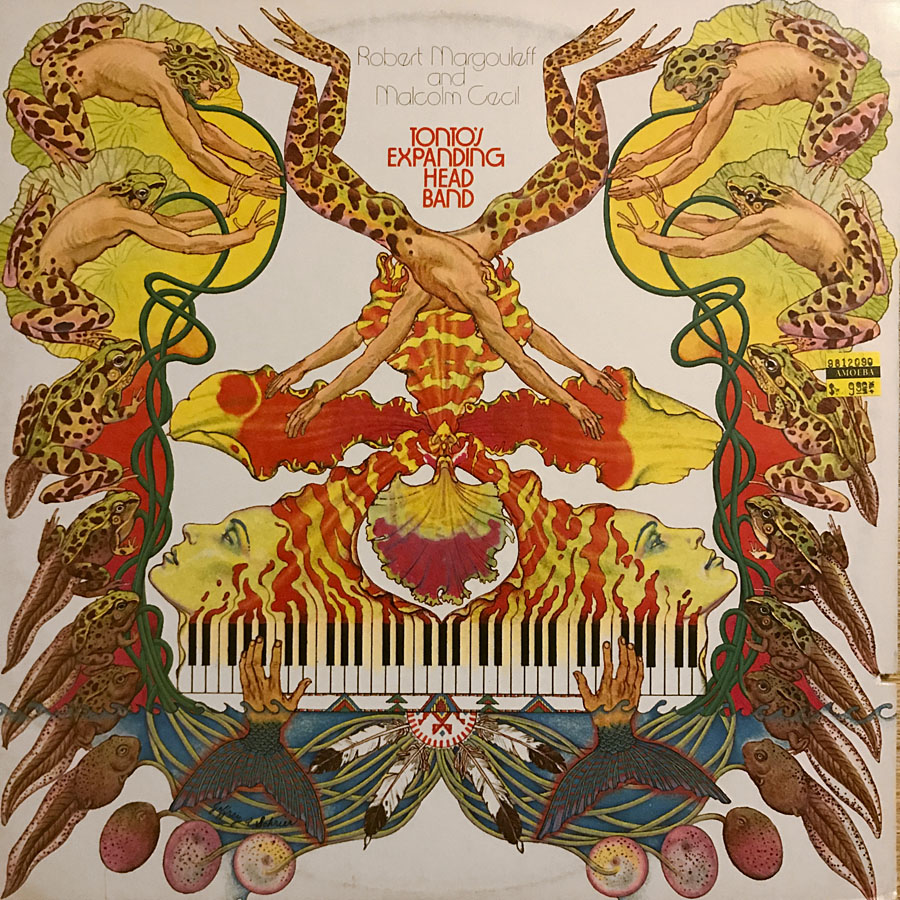
Cover art by Jeffrey Schrier for the 1975 reissue of Zero Time by Tonto’s Expanding Head Band.

• RIP Malcolm Cecil, electronic musician, and producer of Stevie Wonder, among many others. The term pioneer is over-used when discussing electronic artists, but it’s an accurate one when applied to Cecil and his partner in Tonto’s Expanding Head Band, Robert Margouleff. The first Tonto album, Zero Time (1971), was a collection of fully-realised all-electronic compositions recorded in the days when “electronic music” in the rock sphere usually meant rock-band-plus-synth-burbles. As I said in a post about Tonto’s debut album a few years ago, “Jetsex sounds like an outtake from Kraftwerk’s Autobahn (albeit three years early) while Timewhys wouldn’t have been out of place on The Human League’s Travelogue album almost a decade later”. Cecil may be seen in this short film showing off the bespoke synth gear that comprised The Original New Timbral Orchestra (aka TONTO), while he talks at length about his career in issue 4 of Synapse magazine here. Cecil and Margouleff parted company in the mid-70s shortly after releasing a second album, It’s About Time (1974), a collection of jazzy instrumentals that’s overdue a proper reissue.

• “Every film production company they showed it to said it was ‘too weird’ to ever be made. ” Next month Strange Attractor publishes The Otherwise, a script by Mark E. Smith and Graham Duff for an unmade horror film.

• More horror: Predator’s Ball by Uni; music video as horror scenario in which you can play spot-the-reference: Alice in Wonderland, Rocky Horror, Leigh Bowery (?), Pasolini’s Salò (?)…

• At Bibliothèque Gay: Narkiss by Jean Lorrain, another homoerotic classic newly translated into Spanish, and with new illustrations.

• The week in Gary Panter: Nicole Rudick on Gary Panter’s Punk Everyman, and the man himself writing about his life and art.

• At Wormwoodiana: Mark Valentine investigates the connections between Charles Williams and Sax Rohmer.

• At Dangerous Minds: New Age Steppers, “the only ever post-punk supergroup”.

• Mix of the week: XLR8R Podcast 689, a feast of funk compiled by Steve Arrington.

• At Public Domain Review: Agostino Ramelli’s Theatre of Machines (1588).

• At Dennis Cooper’s: Pier Paolo Pasolini Day.

Valentina Magaletti’s favourite music.

Louvre site des collections

Narcissus Queen (1958) by Martin Denny | Narciso (1974) by Pierrot Lunaire | Narkissos (2006) by Sadistic Mikaela Band
Weekend links 562

ernst.jpg

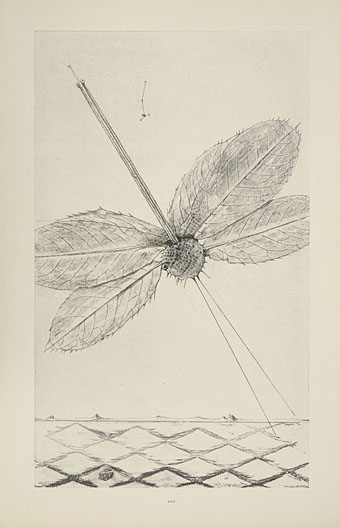
Teenage Lightning (Les Éclairs au-dessous de quatorze ans) (c. 1925) by Max Ernst.

• “There has never been another director who has lain in wait for us with the same wrath or disgust. He is so complicated that finally he became the very thing he was nervous of admitting, a true artist best measured in the company of Patrick Hamilton, Francis Bacon, or Harold Pinter. He saw no reason to like us or himself.” David Thomson on why Alfred Hitchcock’s films still feel dangerous.

• New music: “Habitat, an environmental music collaboration by Berlin based composer Niklas Kramer and percussionist Joda Foerster, is inspired by the drawings of Italian architect Ettore Sottsass. Each of the eight tracks represents a room in an imaginary building.”

• “You could describe Lambkin’s work as a rich sort of ambient music, but largely without the synthetic textures that ambient music often possesses.” Geeta Dayal reviews Solos, a collection of recordings by Graham Lambkin.

Tom of Finland: Pen and Ink, 1965–1989 is an exhibition at the David Kordansky Gallery, Los Angeles, which runs to 1st May. The website includes a virtual tour.

• More revenant gay art: Bibliothèque Gay reviews a new Spanish translation of Baiser de Narcisse by Jacques d’Adelswärd-Fersen.

• Introducing Ark Surreal: “Surreal collages by Allan Randolph Kausch. Some cute and sweet, others dark and intriguing.”

• At Artforum: Albert Mobilio on Extra Ordinary: Magic, Mystery, and Imagination in American Realism.

• At Spoon & Tamago: Shizuoka is installing monuments inspired by their plastic model industry.

• At Dennis Cooper’s: Jordan Belson Day.

Museum of Everything Else

• RIP Bertrand Tavernier.

Teenage Lightning 2 (1991) by Coil | Teenage Lightning (1992) by Skullflower | Teenage Lightning (Surgeon Remix) (2001) by Coil

Weekend links 560

martin.jpg

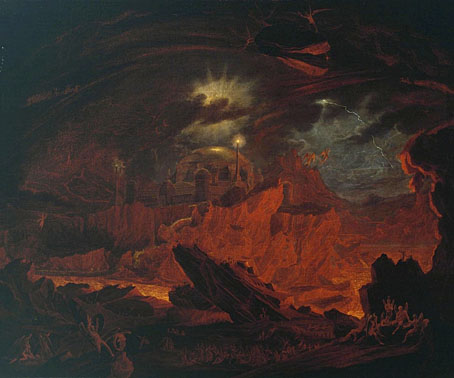
The Fallen Angels Entering Pandemonium, from ‘Paradise Lost’, Book 1 (c.1841) by John Martin.

• “Hergé’s heirs sue artist over his Tintin/Edward Hopper mashups.” The complaint is that the paintings of Xavier Marabout besmirch Tintin’s character by making him seem…human? Silly. I’d sooner complain that Hergé’s ligne claire drawing style is an awkward match for Hopper’s realism. And besides which, isn’t Tintin gay? There’s a lot of wish-fulfilling slash art showing Tintin and Captain Haddock in a closer relationship than Hergé ever would have wanted. This Canadian magazine cover by Normand Bastien dates from 1987.

• “Everyone wanted to make products that looked fast and angry and maybe wanted to lay eggs in your brain.” Alexis Berger tells S. Elizabeth how she avoided years stuck in a design office by becoming a jeweller instead.

• New music: Chiaroscuro by Alessandro Cortini, and Frequencies For Leaving Earth Vol. 4 (One-Hour Loop) by Kevin Richard Martin & Pedro Maia.

The Willows is less a flight of fancy and more an attempt to articulate the ways in which what we dubiously still call “nature” is at once an object of human systems of knowledge and yet also something that undermines those same systems. Thus if The Willows is indeed a classic of “supernatural horror” (as HP Lovecraft would famously note), we might also be justified in calling it “natural horror” as well. In Blackwood’s wonderfully slow, patiently constructed scenes of atmospheric suspense, there is the sense of an impersonal sublime, a lyricism of the unhuman that shores up the limitations of anthropocentric thinking, as well as evoking the attendant smallness of human beings against the backdrop of this deep time perspective.

Eugene Thacker on how Algernon Blackwood turned nature into sublime horror

• Women of Letters: John Boardley talks to Lynne Yun, Deb Pang Davis, Coleen Baik and Duong Nguyen about their typographic designs.

• At Google Arts & Culture: Music, Makers & Machines: A brief history of electronic music.

• At The Public Domain Review: The Universe as Pictured in Milton’s Paradise Lost (1915).

• Beyond the Perseverance drone: Chloe Lula on the sounds of space.

• At Wormwoodiana: Colour magazine (1914–1932).

Wyrd Daze Lvl.4 FOUR STAR is here.

• At Dennis Cooper’s: Hell.

O Willow Waly (1961) by Isla Cameron And The Raymonde Singers | Cool Iron (1972) by The Willows | The Willows (2005) by Belbury Poly

Duggie Fields, 1975

fields.jpg

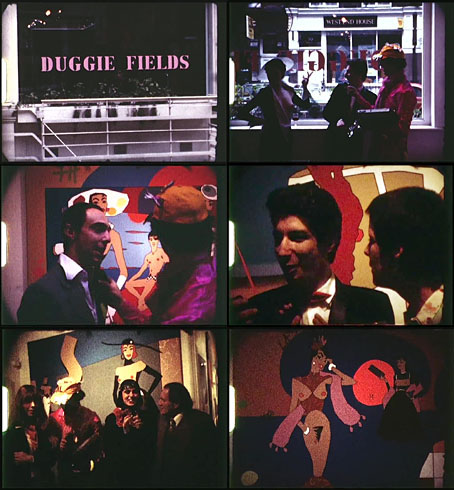
RIP Duggie Fields, seen here in 1975 courtesy of Derek Jarman’s Super-8 camera. The occasion was an exhibition at the Kinsman-Morrison Gallery of Fields’ paintings, many of which are seen throughout the film, although the low light and poor quality of Super-8 stock doesn’t do them any favours. Fields and Jarman were both constituents of the mid-70s London art crowd known as “Them” so it’s no surprise to see other Them faces at the gallery, notably Andrew Logan interviewing all the attendees (the film is silent, unfortunately), and an insistently bare-breasted Nell Campbell, aka Little Nell, either just before or just after her appearance in The Rocky Horror Picture Show. This wasn’t the first or last time that Fields and Campbell had appeared before Jarman’s roaming lens, they’re both in an earlier Super-8 short, Ulla’s Fete, and in also Jubilee, while Fields may be found reclining in a toga during the opening scene of Sebastiane. For a better look at Fields’ paintings, plus some comment from the man himself, there’s this recent visit to his Earl’s Court studio.

Squirm: Drew Struzan versus Gustav Klimt

squirm1.jpg

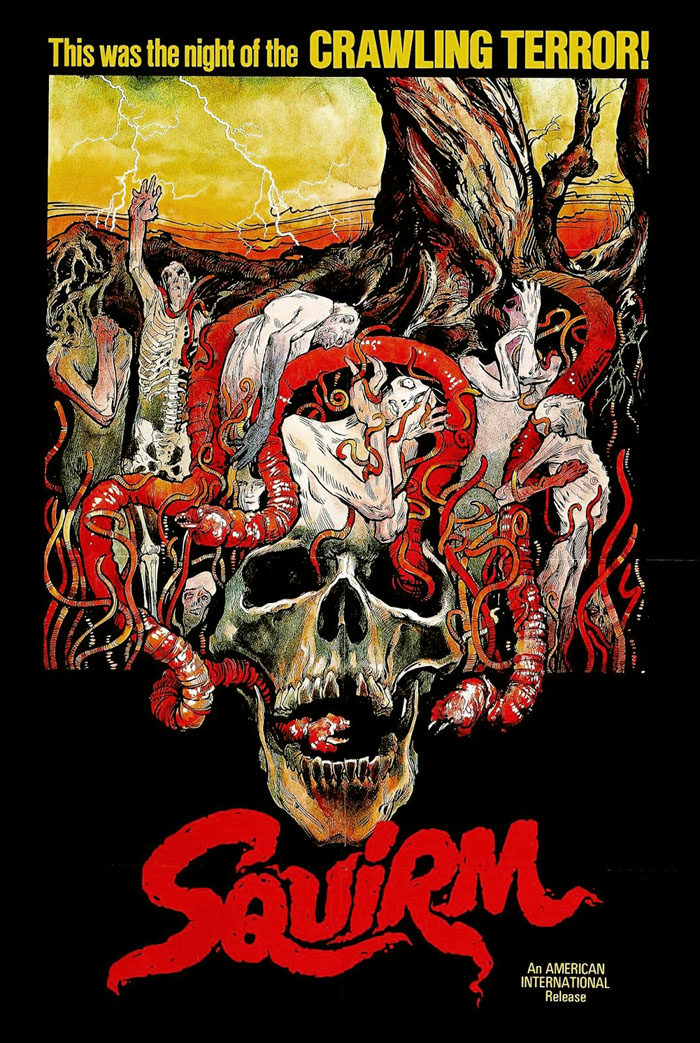
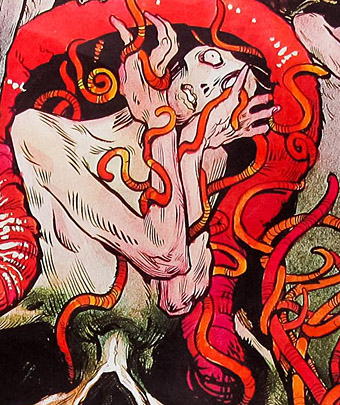
This poster by Drew Struzan turned up in my RSS feed courtesy of 70s Sci-Fi Art. So Struzan did the US poster for Squirm, thought I, …who knew? Wait a minute…are those Klimt figures?! Closer scrutiny confirmed that, yes, Struzan does indeed appear to have swiped a handful of figures from Gustav Klimt as victims for the carnivorous worms. Squirm (1976) for those who haven’t seen it, is described by The Psychotronic Encyclopedia of Film as:

Pretty bad film about electrified earthworms in Georgia that have teeth and make noises like horses. It does have an amazing scene with long worms burrowing through a man’s face. Whole rooms are filled with what looks like thick spaghetti. Don Scardino is the studious young hero. The ads claimed there were “250,000 real worms” in the film. From the director of Blue Sunshine.

Michael Weldon’s book has a very lenient attitude towards this kind of nonsense so for a film to be labelled as bad is always a warning. Having seen Squirm, I agree with Weldon’s appraisal. There were a lot of animals attacking humans in the cinema of the 1970s, thanks in part to the success of Jaws, so a story about worms on the rampage is merely another addition to the trashy pile. (The Japanese poster even managed to emulate the famous Jaws poster.) Squirm is especially ridiculous when the humble earthworm is so resistant to being any kind of menace unless its size is dramatically increased, as in Dune or Tremors, the latter being a much better horror film with its own Jaws-like poster.

klimt1.jpg

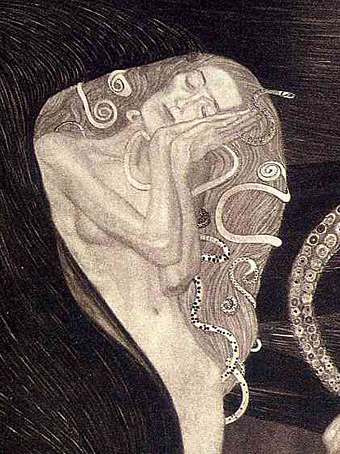
Jurisprudence (1907) by Gustav Klimt.

Struzan’s figures are based on those in Jurisprudence, one of the paintings that Gustav Klimt worked on from 1900 to 1907 for the ceiling of the Great Hall at the University of Vienna. There were three pictures—the others represented Philosophy and Medicine—but all were deemed too pornographic for public display. The paintings were subsequently destroyed in 1945 by retreating Nazi troops after having been seized from their Jewish owners and moved with other loot to the Schloss Immendorf.

klimt2.jpg

squirm2.jpg

Klimt’s Jurisprudence is the strangest of all his works, with three Furies presiding over the cowed figure of a man ensnared by evil, represented here by an octopus. Philippe Jullian in Dreamers of Decadence declares Klimt’s symbolic cephalopod to be “unique in European Art”. I alluded to the Furies, and thereby surreptitiously alluded to those tentacles of evil, when I put a Klimt-like figure into my adaptation The Call of Cthulhu in 1988.

Continue reading “Squirm: Drew Struzan versus Gustav Klimt”