Pynchon and Varo

varo.jpg

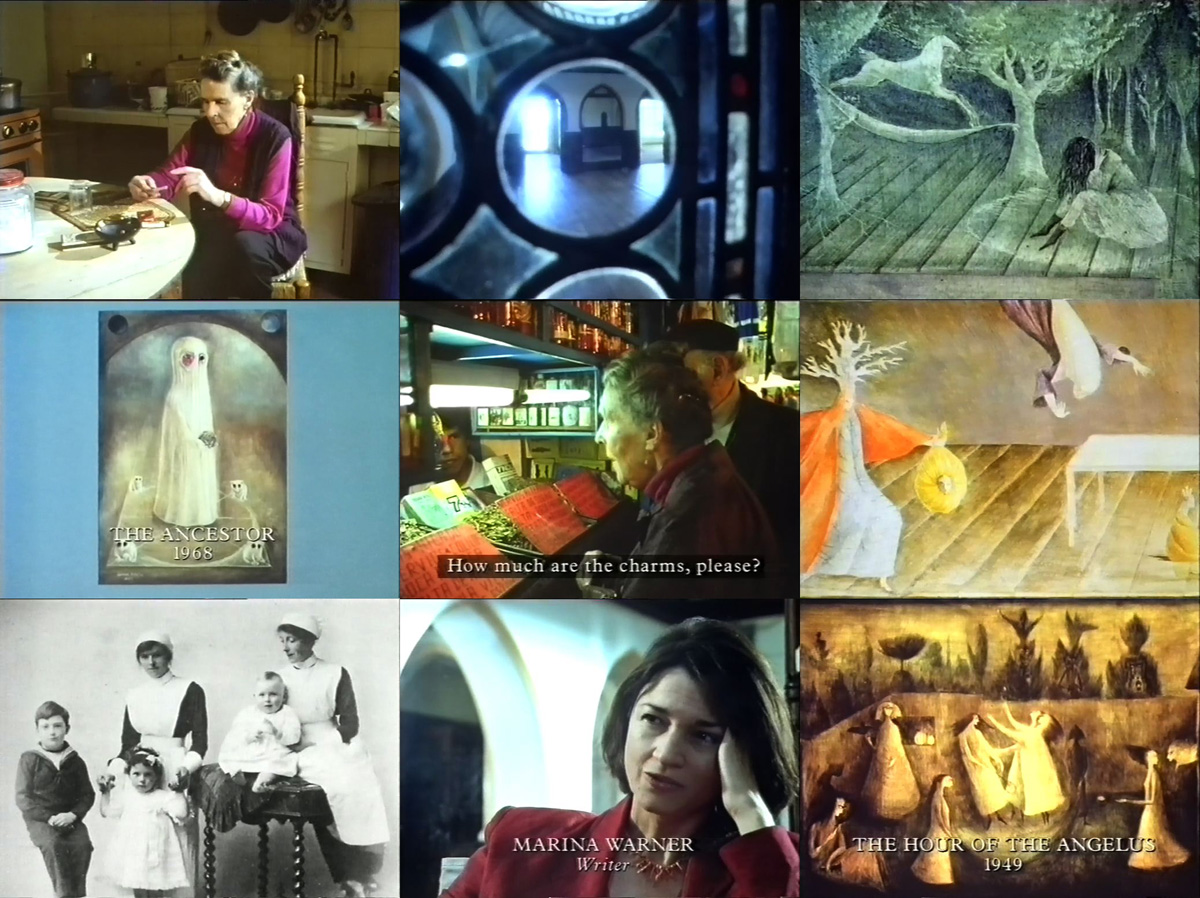
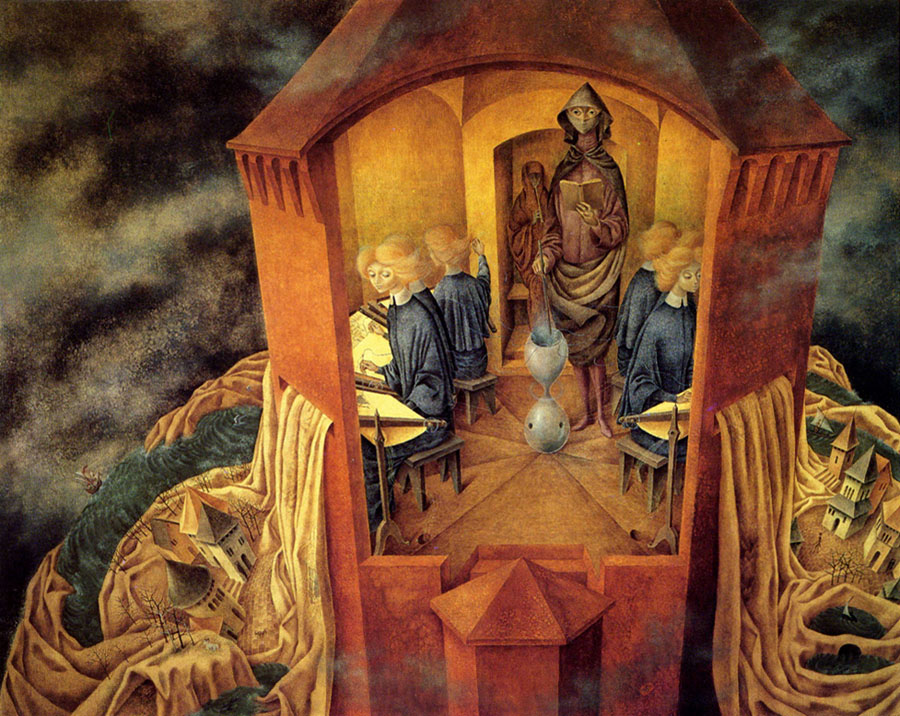
Bordando el Manto Terrestre (Embroidering the Earth’s Mantle) (1961) by Remedios Varo.

Re-reading The Crying of Lot 49 by Thomas Pynchon, this passage near the end of the first chapter stood out:

In Mexico City they somehow wandered into an exhibition of paintings by the beautiful Spanish exile Remedios Varo: in the central painting of a triptych, titled “Bordando el Manto Terrestre,” were a number of frail girls with heart-shaped faces, huge eyes, spun-gold hair, prisoners in the top room of a circular tower, embroidering a kind of tapestry which spilled out the slit windows and into a void, seeking hopelessly to fill the void: for all the other buildings and creatures, all the waves, ships and forests of the earth were contained in this tapestry, and the tapestry was the world. Oedipa, perverse, had stood in front of the painting and cried. No one had noticed; she wore dark green bubble shades. For a moment she’d wondered if the seal around her sockets were tight enough to allow the tears simply to go on and fill up the entire lens space and never dry. She could carry the sadness of the moment with her that way forever, see the world refracted through those tears, those specific tears, as if indices as yet unfound varied in important ways from cry to cry.

My earlier reading was in the mid-1990s, remote enough to have forgotten that Remedios Varo is mentioned twice (there’s another brief reference later on) in a novel otherwise unconcerned with painting. I didn’t remember much at all of the narrative, come to that, apart from the long description of a Jacobean revenge play, and all the post horn business. (And by coincidence—or is it? etc—I was amused to encounter a description of James Clerk Maxwell’s famous demon of entropy only a few days after reading this.) I did know who Varo was but at the time had only seen a couple of her paintings. She turns up in the better books on Surrealist art—one of mine has her filed under “Remedios”—but she didn’t have the connections or the longevity of her friend Leonora Carrington so any mention tended to be brief. In the 1990s it wasn’t possible to easily find a picture of a painting like Bordando el Manto Terrestre unless you worked in a major library or collected exhibition catalogues. Many complaints may be levelled against the internet but I never tire of having instant access to the entire history of art, so of course I had to stop reading for a moment to look for a copy of the picture. If I hadn’t done so I wouldn’t have discovered this lengthy discussion by Bill Brown of both novel and painting, and of the connections between the two. The Crying of Lot 49 is a slight work by Pynchon standards, one that the author disparages in his introduction to Slow Learner. In the same introduction he mentions Surrealism being an important factor in his literary evolution although he doesn’t name any specific influences. Pynchon’s Surrealism is like Varo’s, not the poetry of haphazard collisions but a thing of stylised figures in a world where hidden meanings may be present but also reluctant to reveal themselves. No wonder he liked the painting.

Previously on { feuilleton }
Remedios Varo’s recipe for erotic dreams
Thomas Pynchon – A Journey into the Mind of [P.]

Weekend links 566

hokusai.jpg

The Amida Falls in the Far Reaches of the Kisokaido Road. From the series A Tour of Waterfalls in Various Provinces (c. 1832) by Hokusai.

• New music: In Love With A Ghost by Kevin Richard Martin (aka Kevin Martin, The Bug, etc), a preview from his forthcoming alternative score for Andrei Tarkovsky’s Solaris (1972). In other hands I’d probably dismiss a further addition to the trend of creating new scores for films that don’t require them. Tarkovsky’s film certainly doesn’t need any new music, and we’ve already had an album-length homage from Ben Frost & Daníel Bjarnason. But I like Martin’s sombre atmospherics so he gets a pass with this one.

• “[Pauline] Oliveros wrote a piece for the New York Times in 1970 titled And Don’t Call Them Lady Composers, focusing on the difficulties of women being noticed and taken seriously in her field. It’s still online and could have been written yesterday.” Jude Rogers on Sisters With Transistors, a documentary about women in electronic music. Madeleine Siedel interviewed Lisa Rovner, the film’s director. Watch the trailer.

Submissions to the 16th number of Dada journal Maintenant will be open at the beginning of October, 2021, following an announcement of the theme of the new issue in September. All you would-be (or actual) Dadaists out there have the summer to plot your potential contributions.

Our reverence for originals takes an absurdly extreme form in the recent craze for NFTs (non-fungible tokens), where collectors and traders spend huge sums of money on unique ‘ownership’ of a digital artwork that anyone can download for free. Since there’s no such thing as the original of a digital file, the artist can now certify the file as the one and only ‘original copy’, and make a fortune. Time will tell whether this is a transient fad or a new way of establishing the feeling of a relationship to the mind of the digital artist.

But our reverence for originals isn’t universal. Treating the original as special and sacred is a Western attitude. In China and Japan, for example, it’s acceptable to create exact replicas, and these are valued as much as the original—especially because an ancient original might degrade over time, but a new replica will show us how the work looked originally. And, as mentioned, there are studios in China where artists are employed to create fakes. Perhaps our culture teaches us to respond to artworks by inferring the mind behind the art.

“Works of art compel our attention—but can they change us?” asks Ellen Winner

• “What Don basically did here is find a series of one or two bar riffs, or parts, that he liked, have me write them down, and then say, in essence, ‘make something out of this’.” John French (aka Drumbo) recalls the making of Trout Mask Replica.

• From 1988 (and relevant this week because I’m reading a Pynchon novel): Thomas Pynchon’s review of Love in the Time of Cholera.

• Andy Thomas on fusion legend Ryo Kawasaki, pioneer of the synth guitar.

• At Dennis Cooper’s: Dimitri Kirsanoff Day.

Gareth Jones’ favourite music.

• RIP Monte Hellman.

The Sea Named “Solaris” (1978) by Tomita | Solaris (2014) by Docetism | Solaris Return (2019) by Jenzeits

Raphael Kirchner’s Salomés

kirchner1.jpg

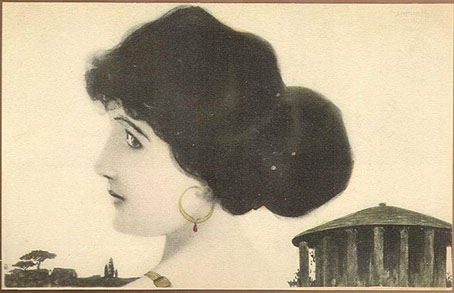
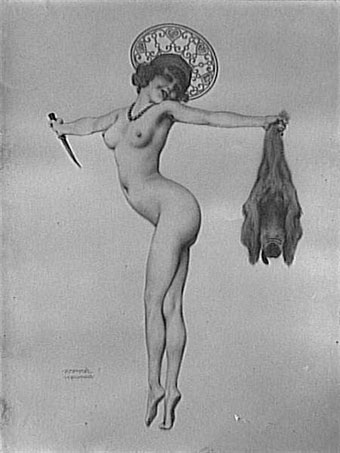
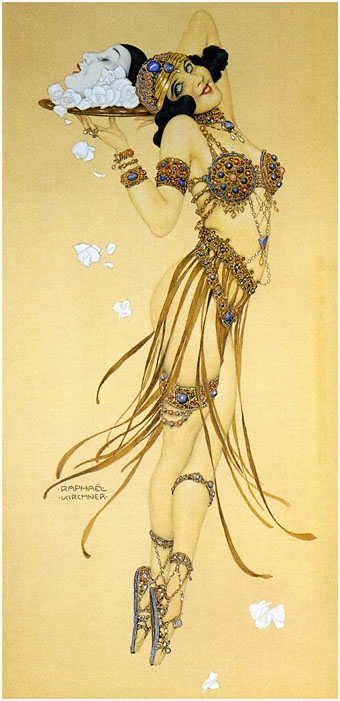
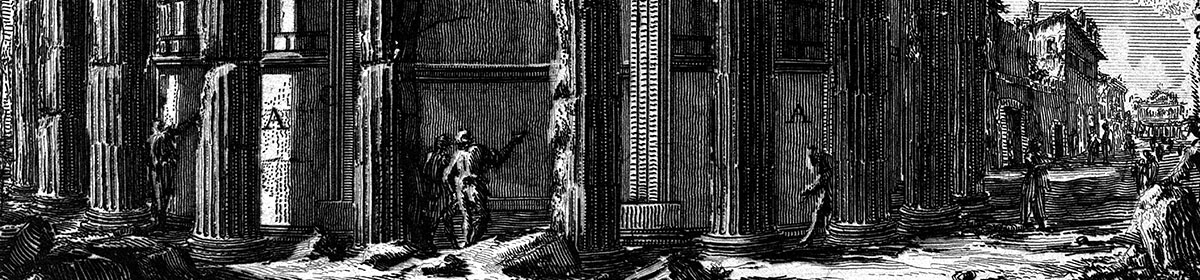
This drawing by Austrian artist Raphael Kirchner (1876–1917) caught my attention for its apparent combination of the Salomé theme with an arrangement of stones and cypresses that bring to mind Arnold Böcklin’s Isle of the Dead. All supposition on my part since I can’t find any definite confirmation that the picture is meant to depict Salomé, while a stand of cypresses is often just a stand of cypresses. But the Salomé theme and Böcklin’s island were popular enough fin de siècle subjects to be gestured towards in this manner, even on a piece of postcard art. In one of Kirchner’s other alleged Salomé cards he has a building that resembles the Temple of Cybele in Rome so the cypresses may simply be there to signify Ancient-World-plus-Mediterranean-setting (which in itself contradicts the Judean setting of the Salomé story). Kirchner’s speciality as an artist was attractive young women, often in states of undress, so the Ancient World here and elsewhere is providing the same excuse for a straight audience as “Greek” themes provided for homoerotica in the 19th and 20th century. There’s a lot more of Kirchner’s tasteful cheesecake at Wikiart.

kirchner2.jpg

kirchner3.jpg

kirchner4.jpg

kirchner5.jpg

Elsewhere on { feuilleton }
The Salomé archive

Weekend links 564

kolbe.jpg

Fantastical Tree (c. 1830) by Carl Wilhelm Kolbe.

• “It’s just a square and a semi-circle at the end of the day.” Pete Adlington navigates the rapids of high-profile cover design for the UK edition of Kazuo Ishiguro’s Klara and The Sun. I’m not always keen on the minimal approach but the Faber edition is a better design than the equally minimal US cover whose circle in a hand makes it look like a reprint of Logan’s Run. Faber also produced a limited edition with the sun circle wrapped onto sprayed page edges.

• “‘With a mysterious smile on her lips,’ writes the Chilean film director Alejandro Jodorowsky, ‘the painter whispered to me, “What you just dictated to me is the secret. As each Arcana is a mirror and not a truth in itself, become what you see in it. That tarot is a chameleon.”‘” The painter referred to is the now-ubiquitous Leonora Carrington whose own Tarot deck is investigated by Rhian Sasseen.

• “‘Horror is an emotion,’ Douglas E. Winter tells us. I would respectfully like to amend that assertion. Horror is a range of emotions. And each of these moods, if they are to be successful, must be cultivated differently.” Brian J. Showers offers his thoughts on horror fiction.

• “You move from awareness of—and preoccupation with—how sounds affect our bodies, into how that might create a web of connection with the external world—with the natural world.” Annea Lockwood talking to Jennifer Lucy Allan about her career as a composer and sound artist.

• Gay cruising and its geography in cinema and documentary, a list of films by Mike Kennedy. Related: Shiv Kotecha on O Fantasma (2000), a film by João Pedro Rodrigues.

• Coming from Strange Attractor in June: Coil: Camera Light Oblivion, a photographic record by Ruth Beyer of the first live performances by Coil from 2000–2002.

• At Wormwoodiana: Mark Valentine on The Star Called Wormwood (1941), a strange novel by Morchard Bishop.

• At Unquiet Things: Ephemeral and Irresistible: The Spectacular Still-life Botanical Drama of Gatya Kelly.

• “Fevers of Curiosity”: Charles Baudelaire and the convalescent flâneur by Matthew Beaumont.

• 1066 and all that: Explore the Bayeux Tapestry online.

• Mix of the week: Secret Thirteen Mix 311 by Arigto.

• New music: Terrain by Portico Quartet.

Fever (1956) by Little Willie John | Fever (1972) by Junior Byles | Fever (1980) The Cramps

Leonora Carrington and the House of Fear

lc1.jpg

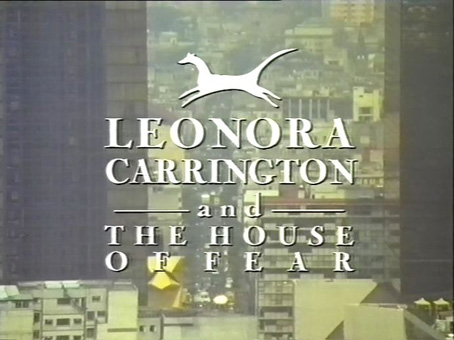
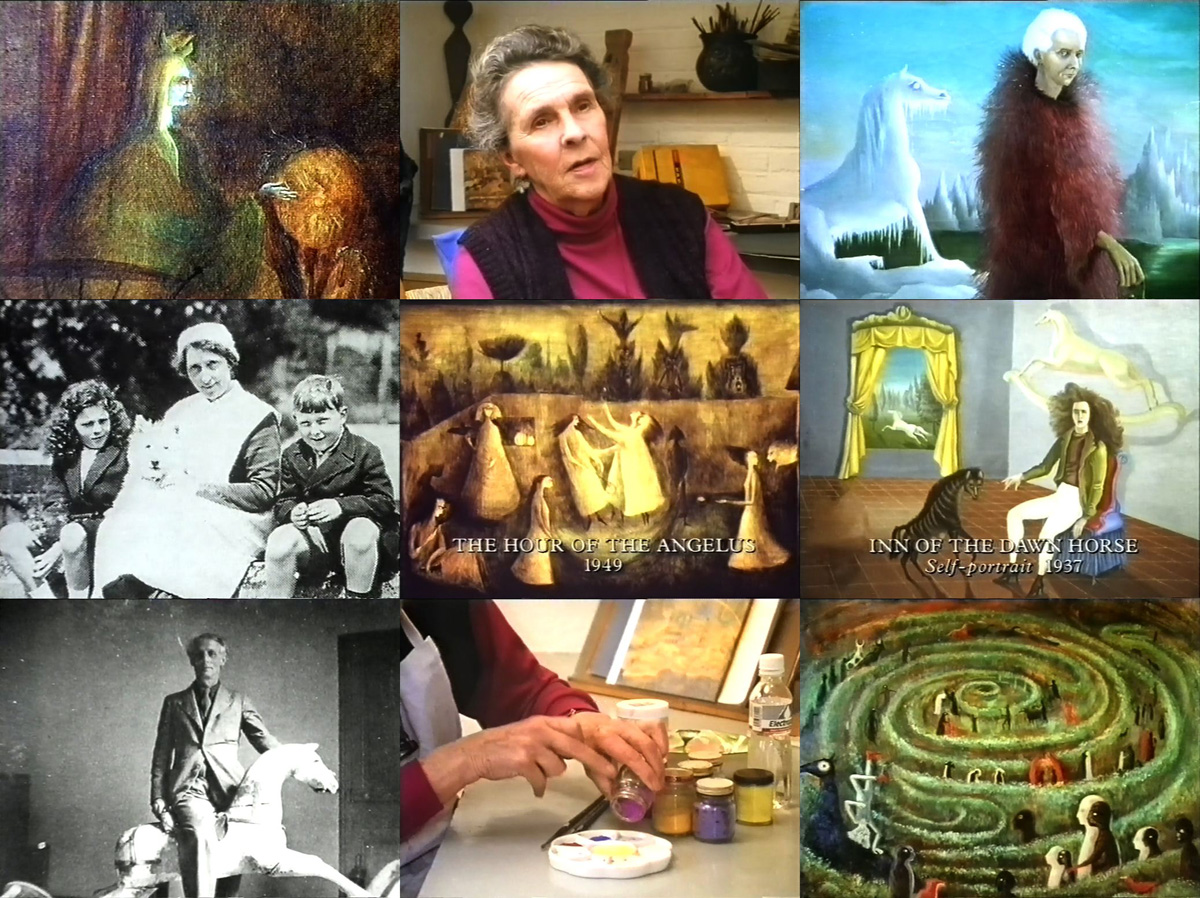
Kim Evans’ 50-minute TV profile of Leonora Carrington finally turned up on YouTube in December, in a slightly truncated copy. I taped this when it was first broadcast by the BBC in November 1992, and had the foresight to digitise it before my video recorder stopped working, but I’ve never wanted a YT account so I resisted the urge to upload it myself. If I was going to do so I’d offer things to Ubuweb instead, but I haven’t managed that either.

lc2.jpg

Leonora Carrington and the House of Fear was shown a few months after Carrington’s paintings had been the subject of a retrospective exhibition at the Serpentine Gallery in London, two events that made nonsense of Tate Modern’s subsequent labelling of her as a “lost” artist. Most artists would be happy to be described as “lost” if it meant being given almost an hour of screen-time on BBC 1 together with a retrospective show at a major London gallery. Describing Carrington as “lost” was a convenient way for the Tate and any art critics playing catch-up to sidestep their having ignored her work for decades. (Joanna Moorhead embarrassed Tate Modern about this neglect in 2007.) Surrealism’s avant-garde status waned in the late 1940s, and the movement became increasingly disreputable thanks in part to Salvador Dalí’s prominence and self-promotion. There were Surrealist exhibitions in London prior to 1992—notably the expansive Dada and Surrealism show at the Hayward Gallery in 1978—but the British art and literary world has always been suspicious of an excess of imagination, the very thing that’s to the fore in Kim Evans’ film. This follows the standard BBC template of the time, combining a biographical sketch with a view of the artist’s day-to-day life which here includes a visit to a crypt full of mummified corpses, and a lesson in how to make egg tempera. Marina Warner championed Carrington’s art and writing throughout the “lost” years, and she turns up briefly to offer some comment.

lc3.jpg

Previously on { feuilleton }
Temptations
The Secret Life of Edward James
Leonora Carrington, 1917–2011