Weekend links 572

poumeyrol.jpg

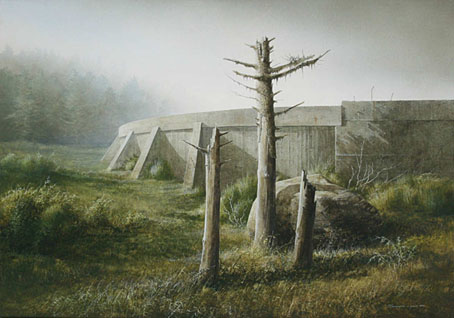
L’Insolite (1980) by Jean-Marie Poumeyrol.

• “As we move down the ladder of prestige into the world of unvetted tweets, we observe an increasing difficulty, among people with very strong opinions, in exercising that basic critical competence of distinguishing between the authorial creation of a character, and the author’s affirmation of that character’s every moral trait and political view.” Justin EH Smith on the HR managers of the human soul.

• “When is a Didone not a Didone? How far must an exemplar Didone, like a Didot or a Bodoni, be altered before it loses its ‘Didoneness’?” John Boardley on the vexed question of font classification, and the need for an alternative to the present system.

• “Birds with Human Faces and Birds with Human Souls share shelf space with The Book of Owls and Expert Obedience Training for Dogs…” Joanna Moorhead visits the Casa Estudio Leonora Carrington in Mexico City.

“Indolent” is a funny way to characterize her natural state, which seems more like “incisive” to me, but I also have the unshakable sense—for myself—that writing can’t or shouldn’t look like staring into space or feel like not wanting to move from the couch. “A fraud is being perpetrated: writing is not work, it’s doing nothing,” she states in that first essay, from 1992. But she immediately counters with, “It’s not a fraud: doing nothing is what I have to do to live.” Listing a few more pertinent existential options, Diski ends with, “Or: writing is what I have to do to be my melancholy self.” The protoplasmic, chattering, melancholic “I” of these essays is, of course, the collection’s constant, its true subject. I can commiserate with her on every page even if emulation is out of reach.

Johanna Fateman on the incisive long-form criticism of Jenny Diski

• At Spine: Vyki Hendy identifies sunburst as a new trend in book cover design. I often think I overuse these things in my own cover designs which means I may be inadvertently (and fleetingly) trendy.

• At the Magnum Gallery, London: Metamorphoses, photographic studies by Herbert List of male bodies and Greek statuary.

• At Spoon & Tamago: A butterfly sipping moisture from puddles, sculpted entirely in wood by Toru Fukuda.

• At Dangerous Minds: Joseph Lanza on the easy listening side of psychedelic pop.

• At CounterPunch: Louis Proyect on thinking like an octopus.

• Mix of the week: Fact Mix 510 by Britton Powell.

Bye Bye Butterfly (1965) by Pauline Oliveros | Butterfly Mornings (2001) by Hope Sandoval & The Warm Inventions | Butterfly Caught (2003) by Massive Attack
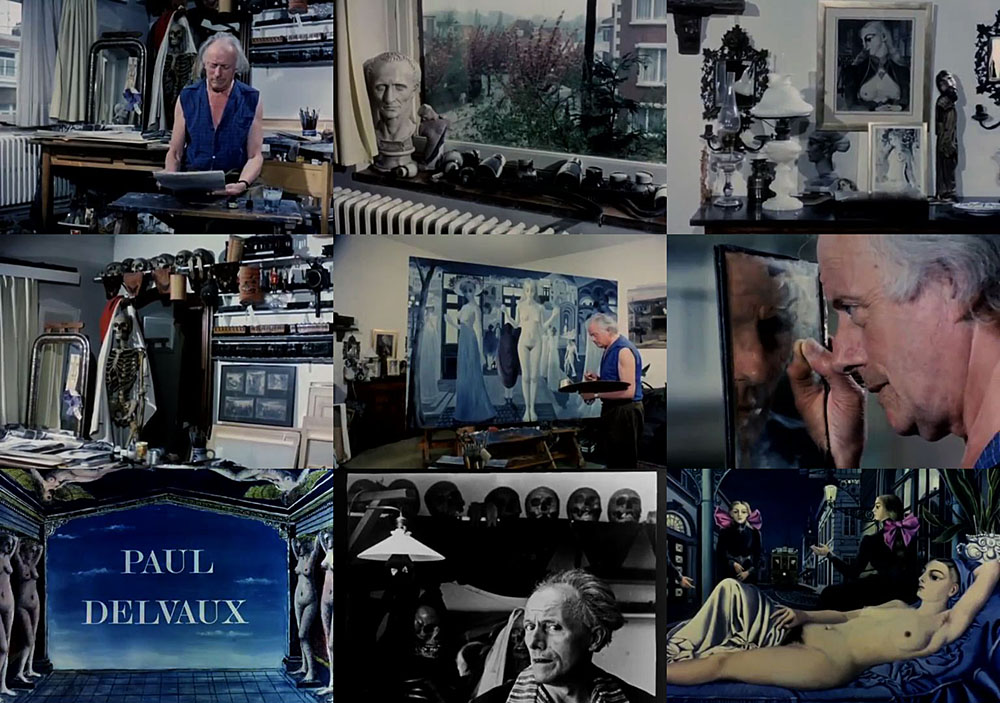
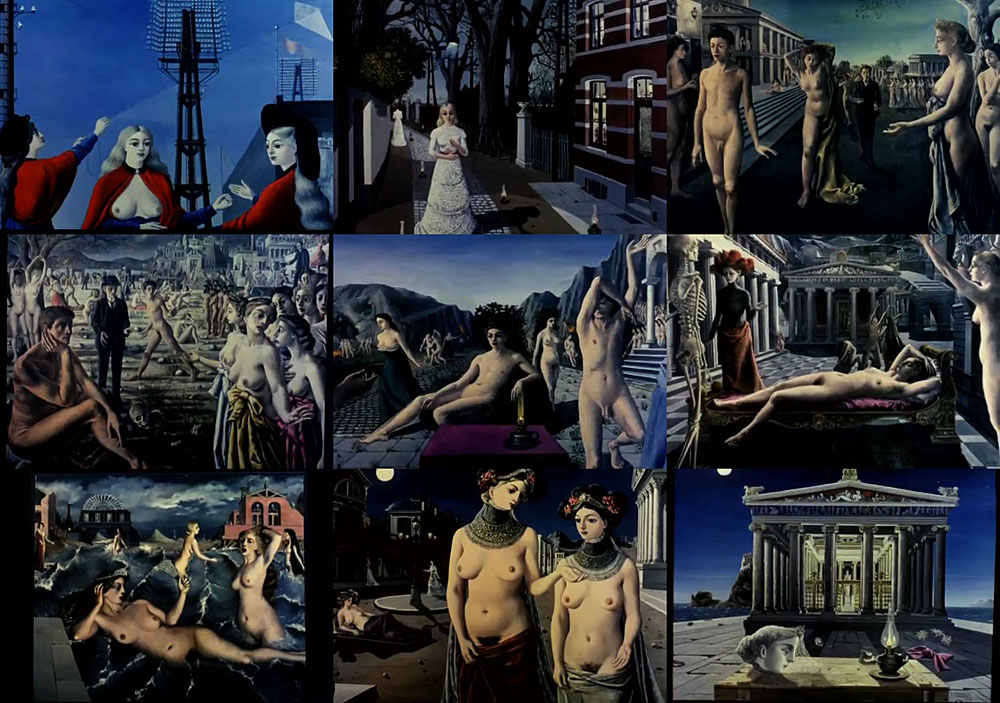
Paul Delvaux ou les Femmes Défendues

delvaux1.jpg

Henri Storck’s short film from 1971 is mostly an overview of Paul Delvaux’s irreducibly mysterious paintings but the first 7 minutes are invaluable for the views they give of the artist at work. I’m always interested in the technical details of painting but these are seldom mentioned in art books which tend to be more concerned with discussions of meaning and artistic intent. So here we see Delvaux sketching, then leafing through a collection of preliminary studies before finally dabbing at a figure on a large canvas in his skull-filled studio.

delvaux2.jpg

The rest of the film is taken up with shots that roam over many of the artist’s earlier paintings. I don’t have any books about Delvaux so there are more of his pictures here than I’ve seen in one place, all of them displaying the familiar nocturnal enigmas: somnambulist nudes, trains, moonlight, Classical architecture and so on. The voiceovers, including that of the artist, are in unsubtitled French but the film is available with subtitles as part of a DVD collection of films about Belgian artists and cultural figures directed by Storck and others. One for the shopping list.

Previously on { feuilleton }
Raoul Servais: Courts-Métrages
The mystery of trams
Temptations
Papillons de Nuit, a film by Raoul Servais
Paul Delvaux: The Sleepwalker of Saint-Idesbald
Ballard and the painters
Taxandria, or Raoul Servais meets Paul Delvaux

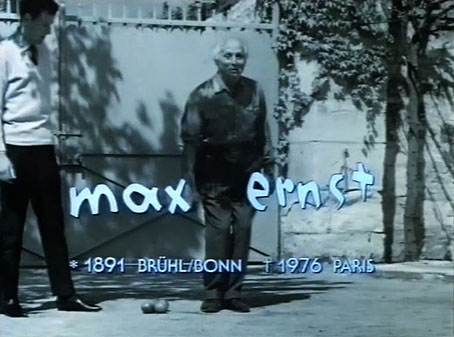
Max Ernst by Peter Schamoni

me1.jpg

The English version of Peter Schamoni’s feature-length documentary from 1991 has finally reached YouTube. I think copyright reasons may have prevented it from doing so in the past in which case the usual caveats apply: if it’s of interest then watch it while you have the opportunity, it may not be there for long. The German version of the film has a longer title, Max Ernst: Mein Vagabundieren—Meine Unruhe, which auto-translates to “my vagabondingmy restlessness”, a reference to Ernst’s peripatetic life as well as to his artistic wanderings.

me2.jpg

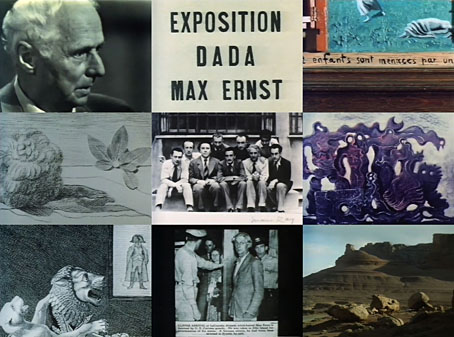
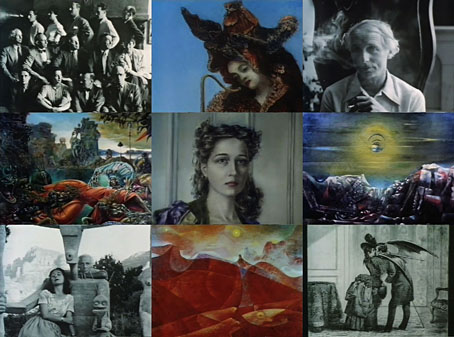
I mentioned in the previous post my having spent some time last year watching a number of documentaries about Surrealism. This was one of them, and it’s the film about Max Ernst. Films about Salvador Dalí are plentiful but other Surrealist artists are lucky if they receive a single worthwhile appraisal. Peter Schamoni had filmed Ernst in 1966 for a short, Maximiliana oder die widerrechtliche Ausübung der Astronomie, so was already sympathetic to the artist’s work. Max Ernst resembles one of the BBC’s classic Arena documentaries in being a biographical account threaded with documentary material and pictures of significant artworks. Detail is supplied by actors reading from writings by Ernst, Dorothea Tanning and others.

me3.jpg

There’s a lot of interview footage here, mostly from TV appearances in later life, in which Ernst’s intelligent conversation makes a striking contrast to Dalí’s bluster and evasions. Schamoni interleaves the historical footage with shots of the various locations of Ernst’s wanderings: the south of France, New York City, California, Arizona, Paris. Several of the Dalí documentaries note the degree to which the coastal landscape of Cadaqués informed Dalí’s painting; Schamoni makes a similar comparison between Ernst’s American paintings and the desert landscapes of Arizona. It’s good to see some of the Microbes that he painted while he was there, a series of tiny landscape pictures that books about Ernst don’t always mention, let alone reproduce.

Previously on { feuilleton }
The nightingale echo
Max Ernst’s favourites
Viewing View
Max Ernst album covers
Maximiliana oder die widerrechtliche Ausübung der Astronomie
Max and Dorothea
Dreams That Money Can Buy
La femme 100 têtes by Eric Duvivier

The Fame and Shame of Salvador Dalí

fasosd1.jpg

…one ought to be able to hold in one’s head simultaneously the two facts that Dalí is a good draughtsman and a disgusting human being.

George Orwell

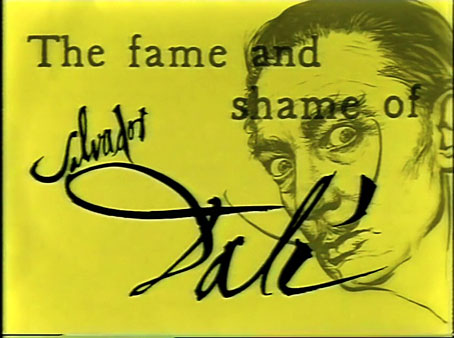
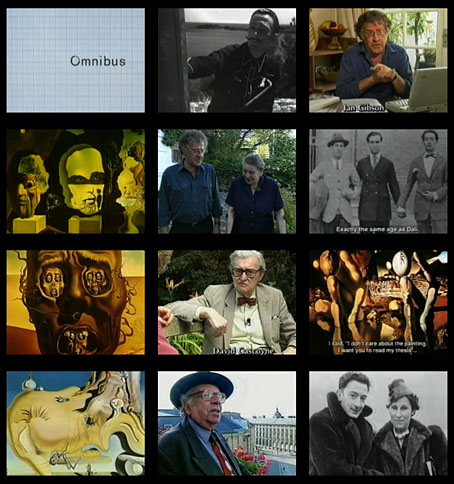
This two-part, two-hour TV documentary from 1997 has a title that makes it sound like more of an exercise in audience pandering than was typical for the BBC’s Omnibus arts strand, fame and shame being qualities that might be considered of greater interest for the general viewer than art history. But Michael Dibb’s film is more insightful than those made 20 years earlier when access to the Dalí circle, and to Dalí himself, required flattery and capitulation to the artist’s whims and attention-grabbing antics. In place of the impersonal approach taken by the BBC’s Arena documentary from 1986 we have writer Ian Gibson serving as a guide to Dalí’s life while conducting research into a major biography, La vida desaforada de Salvador Dalí (The Shameful Life of Salvador Dalí), which was published a year later. “Shame” here refers more to Dalí’s numerous fears and phobias, especially those of the sexual variety, rather than to scandal and public opprobrium, while “Shameful Life” echoes the “Secret Life” title of the artist’s autobiography. Dalí’s sexual neuroses were always to the fore in his art but they remained concealed in his personal life, although the evasions—his frequent declarations of impotence, for example—don’t prevent Gibson from speculating. I saw this documentary when it was first broadcast but had forgotten the discussions of a possible homosexual relationship with Dalí’s adoring friend, Federico García Lorca, as well as the mention of the artist’s voyeurism, all of which was explored in more detail (and with some personal experience) by Brian Sewell a decade later in the TV documentary with the most prurient title of them all, Dirty Dalí: A Private View.

fasosd2.jpg

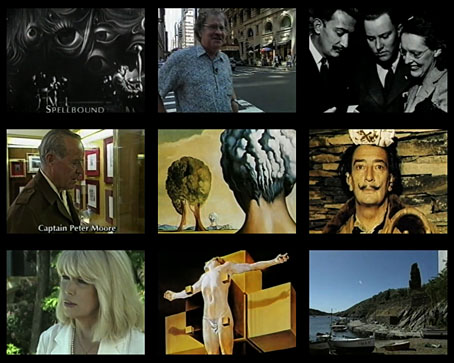
Gibson is a guide with the advantage of being a fluent Spanish speaker able to engage in conversation with those who knew or worked for the artist. Several of the interviewees are familiar faces in Dalí films: Amanda Lear, art collectors Reynolds and Ellen Morse, Dalí’s first secretary and business manager, Captain Peter Moore, and painter Antoni Pitxot. 1997 was about the last time it was possible to make a documentary about Dalí that might feature interviews with people who knew the artist in his younger days, although José “Pépin” Bello, born the same year as Dalí in 1904, lived on until 2008. Bello was the sole surviving member of a Madrid student group in the 1920s whose other members were Dalí, Luis Buñuel and Federico García Lorca. He also turns up in The Life and Times of Don Luis Buñuel (1984), another BBC film which really ought to be on YouTube, where he makes unsubstantiated claims about having contributed ideas to Un Chien Andalou. It’s easy to be sceptical about the assertions of an uncreative man whose youth had been spent in the company of three great talents but according to this obituary both Dalí and Buñuel confirmed the claims. (The image of a rotting donkey, however, had appeared in Dalí’s paintings before the film was made.)

fasosd3.jpg

Among the other people talking to Gibson are Surrealist poet David Gascoyne, and also George Melly, a man who for a long time was a ubiquitous presence whenever Surrealism was being discussed on British TV. The interviews are separated by clips from other films, two of which have featured in earlier posts: Hello Dalí! (which I keep hoping someone will upload to YouTube in better quality), and Jack Bond’s film of Dalí in New York in 1965. I watched both these again last year when I followed my viewing of the Švankmajer oeuvre with a number of Surrealist documentaries. Jack Bond’s film is especially good for its verité qualities, and for Jane Arden’s attempts to persuade Dalí to talk seriously for once about his art.

The Fame and Shame of Salvador Dalí: Part One | Part Two

Previously on { feuilleton }
Figures of Mortality: Lawrence versus Dalí
Être Dieu: Dalí versus Wakhévitch
Chance encounters on the dissecting table
Salvador Dalí’s Maze
Dalí in New York
Dalí’s discography
Soft Self-Portrait of Salvador Dalí
Mongolian impressions
Hello Dalí!
Dirty Dalí
Impressions de la Haute Mongolie revisited

Weekend links 569

lehr.jpg

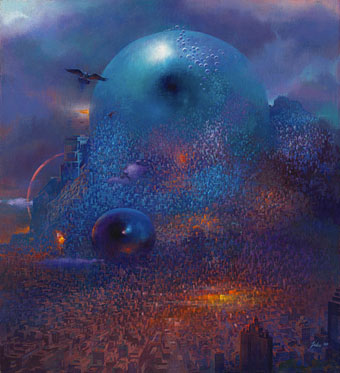
City with Eyes in Blue (1989) by Paul Lehr.

• “Lehr chose science fiction illustration because he saw it as a path to making a living and an opportunity to ‘depict the epic’. ‘War, destruction, celebration, congestion, marching armies, waving flags and banners—the strange and mysterious atmosphere of it all, rather than the literal illustration.'” Jane Frank on the art of Paul Lehr (1930–1998).

• “Time isn’t the only thing Harrison treats as firmly malleable. The same is true of his willingness to play with genre conventions…” Tobias Carroll on M. John Harrison, and an article where you have to ignore the clickbait clichés in the headline.

• The narrators for the forthcoming audiobook of Voice of the Fire by Alan Moore have been revealed.

• At Public Domain Review: A remembrance of aerial forms: Odilon Redon’s À Edgar Poe.

• The weight of the ritual: Frank Rynne on The Master Musicians of Joujouka.

• “Cerne Giant in Dorset dates from Anglo-Saxon times, analysis suggests.

Aaron Moth, the artist creating exquisite collages from vintage [gay] porn.

Clive Hicks-Jenkins on revision in illustration.

• At Wikimedia Commons: Lesbian pulp fiction.

• Mix of the week: A Wire mix by BLK JKS.

• At Dennis Cooper’s: Psychedelics.

Colleen‘s favourite albums.

Ritual Fire Dance (1969) by Tuesday’s Children | Ritual (1973) by Vangelis | Rituals (1981) by Bush Tetras