
Weekend links 481

gaussot.jpg

L’Hamestoque (1977) by Christine Gaussot.

• Another announcement from Strange Attractor Press: Of Mud & Flame: A Penda’s Fen Sourcebook edited by Matthew Harle and James Machin will be published at the end of October. Among the contents will be the screenplay of David Rudkin’s cult television play, an item that’s always been impossible to find in print.

• A trailer for Journey to the Beginning of Time (1955), another semi-animated fantasy film by Karel Zeman which will released on disc next month by Second Run.

• “There was craziness in getting lost and dizzy.” Stereolab choose favourite songs from their back catalogue.

E=MC² (1976), an album of spacey jazz-electronica by Teddy Lasry which has never been reissued.

• “Why do so many book covers look the same? Blame Getty Images,” says Cory Matteson.

• Mix of the week: The Ephemeral Man’s Teapot by The Ephemeral Man.

Masataka Nakano has been photographing a deserted Tokyo for almost 30 years.

• Beyond the bounds of depravity: an oral history of David Cronenberg’s Crash.

Woodblocks in Wonderland: The Japanese Fairy Tale Series.

• A new novel by M. John Harrison is always a good thing.

Hamid Drake‘s favourite music.

Warm Leatherette (1980) by Grace Jones | Crash (1980) by Tuxedomoon | A Crash At Every Speed (1994) by Disco Inferno
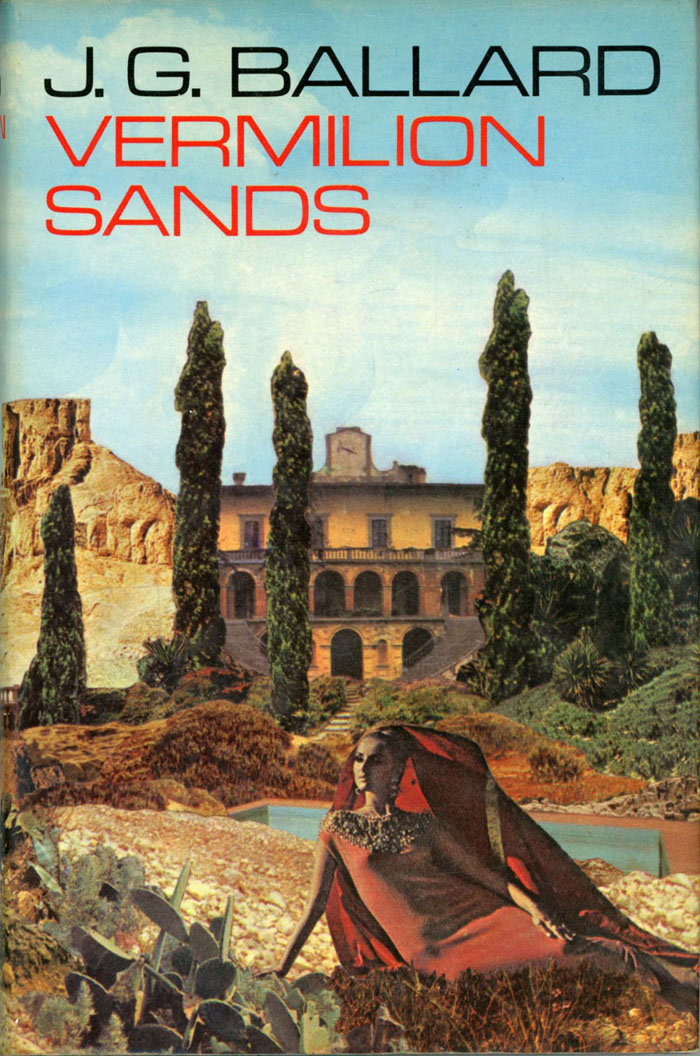
Picturing Vermilion Sands

knight2.jpg

First UK edition, 1971. Art by Brian Knight.

Vermilion Sands (1971) is a story collection by JG Ballard which maintains a cult reputation despite being overshadowed by its author’s more popular (and notorious) novels. Most of the stories were written in the 1960s—a couple of them are among Ballard’s earliest works—but where many of his other short stories can read like the work of a writer with bills to pay, the tales of Vermilion Sands are much closer to Ballard’s core interests, filled with symbolic resonance and literary allusion.

Vermilion Sands, the place, is a near-future resort with a desert climate and an unspecified location; a locale where the Côte d’Azur meets Southern California but the ocean is a sea of sand. While each story has a different artistic or cultural theme, all the stories are populated by the idle midde-class types found in the rest of Ballard’s work. Ballard was more receptive to visual art, especially painting, than many authors, particularly the SF writers of his generation for whom art was less interesting than science and technology. There is science and technology in these stories (some of the latter is now inevitably dated) but it doesn’t dominate the proceedings. The stories derive less from scientific speculation than from Ballard’s desire to create a future he would have been happy to inhabit himself, an alternative to the grim dystopias which proliferate in science fiction. The background furnishings also reflect the author’s ideal, owing much to the Surrealist landscapes of Salvador Dalí and Max Ernst, a pair of artists whose works are often referenced in Ballard’s fiction. Given all of this you’d expect that cover artists might have risen to the challenge more than they have. What follows is a look at the most notable attempts to depict Vermilion Sands or its population, only a few of which are covers for the book itself.

Continue reading “Picturing Vermilion Sands”

Claude Shepperson’s First Men in the Moon

shepperson01.jpg

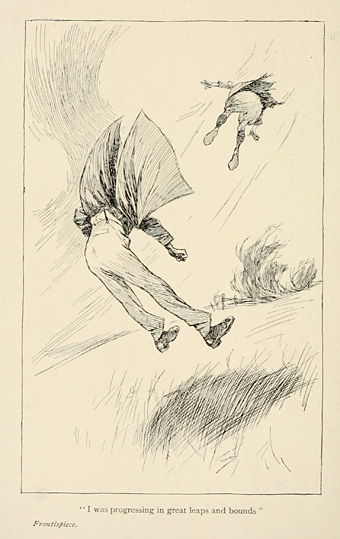
In the week following the Moon-landing anniversary I’ve been re-reading The First Men in the Moon by HG Wells. This was a late entry in Wells’ extraordinary run of science fiction novels, and is both shorter and lighter in tone than his earlier novels, some of which veer at times into outright horror. The First Men in the Moon might have been a serious examination of interstellar travel but the narrative is overtly comic in places, rather like The Man Who Could Work Miracles, a Wells story in which a fantastic gift is offered to a character unprepared to make the most of it. Wells’ lunar explorers—Bedford, a failed entrepreneur, and Cavor, an absent-minded inventor—lurch from one mishap to another, yoked together through their own inadequacies. Early in the proceedings Cavor destroys his house when his gravity-repelling “Cavorite” generates a violent funnel of air before launching itself into space. Cavor regards this as fortunate, explaining that a slightly different set of circumstances might have removed the breathable atmosphere from the entire planet for a day or so. The trip to the Moon is conducted almost on a whim: Cavor has no real reason for going, and Bedford tags along in the hope of finding some future business opportunity. Like the hapless protagonists of Withnail and I, this is a lunar voyage undertaken “by mistake”.

shepperson02.jpg

It’s probable that Wells regarded absurdity as being the best way to approach a story that was less original than his earlier works. The first edition of the novel opens with an epigraph from Lucian’s True History (or True Story), a book from the second century AD which includes a journey to the Moon among its planetary travels. Lucian’s book was the first to feature such a journey (and is often regarded as the first work of science fiction) but many others followed, even before From the Earth to the Moon (1865) by Jules Verne, a book which Bedford mentions during the expedition discussions. (Cavor has never heard of it.)

shepperson03.jpg

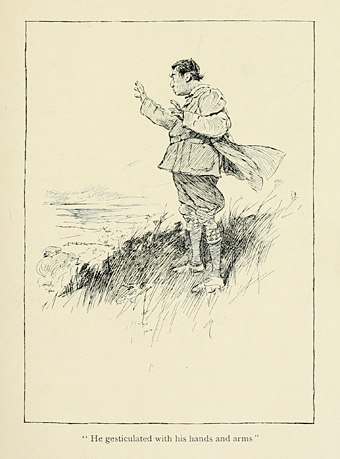
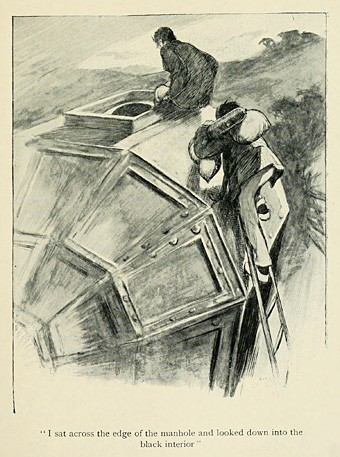
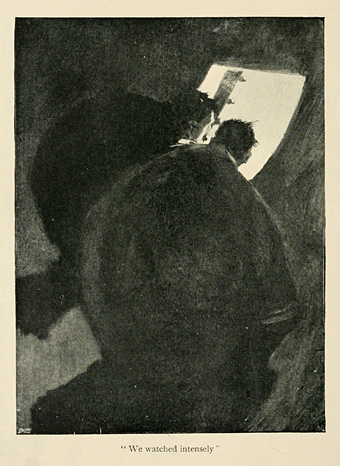
The illustrations here by Claude Allin Shepperson are also from the first edition, and are closer to the tone of the novel than those by other artists. E. Hering’s illustrations for American readers are in a style which is more detailed and inventive than Shepperson’s but which also suggests a more serious story. Readers expecting a new War of the Worlds would have been surprised. Shepperson’s drawing of Cavor’s spacecraft evidently provided the model for Ray Harryhausen in the 1964 film adaptation, although Harryhausen’s Selenites differ from both Shepperson and Wells’ descriptions. Nigel Kneale’s screenplay deviates from the book elsewhere but the film is still a more faithful adaptation than those based on Wells’ more popular novels, as are many of the other screen adaptations, the first being a lost silent from 1919. All of which reminds me that I’ve not seen Harryhausen’s film for many years. I’d welcome another date with the Grand Lunar.

shepperson04.jpg

shepperson05.jpg

Continue reading “Claude Shepperson’s First Men in the Moon”

Weekend links 472

isono.jpg

Poster art by Hiroo Isono.

• “[Divine] didn’t want to pass as a woman; he wanted to pass as a monster. He was thought up to scare hippies. And that’s what he wanted to do. He wanted to be Godzilla. Well, he wanted to be Elizabeth Taylor and Godzilla put together.” I can’t help linking to yet another John Waters interview when he always has things like this to say.

• Fifty shades of grey: great towers of the Eastern bloc photographed by David Navarro & Martyna Sobecka.

• Seeking Beastliness and Defining Beauty: Clive Hicks-Jenkins on visualisations of Beauty and the Beast.

Fire Temple by Bobby Krlic (The Haxan Cloak) from the Midsommar soundtrack.

Brad Jolliff & Mark Robinson on the scientific legacy of the Apollo programme.

John Boardley on Renaissance memes and the chemical pleasure garden.

• “It’s important to go out and feel the so-called reality,” says David Lynch.

Peter Strickland talks to Robert Barry about his new film, In Fabric.

Nico in Manchester: “She loved the architecture—and the heroin”.

• Mix of the week: Secret Thirteen Mix 292 by Paco Sala.

• Andrei Codrescu on the many lives of Lafcadio Hearn.

Hiroo Isono: Into the Depths of the Sacred Forest.

• At Dennis Cooper’s: Queer.

The Beast (1956) by Milt Buckner | The Beast (1989) by Rhythm Devils | Beast (1994) by Brian Eno

Weekend links 468

atoms.jpg

“The atom shall work for peace…” Soviet poster promoting the benefits of nuclear power.

• RIP Mac Rebennack aka Dr. John Creaux, The Night Tripper. Dan Auerbach remembers the man whose return to funky form, Locked Down, he produced in 2012. Elsewhere, Michael Hurtt details Mac Rebennack’s pre-Dr. John exploits; some of his music from that period is linked at the end of this post. Entries at YouTube are inevitably skewed to the present but among the older clips you’ll find these: The Doctor and his band in full voodoo regalia miming to Zu Zu Mamou on the Something Else TV show; audio extracts from a Dutch festival performance in 1970, here and here; more quality audio from a 1972 concert in Syracuse, NY; and an hour-long Chicago TV show from 1974 featuring Dr. John, Professor Longhair, The Meters, and Earl King.

• More Tangerine Dream: all the soundtrack music for Vampira (1971), a drama-documentary directed by George Moorse for German TV. Recommended to those who like the group’s Ohr period.

• More Chernobyl: a photo-essay by Tom Skipp featuring survivors of the disaster, and from 2013, Hari Kunzru‘s report from the Exclusion Zone.

• At The Quietus: Lottie Brazier on The Strange World of Stereolab, and Ned Raggett talking to Liz Harris about her Nivhek project.

• The sixth edition of Wyrd Daze—”The multimedia zine of speculative fiction + extra-ordinary music, art & writing”—is out now.

Clark Ashton Smith: The Emperor of Dreams, a DVD of the feature-length documentary by Darin Coelho Spring.

• Moon Wiring Club is back this month with fresh releases at Bandcamp, a YouTube post, and the EVP MVP Mix.

• Once the “Swingingest Street in the World”: Rob Baker on pictures of Carnaby Street 1924–1975.

• New video footage of Coil playing live at All Tomorrow’s Parties, 6th April, 2003.

Dean Hurley explores life after death on Philosophy of Beyond.

Tom Walker on Harry Clarke’s uncanny visions of Ireland.

Alex Barrett on where to begin with Alain Resnais.

• Martin Parr’s Soviet space dog collection.

Dennis Cooper winds you up.

Storm Warning (1959) by Mac Rebennack | Morgus The Magnificent (1959) by Morgus & The 3 Ghouls | Sahara (1961) by Mac Rebennack & His Orch.