Weekend links 378

belbury.jpg

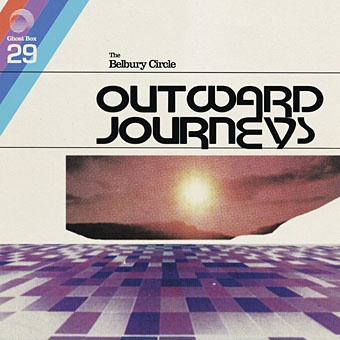
Outward Journeys, which will be released on November 3, is the second album on the Ghost Box label by The Belbury Circle (Belbury Poly with The Advisory Circle). As before, John Foxx is a guest vocalist, and as always, Julian House provides the graphic design.

• Music non-stop: Geeta Dayal in 2012 talking to Rebecca Allen about the challenges of turning Kraftwerk into computer animations.

• At the BFI: Jon Towlson on the sublimity of Close Encounters of the Third Kind; and Stephen King’s favourite films.

Bookogs is the Discogs concept applied to books. Stupid name (Bibliogs would be much better) but there it is.
belbury2.jpg

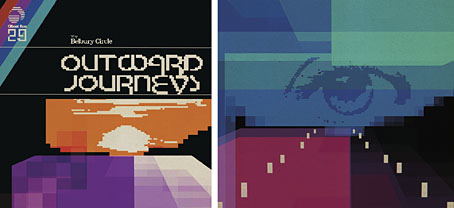
Julian House goes 8-bit. More artwork for The Belbury Circle.

Iain Sinclair‘s farewell to London. Sinclair talked to Alan Moore about his book earlier this month.

• At Dangerous Minds: Paul Gallagher on the occult art of Austin Osman Spare.

• The places where Cold War numbers stations broadcast spies’ secret codes.

• Rodney Brooks on the seven deadly sins of predicting the future of AI.

Nadja Spiegelman on the peculiar poetry of Paris’s Lost and Found.

• At Wormwoodiana: The rise of secondhand bookshops in Britain.

• RIP Grant Hart and Harry Dean Stanton. (And Dirge Magazine.)

• Mix of the week: FACT mix 618 by Tara Jane O’Neil.

• An introduction to Conny Plank in 10 records.

Reoccurring Dreams (1984) by Hüsker Dü | Canción Mixteca (1985) by Ry Cooder | You Don’t Miss Your Water (1993) by Harry Dean Stanton
Holger’s Radio Pictures

Turn the dials with your hand / Till you find the shortwave band

Kraftwerk

The sounds of the radio, especially the distant voices and atmospheric distortions of the shortwave band, were a continual presence in the work of the late Holger Czukay. The Canaxis piece on his first album outside Can (also known today as Canaxis) opens with a series of electronic bleeps reminiscent of (or maybe derived from) radio signals. In Czukay’s later TV appearances with Can he left the bass playing to Rosko Gee, preferring instead to stand at the side of the stage with a collection of radios and tape machines. On one of his first high-profile collaborations of the 1980s, David Sylvian’s Words With The Shaman, he’s credited solely with “radio”. The radio continued to provide source material for his subsequent collaborations and solo albums.

What you have here is my own mix of some favourite Czukay compositions all of which favour radio signals. The title is derived from the two tracks taken from the Full Circle EP, a collaboration between Czukay, Jah Wobble and Jaki Liebezeit; Full Circle and Mystery are both labelled “RPS” or “Radio Picture Series”. Being numbered pieces this has always begged the question of where the other six in the series might be. Now the composer is gone we may never know.

Tracks:
Jah Wobble, Holger Czukay & Jaki Liebezeit—Full Circle R.P.S. (No. 7) (1981)
Holger Czukay—Music In The Air (1987)
Jah Wobble, Holger Czukay & Jaki Liebezeit—Mystery R.P.S. (No. 8) (1981)
Holger Czukay—Radio In An Hourglass (1992)
Holger Czukay—Traum Mal Wieder (1984)
Holger Czukay—Mirage (1999)

Weekend links 377

czukay.jpg

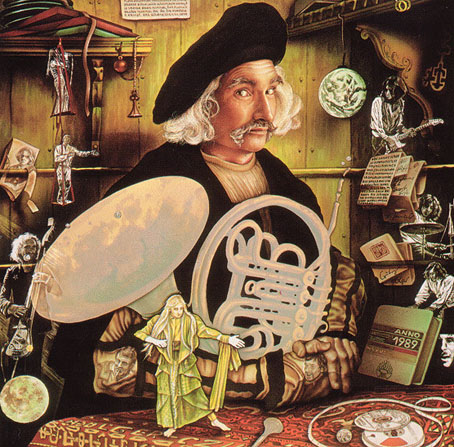
Holger Czukay by Ursula Kloss, from the cover of Czukay’s Moving Pictures (1993). (The painting is a pastiche of Holbein’s portrait of Georg Gisze.)

• RIP Holger Czukay. The obituaries have emphasised his role as the bass player for Can, of course, but he was just as important to the band as a sound engineer and producer: it was Czukay’s editing skills that shaped many of their extended jams into viable compositions. Post-Can he recorded 20 or so albums by himself or with collaborators, several of which can be counted among the best of all the Can solo works. Geeta Dayal and Jason Gross remembered their encounters with Czukay, while FACT reposted their 2009 interview. Czukay’s final interview was probably last year when he talked to Ian Harrison for Mojo magazine.

For my part, I was astonished when Czukay phoned me out of the blue one day in 1997 to thank me for sending him a video I’d made in the 1980s. This was a scratch production created with two VCRs that set 300 clips from feature films to Hollywood Symphony, the final piece on Czukay’s Movies album. Years later, MTV showed a couple of similar video collages that Czukay had made for Can so I sent a copy of my effort to Spoon Records thinking he might be amused. His public persona was often one of a wacky mad professor but the jokiness was allied to an impressive technical skill and curiosity. Most of our brief conversation was taken up with my answering his questions about my primitive video recording.

• “Every pebble can blow us sky-high”: A reconsideration by J. Hoberman of The Wages of Fear, directed by Henri-Georges Clouzot.

• Dario Argento’s masterpiece of horror cinema, Suspiria, is 40 years old. Martyn Conterio looks at five of its influences.

Mark Korven’s Apprehension Engine: an instrument designed to play the music of nightmares.

• The mystery of the Voynich Manuscript solved at last? Nicholas Gibbs thinks so.

• At Dangerous Minds: The macabre and disturbing sculptures of Emil Melmoth.

Jonathan Meades reviews A Place for All People by Richard Rogers.

• Mix of the week: Secret Thirteen Mix 229 by Erin Arthur.

• The ten creepiest objects in the Wellcome Collection.

Rob Chapman’s essential psychedelia reading list.

It’s Just A Fear (1966) by The Answers | Fear (1992) by Miranda Sex Garden | Constant Fear (2002) Bohren & Der Club Of Gore

Moonshine by Jasmine Gower

moonshine.jpg

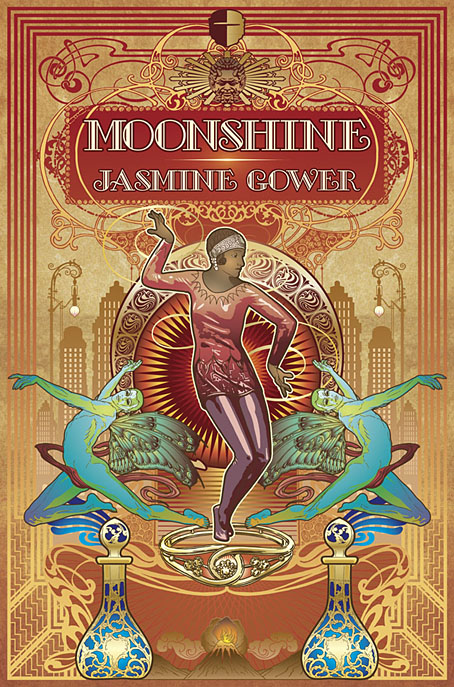
Presenting yet another cover design for the house of furious automata, Angry Robot Books. This one won’t be published until next year but the cover has been previewed on the Barnes & Noble Sci-Fi and Fantasy Blog so I can show it here. Like Under the Pendulum Sun, this is another fantasy scenario with a fresh take on fairy lore:

Daisy’s starting a new job and stylish city life, but mage-hunters out for her dark magic threaten to destroy her vogue image.

In the flourishing metropolis of Soot City (a warped version of 1920s Chicago), progressive ideals reign and the old ways of magic and liquid mana are forbidden. Daisy Dell is a Modern Girl—stylish, educated and independent—keen to establish herself in the city but reluctant to give up the taboo magic inherited from her grandmother.

Her new job takes her to unexpected places, and she gets more attention than she had hoped for. When bounty hunters start combing the city for magicians, Daisy must decide whether to stay with her new employer—even if it means revealing the grim source of her occult powers.

The brief this time was for something with an Art Nouveau/Art Deco feel. I had plans at the outset to incorporate some of the Art Nouveau stylings seen in the Netherlands circa 1910 but that idea was dropped in favour of a more overt collision between Nouveau and Deco. The latter element was essential since Jasmine’s story borrows much from the Roaring Twenties with its city setting, Prohibition theme, speakeasies and dance halls. The poses of the figures are based on the chryselephantine sculptures that were popular in the Deco period; the Daisy figure I borrowed from a statue by Ferdinand Preiss of a Charleston dancer.

Moonshine will be published in February 2018. Meanwhile there’s a lot more of my illustration work waiting in the wings. So far this year I’ve created 55 illustrations for four different books, and there’s even more to come. This is what is known as a busy time. One or more of the books will be out before the end of the year so, as always, watch this space.

Weekend links 376

newton.jpg

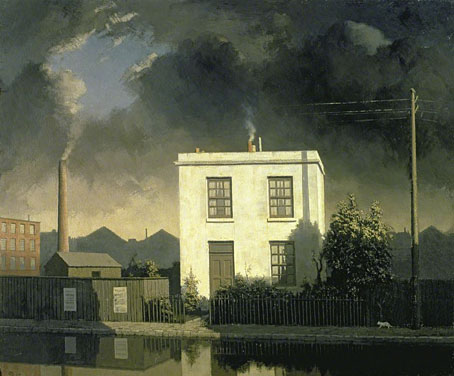
The House by the Canal (1945) by Algernon Cecil Newton.

• RIP Tobe Hooper. Black Hole Reviews recounts the troubled history of The Texas Chain Saw Massacre in Britain, a film that was given a short-lived cinema release then banned for 20 years. Elsewhere: Who sampled from Tobe Hooper’s films? Tucktonia, a model village whose London buildings were destroyed for Hooper’s Lifeforce.

• Graphic language of the wall: Rick Poynor on Brassaï’s photographs of graffiti for Le Livre de Poche. More Poynor: National Theatre Posters: A Design History is available for pre-order from Unit Editions. There’s more from the latter here.

• “A question of queer as a kind of futurism: an attitude or tendency that connects mid-20th-century performers and photographers to contemporary digital art and fashion.” Brian Dillon reviewing Queer British Art at Tate Britain.

In evolutionary terms, the intelligence of octopuses is an anomaly. The last common ancestor between octopuses on the one hand, and humans and other intelligent animals (monkeys, dolphins, dogs, crows) on the other, was probably a primitive, blind worm-like creature that existed six hundred million years ago. Other creatures that are so evolutionarily distant from humans—lobsters, snails, slugs, clams—rate pretty low on the cognitive scale. But octopuses—and to some extent their cephalopod cousins, cuttlefish and squid—frustrate the neat evolutionary division between clever vertebrates and simple-minded invertebrates. They are sophisticated problem solvers; they learn, and can use tools; and they show a capacity for mimicry, deception and, some think, humour. Just how refined their abilities are is a matter of scientific debate: their very strangeness makes octopuses hard to study. Their intelligence is like ours, and utterly unlike ours. Octopuses are the closest we can come, on earth, to knowing what it might be like to encounter intelligent aliens.

Amia Srinivasan reviewing Other Minds: The Octopus and the Evolution of Intelligent Life by Peter Godfrey-Smith, and The Soul of an Octopus: A Surprising Exploration into the Wonder of Consciousness by Sy Montgomery

Royal Academy of Arts to reveal explicit side of Dalí and Duchamp.

• At Wormwoodiana: Mark Valentine on The Mystic Umbrellas.

Norton Critical Edition’s Periodic Table of Literary Villains.

• Mix of the week: FACT mix 616 by Lanark Artefax.

Virus Fonts has a new website.

Little Umbrellas (1969) by Frank Zappa | Umbrellas (1971) by Weather Report | Black Umbrellas (2003) by Broadcast