Eugène Thivier’s Nightmare

thivier1.jpg

October is the month of nightmares so now seemed a suitable moment to air this sculpture, The Nightmare (1894) by Eugène Thivier, which I’ve had bookmarked for some time. Thivier (1845–1920) seems to be one of those artists who produces a single striking work with little else in the oeuvre to match it. The subject is a familiar one, of course, a variation on the sleeper menaced by an incubus or other creature of the night. A previous October post was devoted to Fuseli’s celebrated painted version; similar pictorial examples abound but sculptures of the theme are scarce. Thivier’s work is in the Musée des Augustins in Toulouse. Wikimedia Commons has a few more photos of the poor woman and her nocturnal tormentor.

thivier2.jpg

thivier3.jpg

Previously on { feuilleton }
Fuseli’s Nightmare

Weekend links 380

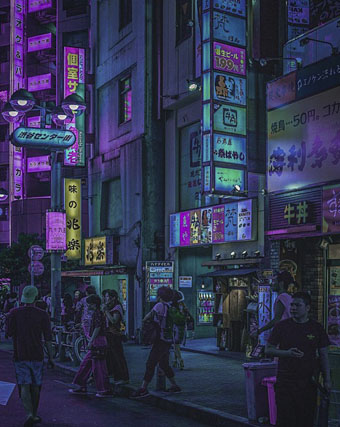
hasaka.jpg

Night Out, Shibuya, a photograph by Yoshito Hasaka. One of a remarkable series.

• Rixdorf Editions is a new publishing venture from Strange Flowers’ James Conway which “…aims to cast light on an era which is misunderstood to the extent that it is thought of at all. I speak of the German Empire, specifically the Wilhelmine period from 1890 to 1918.” The first two titles, both translated by Conway himself, are Berlin’s Third Sex (1904), a study of the city’s queer demi monde by the pioneering Magnus Hirschfeld; and The Guesthouse at the Sign of the Teetering Globe (1917), a collection of strange stories by Franziska zu Reventlow.

• Patrick McGoohan’s enigmatic TV series, The Prisoner, premiered 50 years ago this week. Among the series’ many stylistic hallmarks was the use of Berthold Wolpe’s Albertus typeface, as detailed at We Made This.

• Three of Bill Nelson’s home-produced instrumental albums from the 1980s—Sounding The Ritual Echo, Das Kabinet, and La Belle Et La Bête—are reissued in November.

Photos by Heinrich Klaffs of German group Faust performing live (for the first time?) in 1971. Klaffs’ other photos are worth looking at as well.

• Mixes of the week: XLR8R Podcast 509 by Laylla Dane, and Secret Thirteen Mix 231 by New Hip Tiki Scene.

• At Spoon & Tamago: Altered landscapes meticulously rendered in pencil by Shinji Ogawa.

• “Why are UK and US book jackets often so different?”asks Danuta Kean.

Samantha Manzella on eight of the world’s remaining gay bookstores.

• At greydogtales: F. Marion Crawford & the Screaming Skull.

Tunnel View, a previously unheard demo by Broadcast.

Zealandia: Earth’s Hidden Continent

Seeland (1975) by Neu! | Neu Seeland (1992) by Terminal Cheesecake | Osprey’s Odyssey (2010) by Seeland
The art of Rafael Romero Calvet, 1885–1925

calvet01.jpg

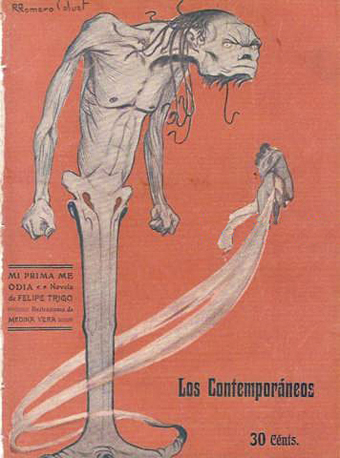
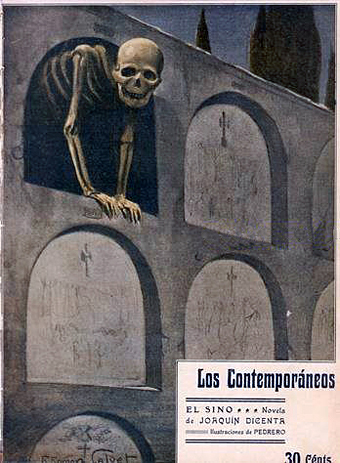
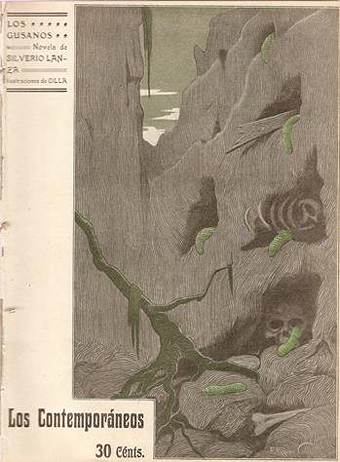
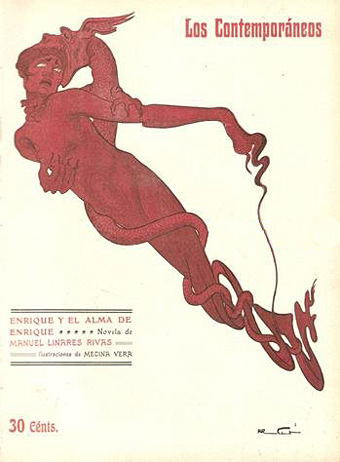
Recent picture research turned up another illustrator whose work I hadn’t seen before. Rafael Romero Calvet was Spanish, and the dates above aren’t necessarily accurate (he may have been born in 1884). He did die young, however, and probably too soon to make more of an impact outside the magazines he was working for. The covers here are all from Los Contemporáneos, a Spanish publication that ran from 1909 to 1926. Many of Calvet’s covers—dating from 1909–1910—are grotesque and macabre enough to suit Der Orchideengarten, although that magazine wouldn’t be launched for another ten years.

calvet02.jpg

There’s more of Calvet’s work at Wikimedia Commons, while this feature at Collectors Weekly has a glimpse of his cover for Baudelaire’s Les Fleurs du Mal.

calvet03.jpg

calvet04.jpg

Continue reading “The art of Rafael Romero Calvet, 1885–1925”

Weekend links 379

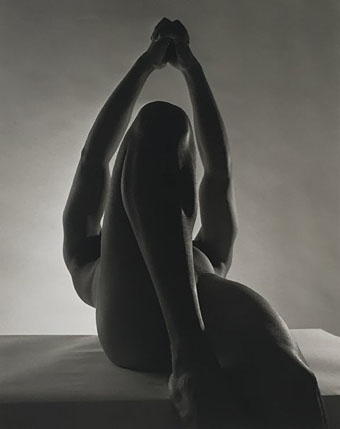
horst.jpg

Male Nude, Leg Up (1952) by Horst. From a series of photo prints at Wessel + O’Connor Fine Art until 5th November.

• At Bandcamp: “Tuareg guitar mixed with traditional rural folk”: Eghass Malan by Les Filles de Illighadad; “Pan dimensional spacecraft hover over ancient pyramids on worlds undreamed of”: Lemurian Dawn by Memnon Sa.

Songs of Discomposure: Quietus writers pick their most disturbing pieces of music. Also at The Quietus: John Foxx on his collaborations with Harold Budd and Ruben Garcia.

Eros In Arabia, the first album by Richard Horowitz, has been deleted since 1981, and is consequently very difficult to find. Freedom To Spend are reissuing it next month.

JG Ballard—The Interview Concordance. A companion to the concordance of Ballard’s published works. Some of the interviews may be found here.

• At Dangerous Minds: The Male Figure: Bruce of Los Angeles and the perfection of midcentury beefcake.

• Mixes of the week: XLR8R Podcast 508 by Jennifer Cardini, and Secret Thirteen Mix 231 by Alex XIII.

Post Punk: a set of postage stamp designs by Dorothy for punk and post-punk bands.

• At Spoon & Tamago: Kanban: The exquisite art of historic Japanese store signs.

• At Greydogtales: Photography of the Folk Horror Revival.

The Spomenik Database

• The Secret Life Of Arabia (1977) by David Bowie | Arabian Knights (1981) by Siouxsie And The Banshees | Arabiant (2002) by Radar

The Quietened Cosmologists

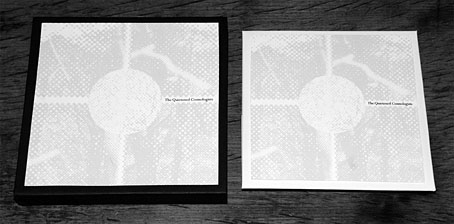
quietened.jpg

It was a coincidence, but the destruction last week of the Cassini probe in the atmosphere of Saturn parallels the theme of the latest music collection from A Year In The Country:

The Quietened Cosmologists is a reflection on space exploration projects that have been abandoned and/or that were never realised, of connected lost or imagined futures and dreams, the intrigue and sometimes melancholia of related derelict sites and technological remnants that lie scattered and forgotten.

It takes as its initial starting points the shape of the future’s past via the discarded British space program of the 1950s to 1970s; the sometimes statuesque and startling derelict artefacts and infrastructure from the Soviet Union’s once far reaching space projects; the way in which manned spaceflight beyond Earth’s orbit/to the moon and the associated sense of a coming space age came to be largely put to one side after the 1969 to 1972 US Apollo flights.

Track list:
1) Field Lines Cartographer — OPS-4
2) Pulselovers — Lonely Puck
3) Magpahi — Chayka
4) Howlround — Night Call, Collect
5) Vic Mars — X-3
6) Unit One — Voyages Of The Moon
7) A Year In The Country — The March Of Progress/Frontier Dreams
8) Keith Seatman — 093A-Prospero
9) Grey Frequency — Phantom Cosmonauts
10) Time Attendant — Adrift
11) Listening Center — Mlécný Perihelion Weekend
12) Polypores — The Amateur Astronomer
13) David Colohan — Landfall At William Creek

The Cassini expedition wasn’t a failed one, of course, but the destruction of the probe (planned from the outset to avoid space-junk wandering the Solar System) is a reminder of the realities of the Space Age, that this is a frontier with the same casualties and ruins as any other. The ruins of Britain’s own contribution to the Space Race—especially those like the abandoned launch-pad at High Down on the Isle of Wight—are all the more poignant for the gulf between their past ambition and present state of decay.

As you might expect, the entries on this collection tend towards the electronic, and there’s even an uptempo synth piece from Keith Seatman whose title—093A-Prospero—is a nod to one of the old British rockets. By way of contrast, David Colohan’s Landfall At William Creek sounds more pastoral unless you know that his title refers to the region of Australia where Britain’s rockets and nuclear missiles were tested during the 1950s and 1960s.

The Quietened Cosmologists will be released on 3rd October, and is available for pre-order now.

Previously on { feuilleton }
Undercurrents
From The Furthest Signals
The Restless Field
The Marks Upon The Land
The Forest / The Wald
The Quietened Bunker
Fractures