Weekend links 398

deon.jpg

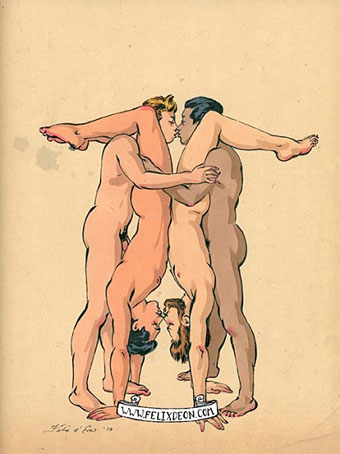
Untitled art by Felix D’Eon. Via Dangerous Minds.

• “The music inside lived up to the cover’s challenge: a collage of pop-culture nostalgia, hard-rock guitar, piano-driven melodies, stylised high vocals, strange musical structures and experimental sound pictures. Roxy Music’s eponymous album sounded like nothing else in 1971 and 1972—and like nothing else the group would ever attempt again.” Jon Savage on the creation of Roxy Music’s debut album.

• Behind the scenes of the BFI’s forthcoming Derek Jarman box-sets. Jarman appears in a rare acting role (not one of his strengths) in Dead Cat (1989) a short film by David Lewis which is only now being released on DVD.

• Rob Young’s long-awaited book about Cologne’s finest, Can, has finally been given a publication date. All Gates Open: The Story of Can will be published by Faber in May.

• At the Lever Gallery, London: UNCOVERED: Illustrating the Sixties and Seventies. Wallpaper magazine has a related feature about the exhibition.

Trim Tabroid [sic]: Yui Takada’s Instagram showing Japanese tabloid pages reduced to abstraction by careful pruning.

• On Fairy Tales: Carol Mavor and Marina Warner in discussion for the London Review Bookshop podcast.

• Mixes of the week: XLR8R podcast 527 by Peter Van Hoesen, and Secret Thirteen Mix 245 by Chikiss.

• Dubbing is a Must: Oli Warwick on the modern sound of leftfield dub.

This Book Is Bound in Lab-Grown Jellyfish Leather.

Cornelius’s Favourite Albums

Dubism (1976) by The Upsetters | Dub Fi Gwan (1979) by King Tubby | Dub Yalil (1995) by Natacha Atlas
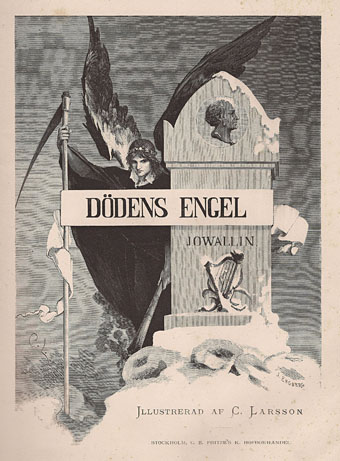
Carl Larsson’s Angel of Death

larsson01.jpg

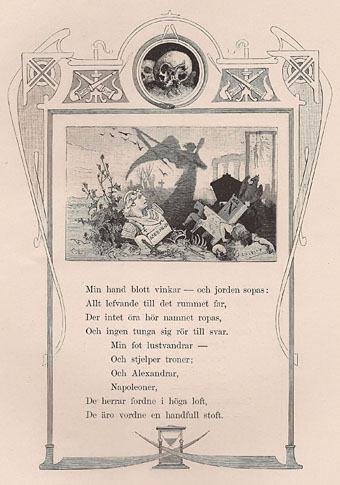
I’ve known the work of Swedish artist Carl Larsson (1853–1919) for many years via a collection of drawings and paintings of the artist’s family and home life, light works created between bouts of more serious painting. The interiors in the At Home series are especially good, meticulously rendered watercolours which today resemble the kinds of delineations found in Continental comic books. Less familiar is the work Larsson created prior to these drawings.

larsson02.jpg

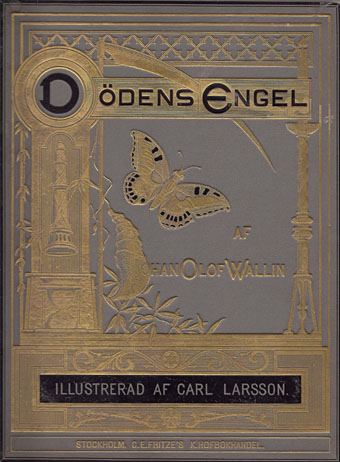
Dödens Engel (The Angel of the Death) is a book-length religious poem by Johan Olof Wallin inspired by the cholera epidemic of the 1830s, the same epidemic that Poe writes about in The Sphinx. Larsson illustrates every page of this edition from 1880, deploying the full range of traditional death symbolism: skulls, hourglasses, scythes, extinguished torches and so on.The sombre imagery makes a striking contrast with the pictures of Larsson’s home life yet the painting for which he hoped to be remembered, Midvinterblot (1915), is equally doom-laden, a huge canvas that depicts a king preparing to sacrifice himself to spare his people from famine.

larsson03.jpg

Continue reading “Carl Larsson’s Angel of Death”

Weekend links 397

escher.jpg

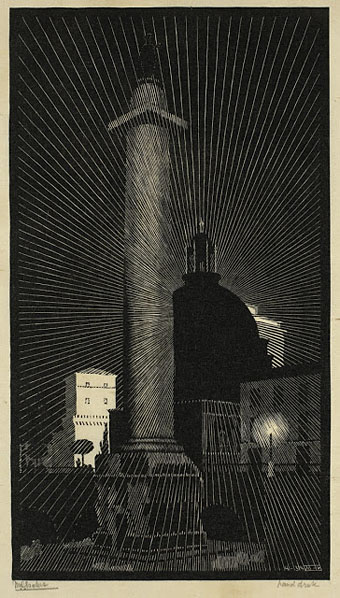
Nocturnal Rome — Trajan’s Column (1934) by MC Escher.

• Many eulogies this week for the late, great Mark E Smith. Strangers to the abrasive splendour of The Fall could do worse than begin with Geeta Dayal‘s list of ten best albums. At YouTube there’s a playlist of The Fall’s Peel Sessions, from 1978 to 2004, while The Fall Quote Generator provides fragments of lyrics and interviews. “Use it like the I Ching.”

• Books with poisoned pages are usually the stuff of fiction but Shadows from the Walls of Death: Facts and Inferences Prefacing a Book of Specimens of Arsenical Wall Papers (1874) by RC Kedzie presents a serious health hazard to would-be readers.

• Man Ray: “There was more surrealism rampant in Hollywood than all the surrealists could invent in a lifetime.” Kimberly Lindbergs looks at Albert Lewin’s 1951 fantasy, Pandora and the Flying Dutchman.

• At Towleroad: “The Most Dangerous Gay Man In America Fought Violence with Violence” Eric Markowitz on the Reverend Raymond Broshears, founder in 1973 of the Lavender Panthers.

• Coming in April from Strange Attractor: All in the Downs: Reflections on Life, Landscape and Song by Shirley Collins.

• Mixes of the week: Secret Thirteen Mix 244 by Daniel O’Sullivan, and XLR8R Podcast 526 by Jamaica Suk.

• At Dennis Cooper‘s this week, a post I might have made myself (but, er, didn’t) about mirrored works of art.

• A preview of Strange Stars: David Bowie, Pop Music and the Year Sci-Fi Exploded by Jason Heller.

• “We live in Philip K Dick’s future, not George Orwell’s or Aldous Huxley’s,” says Henry Farrell.

• Was For Your Convenience (1937) by Paul Pry the first queer city guide?

Fall (1967) by Miles Davis | Fall (2011) by The Haxan Cloak | Fall (2014) by The Bug feat. Inga Copeland

The Mystery of Picasso

picasso1.jpg

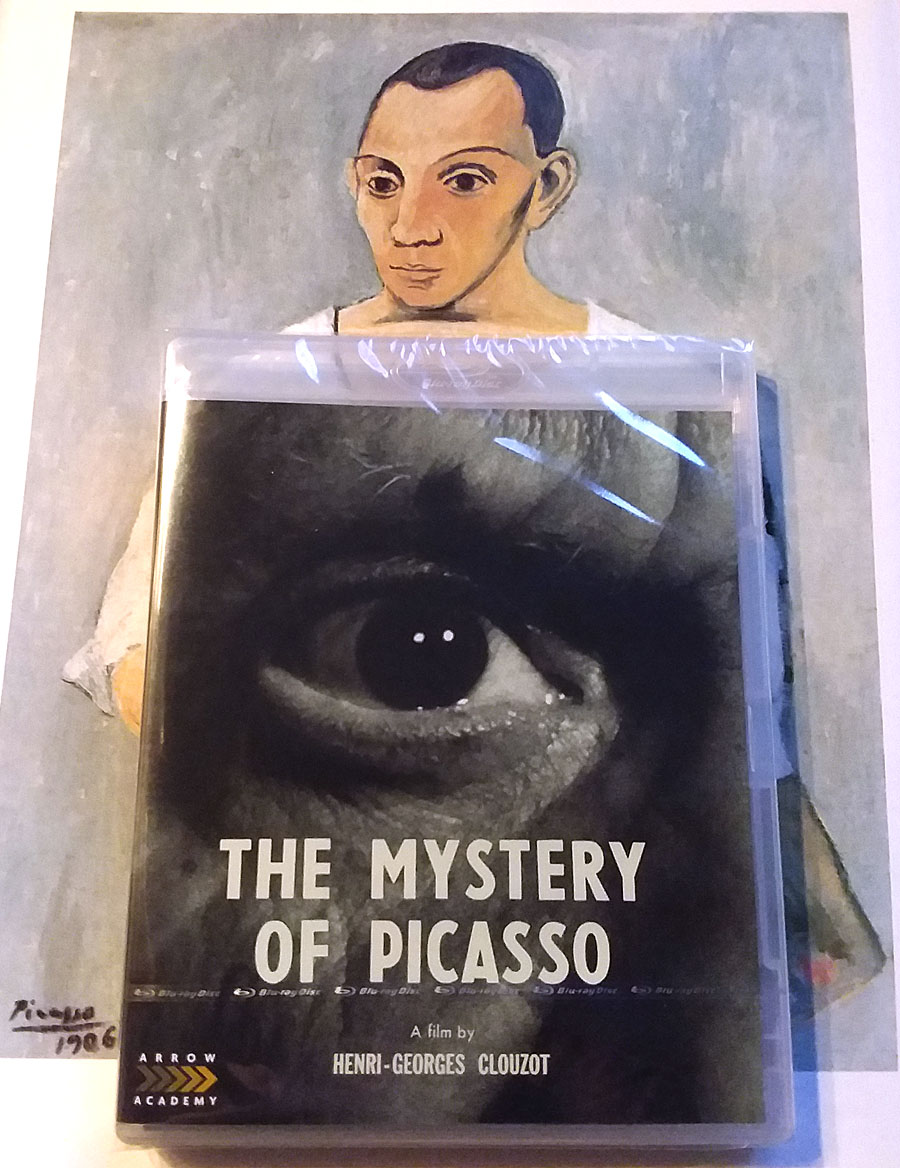
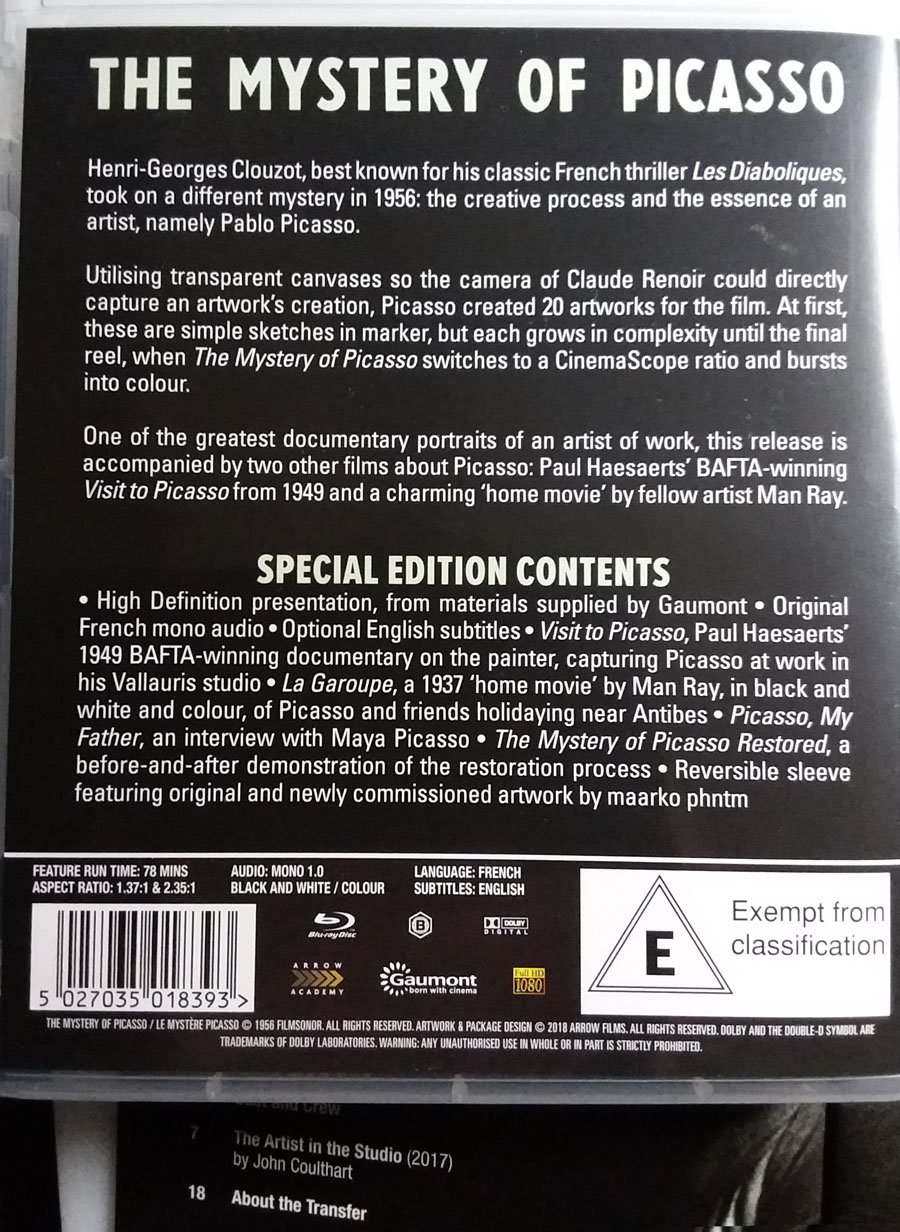
I mentioned late last year that I’d written the booklet notes for a forthcoming DVD/blu-ray of The Mystery of Picasso (1956) by Henri-Georges Clouzot, a film receiving its blu-ray premiere this month courtesy of Arrow Academy. The discs are now on sale (UK only, I’m afraid) either online or anywhere that stocks Arrow titles. (Fopp is my preferred outlet.) For those outside the UK, the restored film is also available on iTunes. Clouzot’s film was regarded as an oddity in the 1950s, the director being best known for outstanding thrillers like The Wages of Fear and Les Diaboliques. Today The Mystery of Picasso is regarded as one of the great films about art for the way it successfully captures Picasso in a decade when he was still fervently productive, despite being in his 70s.

picasso2.jpg

Almost all films of this type favour the documentary approach, usually with a camera and interviewer dogging the subject’s footsteps while showing little of the creative process. Picasso wouldn’t have participated in anything like this—he was appalled by a documentary he saw about Matisse—but Clouzot persuaded him that a film could be made showing him drawing and painting in a studio environment. This approach had precedence in Paul Haessarts’ short film from 1949 (included among the disc extras) which showed Picasso in his studio at Vallauris; the film ends with a series of paintings on glass of various animals and human figures. Clouzot expanded on Haessarts’ idea with the full range of film technology: time-lapse, black-and-white stock, colour stock and Cinemascope. The works Picasso creates for the camera aren’t his best—how could they be when they were being produced at speed in sweltering, time-constrained conditions? But the film is a miraculous portrait of an artist whose name is still universally recognised almost fifty years after his death. By chance or design, it’s also a partial portrait of Clouzot himself who appears in several of the shots to discuss new camera setups.

There’s no need for me to say more about the film when I discuss it at length in the booklet. For a review of the disc contents, there’s a substantial appraisal here. For more about Henri-Georges Clouzot I recommend the study by Christopher Lloyd which was invaluable for its details about the film’s production.

Previously on { feuilleton }
Picasso-esque
My pastiches
Cubist Cthulhu

Weekend links 396

laswell.jpg

Cover art for Outer Dark (1994) by Bill Laswell. Photography by Thi-Linh Le.

• “In an era where music, among other creative endeavors, has been devalued as mere ‘content,’ freely accessed through the new digital medium, the very survival of those who create music and art and culture has been threatened. Bassist, iconic producer, and sonic visionary Bill Laswell becomes the latest legendary talent to fall victim to the vagaries of these crazy times. Beset by health problems while trying to navigate this harsh and uncertain economic landscape, Laswell is struggling to maintain Orange Music, the legendary New Jersey studio that he as helmed for the last 20 years. He is putting the call out to all fans, friends, and fellow artists alike: If you can help, please do so now. No contribution is too small.”

A Perspex Town is a video by Ian Hodgson (aka Moon Wiring Club) for Applied Music Vol.2: Plastics Today, a new album by Jon Brooks (aka The Advisory Circle).

• The strangeness in the land: Adam Scovell on the BBC’s Play for Today adaptation of Red Shift by Alan Garner. I’d recommend reading the novel as well.

• “My last album was pretty perfect,” says Scott Walker. Sundog, a book of his lyrics, is out now from Faber.

Popular Graphic Arts at the Library of Congress, a new resource of free-to-use, high-resolution scans.

• At The Quietus: LoneLady & Stephen Mallinder offer playlists of music they’ve enjoyed recently.

• Another Green World: Lewis Gordon on how Japanese ambient music found a new audience.

• The discography of Drew Mullholland (aka Mount Vernon Arts Lab) is now at Bandcamp.

• Mixes of the week: FACT mix 635 by Riobamba, XLR8R Podcast 526 by DJ Sports.

The occult roots of higher dimensional research in physics.

• Animated Britain: a YouTube playlist from the BFI.

Pye Corner Audio remixes Knightstown.

• At Dennis Cooper’s: John Waters Day.

• A World Of Different Dimensions (1979) by Tomita | Into The Fourth Dimension (Essenes In Starlight) (1991) by The Orb | New Dimensions In (2010) by The Advisory Circle