The South Bank Show: Dracula

sbs1.jpg

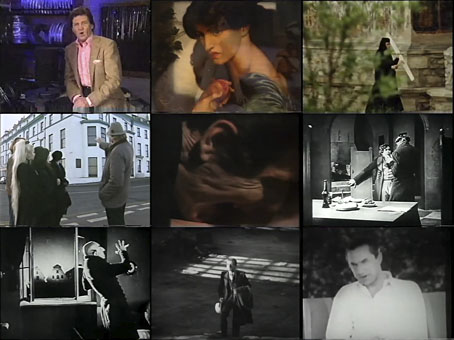
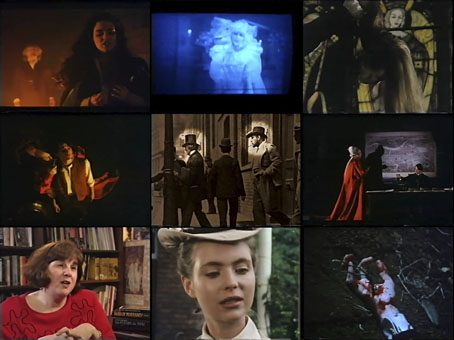
While illustrating Dracula earlier this year I was listening to Wojciech Kilar’s soundtrack to Francis Coppola’s Dracula to sustain the vampiric mood. I also watched Coppola’s film again, it’s an adaptation I enjoy a great deal despite its flaws. (This post detailed some of the plus points.) The South Bank Show‘s programme devoted to Dracula on page and screen was broadcast in early 1993, timed for the opening of Coppola’s film in the UK. I watched this when it was first shown, and remembered it being a good one but neglected to go searching for it back in January. I also remembered it being more about Coppola’s film than it is, although there’s still enough to make it a substantial promo piece.
sbs2.jpg

The territory here may be familiar but the evolution of Stoker’s novel is contextualised by some expert commentators—Leonard Wolf, Elaine Showalter (with a copy of Bram Dijkstra’s Idols of Perversity at her side) and Christopher Frayling—while discussion of the film adaptations includes Christopher Lee, Francis Coppola, James V. Hart (the screenwriter of Coppola’s film), Gary Oldman, Winona Ryder and others. Among the film clips there are several scenes from Count Dracula, Gerald Savory’s 1977 adaptation for the BBC. This is surprising since The South Bank Show was screened by the BBC’s rival, ITV. But Savory’s Count Dracula is still the most faithful screen adaptation that I’ve seen (and possibly the most faithful to date) so it’s a worthwhile choice, and one whose naturalism makes a sober contrast to Coppola’s Sturm und Drang.

Previously on { feuilleton }
Illustrating Dracula
Illustrating Frankenstein
Dracula and I by Christopher Lee
The Dracula Annual
Nightmare: The Birth of Horror
Albin Grau’s Nosferatu
Count Dracula
Symbolist cinema

Weekend links 415

varo.jpg

The Creation of the Birds (1957) by Remedios Varo.

• “I think my music is very modern and very old. Together.” Sandy Robertson interviewed Popol Vuh’s Florian Fricke for Sounds in 1981. The Fricke-directed Sei Still Wisse ICH BIN referred to in the feature may be viewed here. Further Vuh-ing: Popol Vuh on Beat Club, 1971; a news clip of the group from the same year; a filmed improvisation from around the same time (Florian still had his Moog); and the group miming to recorded music from a year or two later.

• More Rammellzee (see last week): Gothic Futurism, a video collage based on Rammellzee’s treatise of the same name. Probably the only place you’ll ever see Rammellzee, the late Glenn Branca and art historian Kenneth Clark thrown together.

• After releasing 5 albums, Disjointed Oddities And Other Such Things is the first EP of “odd strange electronics, psych, Radiophonics, drone and quirky folk” by Keith Seatman.

Alina Cohen on Remedios Varo, a Spanish Surrealist painter whose work has been receiving increased attention in recent years but whose life remains under-examined.

• More German music: “I grew up in total ruins”—Irmin Schmidt of Can on LSD, mourning and musical adventures.

• Mixes of the week: FACT mix 655 by Matthewdavid, and The Monday Is Okay mix by JQ.

Olivia Laing, Sarah Wood and Philip Hoare discuss Modern Nature by Derek Jarman.

National Geographic has digitized its collection of 6,000+ vintage maps.

• At Bandcamp: The Transcendental Sound of Moroccan Gnawa Music.

Joe Fletcher on the nightmarish dream logic of Bruno Schulz.

Levi Stahl on the mind of Donald E. Westlake.

Affenstunde (1970) by Popol Vuh | Toy Planet (1981) by Irmin Schmidt & Bruno Spoerri | Adithaim (2005) by The Cracow Klezmer Band

Illustrating Dracula

holloway.jpg

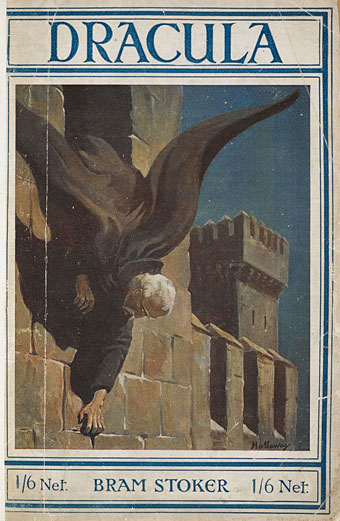
Cover art by Edgar Alfred Holloway for the Rider edition of Bram Stoker’s novel, an edition reprinted many times during the early 20th century. Holloway’s Count is shown as Stoker describes him in the early chapters of the book, white-haired and bearded.

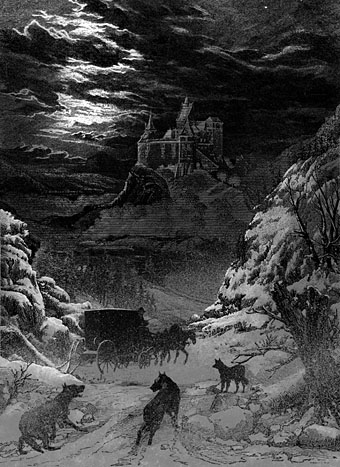
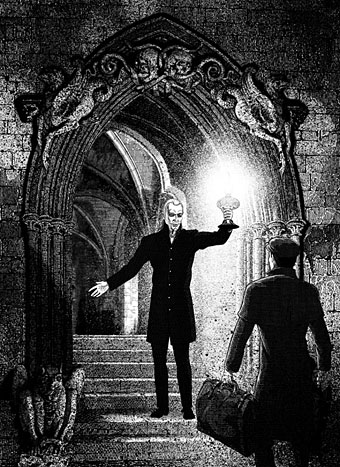
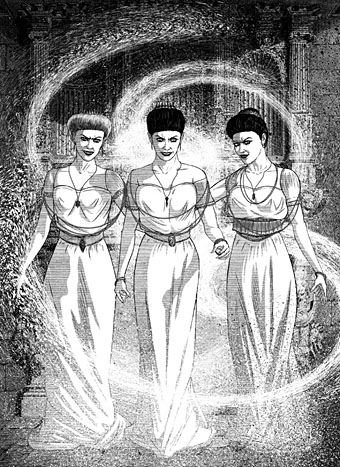
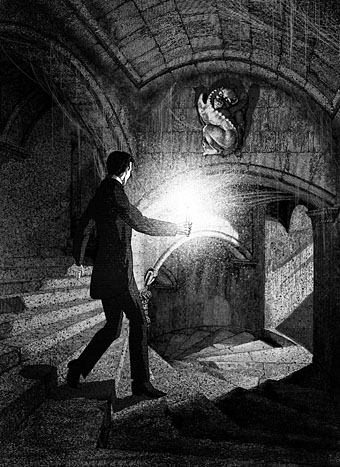
Last year I illustrated a number of stories by Edgar Allan Poe, and the entirety of Mary Shelley’s Frankenstein for Spanish publisher Editorial Alma. Earlier this year I was illustrating Dracula for the same publisher; now the book is in print I can show the results here. This was another difficult task since I had a few weeks to illustrate all 27 chapters of the novel while trying to do something new (or at least slightly different) with a very familiar story.

As with Frankenstein, I opted for fidelity to the text and period details. Despite its epistolary form, Dracula is much more readable (in a contemporary sense) than Frankenstein, so more people will have read Stoker than Shelley; but the sheer scale of cultural mauling that Dracula has been subject to means that—as with Frankenstein—even the allegedly faithful adaptations often deviate from the novel. The lounge-lizard vampire that everyone knows was a creation of Hamilton Deane’s 1924 stage adaptation, the success of which led to Tod Browning’s film and Bela Lugosi’s performance (which I’ve never liked); film and theatre may have made Dracula universally popular but the Lugosi stereotype has overshadowed the more powerful and violent character that Stoker gives us, with his bearded face, hairy palms and glowing eyes. So that’s who you see here, although the restrictions of time and brief (one picture per chapter) meant that some of the moments I’d have liked to illustrate had to be forfeit. Poor old Renfield gets short shrift, and some of the minor male characters are out of the picture altogether.

dracula01.jpg

On the plus side (I hope), many of the background details are well-researched even if they’re not at all obvious. The castle in the first picture (above) is Bran Castle, known today as “Dracula’s Castle” even though the building in the novel is Stoker’s invention; it certainly looks the part. As before, the full run of pictures follows below. All may be seen at a larger size here.

dracula02.jpg

dracula03.jpg

dracula04.jpg

Continue reading “Illustrating Dracula”

Weekend links 414

polackova-vyletalova.jpg

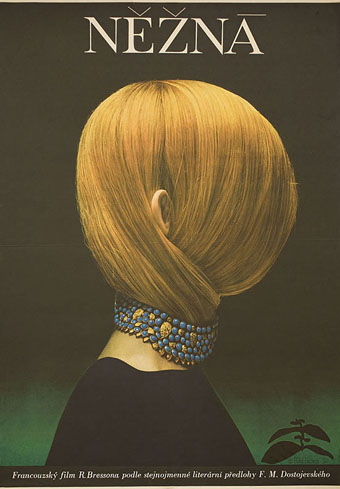
Czech poster for Robert Bresson’s Une Femme Douce (1969) by Olga Polácková-Vyletalová. There’s more about Polácková-Vyletalová’s striking poster designs (and this one in particular) at Mubi. See also the Polácková-Vyletalová collection at Terry Posters.

• “I heard that in Japan the tendency is to hammer down the nails that stick out. I think that Haruomi Hosono is a nail that sticks out. And has maintained that.” Van Dyke Parks on Haruomi Hosono, best known in the West for being one third of Yellow Magic Orchestra but a prolific artist in his own right. Hosono’s early solo albums are being reissued by Light In The Attic later this year.

Hua Hsu on The Spectacular Personal Mythology of Rammellzee. “Rammellzee will always feel like part of the underground,” says Geeta Dayal in a review of the Rammellzee exhibition currently showing in New York.

• Mixes of the week: Hassell’s Children, a Fourth World mix by Ban Ban Ton Ton, The Island of Bright Tombs by SeraphicManta, and a Radio Belbury mix by The Advisory Circle.

• More Robert Aickman: The Fully-Conducted Tour, a complete short story. Related: Matthew Cheney reviews the new Aickman collection, Compulsory Games.

• Another Kickstarter bid, this time for a reprint of Art Nouveau designs and illustrations by Carl Otto Czeschka.

Oliver Burkeman reviews How to Change Your Mind: The New Science of Psychedelics by Michael Pollan.

Art/design/architecture magazines online at the International Advertising & Design Database.

• Tonedeaf in our nose: Gerri Kimber on the musicality of James Joyce’s writing.

• More William Hope Hodgson: Greydogtales examines Hodgson’s poetry.

• The Art of Elsewhere: Jed Perl on the world of Edward Gorey.

• At Dennis Cooper’s: Records.

Beat Bop (1983) by Rammellzee vs. K-Rob | Equation (1989) by Material ft. Rammellzee | No Guts No Galaxy (1999) by Ramm Ell Zee & phonosycographDISK

Audio Albion

audioalbion.jpg

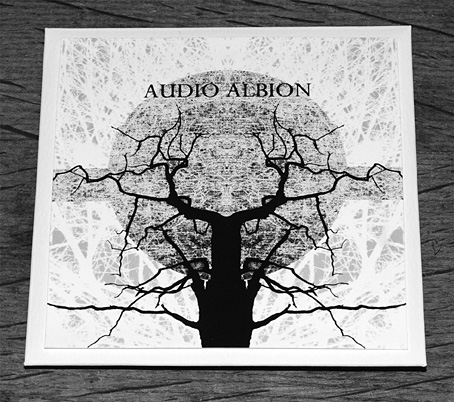
Last year saw a series of themed compilation albums from A Year In The Country, each of which was released a few months at a time. This year follows suit with Audio Albion, a collection of 15 new pieces of music from regular contributors such as David Colohan, Howlround, Keith Seatman, Sproatly Smith and others. The theme this time is “the sounds found and heard when wandering down pathways, over fields, through marshes, alongside rivers, down into caves and caverns, climbing hills, along coastlands, through remote mountain forestland, amongst the signs of industry and infrastructure and its discarded debris.”

Track list:
1) Bare Bones—Marshland Improvisation
2) David Colohan—On Stormy Point
3) Grey Frequency—Stapleford Hill
4) Field Lines Cartographer—Coldbarrow
5) Howlround—Cold Kissing
6) A Year In The Country—The Fields of Tumbling Ideas
7) Keith Seatman—Winter Sands
8) Magpahi—Shepsters in the Yessins
9) Sproatly Smith—Ethelbert & Mary
10) Widow’s Weeds—The Unquiet Grave
11) Time Attendant—Holloway
12) Spaceship—The Roding in Spate
13) Pulselovers—Thieves’ Cant
14) The Heartwood Institute—Hvin-lettir
15) Vic Mars—Dinedor Hill

As with previous A Year In The Country collections, the approaches are diverse, ranging here from the banjo-plus-location-recordings of Bare Bones to abstract electronic treatments by Howlround and Time Attendant. The accompanying texts are useful for contextualising the recordings; so David Colohan informs us that his piece, On Stormy Point, contains a whistle recording made in one of the caves at Alderley Edge in Cheshire, an important location in the Rural Wyrd via the popularisation of its myths in the novels of Alan Garner. Not everything here aims for a sinister atmosphere but the The Unquiet Grave by Widow’s Weeds certainly achieves this, a marvellous interpretation of one of the spookiest English folk songs, and the standout piece in an excellent collection.

Audio Albion will be released on 29th May but is available for pre-order now.

Previously on { feuilleton }
A Year In The Country: the book
All The Merry Year Round
The Quietened Cosmologists
Undercurrents
From The Furthest Signals
The Restless Field
The Marks Upon The Land
The Forest / The Wald
The Quietened Bunker
Fractures
Folk Horror Revival: Field Studies