Leonor Fini

fini1.jpg

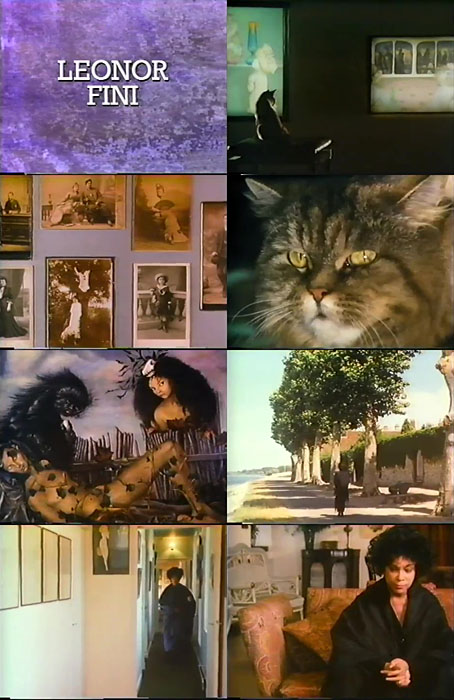
I’ve been hoping for years that a proper documentary about the enigmatic Argentinian artist might surface, and here one is at last. Leonor Fini (1987) was directed by Chris Vermorcken, and as a portrait of an artist it’s almost as good as the films the BBC used to produce for the Arena arts strand. I say “almost” because the Arena template tended to blend a biographical sketch with the life of the artist or writer at the present moment. Vermorcken encourages Fini to tell us about her early years in Trieste up to her meeting with the Surrealists in Paris, after which the discussion meanders to her vast company of Persian cats and the various forms of her painting and drawing.
fini2.jpg

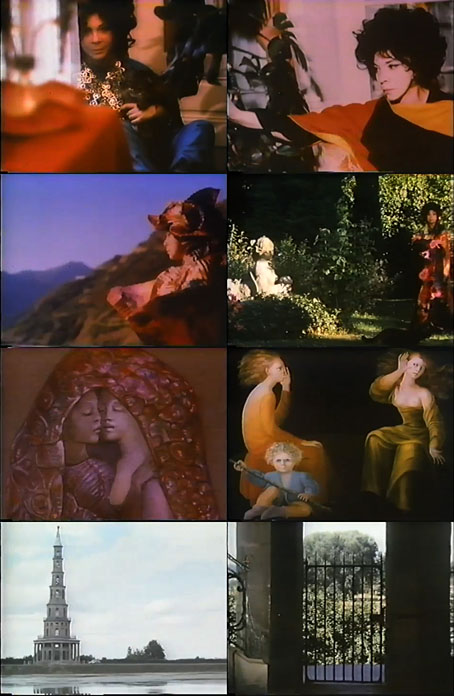
Unlike most other films about Fini, this one is subtitled throughout so we can enjoy her reading from some of the stories that accompany her drawings, and also find out which films she liked. (Fellini’s Casanova was a favourite.) There’s also an appearance by Konstanty Jelenski, one of the points of the bisexual ménage à trois formed by Jelenski, Fini and Count Stanislas Lepri, all of whom lived together in the cat-infested house. Essential viewing here.

Previously on { feuilleton }
Leonor Fini: comment vivre sans chat
Angels of Anarchy: Women Artists and Surrealism
The art of Leonor Fini, 1907–1996
Surrealist women

Weekend links 432

urbanowicz.jpg

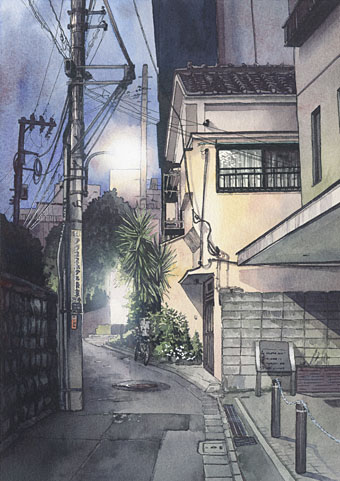
Tokyo at night, one of a series of watercolours depicting the back streets of the city by Mateusz Urbanowicz.

• “The experience of reading the book is something like watching Dr. Strangelove on one screen, Apocalypse Now on a second screen, and having both feeds interrupted by explicit gay erotica.” Bad Books For Bad People examines William Burroughs’ celebrated YA novel, The Wild Boys. The subject is a perennial one here, explored at length in this post.

• Lindsay Anderson’s The White Bus (1967), a surreal precursor to If…. and O Lucky Man!, will receive the high-quality BFI reissue treatment as part of the Woodfall Films portmanteau feature, Red, White and Zero.

• The Radiophonic Workshop have composed the score for Possum, a horror film by Matthew Holness. The main title theme is here. The film is released later next month.

Might I have written a sober affair, had I not been under the influence? Perhaps not—I have never needed tramadol to be attended by angels, or to feel demons pricking my feet. But I think of Vincent van Gogh, who looked at the world through the yellowish haze conveyed by digitalis, and grew enraptured by sunflowers and straw chairs, and I think of a glass prism through which a beam of white light passes and is split into a rainbow. What had been a single lucid idea had passed through the drugs I took and been dispersed into a spectrum of colours I had only half foreseen.

Sarah Perry on trying to write while besieged by bodily pain and prescription drugs

• Jacques Tourneur’s masterful MR James adaptation, Night of the Demon (1957), is released on region-free Blu-ray next month by Powerhouse Films.

• Mixes of the week: FACT mix 673 is The Bug presents PRESSURE, and XLR8R Podcast 561 by Zendid.

• The Space Shifters exhibition at the Hayward Gallery, London, messes with Adrian Searle‘s mind.

Gregory Wells on queers, faeries and revolutionaries in the psychedelic movement.

Wide Boys (1977) by Ultravox! | On Demon Wings (2000) by Bohren & Der Club Of Gore | Spoonful (2013) by Robert Plant and the Sensational Space Shifters

Illustrating Lovecraft again

dunwich.jpg

The Dunwich Horror (1972). Art by Victor Valla.

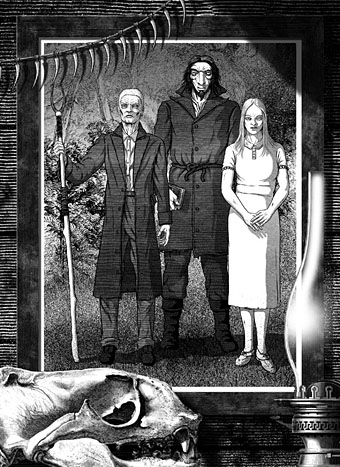
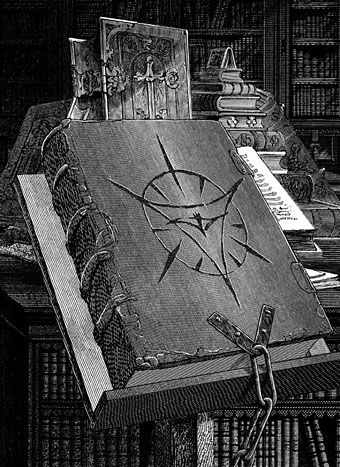
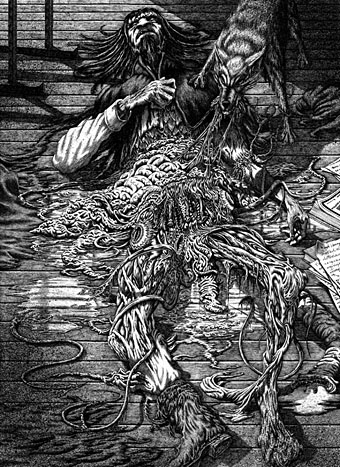
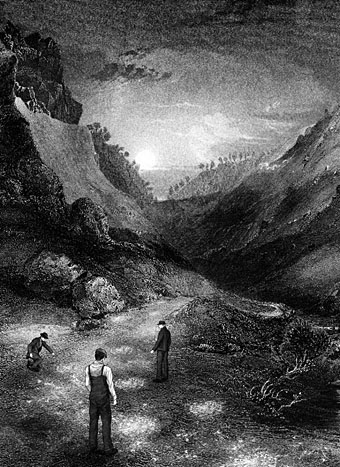
El horror de Dunwich y otros relatos is the last of the books I was working on earlier this year for Spanish publisher Editorial Alma. This was a more stimulating Lovecraft collection to work on than the previous two-story volume since three of the stories were ones I hadn’t dealt with before. The fourth story, The Dunwich Horror, I partly illustrated back in 1988/89, and I took the liberty of reusing the best of that set of pages showing Wilbur Whateley’s messy demise. This picture has been reprinted a few times elsewhere so I was reluctant to recycle it again, but the collision of deadlines earlier this year meant that once again I was pressed for time on this book, and having an illustration already done was a great help. It’s taken me 30 years to finally get round to depicting Wilbur’s monstrous brother.

hpl11.jpg

The Dunwich Horror 1.

hpl12.jpg

The Dunwich Horror 2.

hpl13.jpg

The Dunwich Horror 3.

hpl14.jpg

The Dunwich Horror 4.

Continue reading “Illustrating Lovecraft again”

Weekend links 431

eckman-lawn.jpg

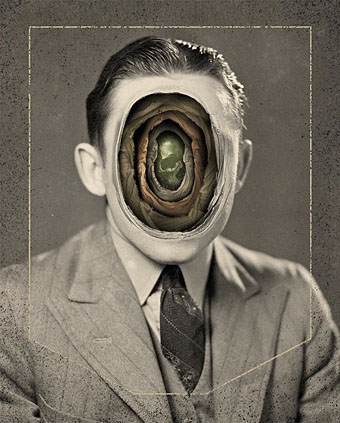
Postcard collage by Alex Eckman-Lawn.

• “He deserves to be a major figure not only in the history of Japanese music, but in popular music writ large.” Geeta Dayal on Haruomi Hosono, a musician whose solo albums from the 1970s are reissued this month by Light In The Attic.

Erica X Eisen reviews Black Light: Secret Traditions in Art since the 1950s, an exhibition of occult art at the Barcelona Contemporary Culture Centre. Related: Gary Lachman‘s talk from the same exhibition.

• Mixes of the week: Jesús Bacalão’s Light Entertainment Programme 2, Secret Thirteen Mix 265 by Alexander Tucker, and FACT Mix 672 by Rian Treanor.

Whenever horror is criticised, it is criticised for staging a dark carnival of physicality. Perhaps the only sort of media we moralise more than we do horror is that other mainliner of bodily response, pornography.

Horror’s historical ghettoisation has meant that weightier, smarter horror reliably gets labelled as something else. The finest films of our current golden age have been dubbed “elevated horror” and “post-horror”. In literary circles, works of horror seen as sufficiently cerebral get relabelled “Gothic”. It’s certainly true that great horror is always about more than gore. But we should be careful not to gentrify the genre by cleansing it of everything but the philosophy.

MM Owen on the perennial attractions of a perennially despised genre

• “Netflix is a woeful service,” says Jeremy Allen who prefers DVD/Blu-ray to streaming video (as do I). Related: The problem with film aspect ratio on Netflix.

• The Thought Gang album, a Twin Peaks-related collaboration between David Lynch & Angelo Badalamenti from 1993, will be released next month.

Tangerine Dream: Sound From Another World: a TV documentary from 2016. In German but with auto-translated subtitles.

The Thing’s Incredible! The Secret Origins of Weird Tales by John Locke.

Haute Macabre Staff Favorites: Tarot Decks

First Light (1980) by Harold Budd & Brian Eno | Blue Light (1993) by Mazzy Star | Black Light (1994) by Material

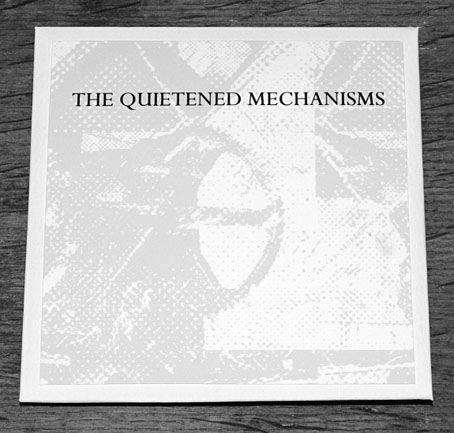
The Quietened Mechanisms

mechanisms.jpg

The latest themed collection from A Year In The Country is a surprise for being a dramatic departure from the previous installment, the very musical Shildam House Tapes. The Quietened Mechanisms follows similar the label’s other Quietened releases—Bunker, Cosmologists and Village—in seeking to represent in sound or music a sense of absence or ending. The theme of the new collection is the end of Britain’s industrial revolution, a period of social and geological turmoil whose ruins still litter the landscape, especially in the Midlands and North of England. Consequently, the entries this time are sparse to the point of abstraction, tending to the soundscape end of the musical spectrum.

The album is an exploration of abandoned and derelict industry, infrastructure, technology and equipment that once upon a time helped to create, connect and sustain society.

It wanders amongst deserted factories, discarded machinery, closed mines, mills and kilns and their echoes and remains; taking a moment or two to reflect on these once busy, functioning centres of activity and the sometimes sheer scale or amount of effort and human endeavour that was required to create and operate such structures and machines, many of which are now just left to fade away.

Track list:
1) The Heartwood Institute—Birkby and Allbright Mine
2) Quaker’s Stang—The Hoffman Kiln
3) Depatterning—Of Looms in the Housen
4) Embertides—Ash, Oak & Sulphur
5) Dom Cooper—Metallurgy
6) Field Lines Cartographer—The Mill in the Forest
7) Grey Frequency—Nottingham Canal
8) Howlround—A Closed Circuit
9) The Soulless Party—Rattler to the Tower
10) Keith Seatman—Rural Flight
11) Listening Center—Clarion of the Collapsed Complex
12) Spaceship—The Stones Speak of Short Lives
13) Sproatly Smith—Canary Babies
14) Pulselovers—Fuggles
15) Time Attendant—Hidden Parameters
16) Vic Mars—Watchtower and Engine
17) A Year In The Country—The Structure/Respite

This is post-industrial music in the multiple senses of the term although Dom Cooper’s Metallurgy harks back to the Industrial metal-bashing sub-genre of the 1980s. The pieces that seek to conjure pictures of abandoned places do so in ways that aren’t always so obvious: The Mill In The Forest by Field Lines Cartographer is closer to Gil Mellé’s Andromeda Strain soundtrack than Shirley Collins. Not all the contributions have immediately obvious titles so the accompanying notes are essential: Sproatly Smith’s solemn Canary Babies is a memorial to the women who worked in the Rother Ordnance Factory making bombs and shells, and whose skins were turned yellow by the chemicals they used. This isn’t industrial nostalgia, in other words, but an often poignant commemoration. Another impressive installment in this ongoing series. The Quietened Mechanisms will be released on 2nd October 2018, and is available for order here.

Previously on { feuilleton }
The Shildam Hall Tapes
Audio Albion
A Year In The Country: the book
All The Merry Year Round
The Quietened Cosmologists
Undercurrents
From The Furthest Signals
The Restless Field
The Marks Upon The Land
The Forest / The Wald
The Quietened Bunker
Fractures