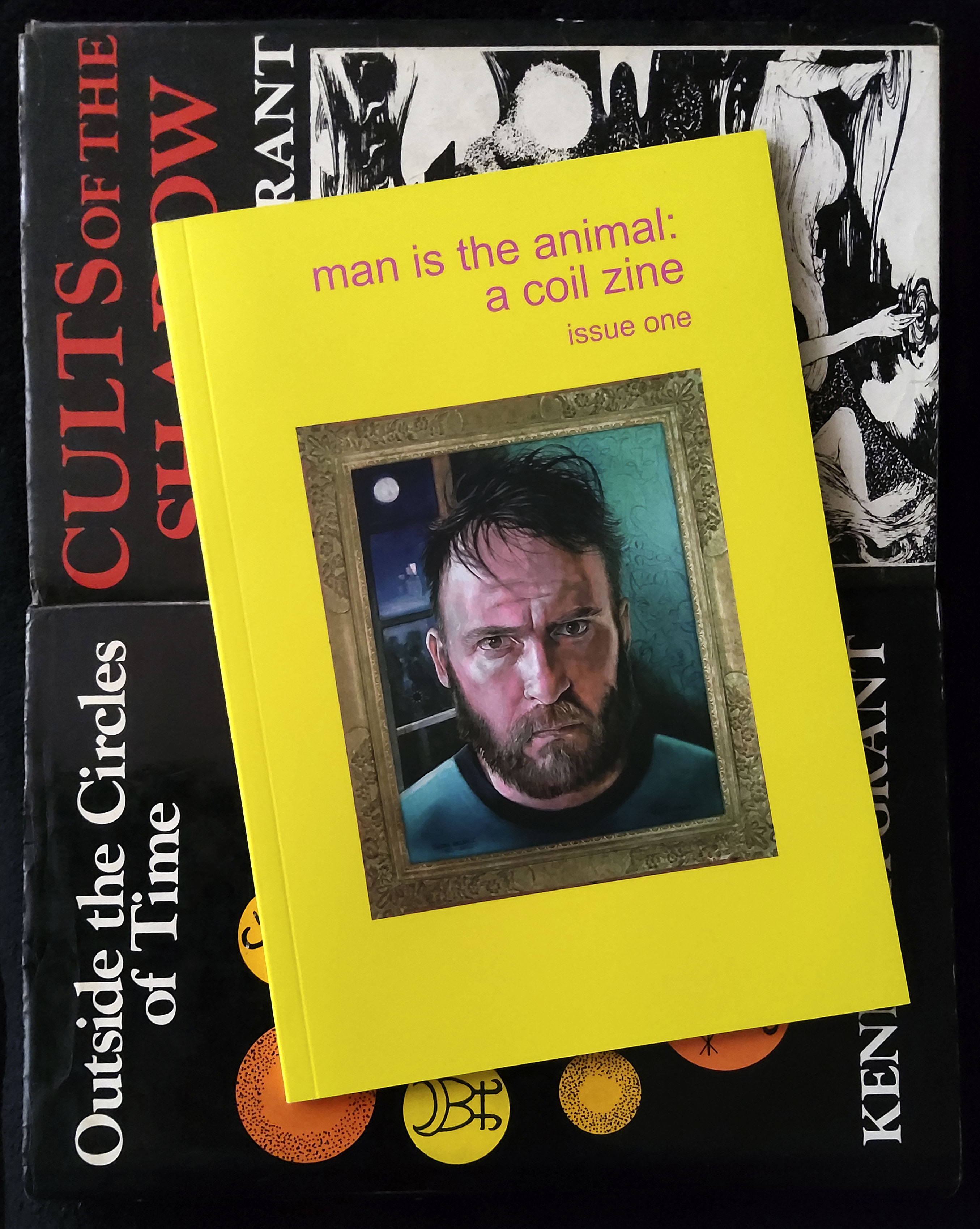
Man is the Animal: A Coil Zine

coil.jpg

Death is centrifugal / Solar and logical / Decadent and symmetrical / Angels are mathematical / Angels are bestial / Man is the animal —Fire Of The Mind by Coil

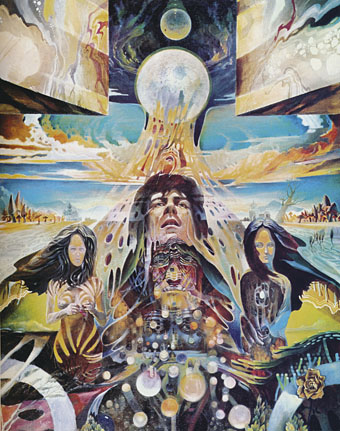
In the post this week from Temporal Boundary Press, issue 1 of Man is the Animal: A Coil Zine. A timely publication, given the persistent and increasing interest in Coil, and one whose essays are all of a quality belied by the “zine” label which usually suggests something more fannish and trivial. This is a pleasing object even before you look inside, a perfect-bound A5 booklet with full-colour printing throughout, and a cover painting by Val Denham, an artist with Coil associations that reach back through the Some Bizzare period to art for Marc Almond and Throbbing Gristle. Denham also contributes one of the written pieces, Jhonn is Unbalanced, a touching memoir of Geoff Rushton/John (Jhonn) Balance. Among the other entries is a piece by Benjamin Noys, a writer whose previous studies have included an examination of the connections between my own art for the Reverbstorm comic series and the weird fiction of HP Lovecraft. Noys takes a similar approach here, finding reflections of Coil obsessions in the symbolism of alchemical magic and the weird fiction of Arthur Machen.
grant.jpg

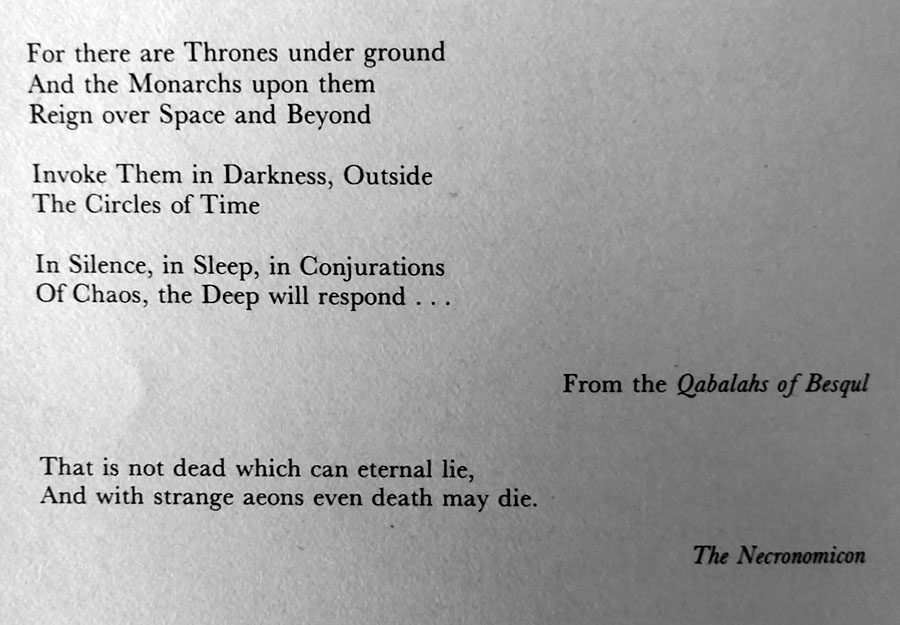
Epigraph from Outside the Circles of Time by Kenneth Grant.

The weird fiction of HP Lovecraft was a Coil obsession, and Lovecraft receives the most attention in a great piece by Andy Sharp which takes its cue from the appearance in Titan Arch of lines from the epigraph for Outside the Circles of Time, an occult study by magus and scholar Kenneth Grant. The latter was another Lovecraft obsessive—no doubt one of the first, given his age—whose books are littered with references to both Lovecraft and Machen. I spotted the Coil/Grant connection many years ago (although quite some time after Love’s Secret Domain was released), and acknowledged the link in two pages in The Haunter of the Dark, one of which reprints Grant’s epigraph, while the other is a picture with the title In Spaces Between, a line from Titan Arch which is also a reference to the Necronomicon extract in The Dunwich Horror: “The Old Ones were, the Old Ones are, and the Old Ones shall be. Not in the spaces we know, but between them, they walk serene and primal, undimensioned and to us unseen.” Sharp does more than merely acknowledge this web of connections, he delves into Grant’s dense treatise in search of further correspondences. I’ve not read Grant’s book for many years but this essay makes me think I ought to look at it again. By coincidence (or is it? etc), both Love’s Secret Domain and Outside the Circles of Time have been reissued this year, the Grant book by Starfire Publishing.

Contents:
The Vision and the Voice: Esoteric Dimensions of Coil’s Vocals by Hayes Hampton
A Hauntology of Coil by Sean Oscar
Are You Loathsome Tonight?: Coil’s Transformations by Benjamin Noys
The Horseman Betrays His Steed by Cormac Pentecost
The Spaces Between: Outside the Circles of Time and Love’s Secret Domain by Andy Sharp
Jhonn is Unbalanced by Val Denham

Previously on { feuilleton }
Dreaming Out of Space: Kenneth Grant on HP Lovecraft
Peter Christopherson Photography & The Art of John Balance Collected
The White People by Arthur Machen
Val Denham album covers
Kenneth Grant, 1924–2011
Peter Christopherson, 1955–2010
The Angelic Conversation

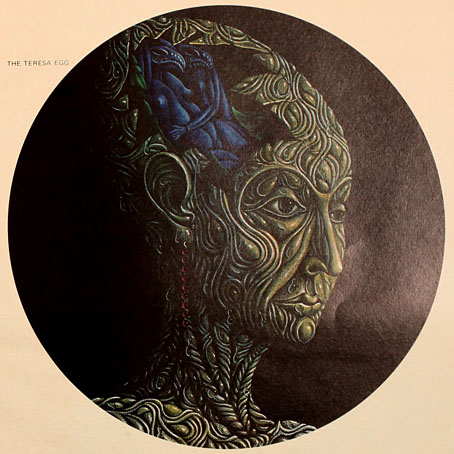
Jorgen Boberg’s Teresas

boberg1.jpg

The Teresa Egg.

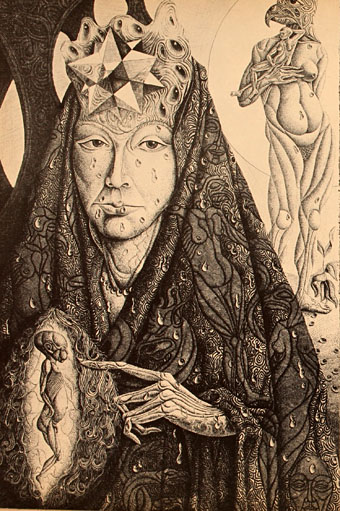
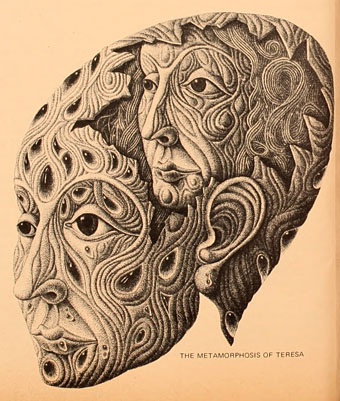
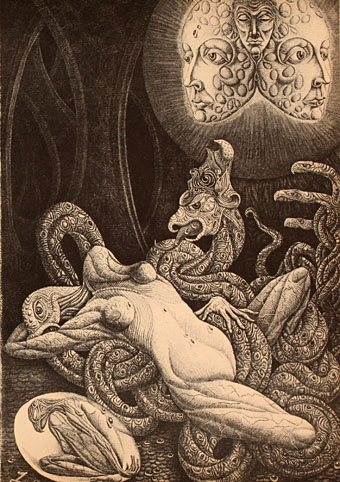
Danish artist Jorgen Boberg (1940–2009) described these early artworks as Surrealist, but if they have to be pigeonholed then Fantastic Realism may be as good a description. Everything here is from a feature in issue 12 of Avant Garde magazine for May 1970, and at first glance I thought the paintings and etchings might be the work of Ernst Fuchs, co-founder of the Vienna School of Fantastic Realism. (Fuchs’ art did appear in issue 9 of the same magazine.) Boberg at this stage in his career shared with Fuchs a preoccupation with bodily metamorphosis, jewelled forms and religious iconography. All the pictures in this feature have “Teresa” in their titles, although whether the name refers to Teresa of Ávila or to a private fixation of the artist isn’t clear.

boberg2.jpg

Teresa’s Dream of Birth.

boberg3.jpg

The Metamorphosis of Teresa.

boberg4.jpg

Teresa’s Dream of the Temple.

Previously on { feuilleton }
Ernst Fuchs, 1930–2015

Elsewhere on { feuilleton }
The etching and engraving archive
The fantastic art archive

Weekend links 579

kresek.jpg

Untitled painting by Larry Kresek.

• “A good comparison might be Broken English-era Marianne Faithfull, Appalachian folk singer Hedy West, or the early-70s home recordings of German actress Sibylle Baier; spellbound female voices possessed of an uncanny emotional honesty.” Andrew Male on the songs of Karen Black. In 1989, the first issue of Psychotronic Video profiled Black’s remarkable acting career which was cultish enough for the magazine to give her the “psychotronic” label.

• Coming soon from Strange Attractor Press, In A Sound World by Victor Segalen, “a work of fantasy concerning an inventor lost in his own immersive harmonic space”.

• At Messynessychic: Inside the Imaginarium of a Solarpunk Architect, or architectural designs by Luc Schuiten, brother of comic artist and illustrator François Schuiten.

De Strijd der Werelden, 1899. The first illustrated book version of HG Wells’ The War of the Worlds was a Dutch edition with drawings by JH Speenhoff.

• New/old music: Words Disobey Me (Dennis Bovell Dub Version) by The Pop Group, part of a forthcoming Bovell remix of the group’s debut album, Y.

• Mixes of the week: A mix for The Wire by Sunik Kim, FACT Mix 817 by Malibu, and Rhythmic Asymmetrical Wyrd by The Ephemeral Man.

• “Whatever we call them, and whatever else they might be, they are, in fact, printed paintings.” Joseph Visconi on William Blake’s monoprints.

• Curious Music announces Moebius Strips, an audio installation by Tim Story from the sounds and music of Dieter Moebius.

• At Dangerous Minds: Richard Metzger‘s confessions of an analogue vinyl snob.

Strange Flowers departs from tradition by offering a summer reading list.

Moebius 256 (1977) by Zanov | Moebius (1981) by Cyrille Verdeaux | Elena’s Sound-World (2014) by Sinoia Caves

Ravi Shankar’s metempsychosis

ravi.jpg

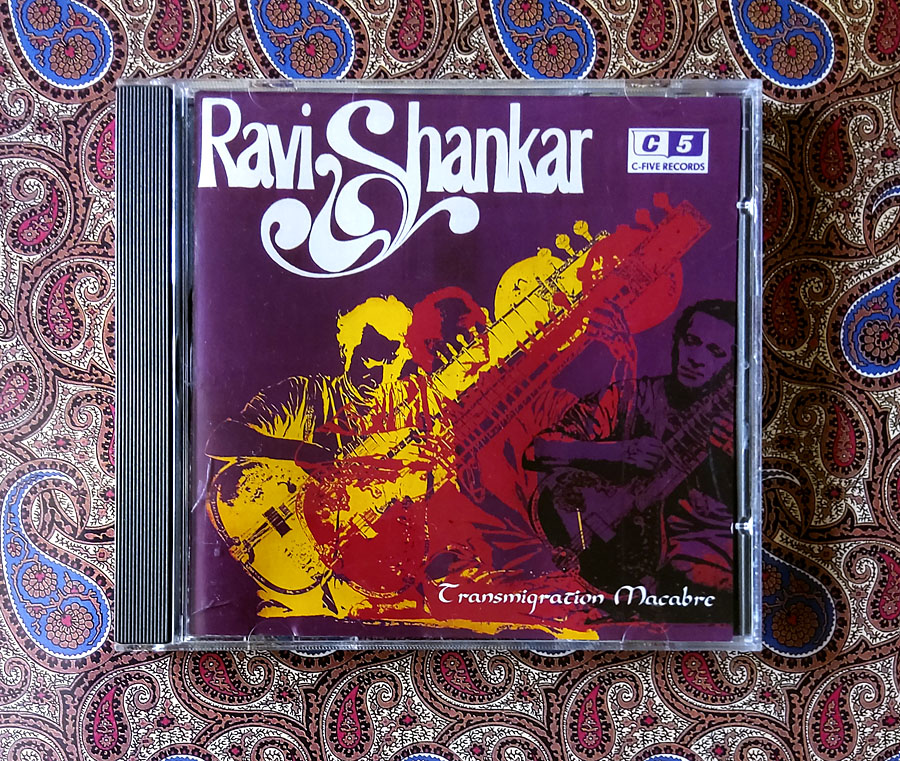
Transmigration Macabre is the curious title of a disc by Ravi Shankar that turned up in one of the local charity shops this week. The album is the score for a short British film, Viola, made in 1967 when Indian music was enjoying its fleeting novelty status in the West. Prior to this, Shankar had provided music for Jonathan Miller’s TV film of Alice in Wonderland, Conrad Rooks’ Chappaqua, and an obscure independent feature, The Psychedelics. Transmigration Macabre wasn’t released until 1973, however, when the sitar fad had long since expired, but it does does work well as an album in itself, albeit a short, monophonic one. I wrote something about the album in 2008 after it provided the key to a minor musical mystery. At the time I only had a collection of mp3s so it’s good to find a cheap disc of the music.

davis.jpg

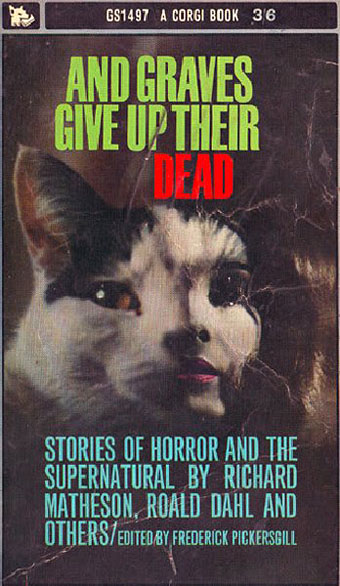
The most notable feature of the score, also the feature that solved my musical mystery, is the appearance on several tracks of the Cristal baschet, a unique instrument made of glass rods and metal cones created by Bernard and François Baschet, and played by Structures Sonores (aka Structures Sonores Lasry Baschet), the group the Baschet brothers formed with Yvonne and Jacques Lasry. The combination of the Cristal’s weird timbres with Ravi Shankar’s sitar playing works so well I wish the ensemble had recorded more together. The presence of the Cristal also makes Viola one of the few films that features the instrument at all, something I find surprising given the otherworldliness of the Cristal sound. Viola is a supernatural story directed by Dunstan Pereira in which “a man believes that his dead wife has returned in the form of a cat to haunt him”, hence the need for uncanny sounds. The film is described as being comprised of still photos, a common technique for low-budget shorts. Producer Richard Davis adapted his own short story, The Female of the Species, which was first published in And Graves Give Up Their Dead in 1964, a book that also appears to illustrate his story on its cover. The BFI has a copy of the film that’s free to watch but it wouldn’t play for me so I’ll just have to imagine the visuals while listening to the music.

Previously on { feuilleton }
Alice in Wonderland by Jonathan Miller
Cristalophonics: searching for the Cocteau sound

Eiko Ishioka album covers

ei01.jpg

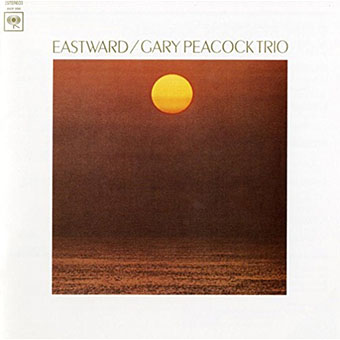
Eastward (1970) by Gary Peacock Trio. Photography by Hiroshi Asada, Tadayuki Naitoh.

Continuing an occasional series about artists or designers whose work has appeared on record sleeves. Also another jazz-related post which includes Herbie Hancock via the V.S.O.P. album.

Eiko Ishioka is best known outside Japan for the costume designs she created for feature films, especially those in Francis Coppola’s Dracula, but she also had a parallel career as a graphic designer and art director, working with photographers and other designers on a large number of album covers. The examples here are a partial selection, many of which were created for East Wind, a label established by Nippon Phonogram to promote Japanese artists overseas.

ei02.jpg

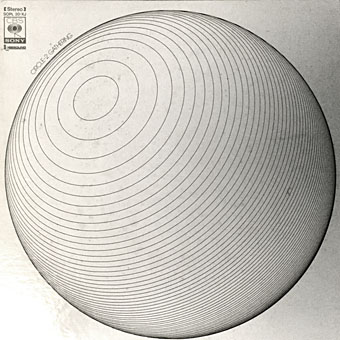
Circle 2: Gathering (1971) by Circle. Design by Eiko Ishioka, Seiya Sawayama, Yoshio Nakanishi.

ei03.jpg

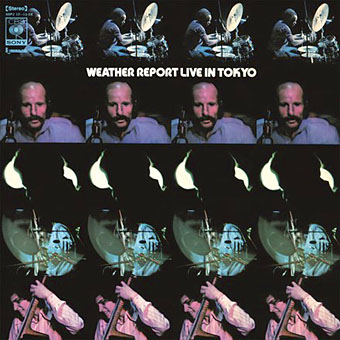
Weather Report Live In Tokyo (1972) by Weather Report. Design by Eiko Ishioka, Yoshio Nakanishi.

ei04.jpg

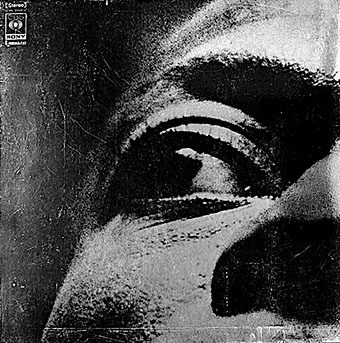
Miles Davis Story Vol. 2 (1972) by Miles Davis. Design by Eiko Ishioka, Yoshio Nakanishi. Photography by Columbia Records Photo Studio, Tadayuki Naitoh.

Black ink on silver foil, something that always looks impressive but doesn’t wear very well. This cover may have led to Ishioka’s work on Tutu (see below).

ei05.jpg

Winter Love, April Joy (1975) by David Friedman. Design by Eiko Ishioka, Motoko Naruse.

Continue reading “Eiko Ishioka album covers”