Weekend links 381

siner.jpg

States of Ecstasy 1 by K. Lenore Siner some of whose work may be seen in Witch-Ikon: An Exhibition of Contemporary Witchcraft Imagery at Mortlake & Company, Seattle.

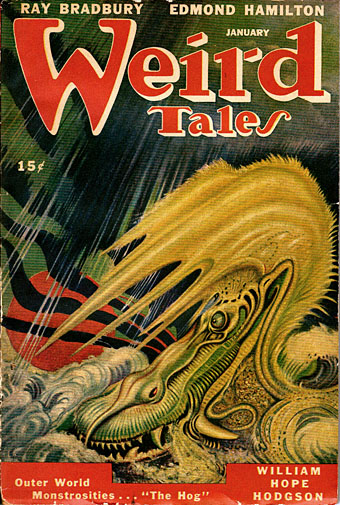
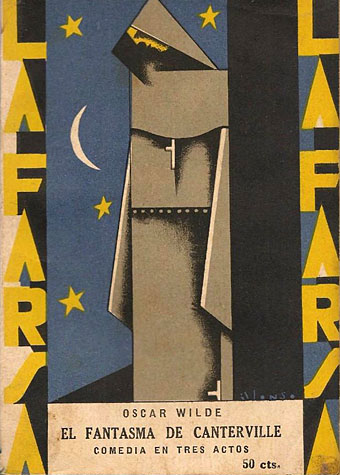
Emily Temple compiles a list of “40 creepy book covers”. A shame that she (or Lithub) can’t also credit more of the artists and designers responsible. Searching titles at ISFDB would turn up many of the missing names.

• Blogging has suffered in recent years from the onslaught of social media but some persist in maintaining the form as a creative act. Poemas del río Wang is one such, its scope best seen in this alphabetical index.

• Mixes of the week: XLR8R Podcast 510 by Moodprint, Secret Thirteen Mix 232 by Alex XIII Maerbach, a mix for The Wire by Sadaf, and FACT mix 621 by NHK yx Koyxen.

Out next month: Mute: A Visual Document, being a visual history of Mute Records by Terry Burrows and Daniel Miller.

Nick Soulsby on “the myth and majesty of Vangelis’ timeless Blade Runner soundtrack”.

Compound in the new album by Yair Elazar Glotman. Stream it in full here.

Killed by Roses (1963): Eikoh Hosoe’s photographs of Yukio Mishima.

Oriental Traditional Music from LPs & Cassettes

• Hours and hours of Blue Jam. Oo ab welcome.

• 65 books of prints by Katsushika Hokusai.

Alpha (1976) by Vangelis | Rêve (1979) by Vangelis | Flamants Roses (1979) by Vangelis

Weekend links 378

belbury.jpg

Outward Journeys, which will be released on November 3, is the second album on the Ghost Box label by The Belbury Circle (Belbury Poly with The Advisory Circle). As before, John Foxx is a guest vocalist, and as always, Julian House provides the graphic design.

• Music non-stop: Geeta Dayal in 2012 talking to Rebecca Allen about the challenges of turning Kraftwerk into computer animations.

• At the BFI: Jon Towlson on the sublimity of Close Encounters of the Third Kind; and Stephen King’s favourite films.

Bookogs is the Discogs concept applied to books. Stupid name (Bibliogs would be much better) but there it is.

belbury2.jpg

Julian House goes 8-bit. More artwork for The Belbury Circle.

Iain Sinclair‘s farewell to London. Sinclair talked to Alan Moore about his book earlier this month.

• At Dangerous Minds: Paul Gallagher on the occult art of Austin Osman Spare.

• The places where Cold War numbers stations broadcast spies’ secret codes.

• Rodney Brooks on the seven deadly sins of predicting the future of AI.

Nadja Spiegelman on the peculiar poetry of Paris’s Lost and Found.

• At Wormwoodiana: The rise of secondhand bookshops in Britain.

• RIP Grant Hart and Harry Dean Stanton. (And Dirge Magazine.)

• Mix of the week: FACT mix 618 by Tara Jane O’Neil.

• An introduction to Conny Plank in 10 records.

Reoccurring Dreams (1984) by Hüsker Dü | Canción Mixteca (1985) by Ry Cooder | You Don’t Miss Your Water (1993) by Harry Dean Stanton

Weekend links 377

czukay.jpg

Holger Czukay by Ursula Kloss, from the cover of Czukay’s Moving Pictures (1993). (The painting is a pastiche of Holbein’s portrait of Georg Gisze.)

• RIP Holger Czukay. The obituaries have emphasised his role as the bass player for Can, of course, but he was just as important to the band as a sound engineer and producer: it was Czukay’s editing skills that shaped many of their extended jams into viable compositions. Post-Can he recorded 20 or so albums by himself or with collaborators, several of which can be counted among the best of all the Can solo works. Geeta Dayal and Jason Gross remembered their encounters with Czukay, while FACT reposted their 2009 interview. Czukay’s final interview was probably last year when he talked to Ian Harrison for Mojo magazine.

For my part, I was astonished when Czukay phoned me out of the blue one day in 1997 to thank me for sending him a video I’d made in the 1980s. This was a scratch production created with two VCRs that set 300 clips from feature films to Hollywood Symphony, the final piece on Czukay’s Movies album. Years later, MTV showed a couple of similar video collages that Czukay had made for Can so I sent a copy of my effort to Spoon Records thinking he might be amused. His public persona was often one of a wacky mad professor but the jokiness was allied to an impressive technical skill and curiosity. Most of our brief conversation was taken up with my answering his questions about my primitive video recording.

• “Every pebble can blow us sky-high”: A reconsideration by J. Hoberman of The Wages of Fear, directed by Henri-Georges Clouzot.

• Dario Argento’s masterpiece of horror cinema, Suspiria, is 40 years old. Martyn Conterio looks at five of its influences.

Mark Korven’s Apprehension Engine: an instrument designed to play the music of nightmares.

• The mystery of the Voynich Manuscript solved at last? Nicholas Gibbs thinks so.

• At Dangerous Minds: The macabre and disturbing sculptures of Emil Melmoth.

Jonathan Meades reviews A Place for All People by Richard Rogers.

• Mix of the week: Secret Thirteen Mix 229 by Erin Arthur.

• The ten creepiest objects in the Wellcome Collection.

Rob Chapman’s essential psychedelia reading list.

It’s Just A Fear (1966) by The Answers | Fear (1992) by Miranda Sex Garden | Constant Fear (2002) Bohren & Der Club Of Gore

Weekend links 376

newton.jpg

The House by the Canal (1945) by Algernon Cecil Newton.

• RIP Tobe Hooper. Black Hole Reviews recounts the troubled history of The Texas Chain Saw Massacre in Britain, a film that was given a short-lived cinema release then banned for 20 years. Elsewhere: Who sampled from Tobe Hooper’s films? Tucktonia, a model village whose London buildings were destroyed for Hooper’s Lifeforce.

• Graphic language of the wall: Rick Poynor on Brassaï’s photographs of graffiti for Le Livre de Poche. More Poynor: National Theatre Posters: A Design History is available for pre-order from Unit Editions. There’s more from the latter here.

• “A question of queer as a kind of futurism: an attitude or tendency that connects mid-20th-century performers and photographers to contemporary digital art and fashion.” Brian Dillon reviewing Queer British Art at Tate Britain.

In evolutionary terms, the intelligence of octopuses is an anomaly. The last common ancestor between octopuses on the one hand, and humans and other intelligent animals (monkeys, dolphins, dogs, crows) on the other, was probably a primitive, blind worm-like creature that existed six hundred million years ago. Other creatures that are so evolutionarily distant from humans—lobsters, snails, slugs, clams—rate pretty low on the cognitive scale. But octopuses—and to some extent their cephalopod cousins, cuttlefish and squid—frustrate the neat evolutionary division between clever vertebrates and simple-minded invertebrates. They are sophisticated problem solvers; they learn, and can use tools; and they show a capacity for mimicry, deception and, some think, humour. Just how refined their abilities are is a matter of scientific debate: their very strangeness makes octopuses hard to study. Their intelligence is like ours, and utterly unlike ours. Octopuses are the closest we can come, on earth, to knowing what it might be like to encounter intelligent aliens.

Amia Srinivasan reviewing Other Minds: The Octopus and the Evolution of Intelligent Life by Peter Godfrey-Smith, and The Soul of an Octopus: A Surprising Exploration into the Wonder of Consciousness by Sy Montgomery

Royal Academy of Arts to reveal explicit side of Dalí and Duchamp.

• At Wormwoodiana: Mark Valentine on The Mystic Umbrellas.

Norton Critical Edition’s Periodic Table of Literary Villains.

• Mix of the week: FACT mix 616 by Lanark Artefax.

Virus Fonts has a new website.

Little Umbrellas (1969) by Frank Zappa | Umbrellas (1971) by Weather Report | Black Umbrellas (2003) by Broadcast

Richter’s “Anchor Blocks”

richters01.jpg

It’s safe to say that I wouldn’t have paid much attention to illustrations from a toy catalogue from 1880 if I hadn’t recognised the pictures from their fleeting appearance in Jan Švankmajer’s Jabberwocky (1971). One sequence in Švankmajer’s animated film has a battalion of toy soldiers emerging from the sleeves of a boy’s sailor suit. While the soldiers march around a table, a drawer opens and the wooden blocks within build themselves into a variety of architectural forms. Cut into this sequence are the pictures from Richter’s toy catalogues.

richters02.jpg

The latter have intrigued me ever since I spotted them in the film (the edits are typically brief) for their inadvertent Surrealism, a quality that may also have appealed to Švankmajer. Most catalogues devoted to toy blocks would display their potential constructions in a neutral space; Richter’s catalogue shows the block constructions as life-size architectural creations in otherwise realistic settings. The engraved renderings are rather fine as well, which adds to their strange atmosphere. There’s a definite Escher quality to some of the plates, in the shapes of the buildings—some of which resemble Escher’s famous fantasy constructions—and in the disparities of scale, a factor explored in this print.

richters03.jpg

The Internet Archive has two Richter catalogues here and here, both of which contain illustrations seen in Švankmajer’s film. Wikipedia has a short history of the blocks which notes that they also appear in Švankmajer’s Alice (1988).

Continue reading “Richter’s “Anchor Blocks””